“Could you bring something Korean for dinner tonight?” That was the text from my friend out of the blue one evening. I had never made bulgogi at home before, mostly because I thought it was a bit too involved. But honestly, after a long, chaotic day juggling work and life, I just needed something straightforward yet satisfying. So, I threw together this savory Korean bulgogi beef bowl with pickled daikon and gochujang. The first bite was like a little surprise party in my mouth — sweet, spicy, tangy, and deeply comforting all at once. And the crunch from the pickled daikon? Game changer.
What really hooked me was how this recipe doesn’t require a million ingredients or complicated steps, but still delivers that unmistakable Korean street food vibe. I found myself making it multiple times in a week, tweaking the marinade just a bit, trying different rice bowls, and even pairing it with some savory Korean ground beef bulgogi bowls for a quick switch-up. It’s the kind of meal that feels like a treat but fits neatly into a busy weeknight. And you know, it’s those quiet kitchen moments when a dish like this really settles in — simple, warm, and just the right bit of spicy to keep things interesting.
So if you’re in the mood for an easy homemade Korean meal that’s bursting with flavor and texture, this bulgogi beef bowl with pickled daikon and gochujang might just be your new go-to. It’s honest cooking with a bit of sass and a whole lot of soul.
Why You’ll Love This Recipe
After testing this recipe over several weeks (and trust me, my kitchen smelled incredible every time), I can say this bulgogi beef bowl seriously nails the balance of flavors and textures without feeling intimidating or time-consuming.
- Quick & Easy: The marinade comes together in about 10 minutes, and the whole meal can be on the table in under 30 minutes — perfect for busy weeknights or unexpected guests.
- Simple Ingredients: Most are pantry staples or easy-to-find at any grocery store, like soy sauce, garlic, and a little brown sugar. The pickled daikon adds a fresh twist that you can make in advance.
- Perfect for Any Occasion: Whether it’s a casual dinner, a cozy weekend lunch, or even meal prep for the week, this bowl hits the spot.
- Crowd-Pleaser: The sweet and savory bulgogi beef combined with spicy gochujang and crunchy pickles always gets rave reviews — even from picky eaters.
- Unbelievably Delicious: The texture contrast between tender marinated beef, crisp pickled daikon, and creamy rice makes every bite exciting.
What sets this recipe apart is the homemade pickled daikon — it’s a subtle, tangy crunch that brings a bright counterpoint to the richly marinated beef. Plus, blending a bit of gochujang into the sauce creates that perfect spicy kick without overpowering the dish. It’s a homemade bulgogi bowl with personality, not just another takeout copy.
Honestly, this recipe stuck with me because it’s comfort food that doesn’t feel heavy or fussy. It’s a meal you want to savor, but also one you can whip up repeatedly without getting bored — kind of like those easy recipes you keep coming back to, like my crispy homemade crunch wrap supreme that always surprises guests.
What Ingredients You Will Need
This recipe uses simple, wholesome ingredients to deliver bold flavor and satisfying texture without the fuss. Most of these you might already have hanging out in your pantry or fridge, and the pickled daikon is surprisingly easy to make with just a few extra minutes.
- For the Bulgogi Beef Marinade:
- 1 pound (450g) thinly sliced beef ribeye or sirloin (you can ask your butcher to slice it, or freeze the beef slightly to slice thin yourself)
- 3 tablespoons soy sauce (I prefer Kikkoman for its balance)
- 1 tablespoon brown sugar (adds a nice caramelized sweetness)
- 1 tablespoon sesame oil (toasty aroma is key here)
- 3 cloves garlic, minced (fresh is best!)
- 1 teaspoon freshly grated ginger (adds brightness)
- 1/2 small onion, finely grated (for natural sweetness and tenderizing)
- 1 tablespoon mirin or rice wine (optional but recommended for depth)
- 1/2 teaspoon black pepper
- 1 tablespoon toasted sesame seeds (for garnish)
- For the Pickled Daikon:
- 1 cup daikon radish, peeled and thinly sliced or julienned
- 1/2 cup rice vinegar
- 1/4 cup water
- 2 tablespoons sugar
- 1 teaspoon salt
- For the Bowl Assembly:
- Cooked short-grain white rice or brown rice (about 2 cups cooked)
- Fresh scallions, thinly sliced
- Gochujang (Korean chili paste), for drizzling
- Optional: sliced cucumbers or kimchi for extra crunch and flavor
For substitutions, you can swap soy sauce with tamari for gluten-free options, or use coconut sugar instead of brown sugar if you want a slightly different sweetness. If you want a vegetarian twist, try marinated mushrooms instead of beef — they soak up the sauce beautifully.
Equipment Needed
- Large mixing bowl (for marinating the beef)
- Sharp knife and cutting board (for slicing beef and daikon radish)
- Medium saucepan or jar (for making pickled daikon)
- Skillet or grill pan (preferably cast iron for best sear on beef)
- Measuring spoons and cups
- Rice cooker or pot (for cooking rice)
- Tongs or spatula (to toss and flip the beef during cooking)
If you don’t have a grill pan, a regular nonstick skillet works fine — just make sure it’s hot enough before adding the beef. For the pickled daikon, if you don’t have a jar, a small bowl covered with plastic wrap works too, but a jar helps the flavors develop better. I’ve found that keeping a sharp knife around makes slicing thin meat much easier and less frustrating.
Preparation Method
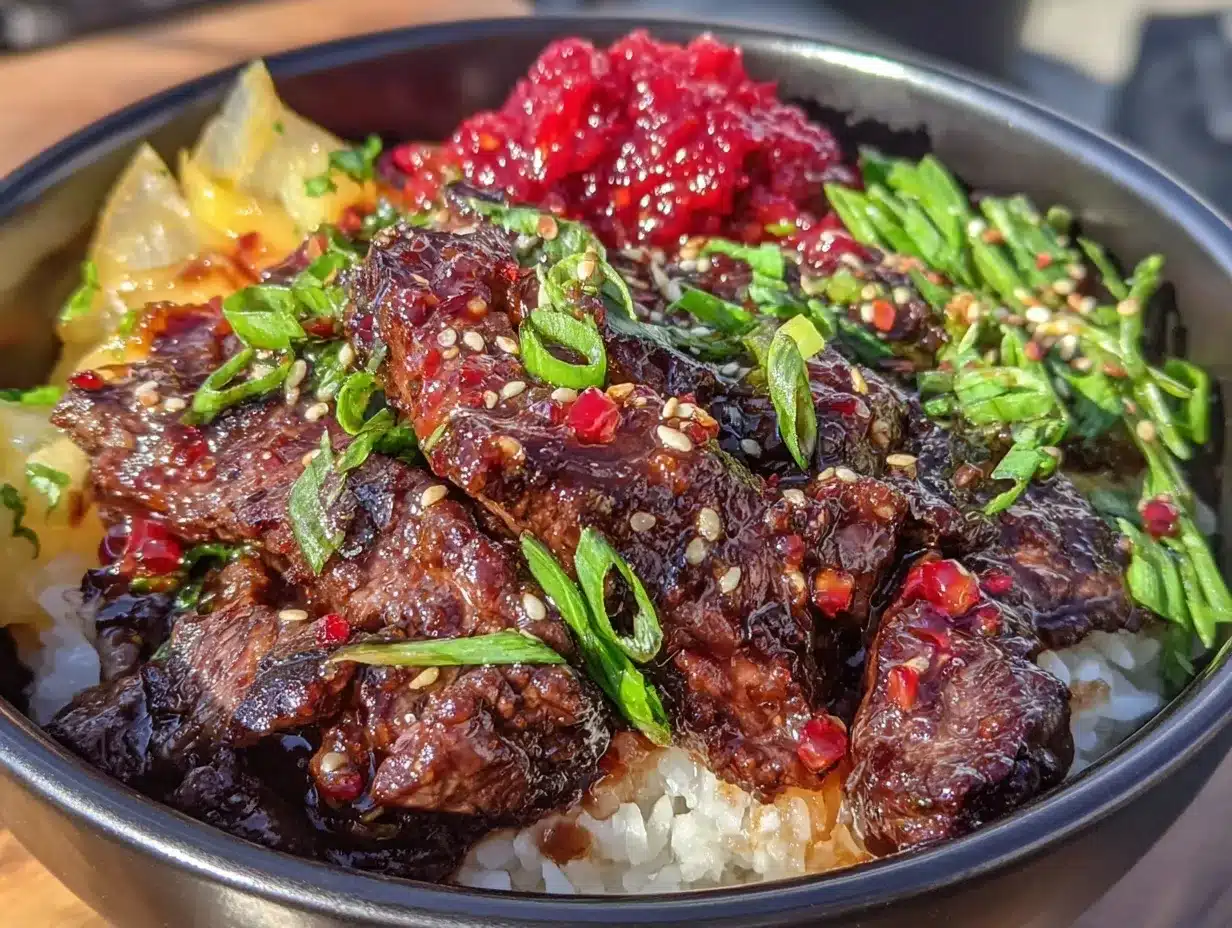
- Prepare the Pickled Daikon: In a small saucepan, combine rice vinegar, water, sugar, and salt. Heat gently just until sugar dissolves, then remove from heat. Place the sliced daikon in a jar or bowl and pour the warm pickling liquid over it. Let it sit at room temperature for at least 30 minutes (or up to overnight in the fridge) for best flavor.
- Marinate the Beef: In a large bowl, mix soy sauce, brown sugar, sesame oil, garlic, ginger, grated onion, mirin (if using), and black pepper until sugar dissolves. Add the thinly sliced beef and toss to coat evenly. Cover and refrigerate for at least 20 minutes, preferably up to 1 hour for deeper flavor. (Pro tip: Don’t marinate too long or the acid could start to “cook” the beef.)
- Cook the Rice: While the beef marinates, cook your rice according to package directions. Fluffy, sticky rice works best to soak up the bulgogi sauce.
- Cook the Bulgogi Beef: Heat a grill pan or skillet over medium-high heat until very hot. Add the marinated beef in a single layer (work in batches if needed) and sear for about 2-3 minutes per side, until nicely caramelized and cooked through. Avoid overcrowding the pan to get that perfect sear. Remove cooked beef and set aside.
- Assemble the Bowls: Scoop warm rice into bowls. Top with generous portions of bulgogi beef, a handful of pickled daikon for crunch and tang, sliced scallions, and a drizzle of gochujang. Add optional cucumber slices or kimchi for extra layers of flavor.
- Garnish and Serve: Sprinkle with toasted sesame seeds and serve immediately. The combination of sweet, savory beef, spicy gochujang, and crisp pickled daikon creates a bowl you’ll want to make again and again.
Quick tip: If your beef isn’t browning well, your pan might not be hot enough or there could be too much moisture. Pat the beef dry before marinating and make sure to preheat the pan properly.
Cooking Tips & Techniques
Getting bulgogi just right isn’t rocket science, but a few simple tricks make a big difference. First, slicing the beef thinly is crucial — it cooks quickly and absorbs the marinade beautifully. I found that freezing the beef for about 30 minutes before slicing makes this much easier and safer.
When marinating, don’t rush it. Even 20 minutes lets the flavors soak in, but if you have time, an hour in the fridge makes the beef juicier and more flavorful. Just be careful not to go much longer or the acids from the onion and mirin can start breaking down the meat too much, turning it mushy.
Use a very hot pan to get that signature caramelized edge. It’s tempting to crowd the pan, but doing so steams the meat instead of searing it. Cook in batches if needed, and keep the cooked beef warm by tenting with foil.
The pickled daikon gives a refreshing crunch that cuts through the richness of the beef. You can prepare this a day ahead to let the flavors mellow. And don’t skip the gochujang drizzle — it adds that spicy, fermented punch that makes the whole bowl sing.
For efficiency, start your pickled daikon before marinating the beef, then cook your rice while the beef hits the pan. Multitasking like this turns what might seem like a lot of steps into a smooth flow.
Variations & Adaptations
- Vegetarian Option: Swap beef for marinated shiitake mushrooms or tofu. Use the same marinade and cook until golden. Mushrooms soak up the flavors wonderfully.
- Low-Carb Version: Serve bulgogi over cauliflower rice or sautéed greens instead of traditional rice for a lighter bowl.
- Spicy Upgrade: Mix extra gochujang into the marinade or add a dash of Korean chili flakes (gochugaru) for more heat.
- Seasonal Twist: Swap pickled daikon with quick-pickled cucumber or carrots for variety. In summer, fresh sliced cucumbers add a cooling crunch.
- Meal Prep Friendly: Prepare the beef and pickled veggies in advance, then reheat quickly in a skillet before assembling bowls for easy weekday lunches.
Once, I tried adding a fried egg on top for a richer, creamier finish — highly recommended if you want to make this bowl extra indulgent.
Serving & Storage Suggestions
This bulgogi beef bowl is best served warm, right after cooking, so the beef stays tender and the rice fluffy. If you want a touch of freshness, sprinkle extra scallions or sesame seeds just before serving.
Pair it with a side of kimchi or a light Asian-inspired salad to round out the meal. For drinks, a cold Korean beer or green tea complements the spicy-sweet flavors nicely.
To store leftovers, keep beef and pickled daikon separate from rice in airtight containers in the refrigerator. They’ll keep well for up to 3 days. When reheating, warm the beef gently in a skillet to preserve texture, and microwave the rice with a sprinkle of water to keep it moist.
Flavors develop over time — the pickled daikon gets tangier, and the beef marinade deepens. Just avoid reheating the pickled daikon to keep its crispness.
Nutritional Information & Benefits
This bulgogi beef bowl is a satisfying balance of protein, carbs, and wholesome flavor. A typical serving provides around 450-550 calories, with about 30 grams of protein thanks to the beef. The pickled daikon adds a low-calorie crunch rich in vitamin C and digestive enzymes.
Using thinly sliced lean beef helps keep saturated fat moderate, and the marinade’s garlic and ginger bring anti-inflammatory benefits. If you swap in brown rice or cauliflower rice, you can tweak carb content based on your dietary needs.
Gluten-free eaters can use tamari instead of soy sauce, and vegan versions with mushrooms or tofu make this bowl accessible for many diets. Just be mindful of gochujang brands, as some contain wheat.
Conclusion
This savory Korean bulgogi beef bowl with pickled daikon and gochujang has become one of those recipes I trust when I want something flavorful, quick, and genuinely satisfying. It’s a dish that respects tradition but fits right into a busy modern kitchen.
Feel free to make it your own — swap out ingredients, adjust the spice, or add your favorite veggies. I love how versatile it is, yet never loses that comforting, familiar essence.
Give it a try and see how it fits into your weeknight rotation — I’d love to hear how you customize it or what sides you pair it with. Cooking is always better when shared, and this recipe feels like a warm invite to do just that.
Frequently Asked Questions
What cut of beef is best for bulgogi?
Thinly sliced ribeye or sirloin are ideal due to their tenderness and marbling. You can ask your butcher to slice it or freeze the beef slightly to slice thin at home.
Can I make the pickled daikon ahead of time?
Absolutely! Pickled daikon improves in flavor after sitting at least 30 minutes, but making it a day ahead allows the flavors to mellow beautifully.
Is gochujang very spicy?
Gochujang has a mild to medium heat with a sweet, fermented flavor. You can control spice levels by adjusting how much you add or mixing it with a little honey or mayo.
How do I store leftovers?
Keep bulgogi beef, rice, and pickled daikon in separate airtight containers in the fridge, and consume within 3 days. Reheat beef gently to avoid drying it out.
Can I use a different marinade if I don’t have mirin?
Yes, you can substitute mirin with a teaspoon of sugar and a splash of white wine or skip it altogether. It adds depth but is not essential.
Pin This Recipe!
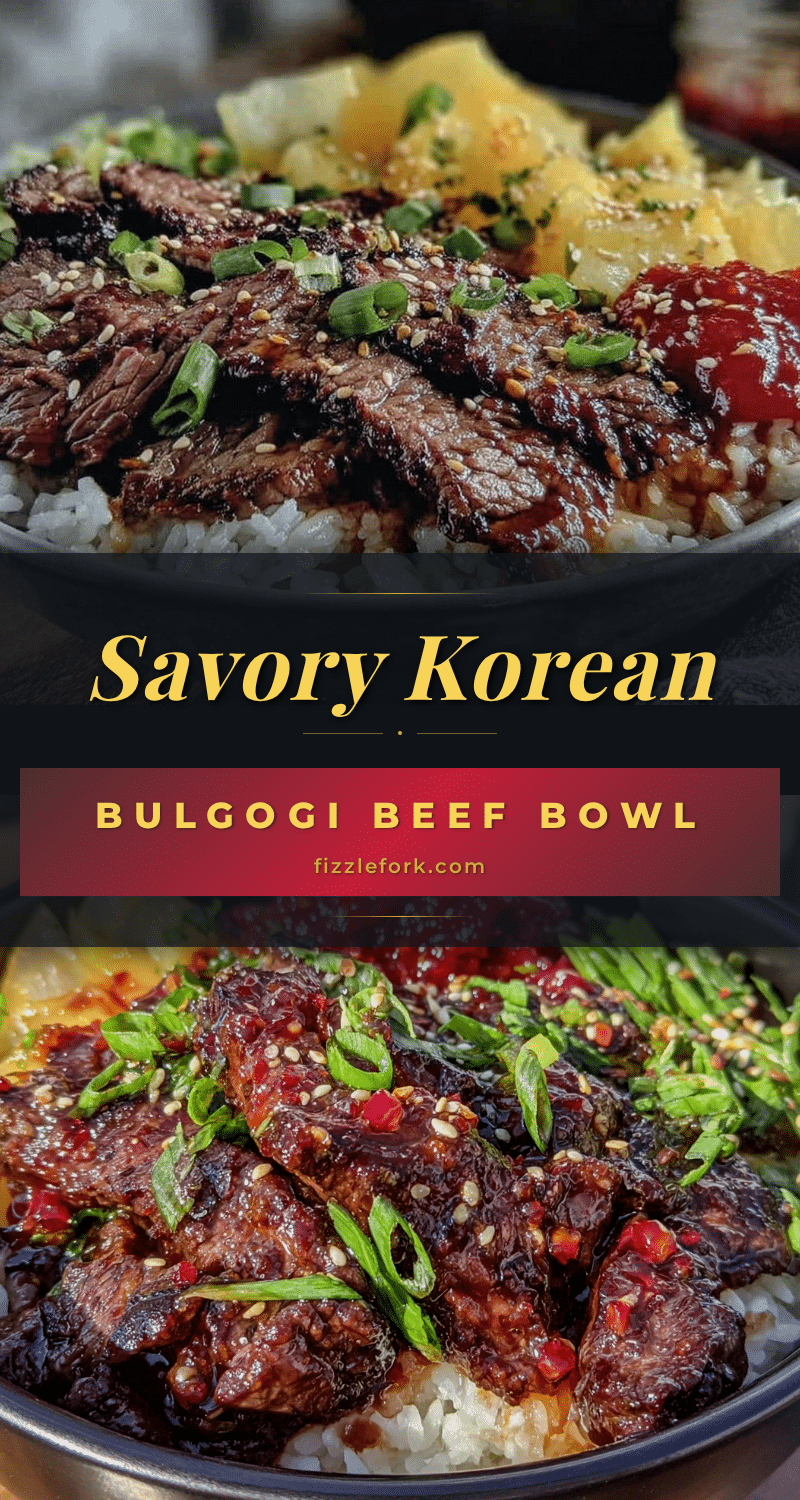
Savory Korean Bulgogi Beef Bowl Recipe Easy Homemade with Pickled Daikon and Gochujang

A quick and easy homemade Korean bulgogi beef bowl featuring tender marinated beef, crunchy pickled daikon, and spicy gochujang, perfect for busy weeknights.
- Prep Time: 15 minutes
- Cook Time: 15 minutes
- Total Time: 30 minutes
- Yield: 4 servings 1x
- Category: Main Course
- Cuisine: Korean
Ingredients
- 1 pound (450g) thinly sliced beef ribeye or sirloin
- 3 tablespoons soy sauce
- 1 tablespoon brown sugar
- 1 tablespoon sesame oil
- 3 cloves garlic, minced
- 1 teaspoon freshly grated ginger
- 1/2 small onion, finely grated
- 1 tablespoon mirin or rice wine (optional)
- 1/2 teaspoon black pepper
- 1 tablespoon toasted sesame seeds (for garnish)
- 1 cup daikon radish, peeled and thinly sliced or julienned
- 1/2 cup rice vinegar
- 1/4 cup water
- 2 tablespoons sugar
- 1 teaspoon salt
- Cooked short-grain white rice or brown rice (about 2 cups cooked)
- Fresh scallions, thinly sliced
- Gochujang (Korean chili paste), for drizzling
- Optional: sliced cucumbers or kimchi for extra crunch and flavor
Instructions
- Prepare the Pickled Daikon: In a small saucepan, combine rice vinegar, water, sugar, and salt. Heat gently just until sugar dissolves, then remove from heat. Place the sliced daikon in a jar or bowl and pour the warm pickling liquid over it. Let it sit at room temperature for at least 30 minutes or up to overnight in the fridge.
- Marinate the Beef: In a large bowl, mix soy sauce, brown sugar, sesame oil, garlic, ginger, grated onion, mirin (if using), and black pepper until sugar dissolves. Add the thinly sliced beef and toss to coat evenly. Cover and refrigerate for at least 20 minutes, preferably up to 1 hour.
- Cook the Rice: While the beef marinates, cook your rice according to package directions.
- Cook the Bulgogi Beef: Heat a grill pan or skillet over medium-high heat until very hot. Add the marinated beef in a single layer and sear for about 2-3 minutes per side until caramelized and cooked through. Work in batches if needed. Remove cooked beef and set aside.
- Assemble the Bowls: Scoop warm rice into bowls. Top with bulgogi beef, pickled daikon, sliced scallions, and a drizzle of gochujang. Add optional cucumber slices or kimchi.
- Garnish and Serve: Sprinkle with toasted sesame seeds and serve immediately.
Notes
Freeze beef slightly before slicing thin for easier cutting. Do not marinate beef for too long to avoid mushy texture. Use a very hot pan and avoid overcrowding for best sear. Pickled daikon can be made ahead and improves in flavor after 30 minutes or overnight. For gluten-free, substitute soy sauce with tamari. Vegetarian option: use marinated mushrooms or tofu instead of beef.
Nutrition
- Serving Size: 1 bowl (approximatel
- Calories: 500
- Sugar: 10
- Sodium: 900
- Fat: 20
- Saturated Fat: 5
- Carbohydrates: 45
- Fiber: 3
- Protein: 30
Keywords: bulgogi, Korean beef bowl, pickled daikon, gochujang, Korean recipe, easy Korean dinner, weeknight meal