“You sure that’s fried rice?” my sister asked, peering skeptically over the rim of her glass as I spooned the steaming bowl onto the table. Honestly, I wasn’t sure myself at first. Cauliflower fried rice seemed like one of those trendy substitutes that might end up tasting like soggy veggies pretending to be something else. But after a few tries tweaking this recipe to be flavorful and gestational diabetes friendly, it quickly became a staple in my kitchen.
It all started one evening when I was scrambling to throw together dinner after a long day of work and doctor appointments. Managing gestational diabetes means watching carbs like a hawk, and traditional fried rice was a no-go. I tossed some riced cauliflower into the pan, added my go-to Asian-inspired sauces, and threw in fresh veggies plus a bit of lean protein. The aroma filled the kitchen, and that first bite surprised me — savory, satisfying, and downright comforting without the carb overload.
Since then, this cauliflower fried rice bowl has been my quiet little victory; easy enough for a busy weeknight, but with enough flavor complexity to feel like a treat. It’s one of those meals I make repeatedly, sometimes swapping ingredients based on what’s in the fridge, but always sticking to the balanced, gestational diabetes friendly framework. There’s something calming about knowing you’re eating well without sacrificing taste — and that’s why this recipe stuck around in my rotation.
So, if you’re looking for a flavorful, wholesome meal that fits gestational diabetes needs without feeling like a compromise, this cauliflower fried rice bowl just might become your go-to comfort food too.
Why You’ll Love This Recipe
Having tested this recipe multiple times across different kitchens and moods, I can confidently say it’s a winner for anyone managing gestational diabetes or just wanting a lighter, tasty alternative to classic fried rice. Here’s why it stands out:
- Quick & Easy: Ready in about 25 minutes, making it perfect for busy evenings or when you want a fuss-free dinner.
- Simple Ingredients: Uses common staples like cauliflower, eggs, soy sauce, and fresh veggies — no need for specialty stores.
- Perfect for Weeknight Dinners: Hearty and filling without being heavy, so you feel good after eating.
- Crowd-Pleaser: Even those not watching carbs love the flavor and texture. It’s surprisingly satisfying for kids and adults alike.
- Unbelievably Delicious: The balance of garlic, ginger, and a hint of sesame oil makes every bite flavorful and comforting.
What makes this recipe different? Instead of relying on heavy sauces or high-carb rice, I blend in a bit of protein and crunchy vegetables to keep the texture interesting. The cauliflower is lightly cooked to keep a slight bite, never mushy, and the seasoning is just right — not salty, not bland. Plus, I use fresh ginger and garlic minced finely, which really wakes up the flavors.
This isn’t just a low-carb swap; it’s a thoughtfully crafted dish that makes you pause and savor. Honestly, after a long day, it’s the kind of meal that feels like a warm hug without the guilt. If you’re curious how a dish like this fits into balanced eating, it pairs beautifully with sides like crispy air fryer salmon bites from my collection, adding protein and variety without extra carbs.
What Ingredients You Will Need
This recipe uses simple, wholesome ingredients to deliver bold flavor and satisfying texture without the fuss. Most are pantry staples or fresh produce you can easily find. If you’re managing gestational diabetes, these ingredients help keep the carb count steady while still offering plenty of flavor.
- Riced cauliflower: About 4 cups (600g), fresh or frozen (thawed and drained). I recommend using fresh if you can—it gives the best texture.
- Vegetables: 1 cup diced carrots, ½ cup peas (fresh or frozen), ½ cup diced bell peppers (adds sweetness and crunch).
- Eggs: 2 large, beaten (adds protein and richness).
- Green onions: 3 stalks, sliced thinly (for freshness and mild onion flavor).
- Garlic: 3 cloves, minced (essential for depth).
- Fresh ginger: 1 tablespoon, finely grated (gives a bright zing).
- Soy sauce or tamari: 2 tablespoons (use low-sodium to keep salt in check).
- Sesame oil: 1 teaspoon (for authentic aroma; toasted sesame oil works best).
- Olive oil or avocado oil: 1 tablespoon (for cooking; neutral flavor).
- Lean protein (optional): ½ cup cooked, diced chicken breast or shrimp (great for extra sustenance).
- Black pepper: To taste.
- Red pepper flakes: Optional, for a bit of heat.
Substitutions and tips:
- If you need a gluten-free soy sauce alternative, tamari is a great choice.
- For a vegetarian version, omit the meat and add extra veggies like mushrooms or snap peas.
- If fresh ginger isn’t available, powdered ginger can work in a pinch but use sparingly.
- Using frozen riced cauliflower is convenient, but be sure to squeeze out excess moisture to avoid sogginess.
- Look for small-curd cottage cheese or Greek yogurt if you want to add a creamy side, but keep it separate from the stir-fry.
Equipment Needed
- Large non-stick skillet or wok: Essential for cooking the cauliflower fried rice evenly without sticking. A wok works great for quick, high-heat cooking.
- Sharp knife and cutting board: For prepping all your veggies and protein. A good knife makes slicing green onions and mincing garlic much easier.
- Mixing bowl: To beat the eggs before adding to the pan.
- Spatula or wooden spoon: For stirring and folding the ingredients gently.
- Measuring spoons and cups: To keep the seasoning balanced, especially soy sauce and oils.
If you don’t have a wok, a large skillet with a rounded bottom works fine. I’ve even used a cast-iron pan on occasion, but just be sure to preheat it well and add enough oil to prevent sticking. If you want to save time, a food processor can quickly rice the cauliflower, but I prefer buying it pre-riced to skip that step on busy days.
Preparation Method
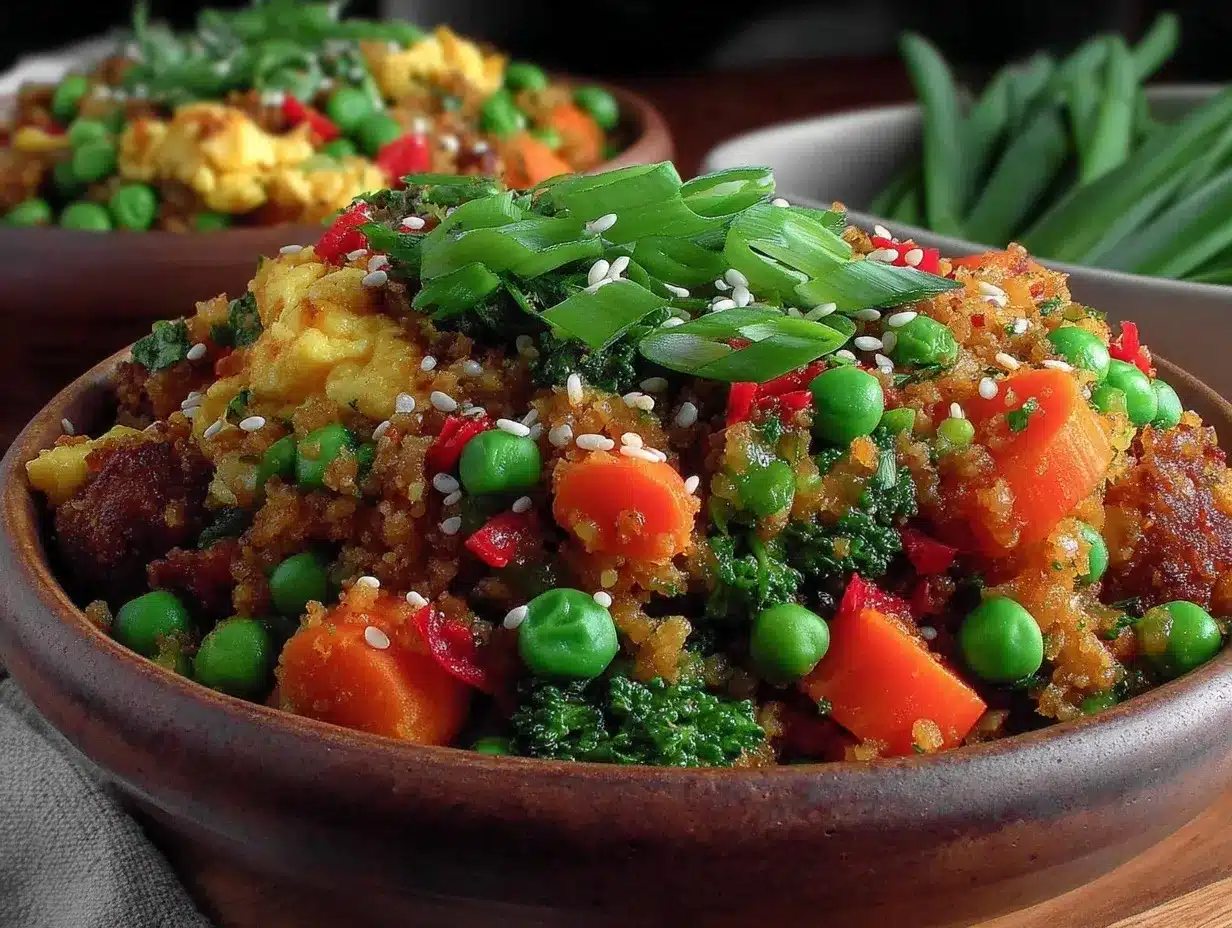
- Prepare the vegetables: Dice the carrots and bell peppers into small, even pieces (about ¼ inch / 0.6 cm). Slice green onions thinly, separating white and green parts for cooking order. Mince garlic cloves finely and grate fresh ginger.
- Heat your skillet or wok: Over medium-high heat, add olive or avocado oil (1 tablespoon). Let it warm until shimmering but not smoking, about 1-2 minutes.
- Cook aromatics: Add the minced garlic and ginger to the pan, stirring constantly for 30 seconds to a minute until fragrant. Watch closely so they don’t burn.
- Add diced carrots and bell peppers: Stir-fry for 3-4 minutes until they begin to soften but retain some crunch.
- Push veggies to the side: Pour beaten eggs into the cleared space in the pan. Let them sit for 20 seconds, then gently scramble until just set but still slightly glossy. Mix with the veggies.
- Add riced cauliflower: Toss it into the pan with the cooked veggies and eggs. Stir to combine. Cook for 5-6 minutes, stirring occasionally until cauliflower is tender but not mushy. If using frozen cauliflower, check it’s fully thawed and moisture squeezed out beforehand to avoid sogginess.
- Season the mixture: Pour in low-sodium soy sauce (2 tablespoons) and toasted sesame oil (1 teaspoon). Stir well to distribute evenly. Add black pepper to taste and red pepper flakes if using.
- Add peas and protein: Fold in the peas (fresh or thawed frozen). If using pre-cooked chicken or shrimp, add now and warm through for 2-3 minutes.
- Finish with green onion greens: Sprinkle sliced green parts of the green onion on top and give one last gentle stir.
- Check seasoning: Taste a small bite and adjust soy sauce or pepper if needed. Remove from heat and serve immediately.
Pro tip: Avoid overcooking the cauliflower. It should have a slight bite, not be mushy. Also, be mindful with soy sauce — a little goes a long way for flavor without overpowering or adding too much sodium.
Cooking Tips & Techniques
One trick I’ve learned is to keep the heat fairly high but not so high that garlic and ginger burn quickly. If they scorch, a bitter note takes over the dish. Stir frequently but gently—think of folding the ingredients rather than aggressively tossing them.
When scrambling eggs directly in the pan, patience is key. Let them set a bit before stirring to get soft, fluffy curds rather than rubbery bits. Also, don’t skip squeezing out extra water from frozen cauliflower — it can turn your fried rice watery, and nobody wants that.
Timing helps with a smooth workflow: prep all your veggies first, then cook aromatics, followed by veggies, eggs, and cauliflower. It’s like a mini assembly line, which saves mental energy on busy days.
For a more authentic flavor, I occasionally add a dash of fish sauce or a sprinkle of toasted sesame seeds at the end. Just a little goes a long way to boost umami.
Finally, if you like a bit of char or crispness on the cauliflower, avoid overcrowding the pan. Cook in batches if needed, so the heat can caramelize the cauliflower instead of steaming it.
Variations & Adaptations
- Protein swap: Instead of chicken or shrimp, try diced firm tofu or tempeh for a vegetarian version. Marinate lightly in soy sauce beforehand for extra flavor.
- Spice it up: Add chopped fresh chili or a drizzle of sriracha to bring heat. For a milder option, use roasted red pepper flakes only.
- Seasonal veggies: Swap peas and carrots for chopped broccoli, snap peas, or zucchini depending on what’s fresh or in your fridge.
- Cooking method: This recipe works well in a large air fryer wok basket or in an electric skillet for hands-off cooking. Just adjust the timing slightly and keep an eye on moisture.
- Low-sodium option: Use coconut aminos instead of soy sauce to reduce sodium while adding a subtle sweetness.
One personal twist I love is adding a spoonful of chopped fresh cilantro or basil right at the end for a fresh herbal note that contrasts nicely with the warm spices. It’s a simple trick that feels fancy.
Serving & Storage Suggestions
This cauliflower fried rice bowl is best served hot from the pan, garnished with extra green onions or a sprinkle of toasted sesame seeds for a little crunch. It pairs beautifully with a light cucumber salad or a side of steamed greens to round out the meal.
If you want to prepare ahead, store leftovers in an airtight container in the refrigerator for up to 3 days. Reheat gently in a skillet or microwave, adding a splash of water or broth to loosen the mixture if it seems dry.
Freezing isn’t ideal as cauliflower tends to lose texture, but if you must, freeze in single portions and thaw overnight before reheating.
Flavors tend to meld and deepen after a day in the fridge, so this dish can taste even better the next day—perfect for meal prep or packing a healthy lunch.
For a complete meal experience, try serving alongside something like the crispy air fryer breaded pork chops recipe, which offers a satisfying contrast in textures and flavors without overwhelming your gestational diabetes-friendly meal plan.
Nutritional Information & Benefits
This cauliflower fried rice bowl is low in carbohydrates—about 15g net carbs per serving—making it a smart choice for gestational diabetes management. The cauliflower provides fiber, vitamin C, and antioxidants, while the eggs and protein add muscle-friendly amino acids.
Using low-sodium soy sauce keeps sodium levels moderate, and incorporating fresh veggies contributes vitamins A and K. Plus, the inclusion of ginger and garlic offers anti-inflammatory benefits and aids digestion.
Overall, this dish supports blood sugar stability while delivering balanced nutrition. It’s naturally gluten-free and can be made dairy-free with simple swaps, fitting a variety of dietary needs.
Conclusion
This flavorful gestational diabetes friendly cauliflower fried rice bowl is the kind of recipe you return to when you want something tasty, nourishing, and uncomplicated. I love how it balances fresh ingredients with comforting, savory notes, making it a satisfying dinner that doesn’t leave you feeling weighed down.
Feel free to adjust the veggies and protein based on what you have on hand or what you’re craving. It’s a versatile base that welcomes customization without losing its core appeal.
Honestly, it’s become one of those meals I find myself craving on hectic days because it’s reliable, delicious, and fits perfectly into a balanced diet. If you try it, I’d love to hear how you make it your own or what additions you toss in.
Here’s to flavorful, healthy meals that keep you feeling good inside and out.
FAQs
Is cauliflower fried rice really low in carbs for gestational diabetes?
Yes, cauliflower is much lower in carbs than traditional rice, making this dish a great choice to help manage blood sugar levels while still enjoying a comforting meal.
Can I use frozen cauliflower rice instead of fresh?
Absolutely. Just make sure to thaw it fully and squeeze out any excess moisture before cooking to avoid soggy fried rice.
What protein options work best in this recipe?
Cooked chicken, shrimp, tofu, or tempeh all work well. Choose based on your preference or dietary needs.
Can I prepare this recipe ahead of time?
You can prep the veggies and protein in advance, but it’s best to cook the dish fresh. Leftovers keep well in the fridge for up to 3 days.
How can I make this recipe spicier?
Add fresh chopped chilies, a drizzle of sriracha, or red pepper flakes according to your heat tolerance.
Pin This Recipe!
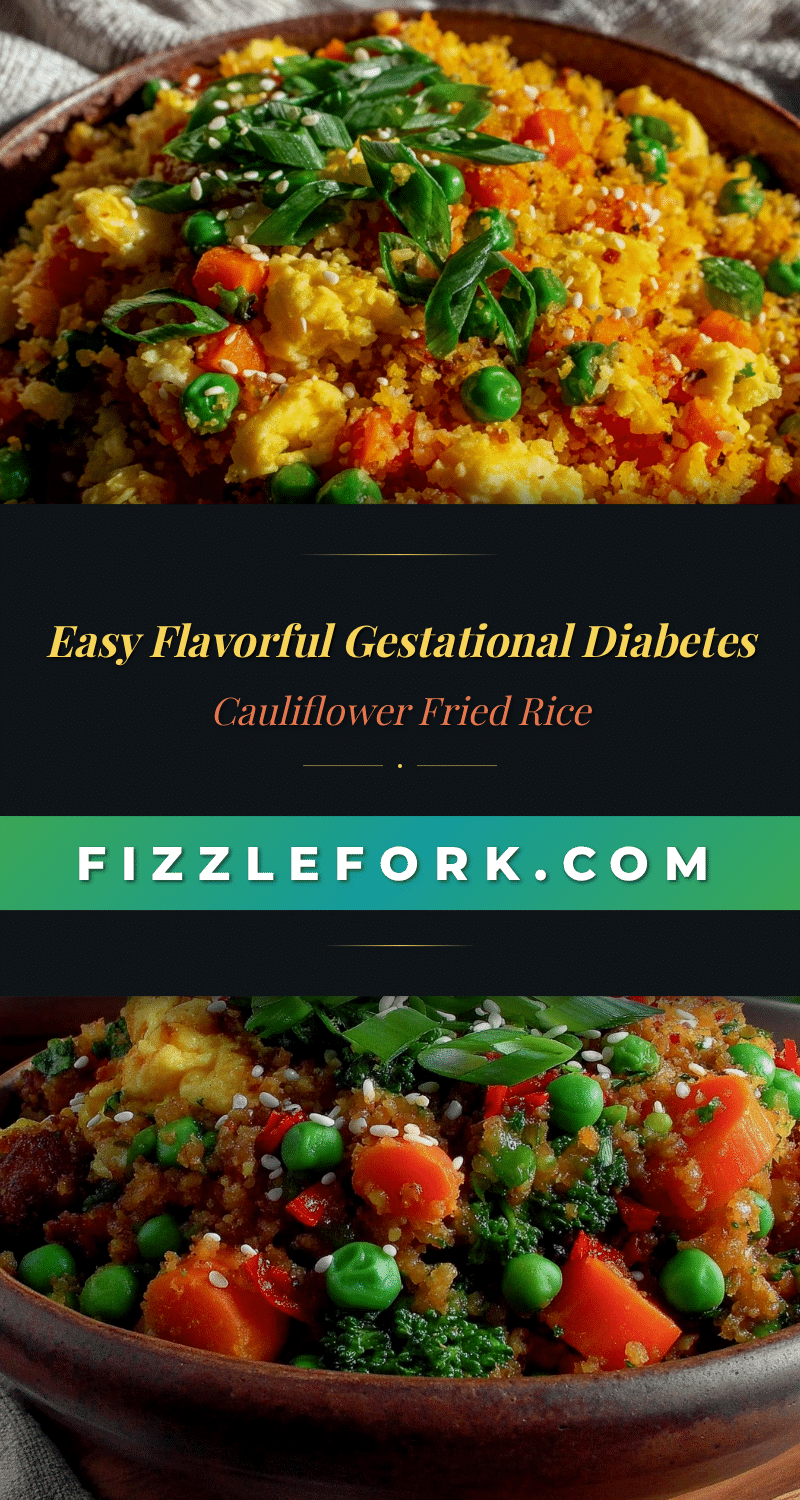
Flavorful Gestational Diabetes Friendly Cauliflower Fried Rice Bowl Recipe Made Easy

A flavorful, wholesome cauliflower fried rice bowl designed to be gestational diabetes friendly, low in carbs, and easy to prepare for busy weeknights.
- Prep Time: 10 minutes
- Cook Time: 15 minutes
- Total Time: 25 minutes
- Yield: 4 servings 1x
- Category: Main Course
- Cuisine: Asian-inspired
Ingredients
- 4 cups riced cauliflower (about 600g), fresh or frozen (thawed and drained)
- 1 cup diced carrots
- 1/2 cup peas (fresh or frozen)
- 1/2 cup diced bell peppers
- 2 large eggs, beaten
- 3 stalks green onions, sliced thinly
- 3 cloves garlic, minced
- 1 tablespoon fresh ginger, finely grated
- 2 tablespoons low-sodium soy sauce or tamari
- 1 teaspoon toasted sesame oil
- 1 tablespoon olive oil or avocado oil
- 1/2 cup cooked, diced chicken breast or shrimp (optional)
- Black pepper to taste
- Red pepper flakes (optional)
Instructions
- Dice the carrots and bell peppers into small, even pieces (about 1/4 inch). Slice green onions thinly, separating white and green parts. Mince garlic and grate fresh ginger.
- Heat a large non-stick skillet or wok over medium-high heat and add 1 tablespoon olive or avocado oil. Warm until shimmering but not smoking, about 1-2 minutes.
- Add minced garlic and ginger to the pan, stirring constantly for 30 seconds to 1 minute until fragrant, being careful not to burn.
- Add diced carrots and bell peppers; stir-fry for 3-4 minutes until they begin to soften but retain some crunch.
- Push veggies to the side of the pan. Pour beaten eggs into the cleared space and let sit for 20 seconds, then gently scramble until just set but still slightly glossy. Mix with the veggies.
- Add riced cauliflower to the pan with the cooked veggies and eggs. Stir to combine and cook for 5-6 minutes, stirring occasionally until tender but not mushy.
- Pour in 2 tablespoons low-sodium soy sauce and 1 teaspoon toasted sesame oil. Stir well to distribute evenly. Add black pepper to taste and red pepper flakes if using.
- Fold in peas and optional cooked protein (chicken or shrimp). Warm through for 2-3 minutes.
- Sprinkle sliced green parts of green onions on top and give one last gentle stir.
- Taste and adjust seasoning if needed. Remove from heat and serve immediately.
Notes
Avoid overcooking the cauliflower to keep a slight bite and prevent mushiness. Use low-sodium soy sauce to control salt levels. Squeeze out excess moisture from frozen cauliflower to avoid sogginess. For vegetarian version, omit meat and add extra veggies or tofu. Optionally add a dash of fish sauce or toasted sesame seeds for extra umami. Cook in batches if needed to get a slight char on cauliflower.
Nutrition
- Serving Size: 1 bowl (approximatel
- Calories: 220
- Sugar: 5
- Sodium: 450
- Fat: 10
- Saturated Fat: 1.5
- Carbohydrates: 18
- Fiber: 5
- Protein: 15
Keywords: cauliflower fried rice, gestational diabetes friendly, low carb, healthy dinner, easy recipe, gluten-free, diabetic meal, quick dinner