Let me tell you, the moment the warm aroma of miso and seaweed fills your kitchen, you know you’re in for something special. The scent alone is enough to make anyone’s mouth water, but add in the soft, silky tofu gently floating in a golden broth, and you’ve got pure comfort in a bowl. The first time I made this comforting miso soup with silky tofu, it was a chilly evening, and honestly, I was instantly hooked. It’s the kind of recipe where you pause, take a deep breath, and just smile because you know you’re onto something truly special.
Years ago, when I was knee-high to a grasshopper, my grandma used to make a version of this soup that always felt like a warm hug after a long day. I stumbled upon this homemade recipe during a rainy weekend experiment, trying to recreate that nostalgic taste without the fuss. My family couldn’t stop sneaking spoonfuls from the pot (and I can’t really blame them). It’s dangerously easy to make, yet it delivers pure, nostalgic comfort in every slurp.
You know what makes this miso soup recipe perfect? It’s not just for weeknight dinners. It’s fantastic for brightening up a cold morning, serving as a starter for a cozy dinner party, or even packing in a thermos for lunch. After testing this recipe multiple times in the name of research, of course, it’s become a staple for family gatherings and gifting. Honestly, it feels like a warm hug in a bowl, and you’re going to want to bookmark this one for all your comfort food moments.
Why You’ll Love This Recipe
This comforting miso soup with silky tofu isn’t just another soup. I’ve tested it over and over, tweaking the balance of flavors and textures to get it just right. Here’s why you’ll fall in love with it:
- Quick & Easy: Comes together in under 20 minutes, perfect for busy nights or when you want something soothing without the wait.
- Simple Ingredients: Most of what you need is probably already in your pantry — miso paste, tofu, seaweed, and a few basics.
- Perfect for Any Occasion: Whether you’re craving a light lunch, a starter for dinner, or a late-night snack, this soup hits the spot every time.
- Crowd-Pleaser: It’s gentle enough for picky eaters but satisfying enough for seasoned food lovers.
- Unbelievably Delicious: The silky texture of tofu combined with the umami-rich miso broth creates a comforting flavor that’s hard to beat.
What sets this recipe apart? The way I blend the miso paste ensures it dissolves smoothly, and the tofu is always soft but never crumbly. Plus, the addition of wakame seaweed adds a subtle ocean freshness that makes it feel authentic and special. This isn’t just good soup—it’s the kind of dish that makes you close your eyes after the first sip because it’s just that soothing. It’s comfort food reimagined—easy, approachable, but with all the soul-soothing satisfaction you crave.
What Ingredients You Will Need
This recipe uses simple, wholesome ingredients to deliver bold flavor and satisfying texture without the fuss. Most are pantry staples, and substitutions are easy if you need them.
- Miso paste (white or yellow): The heart of the soup, providing that rich umami flavor. I recommend using a good quality brand like Hikari for the best taste.
- Silky (soft) tofu: Adds creaminess and protein; look for fresh, firm tofu labeled “silken” or “soft.”
- Dashi stock or vegetable broth: The soup base. Traditional dashi is made from bonito flakes and kelp, but a good quality veggie broth works well too.
- Wakame seaweed (dried): Just a tablespoon rehydrated adds that authentic ocean flavor and texture.
- Green onions (scallions): Thinly sliced for a fresh, slightly sharp contrast.
- Soy sauce: Optional, for seasoning if you like a deeper salty note.
- Water: To adjust soup consistency.
Substitution tips: If you need gluten-free, check that your miso paste and soy sauce are certified gluten-free. For a vegan option, stick to vegetable broth and skip any fish-based dashi. In summer, fresh wakame or even spinach can be used instead of dried seaweed.
Equipment Needed
- Medium saucepan or pot: Big enough to hold about 4 cups (1 liter) of soup comfortably.
- Whisk or spoon: For dissolving miso paste evenly without clumps.
- Measuring cups and spoons: To get your broth and miso ratios just right.
- Knife and cutting board: For slicing green onions and cubing tofu.
If you don’t have a whisk, a fork works just fine for mixing miso paste. I’ve used both and found that a silicone whisk makes quick work of it and is easy to clean. For budget-friendly cooking, a simple saucepan and wooden spoon do the job perfectly.
Preparation Method
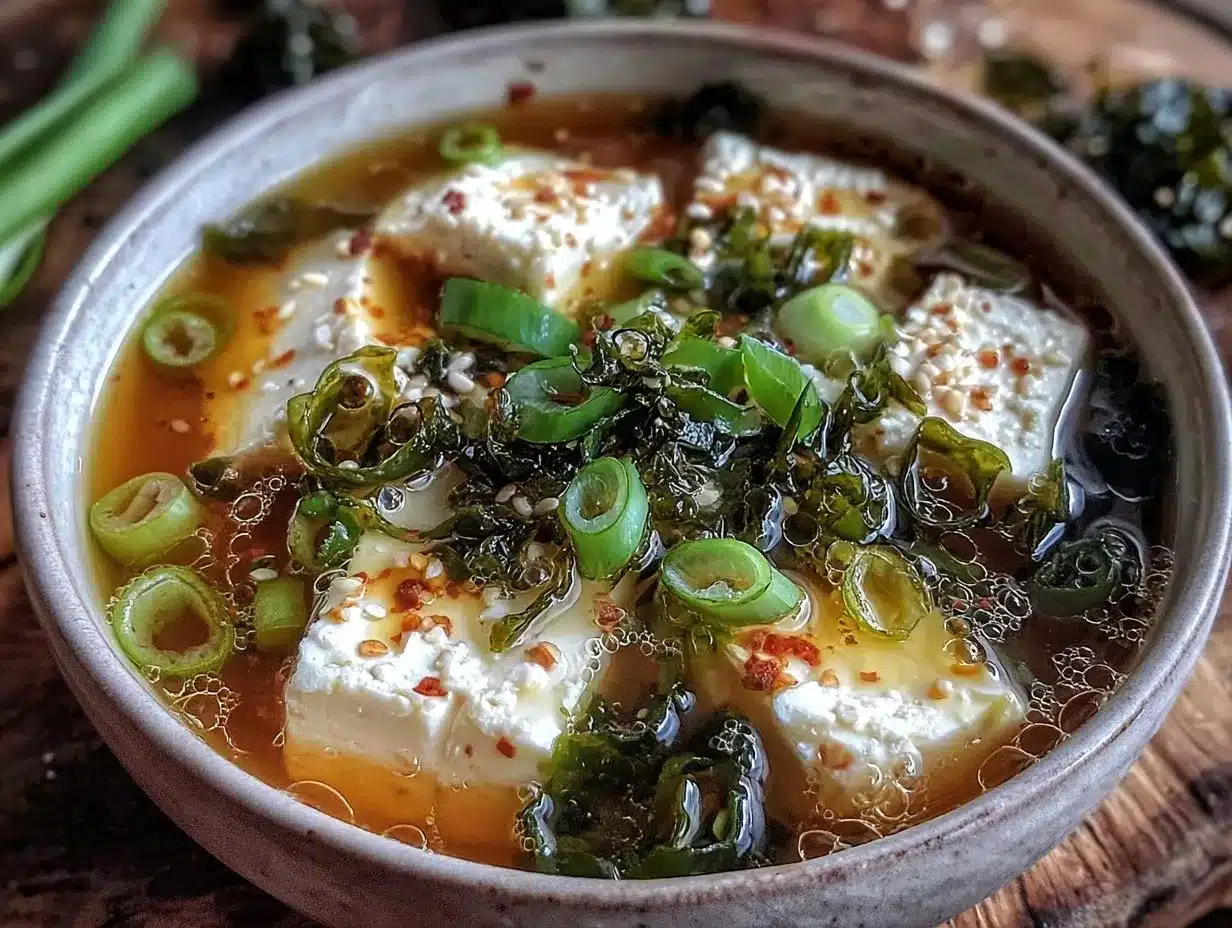
- Prepare the broth (5 minutes): In your saucepan, bring 3 cups (720 ml) of water and 1 cup (240 ml) of dashi stock or vegetable broth to a gentle simmer over medium heat. Watch closely so it doesn’t boil—boiling can dull the delicate flavors.
- Rehydrate the wakame (2 minutes): While the broth heats, place 1 tablespoon dried wakame seaweed in a small bowl with warm water. Let it soak until it expands and softens, about 2 minutes. Drain and chop roughly if pieces are large.
- Prep the tofu and green onions (3 minutes): Carefully cut the silken tofu into ½-inch (1.25 cm) cubes. Slice 2 green onions thinly, separating white and green parts.
- Dissolve the miso paste (3 minutes): Place 3 tablespoons of miso paste in a small bowl. Ladle about ½ cup (120 ml) hot broth into the bowl and whisk until the miso is fully dissolved and smooth. This step prevents clumps in your soup.
- Combine soup ingredients (5 minutes): Slowly stir the miso mixture back into the saucepan with the simmering broth. Add the cubed tofu, rehydrated wakame, and white parts of the green onions. Warm gently—do not boil. Simmer for 2-3 minutes until tofu is heated through and flavors meld.
- Final touches and serve (2 minutes): Taste and adjust seasoning with a splash of soy sauce if desired. Ladle soup into bowls and garnish with the green parts of the scallions. Serve immediately for best flavor and texture.
Pro tip: Keep the heat low after adding miso paste—boiling miso can make the soup bitter. The soup should smell fragrant and look clear with the tofu floating like little clouds.
Cooking Tips & Techniques
Here’s what I’ve learned making miso soup enough times to call myself a bit of a pro. First, the key is gentle heat. You want the soup warm enough to enjoy but never boiling once the miso is in. Boiling breaks down delicate flavors and can turn the soup bitter.
Another tip: dissolve the miso paste in a small bowl with hot broth before adding it to the pot. It’s a simple step, but it keeps your soup silky and smooth without any grainy bits. I’ve tried skipping this step, and honestly, it’s just not the same.
Don’t rush the wakame soaking! It only takes a couple of minutes to rehydrate but soaking too long can make it overly soft and mushy. I usually soak it just while heating the broth—perfect timing.
When handling silken tofu, be gentle. It’s fragile and can crumble easily. Use a sharp knife and steady hands to cube it neatly. Also, adding tofu last helps keep its soft texture intact.
Finally, multitask by prepping your green onions and soaking wakame while the broth heats. It’s a little trick that saves time and keeps the process smooth.
Variations & Adaptations
This comforting miso soup with silky tofu is flexible and easy to tweak depending on your mood or dietary needs.
- Protein Swap: Try adding cooked shrimp, shredded chicken, or even tempeh for a heartier soup.
- Vegetable Boost: Add thinly sliced mushrooms, shredded carrots, or baby spinach for extra nutrients and texture.
- Spice It Up: A few drops of chili oil or a sprinkle of red pepper flakes can add a welcome kick without overpowering the delicate flavors.
- Low-Sodium Option: Use low-sodium miso paste and broth, and skip the soy sauce to keep salt levels in check.
- Gluten-Free Version: Ensure your miso paste and soy sauce are certified gluten-free. Tamari works as a great substitute for soy sauce.
I once added a splash of freshly squeezed lime juice and some chopped cilantro for a fresh twist that surprised everyone at the table. Totally recommend trying it if you want something a little different!
Serving & Storage Suggestions
This miso soup is best served hot and fresh. Pour it into pretty bowls and garnish with green onions for a simple, elegant presentation. It pairs wonderfully with steamed rice, pickled vegetables, or a light salad for a balanced meal.
If you have leftovers, store the soup (without tofu) in an airtight container in the fridge for up to 2 days. Add fresh tofu cubes and reheat gently on the stove before serving—microwaving might make the tofu rubbery.
The flavors tend to deepen overnight, so if you can wait, letting it rest for a few hours enhances the umami. Just remember not to boil when reheating to keep everything silky and smooth.
Nutritional Information & Benefits
One serving of this comforting miso soup with silky tofu is approximately 90 calories, low in fat, and packed with protein from the tofu. Miso paste provides probiotics, which are great for gut health, while wakame seaweed offers iodine and essential minerals.
This soup is naturally gluten-free (when made with gluten-free miso), low-carb, and vegan-friendly if you use vegetable broth. It’s a light yet satisfying option that supports digestion and keeps you feeling cozy and nourished.
From a wellness perspective, I appreciate that this soup fills you up without heaviness and delivers a gentle boost of nutrients. It’s become my go-to when I want something healing and comforting after a busy day.
Conclusion
Comforting miso soup with silky tofu is one of those recipes that feels like a secret weapon in the kitchen—simple, fast, and incredibly satisfying. Whether you’re a beginner or a seasoned cook, it’s a dish that you can customize easily and rely on for a quick, wholesome meal.
I love this recipe because it reminds me of family dinners and cozy nights, yet it’s flexible enough to fit into any lifestyle or occasion. I encourage you to make it your own—add your favorite veggies, adjust the seasoning, or try those little twists I mentioned earlier.
Please share how you make it your own or any fun variations you come up with! Drop a comment below or share this comforting miso soup with silky tofu with friends who need a little kitchen magic. Trust me, you’re going to want to keep this one in your recipe collection.
FAQs About Comforting Miso Soup with Silky Tofu
Can I use firm tofu instead of silken tofu?
Yes, you can! Firm tofu will hold its shape better and add a slightly different texture, but silken tofu gives the soup its signature silky mouthfeel.
Is miso soup gluten-free?
Traditional miso paste can contain barley or wheat, so check the label or look for gluten-free miso. Also, use gluten-free soy sauce or tamari if adding soy sauce.
How long can I store leftover miso soup?
Store leftover soup without tofu in the fridge for up to 2 days. Add fresh tofu when reheating for best texture and flavor.
Can I make miso soup without dashi?
Absolutely! Vegetable broth works well as a substitute. The flavor will be milder but still delicious, especially with good quality miso paste.
Should I boil the soup after adding miso paste?
No, avoid boiling once miso paste is added. Gentle warming keeps the flavors bright and prevents bitterness.
Pin This Recipe!
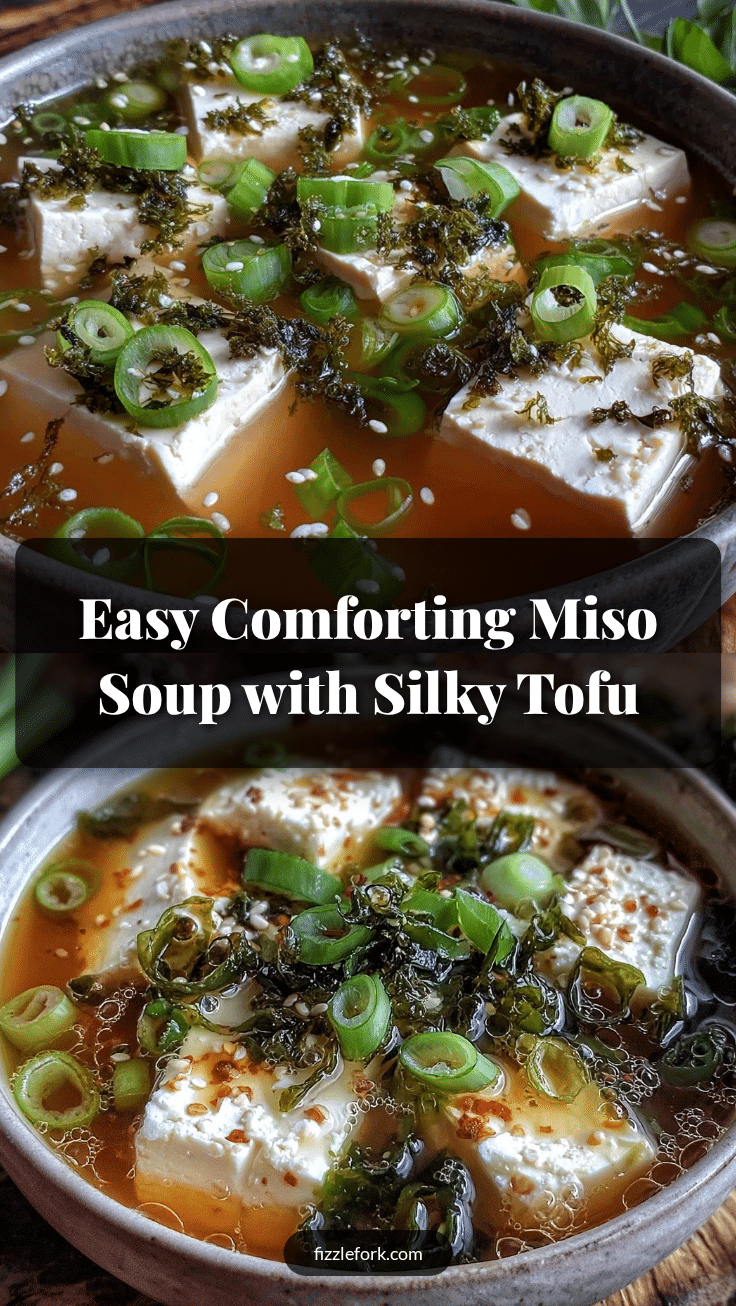
Comforting Miso Soup with Silky Tofu

A quick and easy homemade miso soup featuring silky tofu and wakame seaweed, perfect for comforting meals any time of day.
- Prep Time: 10 minutes
- Cook Time: 10 minutes
- Total Time: 20 minutes
- Yield: 4 servings 1x
- Category: Soup
- Cuisine: Japanese
Ingredients
- 3 tablespoons miso paste (white or yellow)
- 1/2 block silken (soft) tofu, cut into 1/2-inch cubes
- 1 cup dashi stock or vegetable broth
- 3 cups water
- 1 tablespoon dried wakame seaweed
- 2 green onions (scallions), thinly sliced
- Soy sauce (optional, for seasoning)
Instructions
- In a medium saucepan, bring 3 cups of water and 1 cup of dashi stock or vegetable broth to a gentle simmer over medium heat. Avoid boiling.
- Place 1 tablespoon dried wakame seaweed in a small bowl with warm water and soak for about 2 minutes until rehydrated. Drain and chop if pieces are large.
- Carefully cut silken tofu into 1/2-inch cubes. Thinly slice 2 green onions, separating white and green parts.
- Place 3 tablespoons miso paste in a small bowl. Ladle about 1/2 cup hot broth into the bowl and whisk until miso is fully dissolved and smooth.
- Slowly stir the miso mixture back into the saucepan with the simmering broth. Add cubed tofu, rehydrated wakame, and the white parts of the green onions. Warm gently without boiling and simmer for 2-3 minutes.
- Taste and adjust seasoning with a splash of soy sauce if desired. Ladle soup into bowls and garnish with the green parts of the scallions. Serve immediately.
Notes
Keep heat low after adding miso paste to avoid bitterness. Dissolve miso paste in hot broth before adding to the pot to prevent clumps. Handle silken tofu gently to avoid crumbling. Soak wakame just until rehydrated to maintain texture. Store leftover soup without tofu in fridge up to 2 days; add fresh tofu when reheating.
Nutrition
- Serving Size: 1 cup (about 8 fl oz
- Calories: 90
- Sugar: 1
- Sodium: 600
- Fat: 2
- Saturated Fat: 0.3
- Carbohydrates: 6
- Fiber: 1
- Protein: 7
Keywords: miso soup, tofu soup, Japanese soup, easy miso soup, silken tofu, wakame, comfort food, quick soup