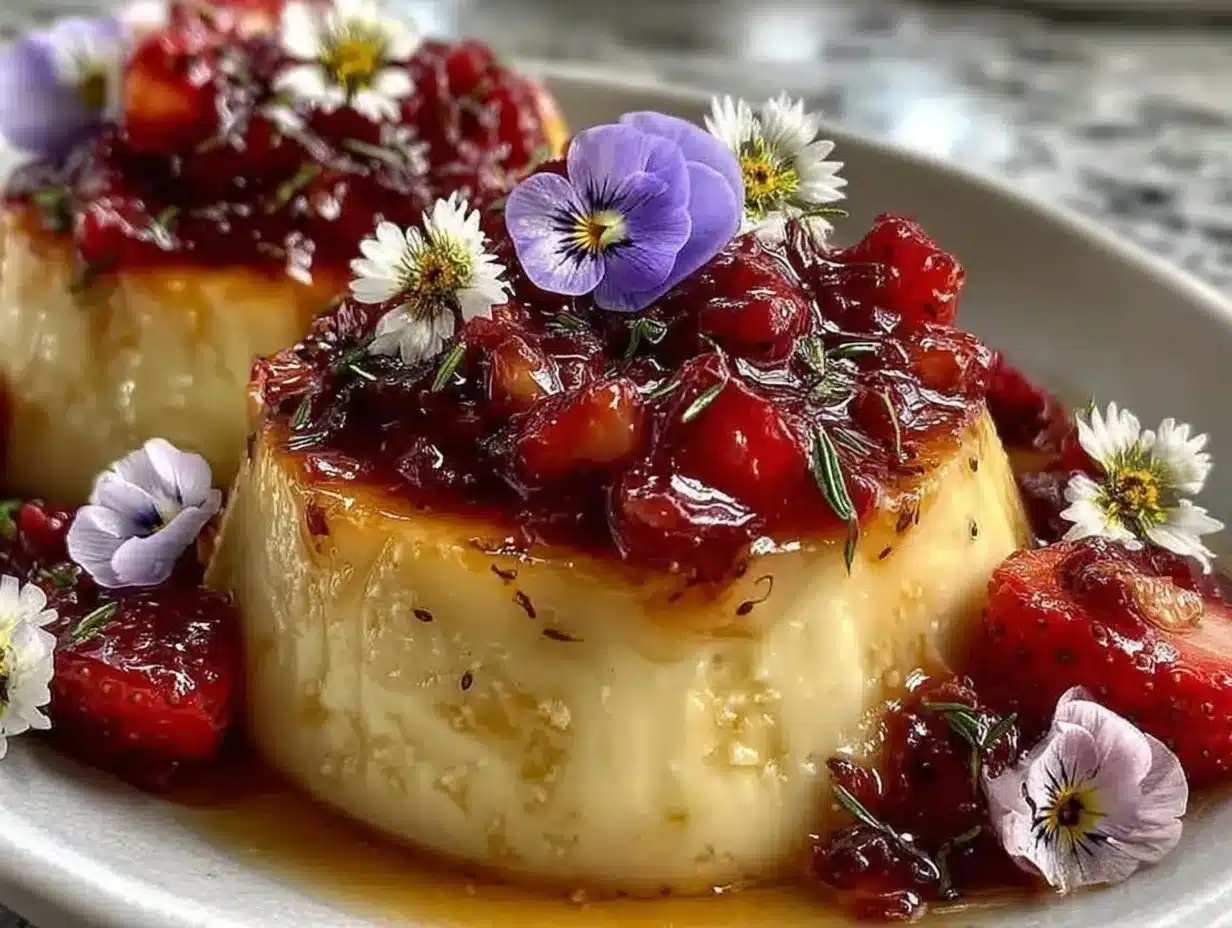
“You really have to try this panna cotta,” my friend whispered over a crowded café table, sliding me a tiny glass rimmed with delicate edible flowers. The creamy dessert was topped with a jewel-toned strawberry rose compote that smelled like a garden in full bloom. Honestly, I was skeptical at first—panna cotta always sounded a bit intimidating, something reserved for fancy restaurants or weekend projects that eat up hours in the kitchen.
But as I tasted it, the silky smoothness and the fragrant floral notes gently wrapped around the sweetness of the strawberries, and I realized this wasn’t just a dessert — it was a quiet kind of magic. That moment turned me into a regular panna cotta maker, whipping it up multiple times a week, especially when I wanted to impress guests without the fuss. The edible flowers are more than decoration; they’re a subtle detail that turns this simple dessert into something truly elegant.
What stuck with me was how approachable the recipe felt, even while looking stunning on the plate. It’s the kind of dessert that feels special without being complicated — a gentle reminder that sometimes the simplest things, when done right, make the biggest impact. This panna cotta with strawberry rose compote became my go-to when I needed something both beautiful and delicious, yet totally doable on a regular weekday or for a quiet celebration.
Why You’ll Love This Recipe
From my many trials in the kitchen, I can say this Elegant Panna Cotta with Strawberry Rose Compote and Edible Flowers truly stands apart. It strikes the perfect balance between sophistication and simplicity, and here’s why it might just become your new favorite:
- Quick & Easy: Ready in under 30 minutes of hands-on time, it’s perfect for those busy nights when you want to serve something impressive without the hassle.
- Simple Ingredients: No need for fancy or hard-to-find items — most are pantry staples or easy fresh finds, like fresh strawberries and rose water.
- Perfect for Special Occasions: Whether it’s a romantic dinner, bridal shower, or a refined brunch, this dessert fits right in with its delicate flavors and presentation.
- Crowd-Pleaser: The creamy texture combined with the bright compote appeals to both kids and adults alike, making it a versatile choice.
- Unbelievably Delicious: The subtle floral aroma from rose water paired with fresh strawberry sweetness is a flavor combo that surprises and delights.
What really makes this panna cotta unique is the little twist of rose water in the compote — not overpowering, just a whisper that lifts the strawberries and adds an unexpected dimension. Plus, the edible flowers aren’t just pretty; they bring a fresh, herbaceous note that complements the creamy base. This isn’t just another panna cotta recipe — it’s my best version, tested and refined to feel both indulgent and light.
Give it a try, and you’ll see why it’s one of those dishes that makes people pause and savor the moment.
What Ingredients You Will Need
This recipe uses simple, wholesome ingredients to deliver bold flavor and a satisfying texture without fuss. Most of these are easy to find in your regular grocery run or at a local market.
- For the Panna Cotta Base:
- Heavy cream – 2 cups (480 ml) (I prefer Organic Valley for creaminess)
- Whole milk – 1 cup (240 ml) (helps lighten the texture)
- Granulated sugar – ½ cup (100 g)
- Gelatin powder – 2 ½ teaspoons (about 7 g) (use Knox brand for reliable setting)
- Vanilla bean paste – 1 teaspoon (or 1 vanilla bean scraped; adds deep flavor)
- Salt – a pinch (balances sweetness)
- For the Strawberry Rose Compote:
- Fresh strawberries – 2 cups, hulled and halved (about 300 g) (in summer, swap with fresh berries)
- Granulated sugar – ¼ cup (50 g)
- Fresh lemon juice – 1 tablespoon (for brightness)
- Rose water – 1 teaspoon (use a quality brand like Cortas for best aroma)
- For Garnish:
- Edible flowers – a handful (pansies, violas, or nasturtiums work beautifully)
- Fresh mint leaves – optional, for extra freshness
Substitution tips: If you want a lighter or dairy-free version, swap heavy cream for full-fat coconut milk and whole milk for almond milk, though the texture will be slightly different. For a vegan gelatin substitute, agar-agar powder can be used but requires careful temperature control. If rose water is not your thing, a few drops of orange blossom water can make a lovely alternative.
Equipment Needed
- Medium saucepan – for heating cream and milk
- Mixing bowls – at least two, one for gelatin blooming, one for compote
- Whisk – to blend ingredients smoothly
- Measuring cups and spoons – for precise measurements
- Small heatproof ramekins or glasses – for setting the panna cotta (4 to 6 oz / 120 to 180 ml size works well)
- Fine mesh strainer – optional, to remove vanilla bean bits or seeds from the compote
- Refrigerator space – for chilling the panna cotta overnight or at least 4 hours
If you don’t have ramekins, small clear glasses or even jars work just as well and add a rustic charm. For whisking, a balloon whisk is my favorite for its ability to blend without incorporating too much air, which keeps the panna cotta silky. This is a fairly low-tech recipe, so no fancy tools are required — making it ideal even for beginner cooks.
Preparation Method
- Bloom the Gelatin: Sprinkle 2 ½ teaspoons of gelatin powder over ¼ cup (60 ml) of cold whole milk in a small bowl. Let it sit for 5 to 10 minutes until it absorbs the liquid and becomes spongy. This step is crucial for a smooth, set panna cotta.
- Heat Cream and Milk: In a medium saucepan, combine 2 cups (480 ml) heavy cream, ¾ cup (180 ml) whole milk (the rest reserved for gelatin), ½ cup (100 g) sugar, 1 teaspoon vanilla bean paste, and a pinch of salt. Warm over medium heat, stirring often, until sugar dissolves and mixture is hot but not boiling (around 170°F / 77°C). Remove from heat immediately.
- Add Gelatin: Stir the bloomed gelatin into the hot cream mixture until fully dissolved. This should take about 1-2 minutes. If gelatin isn’t fully incorporated, the panna cotta may not set properly.
- Strain and Pour: For extra smoothness, strain the mixture through a fine mesh sieve to remove vanilla bean bits or any lumps. Pour the mixture evenly into 4 to 6 prepared ramekins or glasses. Let cool slightly at room temperature (15 minutes).
- Chill: Cover with plastic wrap and refrigerate for at least 4 hours or overnight. The panna cotta should be firm to the touch but still silky.
- Make the Strawberry Rose Compote: While panna cotta chills, combine 2 cups (300 g) halved strawberries, ¼ cup (50 g) sugar, and 1 tablespoon lemon juice in a small saucepan. Cook over medium heat for 8-10 minutes, stirring occasionally, until berries break down and sauce thickens slightly.
- Finish Compote: Remove from heat and stir in 1 teaspoon rose water. Let cool to room temperature, then chill until ready to serve.
- Assemble and Garnish: When ready to serve, spoon a generous layer of strawberry rose compote atop each panna cotta. Garnish with edible flowers and fresh mint leaves for a delicate, stunning presentation.
Tip: To unmold panna cotta, briefly dip ramekins in warm water and invert onto plates. But honestly, serving in pretty glasses like I do saves a step and looks just as elegant.
Cooking Tips & Techniques
Making panna cotta is easier than it looks, but a few tricks help ensure success every time:
- Gelatin Blooming: Don’t skip this or add gelatin directly to hot liquid. Blooming allows gelatin to absorb moisture and prevents clumps.
- Temperature Control: Heat cream mixture gently — avoid boiling which can break down gelatin’s setting power and cause graininess.
- Straining: Passing the mixture through a fine sieve ensures a silky texture free of vanilla pod bits or any lumps.
- Patience in Chilling: Panna cotta needs time to set properly. Overnight chilling is ideal, but 4 hours minimum works.
- Compote Consistency: Cook the strawberries just until they soften but still hold some texture — it adds depth and freshness, rather than a flat jammy flavor.
I once rushed the gelatin step and ended up with a panna cotta that was more pudding than set dessert — lesson learned! Also, if you want to save time, the compote can be made days ahead and refrigerated, which helps flavors meld nicely. If you like a richer vanilla note, try swapping vanilla bean paste for a split vanilla bean pod infused in the cream while heating.
Variations & Adaptations
This panna cotta recipe is surprisingly versatile and can be tweaked to suit different tastes or dietary needs:
- Vegan Version: Use coconut cream instead of heavy cream and agar-agar powder as a gelatin alternative. The texture will be slightly different but still creamy and delicious.
- Flavor Variations: Swap rose water in the compote with orange blossom water or a splash of balsamic vinegar for a tangy twist. You can also infuse the cream with lavender buds for a floral hint.
- Seasonal Fruit Compote: In fall, try pear and cinnamon compote; in winter, use blood oranges and pomegranate seeds for a festive touch.
- Low-Sugar Option: Reduce sugar in the panna cotta and compote and sweeten with honey or maple syrup instead for a more natural sweetness.
- Personal Favorite: I once added a handful of crushed pistachios on top for a delightful crunch and nutty contrast that surprised everyone.
For a fun twist, try layering the panna cotta with a thin strawberry jelly layer—just prepare a basic fruit gelée and pour gently before the panna cotta fully sets.
Serving & Storage Suggestions
Serve panna cotta chilled straight from the fridge for the best texture. The strawberry rose compote should be cool but not icy—room temperature compote lets the flavors shine.
Presentation matters here: use clear glasses or pretty ramekins to show off the creamy base and jewel-like compote topping. Garnish with freshly picked edible flowers and a sprig of mint for a garden-fresh vibe that wows every time.
This dessert pairs beautifully with a light Moscato or a cup of fragrant chamomile tea. If you’re assembling a multi-course meal, panna cotta is a perfect light finish after something rich like a creamy keto crack chicken or a comforting cheesy tater tot casserole.
Store leftover panna cotta covered in the fridge for up to 3 days. The flavors actually deepen with time, though the edible flowers are best added fresh at serving. Reheat compote gently on the stove or microwave before serving if chilled too long.
Nutritional Information & Benefits
Each serving of this Elegant Panna Cotta with Strawberry Rose Compote (about 1 ramekin) contains approximately:
| Calories | 250-280 |
|---|---|
| Fat | 18g (mostly from heavy cream) |
| Carbohydrates | 18g (natural sugars from strawberries and added sugar) |
| Protein | 4g |
| Sugar | 14g |
This dessert offers a good dose of calcium and healthy fats from dairy. Strawberries add antioxidants and vitamin C, while rose water, though used sparingly, is known for mild digestive and mood-enhancing properties. For those watching carbs, you can cut down sugar or substitute sweeteners to fit a low-carb plan.
People with gelatin allergies should avoid this recipe or try the agar-agar alternative. The edible flowers, if sourced correctly, are safe and add a touch of nature’s wellness.
Conclusion
This Elegant Panna Cotta with Strawberry Rose Compote and Edible Flowers is a dessert that feels both special and effortless—exactly the kind of recipe I reach for when I want to impress without stress. Its silky texture, fragrant notes, and pretty presentation make it a memorable finale to any meal. Plus, it invites customization, whether you want to add your favorite flavors or adapt it for dietary needs.
I love how it brings a little luxury into everyday life without demanding a lot of time or complicated skills. If you decide to try it, I’d love to hear how you made it your own or what edible flowers you used!
There’s something quietly joyful about sharing a dessert that looks this good and tastes even better.
Frequently Asked Questions
Can I make panna cotta ahead of time?
Yes! Panna cotta actually benefits from chilling overnight to fully set and develop flavor. Just keep it covered in the fridge until ready to serve.
What if I don’t have rose water?
You can substitute rose water with orange blossom water for a similar floral note or simply omit it and add a little extra vanilla or lemon zest instead.
How do I store leftover panna cotta?
Keep leftovers covered tightly in the refrigerator for up to 3 days. Add fresh compote and edible flowers just before serving for best results.
Can I use fresh gelatin sheets instead of powder?
Yes, substitute about 3 sheets (6 grams) of gelatin soaked in cold water for 2 ½ teaspoons of gelatin powder. Be sure to squeeze out excess water before adding to the hot cream mixture.
Are edible flowers safe to eat?
Only use flowers specifically labeled as edible and sourced from a trusted supplier. Common edible flowers like pansies, violets, and nasturtiums are great choices.
Pin This Recipe!
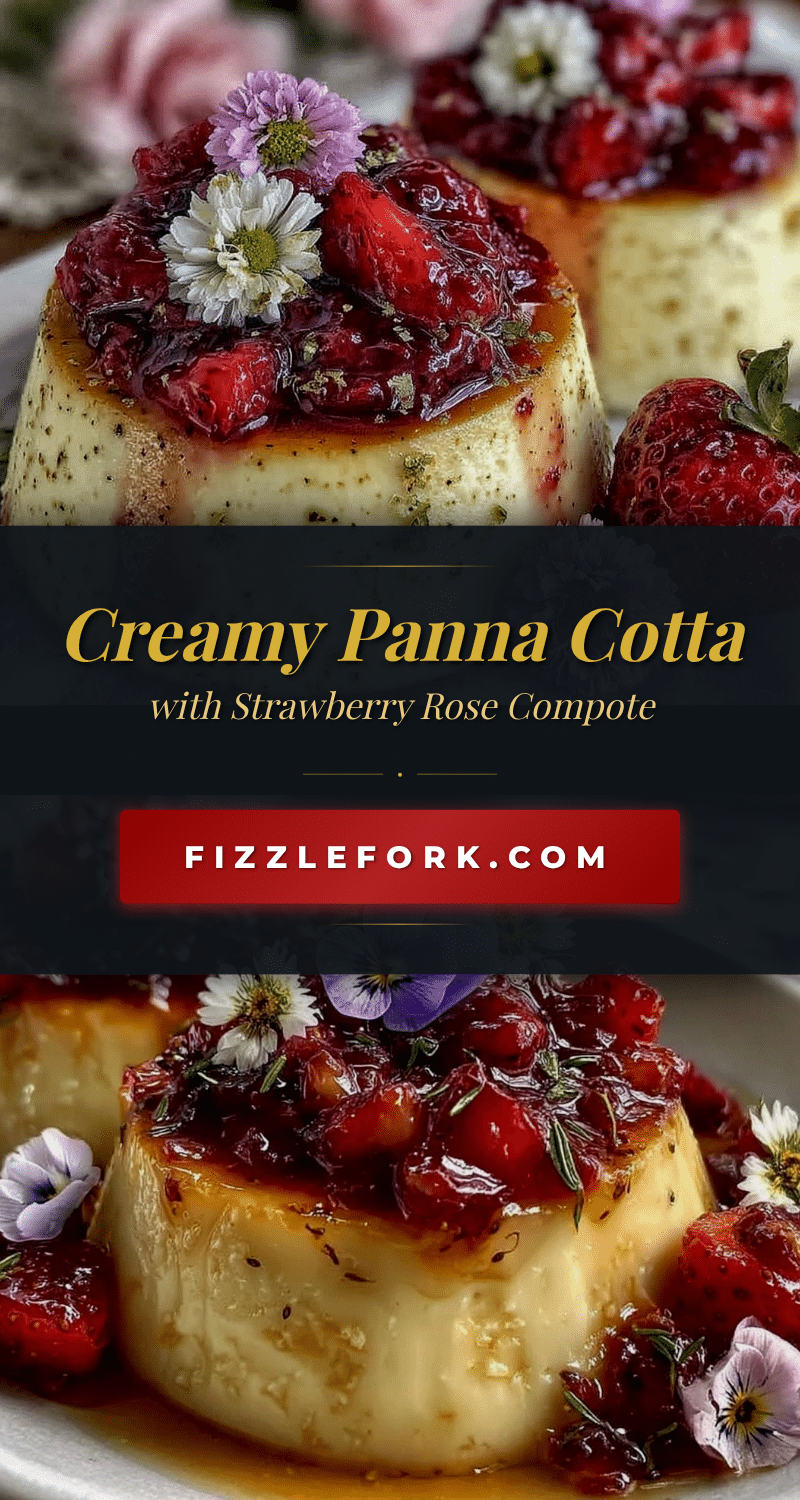
Elegant Panna Cotta Recipe with Strawberry Rose Compote
A silky smooth panna cotta topped with a fragrant strawberry rose compote and garnished with edible flowers, perfect for special occasions or an elegant everyday dessert.
- Prep Time: 15 minutes
- Cook Time: 10 minutes
- Total Time: 4 hours 25 minutes
- Yield: 4 servings 1x
- Category: Dessert
- Cuisine: Italian
Ingredients
- 2 cups (480 ml) heavy cream
- 1 cup (240 ml) whole milk
- ½ cup (100 g) granulated sugar
- 2 ½ teaspoons (about 7 g) gelatin powder
- 1 teaspoon vanilla bean paste (or 1 vanilla bean scraped)
- Pinch of salt
- 2 cups (300 g) fresh strawberries, hulled and halved
- ¼ cup (50 g) granulated sugar
- 1 tablespoon fresh lemon juice
- 1 teaspoon rose water
- Handful of edible flowers (pansies, violas, or nasturtiums)
- Fresh mint leaves (optional)
Instructions
- Bloom the gelatin by sprinkling 2 ½ teaspoons over ¼ cup (60 ml) cold whole milk in a small bowl. Let sit for 5 to 10 minutes until spongy.
- In a medium saucepan, combine 2 cups heavy cream, ¾ cup whole milk, ½ cup sugar, 1 teaspoon vanilla bean paste, and a pinch of salt. Heat over medium, stirring until sugar dissolves and mixture is hot but not boiling (around 170°F / 77°C). Remove from heat.
- Stir the bloomed gelatin into the hot cream mixture until fully dissolved, about 1-2 minutes.
- Strain the mixture through a fine mesh sieve to remove vanilla bean bits or lumps. Pour evenly into 4 to 6 ramekins or glasses. Let cool at room temperature for 15 minutes.
- Cover with plastic wrap and refrigerate for at least 4 hours or overnight until firm but silky.
- To make the compote, combine 2 cups halved strawberries, ¼ cup sugar, and 1 tablespoon lemon juice in a small saucepan. Cook over medium heat for 8-10 minutes, stirring occasionally, until berries soften and sauce thickens slightly.
- Remove from heat and stir in 1 teaspoon rose water. Let cool to room temperature, then chill until serving.
- To serve, spoon a generous layer of strawberry rose compote atop each panna cotta. Garnish with edible flowers and fresh mint leaves.
Notes
Bloom gelatin properly to avoid clumps. Heat cream mixture gently without boiling to preserve gelatin setting power. Strain mixture for silky texture. Chill panna cotta at least 4 hours or overnight for best results. Compote can be made ahead and refrigerated. For vegan version, substitute coconut cream and agar-agar powder.
Nutrition
- Serving Size: 1 ramekin (about 4 t
- Calories: 265
- Sugar: 14
- Fat: 18
- Carbohydrates: 18
- Protein: 4
Keywords: panna cotta, strawberry rose compote, edible flowers, elegant dessert, easy panna cotta, creamy dessert, floral dessert