Let me tell you, the sizzling sound of rice noodles hitting a hot wok, mingled with the tangy aroma of tamarind and the crunch of fresh peanuts, is enough to make anyone’s mouth water. The first time I made this flavorful authentic Pad Thai recipe, I was instantly hooked—honestly, it was one of those rare moments where you pause, take a deep breath, and just smile because you know you’re onto something truly special. This dish brings together the perfect balance of sweet, sour, salty, and a hint of spice that just dances on your tongue.
Years ago, when I was knee-high to a grasshopper, my grandma used to make a version of Pad Thai whenever we had family gatherings. But it wasn’t until recently, after a rainy weekend and a desperate craving for vibrant street food flavors, that I finally tried to recreate a classic Thai noodles recipe from scratch. My family couldn’t stop sneaking servings off the pan (and I can’t really blame them). This flavorful authentic Pad Thai recipe has since become a staple for potlucks, quick dinners, and those moments when you want a meal that feels like a warm hug.
You know what? This recipe is dangerously easy to whip up at home, with ingredients you can find at most grocery stores or Asian markets. It’s perfect for brightening up your weeknight dinner routine or impressing friends without breaking a sweat. After testing it a handful of times in the name of research, of course, I’m confident you’re going to want to bookmark this one.
Why You’ll Love This Recipe
If you’re on the lookout for a reliable, delicious Pad Thai recipe that brings authentic Thai flavors right into your kitchen, this one is a winner. From my kitchen trials to family taste tests, here’s why this recipe stands out:
- Quick & Easy: Comes together in under 30 minutes, perfect for busy weeknights or last-minute cravings.
- Simple Ingredients: No fancy grocery trips needed; you likely already have everything or can find it easily.
- Perfect for Any Occasion: Great for casual dinners, potlucks, or even a cozy date night at home.
- Crowd-Pleaser: Always gets rave reviews from kids and adults alike—trust me, even my picky eaters ask for seconds.
- Unbelievably Delicious: The texture combo of chewy noodles, crunchy peanuts, and tender shrimp or tofu is next-level comfort food.
This isn’t just another Pad Thai recipe with a quick-fix sauce. The tamarind paste and fish sauce balance perfectly together, giving it that authentic tangy punch you crave. Plus, the method of soaking rice noodles just right ensures they’re soft but still have a bit of bite (no mushy mess here). Honestly, this recipe feels like comfort food reimagined—fast, flavorful, and totally satisfying.
Whether you want to impress guests or just treat yourself on a weeknight, this Pad Thai recipe brings that classic Thai street food vibe without the hassle.
What Ingredients You Will Need
This flavorful authentic Pad Thai recipe uses simple, wholesome ingredients to deliver bold flavor and satisfying texture without the fuss. Most are pantry staples or easy to find at your local market or Asian grocery store.
- Rice noodles: Thin flat rice noodles (about 8 oz/225 g), soaked until pliable but not mushy.
- Protein: Shrimp (peeled and deveined, about 10 oz/300 g) or firm tofu (pressed and cubed) for a vegetarian option.
- Eggs: 2 large, beaten (adds richness and helps bind).
- Tamarind paste: 2 tablespoons (gives that signature tangy flavor; look for a good-quality brand like Mae Ploy).
- Fish sauce: 3 tablespoons (adds salty umami; substitute soy sauce for vegetarian).
- Palm sugar: 1 tablespoon (or brown sugar, to balance sourness).
- Garlic: 2 cloves, minced (for that punch of aroma).
- Shallots: 1 small, thinly sliced (optional but adds depth).
- Bean sprouts: 1 cup, rinsed and drained (fresh crunch).
- Green onions: 2 stalks, chopped.
- Crushed roasted peanuts: ½ cup (for topping and crunch).
- Fresh lime wedges: For serving.
- Red chili flakes: To taste (for a touch of heat).
- Vegetable oil: 2 tablespoons (for stir-frying).
For the freshest flavor, I always recommend using fresh tamarind paste rather than bottled sauces. If you’re feeling adventurous, adding a splash of rice vinegar can brighten things up even more. For the peanuts, roasted and lightly salted ones work best—avoid raw or overly oily varieties. And hey, if you can grab some fresh cilantro, it’s a lovely garnish to finish this dish off.
Equipment Needed
- Wok or large non-stick skillet: A wok is ideal for that authentic stir-fry feel and even heat distribution, but a large skillet works just fine if you don’t have one.
- Bowl: For soaking the rice noodles.
- Spatula or wooden spoon: For stirring and tossing ingredients.
- Measuring spoons and cups: To get those tamarind paste and fish sauce amounts just right.
- Knife and cutting board: For prepping garlic, shallots, and green onions.
If you don’t own a wok, no worries! A heavy-bottomed skillet will do the trick. I personally like a carbon steel wok since it heats fast and cooks evenly. Just remember to keep your heat high and your ingredients moving to avoid sticking. If you’re tight on budget, a trusty non-stick pan works wonders and is easy to clean up afterward.
Preparation Method
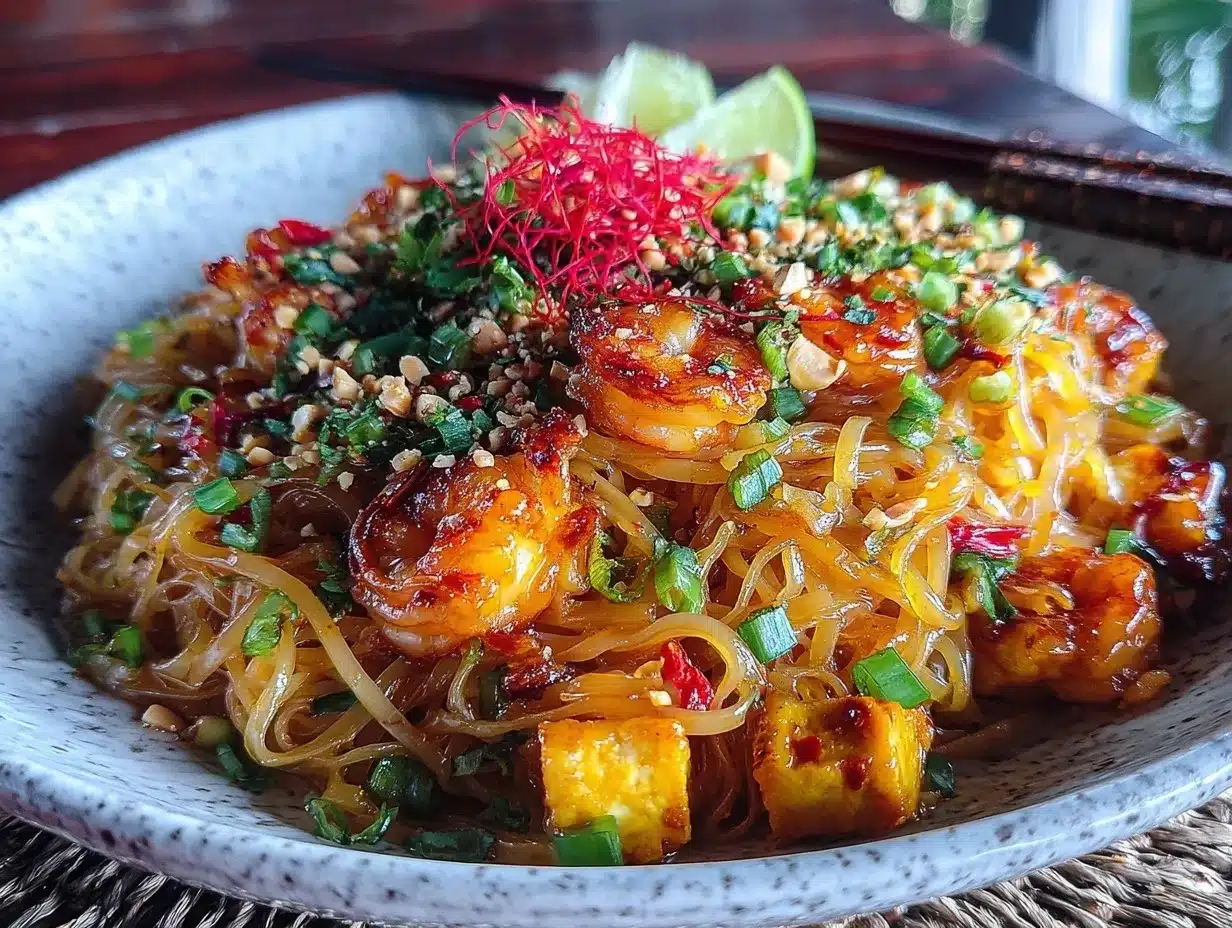
- Soak the rice noodles: Place 8 oz (225 g) rice noodles in a large bowl and cover with warm water (not boiling). Let them soak for about 20-25 minutes until they’re flexible but still slightly firm. Drain and set aside. (Watch out for over-soaking; noodles should have a bit of bite.)
- Prepare the sauce: In a small bowl, mix 2 tablespoons tamarind paste, 3 tablespoons fish sauce, and 1 tablespoon palm sugar. Stir until sugar dissolves. Taste and adjust for balance—should be tangy, salty, and slightly sweet.
- Heat the wok: Add 2 tablespoons vegetable oil over medium-high heat. When hot (you’ll see a slight shimmer), add minced garlic and sliced shallots, stir-frying until fragrant (about 30 seconds).
- Add protein: Toss in shrimp or tofu cubes, cooking for 2-3 minutes until shrimp turn pink or tofu develops a light golden crust.
- Push ingredients aside: Create a space in the center of the wok and pour in the beaten eggs (2 large). Let them cook briefly, then scramble gently and combine with the other ingredients.
- Add noodles and sauce: Toss in the drained noodles and pour over the prepared sauce. Stir-fry everything together for 2-3 minutes, making sure noodles are well coated and heated through.
- Finish with fresh ingredients: Add 1 cup bean sprouts and 2 chopped green onions. Toss lightly to combine—don’t overcook the sprouts; they should stay crisp.
- Serve: Transfer to plates, sprinkle generously with crushed roasted peanuts and red chili flakes to taste. Don’t forget the lime wedges on the side—squeezing fresh lime juice right before eating is a game-changer!
Pro tip: Stir constantly to keep everything moving and avoid sticking or burning. If your noodles start to clump, splash a tiny bit of warm water to loosen them up. This method keeps your Pad Thai looking restaurant-quality and tasting fresh.
Cooking Tips & Techniques
Let’s face it, Pad Thai can be intimidating with all its layers of flavor, but with a few tricks, you’ll nail it every time. First, don’t skip soaking the noodles properly—too soft or too hard ruins the texture. I learned that the hard way on my first try when my noodles turned mushy mess.
Next, keep your wok or pan screaming hot. The high heat seals in flavors and helps develop that slight char which gives Pad Thai its character. If your pan isn’t hot enough, the dish ends up soggy and bland.
When scrambling eggs, push the other ingredients aside rather than mixing them in right away. This helps the eggs cook evenly and gives you those little fluffy bits that add texture.
One of my favorite hacks: have all ingredients prepped and ready to go before heating the pan. Pad Thai cooks fast, so multitasking here is key.
Lastly, don’t forget the garnishes! Fresh lime juice, crunchy peanuts, and chili flakes bring the dish alive and personalize the heat level.
Variations & Adaptations
This flavorful authentic Pad Thai recipe is pretty flexible, making it easy to tweak for your preferences or dietary needs.
- Vegetarian/Vegan: Swap fish sauce for soy sauce or tamari, and use tofu or tempeh instead of shrimp. Add extra veggies like bell peppers or snap peas for more crunch.
- Gluten-Free: Use certified gluten-free rice noodles and tamari sauce instead of soy or fish sauce. Most traditional Pad Thai ingredients are naturally gluten-free, so this is a breeze.
- Spicy Kick: Add fresh Thai bird’s eye chilies or a spoonful of chili garlic sauce to the sauce mix for more heat. I once tried this with double the chili and it turned into a fiery feast!
- Protein Swap: Try chicken, pork, or even thinly sliced beef instead of shrimp. Cooking times will vary slightly, so adjust accordingly.
- Cooking Method: If you don’t have a wok, a cast-iron skillet or large sauté pan works well. Just keep stirring and avoid overcrowding your pan to mimic the wok’s high-heat stir-fry effect.
Serving & Storage Suggestions
Serve your Pad Thai piping hot, garnished with fresh lime wedges and a sprinkle of crushed peanuts. A side of crisp cucumber slices or a light Asian slaw pairs beautifully to balance the bold flavors.
Leftovers keep well in the fridge for up to 2 days. Store in an airtight container and reheat gently in a skillet over medium heat or microwave in short bursts, adding a splash of water to loosen the noodles.
While Pad Thai is best fresh, letting it sit overnight allows flavors to meld even more deeply—though you might lose a bit of that fresh crunch from the bean sprouts. For a quick meal prep hack, keep garnishes separate and add them after reheating.
Nutritional Information & Benefits
This Pad Thai recipe offers a balanced meal with carbs from rice noodles, protein from shrimp or tofu, and healthy fats from peanuts. Tamarind provides antioxidants and vitamin C, while garlic and shallots add immune-boosting compounds.
Estimated per serving (based on 4 servings): approximately 400 calories, 20g protein, 50g carbohydrates, and 15g fat. It’s a satisfying dish that fits well into a balanced diet.
For gluten-free or vegetarian needs, simple swaps make this dish accessible without losing its signature flavor. Just be mindful of peanut allergies and swap peanuts for toasted sesame seeds or sunflower seeds if needed.
Conclusion
This flavorful authentic Pad Thai recipe is a keeper—trust me, it checks all the boxes for taste, ease, and that classic Thai noodle experience you crave. I love how it brings vibrant street flavors home with simple ingredients and techniques that even beginners can master.
Feel free to customize the protein, spice level, or add your favorite veggies to make it truly yours. I’m always tweaking mine depending on what’s in the fridge, and it never disappoints.
If you give this recipe a try, I’d love to hear how it turned out for you—drop a comment below or share your favorite twists. You’re going to find this one popping up again and again on your dinner table, I promise. Enjoy the journey of cooking and, most importantly, eating this delicious classic!
FAQs
What type of noodles should I use for Pad Thai?
Use thin flat rice noodles, about ¼ inch wide (sometimes labeled as Pad Thai noodles). Soak them in warm water until flexible but not mushy.
Can I make Pad Thai vegetarian or vegan?
Absolutely! Swap fish sauce for soy sauce or tamari and use tofu or tempeh instead of shrimp. Skip the eggs or use a vegan egg substitute.
How do I prevent the noodles from sticking together?
Soak noodles just until pliable, then drain well. When cooking, toss frequently and add a splash of water if needed to loosen them up.
Is tamarind paste necessary?
Tamarind provides the signature tangy flavor of Pad Thai. If you can’t find it, a mix of lime juice and a bit of brown sugar can be a rough substitute, but the flavor won’t be quite the same.
Can I prepare Pad Thai ahead of time?
You can prep ingredients and soak noodles ahead, but stir-fry the dish fresh for best texture. Leftovers can be stored in the fridge and reheated gently.
Pin This Recipe!
Flavorful Authentic Pad Thai Recipe Easy Homemade Classic Thai Noodles

A quick and easy homemade Pad Thai recipe that delivers authentic Thai flavors with a perfect balance of sweet, sour, salty, and spicy notes. Ideal for weeknight dinners or impressing guests with classic street food vibes.
- Prep Time: 10 minutes
- Cook Time: 15 minutes
- Total Time: 25 minutes
- Yield: 4 servings 1x
- Category: Main Course
- Cuisine: Thai
Ingredients
- 8 oz (225 g) thin flat rice noodles, soaked until pliable but not mushy
- 10 oz (300 g) shrimp, peeled and deveined, or firm tofu, pressed and cubed for vegetarian option
- 2 large eggs, beaten
- 2 tablespoons tamarind paste
- 3 tablespoons fish sauce (or soy sauce for vegetarian)
- 1 tablespoon palm sugar or brown sugar
- 2 cloves garlic, minced
- 1 small shallot, thinly sliced (optional)
- 1 cup bean sprouts, rinsed and drained
- 2 stalks green onions, chopped
- ½ cup crushed roasted peanuts
- Fresh lime wedges for serving
- Red chili flakes to taste
- 2 tablespoons vegetable oil
Instructions
- Soak the rice noodles in warm water (not boiling) for 20-25 minutes until flexible but still slightly firm. Drain and set aside.
- In a small bowl, mix tamarind paste, fish sauce, and palm sugar until sugar dissolves. Adjust taste for balance.
- Heat vegetable oil in a wok or large skillet over medium-high heat until shimmering.
- Add minced garlic and sliced shallots; stir-fry until fragrant, about 30 seconds.
- Add shrimp or tofu and cook for 2-3 minutes until shrimp turn pink or tofu is lightly golden.
- Push ingredients aside, pour in beaten eggs, cook briefly, then scramble and combine with other ingredients.
- Add drained noodles and prepared sauce; stir-fry for 2-3 minutes until noodles are coated and heated through.
- Add bean sprouts and chopped green onions; toss lightly to combine without overcooking sprouts.
- Serve immediately, topped with crushed peanuts, red chili flakes, and fresh lime wedges.
Notes
Use fresh tamarind paste for best flavor. Avoid over-soaking noodles to prevent mushiness. Keep wok or pan very hot to develop slight char and avoid sogginess. Stir constantly to prevent sticking. Add a splash of warm water if noodles clump. Garnish with fresh lime juice, peanuts, and chili flakes for best taste.
Nutrition
- Serving Size: 1 serving (approxima
- Calories: 400
- Sugar: 8
- Sodium: 900
- Fat: 15
- Saturated Fat: 2.5
- Carbohydrates: 50
- Fiber: 3
- Protein: 20
Keywords: Pad Thai, Thai noodles, authentic Pad Thai, homemade Pad Thai, easy Pad Thai, Thai street food, shrimp Pad Thai, vegetarian Pad Thai