Let me tell you, the sizzling aroma of marinated beef mingling with the fresh crunch of vibrant veggies in a warm bowl is enough to make anyone’s mouth water. The first time I whipped up this flavorful bibimbap bowl with tender beef and fresh veggies, I was instantly hooked. It was one of those rare kitchen moments where you pause, take a deep breath, and just smile because you know you’re onto something truly special. Years ago, when I was knee-high to a grasshopper, my grandma used to make something similar, but this version brings a fresh twist that feels both nostalgic and exciting.
Honestly, my family couldn’t stop sneaking bites off the bowl while I was trying to snap photos (and I can’t really blame them). This recipe is dangerously easy but packs a punch of flavor that brightens up any meal. Whether you need a sweet treat for your kids after school or a colorful dish to impress your friends at a potluck, this bibimbap bowl hits the spot every time. After testing it multiple times in the name of research, of course, it’s now a staple for family gatherings and casual weeknight dinners alike. Trust me, this is the kind of meal that feels like a warm hug in a bowl—you’re going to want to bookmark this one for sure.
Why You’ll Love This Recipe
- Quick & Easy: Comes together in under 30 minutes, perfect for busy weeknights or last-minute cravings.
- Simple Ingredients: No fancy grocery trips needed; you likely already have everything in your kitchen.
- Perfect for Any Occasion: Great for brunch, cozy dinners, or even a colorful lunchbox addition.
- Crowd-Pleaser: Always gets rave reviews from kids and adults alike.
- Unbelievably Delicious: The combo of tender, marinated beef with crisp, fresh veggies and a spicy, sweet sauce is next-level comfort food.
What makes this bibimbap bowl different? It’s all in the marinade and the way the veggies are prepared—lightly sautéed, crispy, or fresh to keep that satisfying texture contrast. Plus, the egg topping (optional but highly recommended) is cooked just right, adding creaminess without overpowering the dish. This recipe isn’t just another Korean-inspired bowl; it’s my best version that balances flavors perfectly without fuss. Honestly, after the first bite, you’ll close your eyes and savor each mouthful like it’s a mini celebration. It’s comfort food reimagined—healthier, faster, but with all the soul-soothing satisfaction you want. Perfect for impressing guests without stress or turning a simple meal into a memorable experience.
What Ingredients You Will Need
This bibimbap bowl uses simple, wholesome ingredients to deliver bold flavor and satisfying texture without the fuss. Most are pantry staples or easy to find at your local market. Here’s what you’ll need:
- For the beef marinade:
- 1 lb (450g) beef sirloin or ribeye, thinly sliced (I prefer well-marbled cuts for tenderness)
- 2 tablespoons soy sauce (I recommend Kikkoman for a rich, balanced flavor)
- 1 tablespoon sesame oil (toasty and aromatic)
- 1 tablespoon brown sugar (adds subtle sweetness)
- 2 cloves garlic, minced
- 1 teaspoon grated fresh ginger
- 1 teaspoon gochujang (Korean chili paste) or substitute with a mild chili sauce
- For the veggies:
- 1 cup spinach, blanched and drained (adds vibrant green freshness)
- 1 medium carrot, julienned or thinly sliced (for crunch and color)
- 1/2 cup bean sprouts, rinsed
- 1 small zucchini, thinly sliced and sautéed
- 4 shiitake mushrooms, sliced and sautéed (optional but adds umami depth)
- For the rice base:
- 3 cups cooked short-grain white rice (warm and sticky, perfect for mixing)
- For garnish and finishing touches:
- 2 large eggs (fried sunny-side up or poached, optional but recommended)
- 1 tablespoon toasted sesame seeds
- Thinly sliced green onions
- Extra gochujang or Sriracha for serving
If you want to keep it gluten-free, just swap the soy sauce for tamari. For a dairy-free version, no worries—this recipe is naturally free from dairy. In summer, I love swapping mushrooms for fresh cucumber slices for a cooler crunch. Trust me, these ingredients come together to create a bowl that’s both comforting and fresh, with every bite bringing a different texture and flavor. You’ll find yourself coming back to these simple ingredients again and again.
Equipment Needed
- Large non-stick skillet or cast-iron pan (for cooking beef and sautéing veggies)
- Medium saucepan (for blanching spinach and cooking rice if not using a rice cooker)
- Rice cooker (optional but handy for perfectly cooked rice)
- Mixing bowls (for marinating beef and tossing veggies)
- Sharp knife and cutting board
- Spatula or wooden spoon
- Small frying pan (for eggs)
I’ve used everything from budget-friendly non-stick pans to a trusty cast-iron skillet for this recipe. The skillet really shines when searing the beef quickly and evenly. If you don’t have a rice cooker, no sweat—just keep an eye on your pot of rice to avoid burning. Also, a slotted spoon helps when blanching spinach to get rid of excess water fast. Honestly, you don’t need fancy gadgets here—just good tools you’re comfortable with.
Preparation Method
- Marinate the beef: In a medium bowl, combine soy sauce, sesame oil, brown sugar, minced garlic, grated ginger, and gochujang. Add the thinly sliced beef and toss well to coat. Cover and refrigerate for at least 20 minutes; I usually let mine sit closer to an hour for deeper flavor.
- Prepare the rice: If you haven’t already, cook 3 cups of short-grain white rice according to package instructions or in a rice cooker. Keep warm until ready to serve.
- Blanch the spinach: Bring a pot of salted water to a boil. Add spinach and cook for 30 seconds to 1 minute until bright green and just wilted. Drain and squeeze out excess water. Set aside.
- Sauté the veggies: Heat a tablespoon of oil in your skillet over medium heat. Quickly sauté the zucchini slices and shiitake mushrooms separately until tender, about 3-4 minutes each. Season lightly with salt and pepper. For carrots and bean sprouts, you can serve raw or lightly sauté for crunch.
- Cook the beef: In the same skillet, add the marinated beef in a single layer. Cook over medium-high heat for 2-3 minutes per side until browned and cooked through but still tender. Avoid overcrowding the pan; cook in batches if needed.
- Fry the eggs: In a small non-stick pan, fry eggs sunny-side up until whites are set but yolks remain runny. This adds a creamy texture that makes the bibimbap feel extra special.
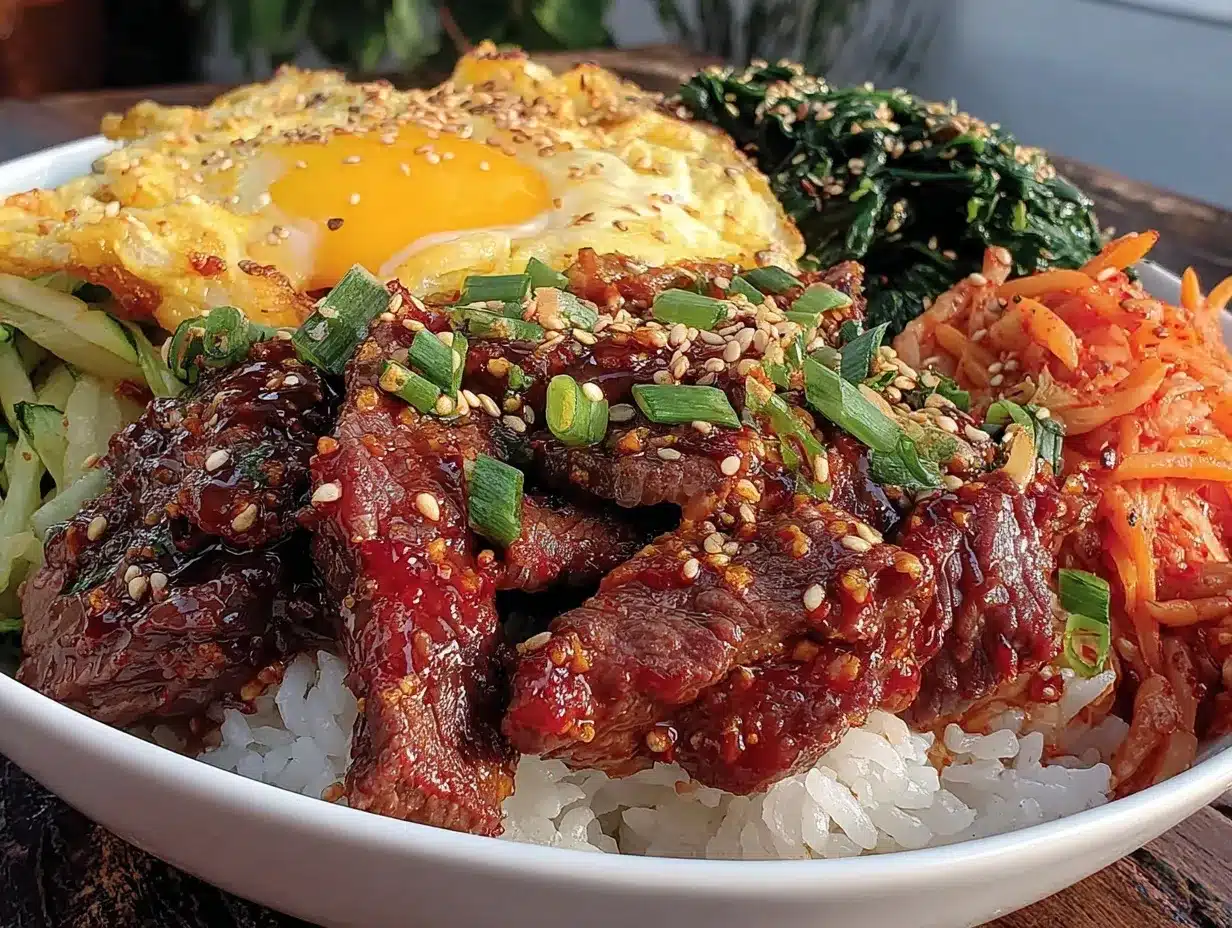
- Assemble the bibimbap bowls: Divide warm rice into bowls. Arrange spinach, carrots, bean sprouts, zucchini, mushrooms, and cooked beef on top in neat sections. Place the fried egg in the center.
- Garnish and serve: Sprinkle toasted sesame seeds and sliced green onions over the bowls. Add a dollop of gochujang or a drizzle of Sriracha for some heat. Mix everything together before eating to enjoy the full flavor explosion.
Pro tip: When cooking the beef, don’t move it around too much—let it sear properly to lock in juices. If your veggies look a little soggy, a quick high-heat sauté can bring back some snap. And don’t forget to taste and adjust seasoning before assembling. This recipe is all about balance, so trust your palate!
Cooking Tips & Techniques
One trick I’ve learned is to slice the beef as thin as possible—this helps it cook fast and stay tender, which is key for a great bibimbap bowl. Marinating the beef for at least 20 minutes is a must; rushing this step will leave your meat bland and chewy. When sautéing veggies, keep the heat medium-high and cook quickly to preserve their crunch and color—you want that fresh contrast against the warm beef and rice.
Don’t overcrowd the pan when cooking the beef or veggies. Crowding traps steam and makes things soggy instead of nicely seared. If you’re short on time, you can prep veggies ahead and keep them chilled; just toss them in the pan to reheat briefly before serving.
For the egg, frying sunny-side up with runny yolks creates a luscious sauce when mixed into the bowl. If you prefer, a soft-poached egg works just as well. Also, I learned the hard way that overcooking rice makes the dish mushy—stick to fluffy, warm rice for the best texture.
This recipe requires a bit of multitasking, but with practice, you’ll find a rhythm: marinate, prep veggies, cook rice, then cook beef and veggies last. Trust me, the payoff is worth every minute.
Variations & Adaptations
Want to mix things up? Here are three tasty variations I’ve tried and loved:
- Vegetarian version: Swap beef for marinated tofu or tempeh. Press and cube tofu, marinate it in the same sauce, and pan-fry until golden. Add extra mushrooms or roasted sweet potatoes for heartiness.
- Spicy twist: Add more gochujang or include a drizzle of chili oil. Toss in pickled radishes or kimchi for that authentic tangy kick. I once made this for a group of spice lovers, and everyone went back for seconds!
- Low-carb option: Replace rice with cauliflower rice or shirataki noodles. Sauté the cauliflower rice lightly with garlic and sesame oil before assembling the bowl for a light but satisfying meal.
Different cooking methods work too—grilling the beef adds a smoky flavor, and roasting veggies instead of sautéing gives a caramelized sweetness. You can customize the veggie mix depending on what’s fresh or in season. For allergen adjustments, swap soy sauce for coconut aminos and ensure your chili paste is gluten-free. Personally, I love adding a handful of toasted seaweed strips on top for extra texture and flavor. It’s a small touch that makes a big difference.
Serving & Storage Suggestions
Serve this bibimbap bowl hot, right after assembling, so the egg yolk can mingle with the rice and veggies. Presentation-wise, arranging the ingredients in neat, colorful sections before mixing makes for a beautiful dish that’s perfect for sharing on Pinterest or Instagram. Pair it with a simple miso soup or a crisp cucumber salad for a balanced meal.
If you have leftovers, store them in an airtight container in the refrigerator for up to 2 days. I recommend keeping the egg separate if possible to maintain texture. Reheat gently in a skillet or microwave, adding a splash of water to keep the rice moist. Flavors actually deepen after sitting a bit, so leftovers can be just as delicious. Just add a fresh egg or sprinkle of sesame seeds before serving again.
Nutritional Information & Benefits
This bibimbap bowl packs a nutritious punch with a balance of protein, fiber, and vitamins. The beef provides iron and essential amino acids, while the fresh veggies bring antioxidants and fiber that help with digestion. Spinach is loaded with vitamin K and folate, carrots offer beta-carotene, and mushrooms add immune-boosting compounds. Using sesame oil introduces healthy fats that support heart health.
Depending on your ingredient choices, this recipe can be gluten-free and dairy-free. It’s moderate in calories but satisfying enough to keep hunger at bay. From my personal wellness perspective, I love how this bowl offers a tasty way to eat a rainbow of veggies with minimal fuss, perfect for anyone wanting a wholesome, comforting meal.
Conclusion
If you’re looking for a meal that’s bursting with flavor, texture, and freshness, this flavorful bibimbap bowl with tender beef and easy fresh veggies is a winner. It’s quick to make, uses everyday ingredients, and delivers that perfect mix of spicy, sweet, and savory you crave. Customize it to your taste, add your favorite veggies, or try one of the variations to make it your own.
Personally, this recipe has become one of my go-to dishes for both busy nights and special occasions—I love how it brings everyone to the table with smiles and satisfied appetites. Give it a try, and don’t forget to share your tweaks or questions in the comments below. I’d love to hear how you make this bowl your own! Happy cooking, and remember: great meals don’t have to be complicated to be unforgettable.
FAQs
What cut of beef is best for bibimbap?
Thinly sliced sirloin or ribeye works best because it cooks quickly and stays tender. You can also use flank steak if thinly sliced against the grain.
Can I make this recipe vegetarian?
Absolutely! Swap the beef for marinated tofu or tempeh and add more veggies or mushrooms for a satisfying vegetarian meal.
Is it okay to use brown rice instead of white rice?
Yes, brown rice works fine but has a firmer texture and nuttier flavor. Cook it fully before assembling to ensure it’s tender.
How spicy is this bibimbap bowl?
The heat level depends on how much gochujang or chili sauce you add. Start small and adjust to taste—you can always add more at the table.
Can I prepare ingredients ahead of time?
Definitely! Marinate the beef and prep the veggies a few hours or even the day before. Just cook the beef and eggs fresh for the best texture and flavor.
Pin This Recipe!

Flavorful Bibimbap Bowl Recipe with Tender Beef and Easy Fresh Veggies

A quick and easy bibimbap bowl featuring marinated tender beef, fresh and sautéed veggies, and a warm rice base topped with a sunny-side-up egg. This Korean-inspired dish balances spicy, sweet, and savory flavors for a comforting and colorful meal.
- Prep Time: 15 minutes
- Cook Time: 15 minutes
- Total Time: 30 minutes
- Yield: 4 servings 1x
- Category: Main Course
- Cuisine: Korean
Ingredients
- 1 lb beef sirloin or ribeye, thinly sliced
- 2 tablespoons soy sauce
- 1 tablespoon sesame oil
- 1 tablespoon brown sugar
- 2 cloves garlic, minced
- 1 teaspoon grated fresh ginger
- 1 teaspoon gochujang (Korean chili paste) or mild chili sauce
- 1 cup spinach, blanched and drained
- 1 medium carrot, julienned or thinly sliced
- 1/2 cup bean sprouts, rinsed
- 1 small zucchini, thinly sliced and sautéed
- 4 shiitake mushrooms, sliced and sautéed (optional)
- 3 cups cooked short-grain white rice
- 2 large eggs (fried sunny-side up or poached, optional)
- 1 tablespoon toasted sesame seeds
- Thinly sliced green onions
- Extra gochujang or Sriracha for serving
Instructions
- In a medium bowl, combine soy sauce, sesame oil, brown sugar, minced garlic, grated ginger, and gochujang. Add the thinly sliced beef and toss well to coat. Cover and refrigerate for at least 20 minutes.
- Cook 3 cups of short-grain white rice according to package instructions or in a rice cooker. Keep warm until ready to serve.
- Bring a pot of salted water to a boil. Add spinach and cook for 30 seconds to 1 minute until bright green and just wilted. Drain and squeeze out excess water. Set aside.
- Heat a tablespoon of oil in a skillet over medium heat. Quickly sauté zucchini slices and shiitake mushrooms separately until tender, about 3-4 minutes each. Season lightly with salt and pepper. Carrots and bean sprouts can be served raw or lightly sautéed.
- In the same skillet, add the marinated beef in a single layer. Cook over medium-high heat for 2-3 minutes per side until browned and cooked through but still tender. Cook in batches if needed.
- In a small non-stick pan, fry eggs sunny-side up until whites are set but yolks remain runny.
- Divide warm rice into bowls. Arrange spinach, carrots, bean sprouts, zucchini, mushrooms, and cooked beef on top in neat sections. Place the fried egg in the center.
- Sprinkle toasted sesame seeds and sliced green onions over the bowls. Add a dollop of gochujang or a drizzle of Sriracha for some heat. Mix everything together before eating.
Notes
Marinate beef for at least 20 minutes for best flavor. Slice beef thinly to ensure tenderness and quick cooking. Avoid overcrowding the pan when cooking beef and veggies to prevent sogginess. Fry eggs sunny-side up with runny yolks for a creamy texture. For gluten-free, substitute soy sauce with tamari. Variations include vegetarian tofu or tempeh substitution, spicy additions, and low-carb options with cauliflower rice.
Nutrition
- Serving Size: 1 bowl
- Calories: 450
- Sugar: 7
- Sodium: 700
- Fat: 18
- Saturated Fat: 4
- Carbohydrates: 45
- Fiber: 5
- Protein: 30
Keywords: bibimbap, Korean recipe, beef bibimbap, easy dinner, healthy bowl, marinated beef, fresh veggies, spicy sauce