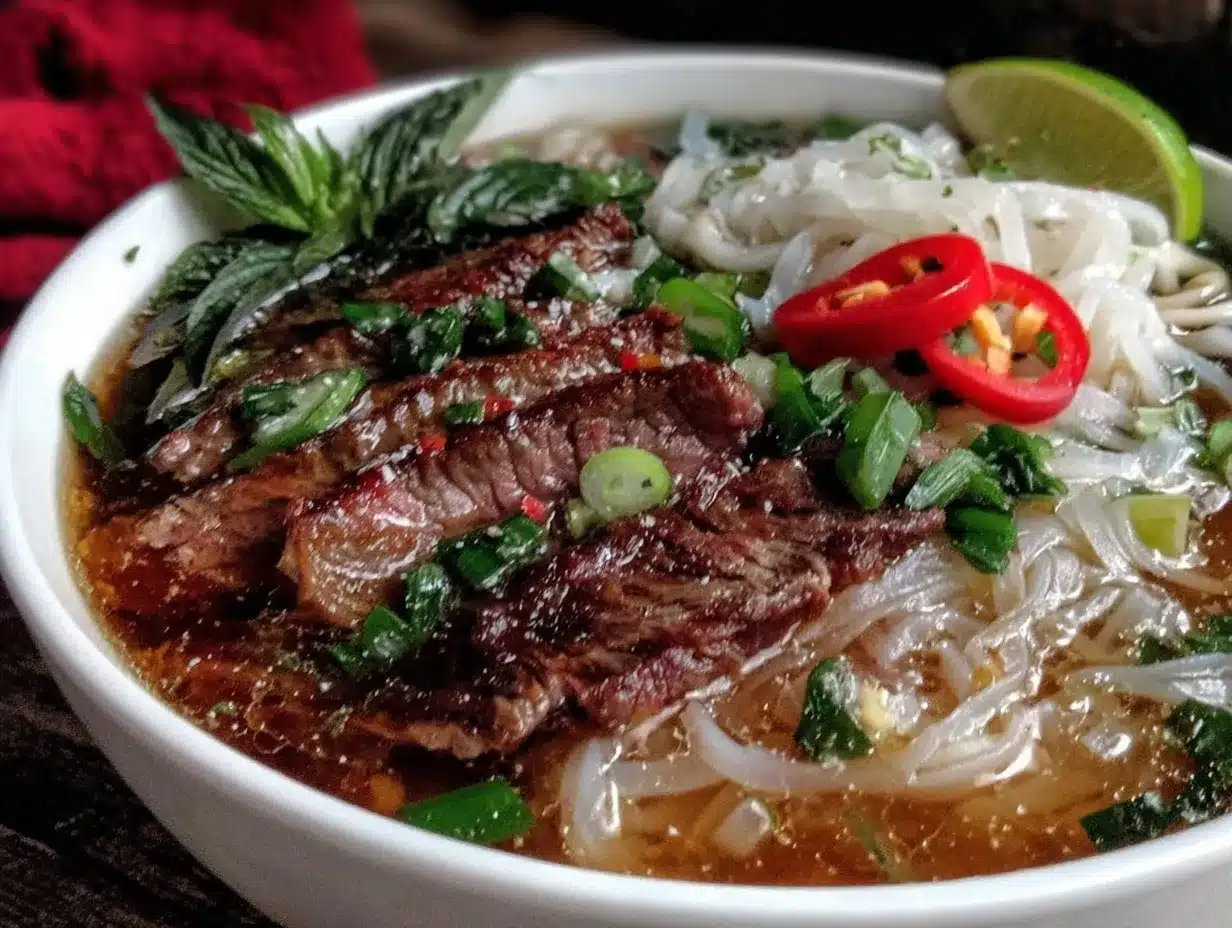
Let me tell you, the scent of simmering beef bones, star anise, and cinnamon wafting from my kitchen is enough to make anyone’s mouth water. There’s something about a steaming bowl of Vietnamese pho with rice noodles that instantly transports you to the bustling streets of Hanoi, where the aroma teases every passerby. The first time I made this flavorful Vietnamese pho with rice noodles recipe, I was instantly hooked — the kind of moment where you pause, take a deep breath, and just smile because you know you’re onto something truly special.
Years ago, when I was knee-high to a grasshopper, my grandma would make a simpler version of pho, but this homemade recipe, which I stumbled upon on a rainy weekend, feels like a next-level revelation. Honestly, I wish I’d discovered it sooner! My family couldn’t stop sneaking spoonfuls of the broth off the stove (and I can’t really blame them). Pho is dangerously easy to fall in love with — offering pure, nostalgic comfort with each slurp.
This recipe is perfect for chilly nights, casual get-togethers, or when you want to brighten up your Pinterest recipe board with something authentic and satisfying. I’ve tested this pho recipe multiple times (in the name of research, of course), and it’s become a staple for family gatherings, gifting, and those “just because” moments where you crave a warm hug in a bowl. You’re going to want to bookmark this one.
Why You’ll Love This Recipe
Honestly, this flavorful Vietnamese pho with rice noodles isn’t just good — it’s the kind of recipe that makes you close your eyes after the first bite. Whether you’re new to pho or a longtime fan, this homemade guide is crafted to bring the best out of every ingredient and technique.
- Quick & Easy: Comes together in about 3 hours, but most of that is simmering time where you can relax or prep other things.
- Simple Ingredients: No exotic items required; most are pantry staples or easy to find at your local Asian market.
- Perfect for Cozy Dinners: Pho is a soul-warming meal ideal for cold evenings or when you want a comforting, aromatic feast.
- Crowd-Pleaser: Always gets rave reviews from kids and adults alike; the balance of savory broth and fresh herbs is irresistible.
- Unbelievably Delicious: The combination of slow-simmered beef broth, fragrant spices, and tender rice noodles is next-level comfort food.
What makes this pho recipe different? It’s all about the broth — I blend traditional spices with a few personal touches, like roasting the bones and spices before simmering for a richer flavor. Plus, soaking the rice noodles just right keeps them perfectly tender, not mushy. This recipe feels like comfort food reimagined — authentic, hearty, but still easy enough to make on a weeknight.
Whether you want to impress guests without stress or treat yourself to a bowl of pure, aromatic goodness, this pho recipe hits the spot every time.
What Ingredients You Will Need
This flavorful Vietnamese pho with rice noodles recipe uses simple, wholesome ingredients to deliver bold flavor and an inviting texture without the fuss. Most of these are pantry staples or easy to find, and I’ve included tips for substitutions so you can make it your own.
- For the Broth:
- Beef bones (marrow and knuckle bones), about 3 pounds (1.4 kg) – for a rich, gelatinous broth
- Onions, 2 medium, halved and charred (adds depth)
- Fresh ginger, 4-inch piece, sliced and charred (aromatic backbone)
- Star anise, 4 whole (key pho spice)
- Cinnamon sticks, 2 (warmth and spice)
- Cloves, 4 whole (adds subtle pungency)
- Cardamom pods, 2 (optional, but recommended for complexity)
- Fish sauce, 1/4 cup (60 ml) – I prefer Red Boat brand for its clean, rich flavor
- Rock sugar, 1 tablespoon (or substitute with regular sugar)
- Salt, to taste
- Water, about 5 quarts (4.7 liters)
- For the Noodles and Toppings:
- Flat rice noodles (bánh phở), 1 pound (450 g), preferably fresh or dried thin wide noodles
- Beef sirloin or eye of round, thinly sliced (about 12 ounces / 340 g), sliced against the grain for tenderness
- Bean sprouts, 2 cups (fresh and crunchy)
- Fresh Thai basil leaves, 1 cup
- Cilantro leaves, 1/2 cup
- Green onions, 3, thinly sliced
- Fresh lime wedges, for squeezing
- Jalapeño or bird’s eye chilies, thinly sliced (optional for heat)
- Hoisin sauce and Sriracha, for serving (adds sweet and spicy flavors)
Substitution notes: Use gluten-free tamari instead of fish sauce if avoiding gluten. For a vegetarian version, swap beef bones for vegetable broth and add mushrooms for umami. In summer, fresh herbs like mint or culantro make a bright addition.
Equipment Needed
- Large stockpot (at least 8 quarts / 7.5 liters) – essential for simmering the broth
- Roasting pan or baking sheet – to char onions and ginger
- Fine mesh strainer or cheesecloth – to strain the broth for clarity
- Large bowl – for soaking rice noodles
- Sharp knife and cutting board – for thinly slicing beef and herbs
- Slotted spoon or spider strainer – to fish out bones and spices
If you don’t have a large stockpot, a slow cooker can be a budget-friendly alternative for simmering the broth overnight. Just keep an eye on the liquid levels. I personally like roasting the bones and spices on a sheet pan for about 20 minutes; it’s a trick that adds smoky depth. Maintenance tip: clean your strainer immediately after use to avoid buildup that dulls the broth’s clarity.
Preparation Method
- Roast the Bones and Aromatics (30 minutes): Preheat your oven to 450°F (230°C). Arrange beef bones on a roasting pan and roast for 20 minutes until browned. Add halved onions and ginger for the last 10 minutes, turning occasionally to char evenly. This step builds the broth’s signature deep flavor.
- Toast the Spices (5 minutes): In a dry pan over medium heat, toast star anise, cinnamon sticks, cloves, and cardamom pods until fragrant (about 3-5 minutes). Watch closely to prevent burning, which can add bitterness.
- Simmer the Broth (3 hours): Transfer roasted bones, onions, and ginger to a large stockpot. Add toasted spices and pour in 5 quarts (4.7 liters) of cold water. Bring to a boil, then reduce heat to low and simmer gently. Skim off any foam or impurities during the first hour for a clear broth.
- Add Flavorings (last 30 minutes): Stir in fish sauce, rock sugar, and salt to taste. Continue simmering uncovered to concentrate flavors. Taste occasionally — the broth should be fragrant, slightly sweet, and balanced.
- Prepare Noodles (while broth simmers): If using dried rice noodles, soak them in warm water for 30 minutes or until pliable but still slightly firm. Fresh noodles require only a quick rinse. Drain before serving.
- Slice Beef Thinly: Freeze beef for 15 minutes to firm up, then slice paper-thin against the grain. This helps it cook quickly in hot broth and stay tender.
- Strain the Broth: Remove bones, onions, and spices with a slotted spoon. Strain broth through a fine mesh strainer to remove any solids. Keep broth hot on low heat.
- Assemble Bowls: Divide soaked noodles into serving bowls. Arrange raw beef slices on top (they’ll cook in the hot broth). Ladle boiling broth over noodles and beef, watching the meat gently cook in seconds.
- Add Fresh Toppings: Garnish with bean sprouts, basil, cilantro, green onions, lime wedges, and chilies. Serve hoisin and sriracha on the side for dipping or drizzling.
Tip: If the broth tastes flat, a splash more fish sauce or a pinch of salt can brighten it. Avoid boiling the broth too hard after adding seasonings to keep it clear and flavorful.
Cooking Tips & Techniques
Making pho broth is a labor of love, but a few tips from my experience can save you frustration. First, roasting the bones and aromatics is non-negotiable — it’s the secret behind that deep, savory richness. When simmering, keep the heat low, and skim the scum early on. This patience pays off with a clear, golden broth.
Don’t rush soaking or cooking the rice noodles; over-soaking makes them mushy, under-soaking leaves them tough. If you’re short on time, fresh rice noodles save a lot of hassle. And slicing the beef thinly while still slightly frozen ensures those tender, melt-in-your-mouth bites.
One lesson I learned the hard way is to add delicate herbs and lime just before serving to keep their brightness intact. Also, keep broth piping hot so it cooks the beef perfectly in the bowl. If you’re multitasking, prep the toppings ahead — trust me, it makes serving a breeze when everyone’s hungry.
Variations & Adaptations
There’s no one-size-fits-all pho, and I love how adaptable this recipe can be. Here are some ways to switch it up:
- Vegetarian Pho: Swap beef bones for a vegetable broth base with dried shiitake mushrooms, charred onion, and ginger. Use tofu or seitan for protein.
- Chicken Pho (Phở Gà): Substitute beef bones with whole chicken or chicken bones, simmer longer for rich broth, and use shredded cooked chicken instead of raw beef slices.
- Low-Carb Pho: Replace rice noodles with spiralized zucchini or shirataki noodles for a lighter, keto-friendly bowl.
I once tried adding a hint of star anise-infused honey to the broth for a subtle sweetness that surprised my family — they loved it! Feel free to customize the heat level or herbs based on your taste buds. If allergies are a concern, skip fish sauce and use coconut aminos or tamari as a substitute.
Serving & Storage Suggestions
Pho is best served hot and fresh, ideally right after assembly. Serve it with plenty of fresh lime wedges, herbs, and chili to customize each bite. It pairs wonderfully with crispy spring rolls or a light cucumber salad to balance the richness.
Leftover broth stores beautifully in the fridge for up to 3 days or freezes well in airtight containers for up to 3 months. Reheat gently to avoid boiling off the delicate flavors. If you have leftover noodles and beef, it’s best to keep them separate and add fresh when serving to prevent them from getting soggy.
Over time, the broth’s flavors deepen, so leftovers often taste even better the next day. Just add fresh herbs and lime when reheating to refresh the bowl.
Nutritional Information & Benefits
This pho recipe provides a nourishing balance of protein, carbs, and fresh herbs. A typical serving contains roughly 350-450 calories, depending on meat and noodle portions. Beef bones add collagen and minerals, which some studies suggest support joint health and skin elasticity.
Fish sauce provides umami with minimal calories, and fresh herbs bring antioxidants and vitamins. The broth is naturally gluten-free (watch for gluten in some brands of fish sauce) and can be adapted to low-carb or vegetarian diets easily. Just watch out for allergens like soy or shellfish in condiments.
From a wellness standpoint, pho is a comforting, hydrating meal that can soothe a cold or tired body, thanks to its warming spices and nutrient-rich broth.
Conclusion
This flavorful Vietnamese pho with rice noodles recipe is truly a keeper. It’s comforting, satisfying, and just the right balance of aromatic and fresh. I love that it invites you to slow down, savor each spoonful, and share great food with family or friends.
Feel free to tweak the herbs, spice level, or protein to make it your own. Honestly, it’s a recipe I return to time and again because it feels like home in a bowl. If you try it, please let me know how it goes — I’d love to hear your variations or tips!
Don’t forget to share this with your fellow food lovers and save it for your next cozy night in. You’re going to want this one on repeat, I promise!
FAQs
What cut of beef is best for pho?
Thinly sliced sirloin or eye of round works best as it cooks quickly in the hot broth and stays tender.
Can I make pho broth ahead of time?
Absolutely! The broth tastes even better the next day. Store it in the fridge for up to 3 days or freeze for longer storage.
How do I prevent rice noodles from getting mushy?
Soak dried noodles until just pliable and drain well. Fresh noodles only need a quick rinse in warm water before serving.
Is there a vegetarian version of pho?
Yes! Use vegetable broth with mushrooms and charred aromatics, and replace beef with tofu or seitan.
What can I use if I don’t have fish sauce?
You can substitute with soy sauce, tamari, or coconut aminos for a similar umami flavor, especially if avoiding seafood.
Pin This Recipe!
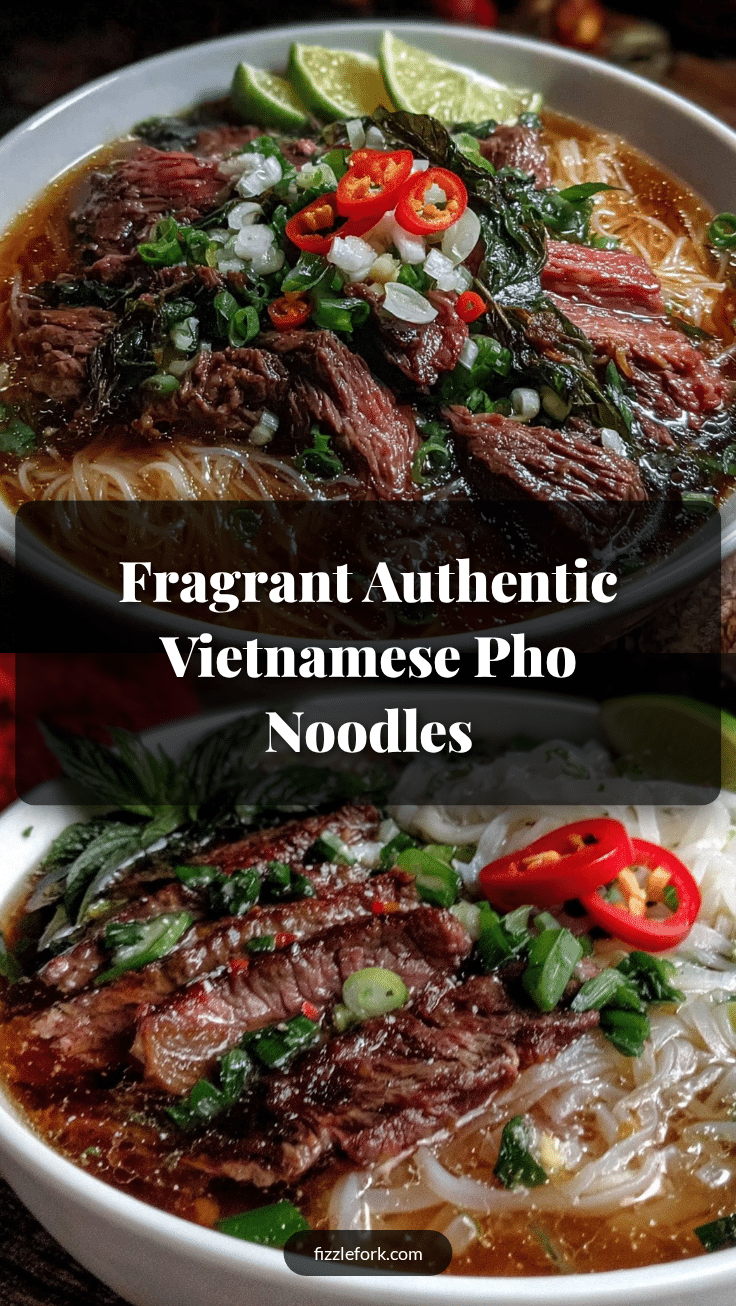
Flavorful Vietnamese Pho with Rice Noodles
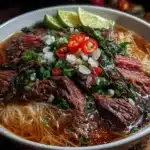
A comforting and authentic Vietnamese pho recipe featuring slow-simmered beef broth, fragrant spices, and tender rice noodles, perfect for cozy dinners and gatherings.
- Prep Time: 45 minutes
- Cook Time: 3 hours
- Total Time: 3 hours 45 minutes
- Yield: 6 servings 1x
- Category: Main Course
- Cuisine: Vietnamese
Ingredients
- 3 pounds beef bones (marrow and knuckle bones)
- 2 medium onions, halved and charred
- 4-inch piece fresh ginger, sliced and charred
- 4 whole star anise
- 2 cinnamon sticks
- 4 whole cloves
- 2 cardamom pods (optional)
- 1/4 cup fish sauce (60 ml)
- 1 tablespoon rock sugar (or substitute with regular sugar)
- Salt, to taste
- 5 quarts water (4.7 liters)
- 1 pound flat rice noodles (bánh phở), fresh or dried thin wide noodles
- 12 ounces beef sirloin or eye of round, thinly sliced against the grain
- 2 cups bean sprouts
- 1 cup fresh Thai basil leaves
- 1/2 cup cilantro leaves
- 3 green onions, thinly sliced
- Fresh lime wedges, for squeezing
- Jalapeño or bird’s eye chilies, thinly sliced (optional)
- Hoisin sauce and Sriracha, for serving
Instructions
- Preheat oven to 450°F (230°C). Arrange beef bones on a roasting pan and roast for 20 minutes until browned.
- Add halved onions and ginger for the last 10 minutes of roasting, turning occasionally to char evenly.
- Toast star anise, cinnamon sticks, cloves, and cardamom pods in a dry pan over medium heat for 3-5 minutes until fragrant, being careful not to burn.
- Transfer roasted bones, onions, and ginger to a large stockpot. Add toasted spices and pour in 5 quarts (4.7 liters) of cold water.
- Bring to a boil, then reduce heat to low and simmer gently for 3 hours, skimming off foam or impurities during the first hour.
- In the last 30 minutes of simmering, stir in fish sauce, rock sugar, and salt to taste. Continue simmering uncovered to concentrate flavors.
- While broth simmers, soak dried rice noodles in warm water for 30 minutes until pliable but still firm. Rinse fresh noodles quickly and drain.
- Freeze beef for 15 minutes to firm up, then slice paper-thin against the grain.
- Remove bones, onions, and spices with a slotted spoon. Strain broth through a fine mesh strainer to remove solids. Keep broth hot on low heat.
- Divide soaked noodles into serving bowls. Arrange raw beef slices on top; they will cook in the hot broth.
- Ladle boiling broth over noodles and beef, allowing the meat to cook gently in seconds.
- Garnish with bean sprouts, basil, cilantro, green onions, lime wedges, and chilies. Serve hoisin and sriracha on the side.
Notes
Roasting bones and aromatics is essential for deep flavor. Skim foam early for clear broth. Soak noodles just until pliable to avoid mushiness. Slice beef thinly while slightly frozen for tenderness. Add herbs and lime just before serving to keep brightness. Keep broth hot to cook beef properly in the bowl.
Nutrition
- Serving Size: 1 bowl (approximatel
- Calories: 400
- Sugar: 4
- Sodium: 900
- Fat: 12
- Saturated Fat: 4
- Carbohydrates: 45
- Fiber: 2
- Protein: 30
Keywords: Vietnamese pho, pho recipe, beef pho, rice noodles, homemade pho, Vietnamese soup, slow simmered broth, authentic pho