Let me tell you, the gentle aroma of fermented miso swirling through the kitchen is enough to warm the soul on the chilliest of days. The first time I made this traditional miso soup, I was instantly hooked—the kind of moment where you pause, take a deep breath, and just smile because you know you’re onto something truly special. It wasn’t just a bowl of soup; it felt like a cozy hug after a long day, a simple comfort that’s pure, nostalgic, and honestly, dangerously easy to whip up.
Years ago, when I was knee-high to a grasshopper, my grandma would simmer a pot of miso soup, filling our home with that unmistakable umami scent that still brings me back. I stumbled upon this recipe trying to recreate those memories on a rainy weekend, and I wish I’d discovered it years ago. My family couldn’t stop sneaking spoonfuls off the stove while I was cooking (and I can’t really blame them). This cozy traditional miso soup is perfect for those quiet nights in, a sweet treat for your taste buds, and a bright spot on your Pinterest comfort food board.
After testing this recipe multiple times in the name of research, of course, it’s become a staple for family gatherings and gifting moments of warmth. Trust me, this recipe feels like a warm hug in a bowl, and you’re going to want to bookmark this one.
Why You’ll Love This Recipe
This traditional miso soup recipe isn’t just any bowl of broth; it’s been perfected through countless trials and family-approved taste tests. Here’s why you’ll want to make it your go-to comfort food:
- Quick & Easy: Comes together in under 5 minutes—perfect for busy weeknights or last-minute cravings.
- Simple Ingredients: No fancy grocery trips needed; you likely have everything in your pantry or can find it easily.
- Perfect for Cozy Moments: Great for chilly mornings, light dinners, or when you just want something soothing.
- Crowd-Pleaser: Always gets rave reviews from kids and adults alike, even those new to miso’s unique flavor.
- Unbelievably Delicious: The perfect balance of savory, salty, and slightly sweet that’s pure comfort food.
What sets this recipe apart is the gentle technique of dissolving the miso paste to preserve its delicate flavor and probiotics. Unlike rushed versions, this soup is smooth, rich, and light all at once. Honestly, it’s the kind of soup that makes you close your eyes after the first sip. It’s comfort food reimagined—simple, fast, and with soul-soothing satisfaction that’s hard to beat.
Whether you’re impressing guests without the fuss or just treating yourself after a hectic day, this traditional miso soup recipe fits the bill perfectly.
What Ingredients You Will Need
This recipe uses simple, wholesome ingredients to deliver bold flavor and satisfying texture without the fuss. Most are pantry staples or easy to find at any grocery store.
- Dashi stock (4 cups / 960 ml): The savory base; you can use instant dashi powder or homemade dashi for richer flavor.
- Miso paste (3-4 tablespoons): I prefer white miso (Shiro Miso) for its mild, slightly sweet taste, but red miso works too if you like a stronger flavor.
- Tofu, soft or silken (1/2 cup / 120 g): Cubed; adds creaminess and protein.
- Wakame seaweed (1 tablespoon dried): Rehydrates quickly and adds that classic ocean touch.
- Green onions (2 tablespoons): Thinly sliced for freshness and a subtle bite.
- Optional garnishes: Sesame seeds, a pinch of chili flakes, or thinly sliced shiitake mushrooms.
If you’re after a gluten-free option, make sure your miso paste and dashi powder don’t contain wheat. For vegan or vegetarian versions, use kombu-based dashi or mushroom broth instead of fish-based stock.
Brands I usually trust for miso paste include Hikari and Marukome—they deliver consistent taste and texture. For tofu, firmer varieties hold their shape better, but silken tofu gives a lovely, silky mouthfeel.
Equipment Needed
- Medium-sized saucepan: For simmering the dashi and preparing the soup.
- Whisk or small ladle: To dissolve the miso paste evenly without clumping.
- Measuring cups and spoons: Essential for accurate ingredient amounts.
- Knife and cutting board: For chopping green onions and cubing tofu.
If you don’t have a whisk, a fork works fine to blend the miso paste smoothly. I’ve used both and found a small ladle helps gently stir the soup without breaking the tofu. For budget-friendly options, any basic saucepan will do—no need for fancy gear here!
Preparation Method
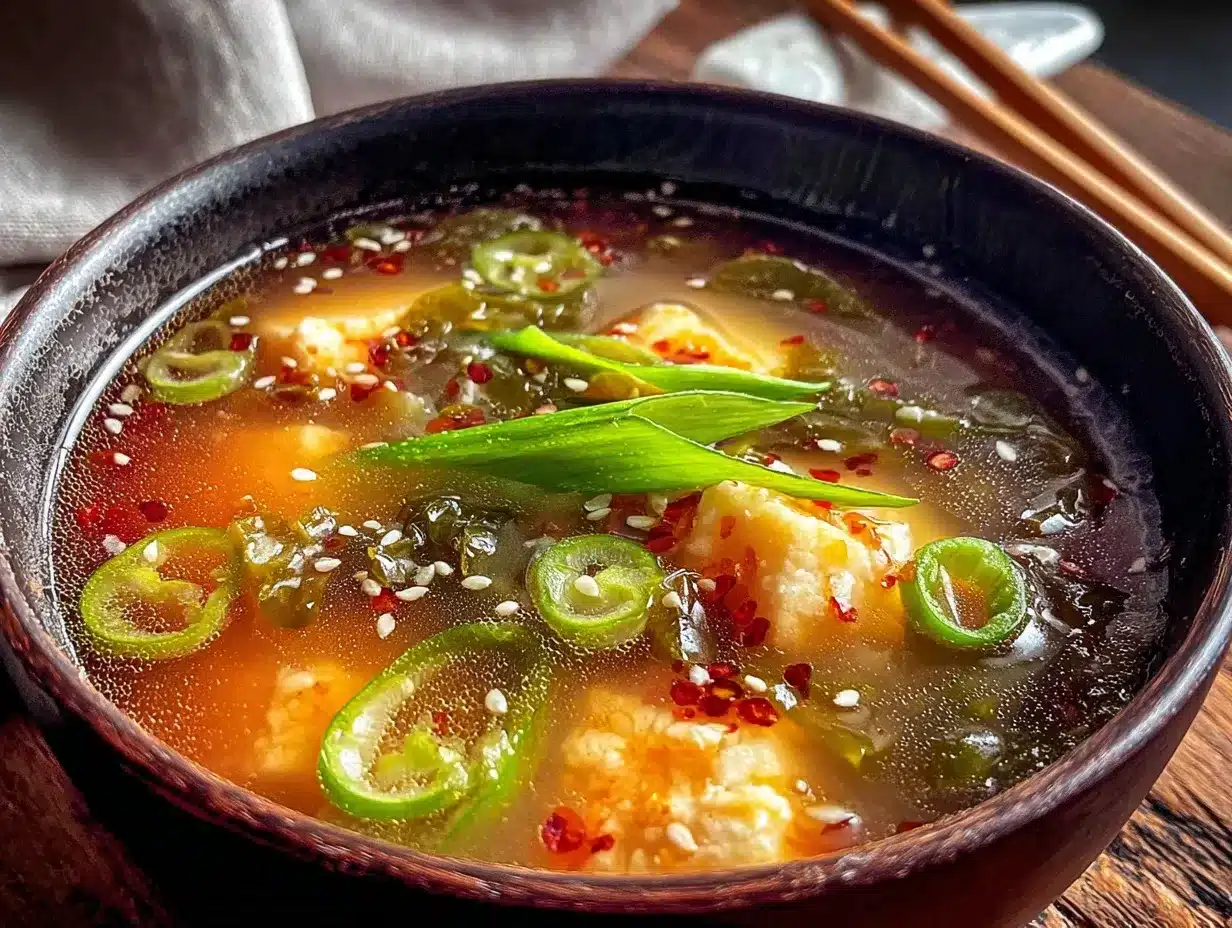
- Prepare your dashi stock: In a medium saucepan, bring 4 cups (960 ml) of dashi to a gentle simmer over medium heat. If using instant dashi powder, dissolve it according to package instructions. (About 5 minutes)
- Soak the wakame seaweed: While the dashi heats, place 1 tablespoon of dried wakame in a small bowl with warm water. Let it rehydrate for about 5 minutes until it expands and softens. Drain and set aside.
- Cube the tofu: Gently cut 1/2 cup (120 g) of soft or silken tofu into small bite-sized cubes. Be careful—it can be delicate! Set aside.
- Mix the miso paste: Turn the heat to low (you don’t want to boil the miso, or it’ll lose flavor and nutrients). Scoop 3-4 tablespoons of miso paste into a small bowl. Ladle about 1/2 cup (120 ml) of hot dashi from the saucepan into the bowl and whisk or stir vigorously until smooth and lump-free.
- Combine miso with dashi: Pour the dissolved miso back into the saucepan with the rest of the dashi. Stir gently to mix. Keep the heat low to preserve the delicate flavors—no boiling!
- Add tofu and wakame: Carefully add the cubed tofu and rehydrated wakame to the pot. Let them warm through for 2-3 minutes. You’ll know it’s ready when the tofu is heated but still holds its shape.
- Finish with green onions: Turn off the heat. Stir in 2 tablespoons of thinly sliced green onions for a fresh pop of flavor.
- Serve immediately: Ladle the soup into bowls and garnish if desired with sesame seeds or a pinch of chili flakes for a little kick.
Pro tip: Avoid boiling the soup after adding miso—it dulls the flavor and kills the probiotics. Slow and gentle warming is key. If you overheat, the miso can taste bitter and lose its subtle sweetness.
Cooking Tips & Techniques
One little secret I learned after a few kitchen mishaps: always dissolve your miso paste in warm broth before adding it back to the pot. It prevents clumps and ensures that smooth, velvety texture we all crave.
Boiling miso soup is a common mistake. I’ve done it myself, and the flavor just falls flat. Miso is a living ingredient, rich in probiotics, and heat can kill those good bacteria (plus it makes the soup taste harsh). So remember, low and slow is the way to go.
Timing is everything here. While the broth heats up, soak your wakame and prep your tofu and green onions to keep things moving quickly. This recipe is perfect for multitasking—you can have it ready while you finish setting the table or prepping a side dish.
Consistency comes from practice. If your soup feels too salty, try a milder miso or reduce the amount next time. Likewise, if it tastes too mild, a little extra miso paste adds depth without overpowering.
Variations & Adaptations
- Seasonal twist: Swap wakame for fresh spinach or thinly sliced shiitake mushrooms in the fall for earthier flavors.
- Protein boost: Add cooked shrimp or shredded chicken for a heartier meal without losing the soup’s delicate essence.
- Vegan version: Use kombu dashi or mushroom broth instead of fish-based stock and double-check your miso paste is vegan-friendly.
I personally love adding a dash of toasted sesame oil or a sprinkle of furikake seasoning for a little extra punch. For a gluten-free version, opt for tamari-based miso paste and gluten-free dashi.
Serving & Storage Suggestions
Serve this cozy traditional miso soup piping hot in small bowls. It pairs wonderfully with steamed rice and pickled vegetables for a quick Japanese-inspired meal. A light green tea or chilled sake on the side complements the flavors beautifully.
Leftovers store well in the refrigerator for up to 2 days. When reheating, warm gently on the stove—avoid boiling to keep that fresh miso flavor intact. You may need to stir in an extra spoonful of miso paste if the flavor mellows too much overnight.
The soup’s flavors actually deepen after resting, making it a perfect make-ahead comfort dish. Just be sure to add fresh green onions or garnishes right before serving to keep things bright.
Nutritional Information & Benefits
This traditional miso soup is a low-calorie, nutrient-rich comfort food that supports digestion and immune health. Miso paste is a fermented food packed with probiotics, which are great for gut health. The tofu provides a good source of plant-based protein, while wakame adds essential minerals like iodine and calcium.
With roughly 40-60 calories per serving (depending on tofu amount), it’s a light, satisfying option that fits well into gluten-free and low-carb diets. Just watch the sodium content if you’re sensitive—using low-sodium miso paste can help manage that.
From my wellness perspective, a warm bowl of miso soup feels like a gentle reset for the body and mind—comfort food that’s good for you, too.
Conclusion
This traditional miso soup recipe is worth every minute you spend making it. It’s simple, cozy, and packed with flavor that hits the spot every single time. Customize it with your favorite veggies or proteins, or keep it classic for pure, soothing comfort. Honestly, it’s one of those recipes I keep returning to, no matter the season.
Give it a try and let me know how you like to enjoy your miso soup. Share your twists, questions, or stories—I’d love to hear! Remember, sometimes the simplest dishes bring the most joy.
Here’s to cozy bowls and warm hearts.
FAQs
Can I use regular broth instead of dashi for miso soup?
You can, but dashi provides the signature umami flavor that makes miso soup special. If you don’t have dashi, a light vegetable broth is a decent substitute, but the soup won’t be quite the same.
How do I store leftover miso soup?
Store leftovers in an airtight container in the fridge for up to 2 days. Reheat gently on the stove without boiling, and add fresh miso paste if needed to refresh the flavor.
Can I make miso soup ahead of time?
Yes! Prepare the broth and ingredients separately and combine just before serving to keep everything fresh. Avoid adding miso too early to maintain its flavor and probiotics.
Is miso soup gluten-free?
It can be, but some miso pastes contain barley or wheat. Look for gluten-free labeled miso and dashi to be sure.
What’s the difference between white and red miso?
White miso (Shiro) is milder and sweeter, while red miso has a stronger, saltier taste. Choose based on your flavor preference; white is great for easy comfort, red for deeper complexity.
Pin This Recipe!
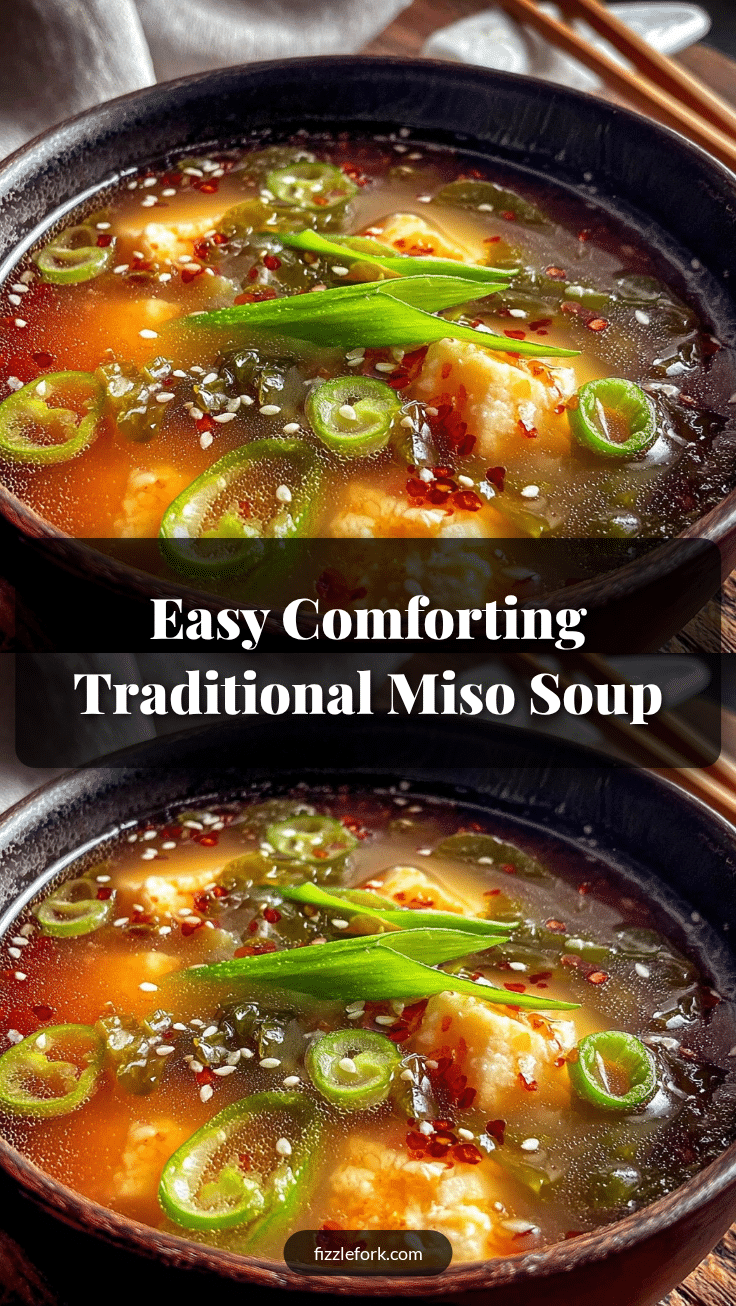
Traditional Miso Soup Recipe

A quick and easy traditional miso soup that delivers cozy comfort in just 5 minutes, featuring a delicate balance of savory, salty, and slightly sweet flavors.
- Prep Time: 5 minutes
- Cook Time: 5 minutes
- Total Time: 10 minutes
- Yield: 4 servings 1x
- Category: Soup
- Cuisine: Japanese
Ingredients
- 4 cups (960 ml) dashi stock (instant or homemade)
- 3–4 tablespoons miso paste (white Shiro Miso preferred, red miso optional)
- 1/2 cup (120 g) soft or silken tofu, cubed
- 1 tablespoon dried wakame seaweed
- 2 tablespoons thinly sliced green onions
- Optional garnishes: sesame seeds, pinch of chili flakes, thinly sliced shiitake mushrooms
Instructions
- Prepare your dashi stock: In a medium saucepan, bring 4 cups (960 ml) of dashi to a gentle simmer over medium heat. If using instant dashi powder, dissolve it according to package instructions (about 5 minutes).
- Soak the wakame seaweed: While the dashi heats, place 1 tablespoon of dried wakame in a small bowl with warm water. Let it rehydrate for about 5 minutes until it expands and softens. Drain and set aside.
- Cube the tofu: Gently cut 1/2 cup (120 g) of soft or silken tofu into small bite-sized cubes. Be careful as it is delicate. Set aside.
- Mix the miso paste: Turn the heat to low (do not boil). Scoop 3-4 tablespoons of miso paste into a small bowl. Ladle about 1/2 cup (120 ml) of hot dashi from the saucepan into the bowl and whisk or stir vigorously until smooth and lump-free.
- Combine miso with dashi: Pour the dissolved miso back into the saucepan with the rest of the dashi. Stir gently to mix. Keep the heat low to preserve delicate flavors—do not boil.
- Add tofu and wakame: Carefully add the cubed tofu and rehydrated wakame to the pot. Let them warm through for 2-3 minutes until tofu is heated but still holds its shape.
- Finish with green onions: Turn off the heat. Stir in 2 tablespoons of thinly sliced green onions for freshness.
- Serve immediately: Ladle the soup into bowls and garnish if desired with sesame seeds or a pinch of chili flakes.
Notes
Avoid boiling the soup after adding miso to preserve flavor and probiotics. Dissolve miso paste in warm broth before adding to prevent clumps. Use low heat to keep soup smooth and flavorful. For gluten-free, ensure miso paste and dashi are gluten-free. For vegan, use kombu or mushroom broth instead of fish-based dashi.
Nutrition
- Serving Size: 1 cup (approximate)
- Calories: 50
- Sugar: 1
- Sodium: 700
- Fat: 2
- Saturated Fat: 0.3
- Carbohydrates: 4
- Fiber: 1
- Protein: 4
Keywords: miso soup, traditional miso soup, easy miso soup, Japanese soup, comfort food, quick soup, tofu soup, dashi soup