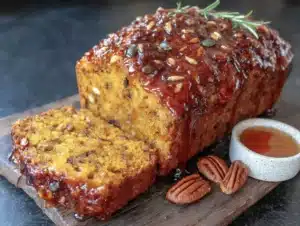
The kitchen counter is covered in a fine dusting of flour, and the sink holds a bowl I keep forgetting to wash. It’s that golden hour before the afternoon fully settles in, when the light through the window catches the dust motes and makes everything look softer than it really is. And the only thing I want right now is this easy pumpkin sourdough discard bread, still warm from the oven, with a thick swipe of butter melting into every single crevice.
I started making this loaf out of pure necessity, honestly. My sourdough starter was thriving—almost too well—and I had a half-can of pumpkin puree sitting in the fridge from a pumpkin chocolate chip sourdough bread experiment earlier that week. You know how it goes. You feed your starter, it bubbles up happily, and then you’re staring at a jar of discard thinking, “What now?” This bread became my answer, and it’s stuck around ever since.
It’s not a fussy recipe. There’s no complicated shaping or scoring involved. You mix it, you let it rise, you bake it. That’s it. But what comes out of the oven is this deeply orange, tender-crumbed loaf that smells like autumn in a way that makes you stop whatever you’re doing and just breathe for a second. The pumpkin keeps it moist for days, and the sourdough discard gives it that subtle tang that balances the sweetness perfectly.
This is the kind of bread that doesn’t need to be perfect to be good. And honestly, that’s why I keep coming back to it.
Why You’ll Love This Recipe
Let’s be real for a second. There are a million pumpkin bread recipes out there, and most of them are fine. But this one? It’s different. And here’s why:
- Uses up sourdough discard — No more guilt about tossing that extra starter. This loaf puts it to good work, adding flavor and texture you just can’t get from commercial yeast alone.
- Super moist without being gummy — The pumpkin puree does double duty here, adding moisture and a tender crumb that stays soft for days. I’ve had slices on day four that still tasted fresh.
- One bowl, no mixer — You don’t need a stand mixer or even a hand mixer for this. Just a bowl, a whisk, and a spatula. Less dishes means more time to actually enjoy the bread.
- Perfectly spiced — The cinnamon, ginger, nutmeg, and cloves work with the pumpkin, not against it. It’s warm and cozy without being overwhelming.
- Great for beginners — If you’re new to baking with sourdough discard, this is the perfect place to start. It’s forgiving, flexible, and nearly impossible to mess up.
I’ve tested this recipe more times than I care to admit. I’ve made it with active starter, with discard straight from the fridge, with fresh pumpkin puree and canned. It works every single time. There’s something deeply satisfying about pulling a loaf out of the oven that you know came from ingredients you already had on hand. It feels resourceful, you know? Like you’re getting the most out of what you have.
This isn’t just another pumpkin bread. It’s the one you’ll actually want to make again and again.
What Ingredients You Will Need
This recipe uses simple, everyday ingredients to create something that tastes anything but ordinary. Most of these are probably already in your pantry, which is exactly how I like it.
For the Bread
- Pumpkin puree — 1 cup (240g). Not pumpkin pie filling. Make sure you grab the plain, unsweetened stuff. I prefer Libby’s for consistency, but any brand works fine. If you’re using homemade pumpkin puree, just make sure it’s well-drained so your bread doesn’t end up too wet.
- Sourdough discard — 1 cup (240g), unfed, straight from the fridge. This is the star of the show, and it doesn’t need to be active or bubbly. In fact, discard that’s been sitting in the fridge for a few days works beautifully here because the flavor is more developed.
- All-purpose flour — 2 cups (250g). Spoon and level it into your measuring cup for accuracy. You can substitute up to half with whole wheat pastry flour if you want a heartier texture, but I wouldn’t go all whole wheat unless you’re okay with a denser loaf.
- Granulated sugar — ¾ cup (150g). Just regular white sugar. It keeps the crumb tender and adds just the right amount of sweetness without overpowering the pumpkin.
- Brown sugar — ½ cup (100g), packed. Light or dark both work. Dark brown sugar will give you a deeper, almost molasses-like flavor that pairs beautifully with the spices. I usually go with dark because I like the warmth it adds.
- Vegetable oil — ½ cup (120ml). Any neutral oil works here. Canola, avocado, or melted coconut oil are all great options. The oil keeps the bread incredibly moist, much more so than butter would.
- Eggs — 2 large, room temperature. If you forget to take them out of the fridge ahead of time, just place them in a bowl of warm water for 5 minutes. It makes a difference in how evenly everything mixes together.
- Vanilla extract — 2 teaspoons. Pure vanilla is best, but imitation works in a pinch. It rounds out the spices and adds a layer of warmth that you’ll notice even if you can’t quite place it.
- Baking soda — 1 teaspoon. This is what gives the bread its rise. Make sure it’s fresh — if it doesn’t fizz when you mix it with something acidic, it’s time to buy a new box.
- Baking powder — ½ teaspoon. Just a little extra lift to keep the crumb light and airy.
- Salt — ½ teaspoon. Don’t skip this. Salt doesn’t just make things salty; it enhances every other flavor in the bread and balances the sweetness.
For the Spice Blend
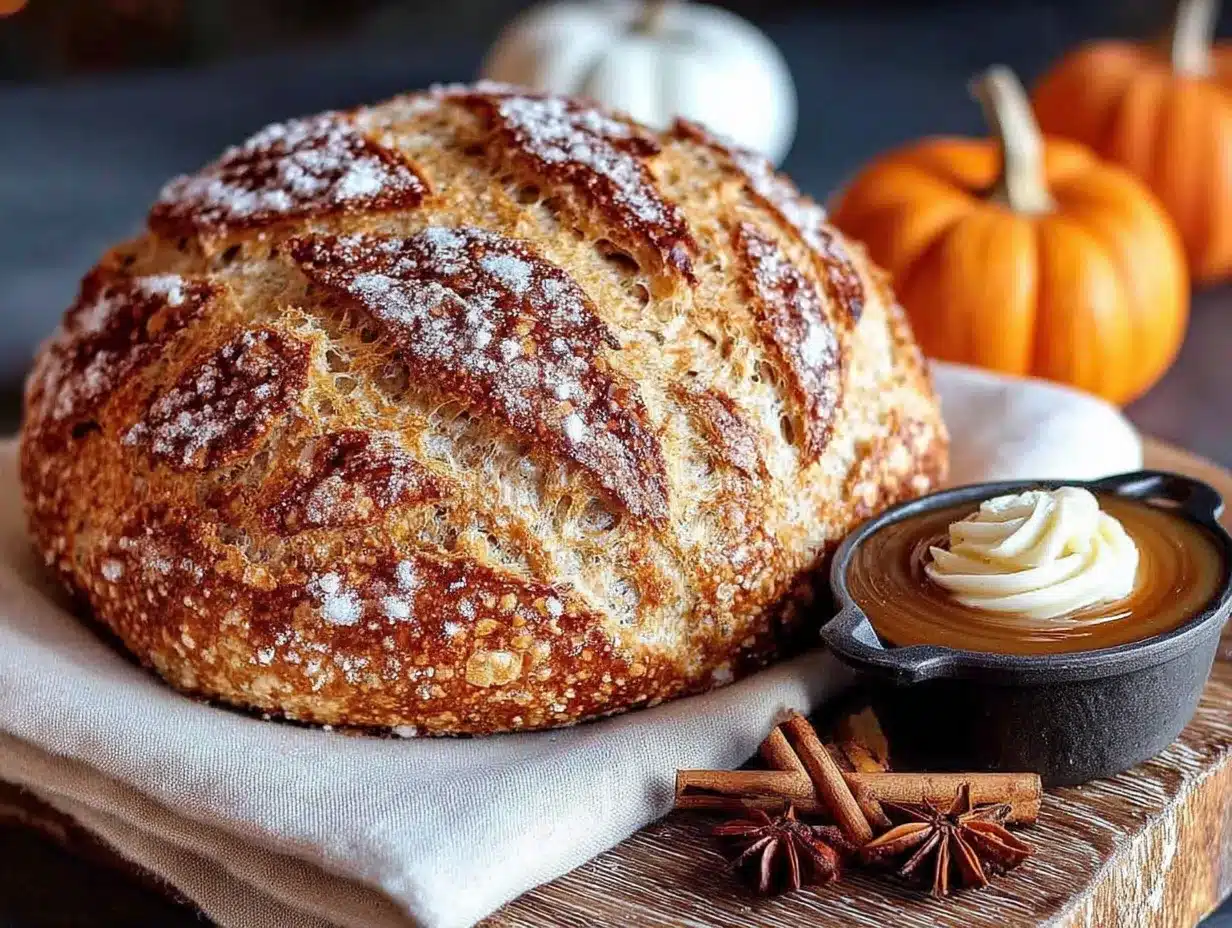
- Ground cinnamon — 2 teaspoons
- Ground ginger — 1 teaspoon
- Ground nutmeg — ½ teaspoon
- Ground cloves — ¼ teaspoon
You can substitute all of these with 1½ tablespoons of pumpkin pie spice if that’s what you have. I’ve done it plenty of times, and it works great. But I personally prefer mixing my own because I like a little extra ginger in there. It gives the bread a subtle warmth that lingers.
Equipment Needed
You don’t need a fancy kitchen to make this bread. Here’s what you’ll actually use:
- 9×5-inch loaf pan — Standard size. If you use an 8×4-inch pan, your bread will take longer to bake and might dome more. Just adjust your bake time accordingly.
- Mixing bowls — One large, one medium. Nothing fancy needed.
- Whisk — For mixing the dry ingredients and smoothing out the wet ones.
- Rubber spatula — For folding everything together without overmixing.
- Parchment paper — I highly recommend lining your loaf pan with a parchment sling. It makes lifting the bread out so much easier, and cleanup is a breeze.
- Cooling rack — Letting the bread cool properly is important. If you leave it in the pan too long, the bottom can get soggy.
- Measuring cups and spoons — For accuracy. I also recommend a kitchen scale if you have one, especially for the flour and pumpkin.
If you don’t have a loaf pan, you can bake this in an 8×8-inch square pan and adjust the time to about 35-40 minutes. I’ve done it before when my loaf pan was in use, and it worked perfectly. The bread just comes out a little shorter and wider, but it tastes exactly the same.
Preparation Method
This is where the magic happens. Take your time, follow the steps, and trust the process. It’s simpler than you think.
- Preheat your oven to 350°F (175°C). Position the rack in the center of the oven. While it’s heating up, line your loaf pan with parchment paper, leaving a little overhang on the long sides. This will be your handle later.
- Mix the dry ingredients. In a medium bowl, whisk together the all-purpose flour, baking soda, baking powder, salt, cinnamon, ginger, nutmeg, and cloves. Make sure everything is evenly distributed. I like to give it a few extra whisks just to be sure there are no clumps of baking soda hiding in there.
- Combine the wet ingredients. In a large bowl, whisk together the pumpkin puree, sourdough discard, granulated sugar, brown sugar, vegetable oil, eggs, and vanilla extract. Whisk until the mixture is smooth and the sugars have mostly dissolved. It should look like a thick, glossy orange batter. If your discard was cold from the fridge, don’t worry — it will warm up as you mix.
- Fold in the dry ingredients. Add the dry mixture to the wet mixture in two additions. Use your rubber spatula to gently fold everything together. Stop as soon as you no longer see streaks of flour. A few lumps are totally fine. Overmixing will make the bread tough, so be gentle here.
- Pour the batter into the prepared pan. Use your spatula to spread it evenly into the corners. Give the pan a gentle tap on the counter to release any air bubbles that might be hiding in there.
- Bake for 50-60 minutes. Start checking at the 50-minute mark. The bread is done when a toothpick inserted into the center comes out clean or with just a few moist crumbs attached. If the top is browning too quickly, tent it loosely with aluminum foil for the last 15 minutes of baking.
- Cool in the pan for 15 minutes. This gives the bread time to set so it doesn’t fall apart when you take it out. After 15 minutes, use the parchment sling to lift the loaf out of the pan and transfer it to a wire rack to cool completely.
- Wait before slicing. I know it’s hard, but try to let the bread cool for at least an hour before cutting into it. If you slice it while it’s still warm, it will be crumbly and the texture won’t be as good. Trust me, I’ve learned this the hard way more times than I’d like to admit.
One thing I’ve noticed over many batches — the bread actually tastes better the next day. The flavors have time to meld together, and the texture becomes even more moist. So if you can resist eating it all on day one, you’re in for a real treat on day two.
Cooking Tips & Techniques
After making this recipe more times than I can count, here are the things I wish someone had told me from the start:
Don’t overmix the batter. This is the number one mistake people make with quick breads. Mix until the flour just disappears, then stop. A few streaks of flour are better than a tough, dense loaf. I’ve made this mistake before, and the bread came out with a texture closer to a hockey puck than a tender loaf. Not my finest moment.
Use room temperature ingredients. Cold eggs and cold discard can make the batter seize up and not mix evenly. Take them out of the fridge about 30 minutes before you start baking. If you forget, place the eggs in a bowl of warm water for 5 minutes, and let the discard sit on the counter while you gather your other ingredients.
Check your baking soda freshness. Baking soda loses its potency over time. To test it, drop a teaspoon into a small bowl of vinegar. If it fizzes vigorously, it’s good. If it barely bubbles, replace it. Old baking soda is the most common reason quick breads don’t rise properly.
Rotate the pan halfway through. Ovens have hot spots, and rotating your pan halfway through baking ensures even browning. I set a timer for 25 minutes, rotate the pan, and let it finish baking. It makes a noticeable difference.
Let it cool completely. I know I said this already, but it’s worth repeating. Cutting into warm bread is tempting, but it will be gummy and fall apart. Patience pays off here. If you absolutely must have a warm slice, wait until the bread is fully cooled, then pop a slice in the microwave for 10 seconds. Best of both worlds.
Variations & Adaptations
This recipe is incredibly flexible, and I’ve tried quite a few variations over the years. Here are some of my favorites:
Chocolate Chip Pumpkin Sourdough Bread — Fold in ¾ cup of semi-sweet or dark chocolate chips right before pouring the batter into the pan. The chocolate melts into little pockets of richness that pair beautifully with the pumpkin and spices. This is my go-to when I want something a little more indulgent.
Gluten-Free Version — Substitute the all-purpose flour with a good quality 1:1 gluten-free baking flour blend. I’ve had the best luck with King Arthur’s Measure for Measure or Bob’s Red Mill. Add an extra tablespoon of oil to help with moisture, since gluten-free flours tend to be more absorbent.
Vegan Adaptation — Replace the eggs with two flax eggs (2 tablespoons ground flaxseed mixed with 6 tablespoons water, let sit for 5 minutes). Use a neutral oil like avocado or coconut, and make sure your sugar is vegan. The texture will be slightly denser, but it’s still delicious and moist.
Nutty Pumpkin Bread — Fold in ½ cup of toasted pecans or walnuts. Toast them first in a dry skillet over medium heat for about 3-4 minutes until they’re fragrant. It adds a wonderful crunch and a deeper, nuttier flavor that complements the pumpkin perfectly.
Maple Glaze Topping — Whisk together 1 cup of powdered sugar, 2 tablespoons of maple syrup, and 1 tablespoon of milk (or non-dairy milk) until smooth. Drizzle over the cooled bread. It adds a beautiful finishing touch that makes the bread feel extra special.
I’ve also made this as muffins before, and they’re fantastic. Just divide the batter into a lined muffin tin and bake at 350°F for 18-22 minutes. Perfect for grab-and-go breakfasts or lunchbox treats.
Serving & Storage Suggestions
This bread is wonderful on its own, but here are some ways to make it even better:
Serving Suggestions — Serve it warm or at room temperature. A generous pat of salted butter is my favorite, but cream cheese or a drizzle of honey works beautifully too. For a real treat, toast a slice and spread it with the creamy whipped pumpkin spice coffee creamer you’ve been making for your morning coffee. It’s a whole vibe.
This bread also pairs wonderfully with a hot cup of coffee or chai tea. The spices in the bread echo the flavors in the drink, creating a cozy moment that feels like a hug in food form.
Storage Instructions — Store the bread wrapped tightly in plastic wrap or in an airtight container at room temperature for up to 4 days. The pumpkin keeps it incredibly moist, so it won’t dry out as quickly as regular quick breads. If you live in a humid environment, you might want to store it in the fridge after day two to prevent mold.
Freezing Instructions — This bread freezes beautifully. Wrap the completely cooled loaf tightly in plastic wrap, then in a layer of aluminum foil. Freeze for up to 3 months. When you’re ready to enjoy it, thaw it overnight in the refrigerator or on the counter for a few hours. You can also freeze individual slices for easy grab-and-go breakfasts.
Reheating Tips — For a just-baked experience, reheat slices in a toaster or toaster oven. You can also microwave a slice for 10-15 seconds if you’re in a hurry. If you’re reheating the whole loaf, wrap it in foil and warm it in a 300°F oven for about 10 minutes.
Nutritional Information & Benefits
Here’s the approximate nutritional breakdown for one slice (based on 10 slices per loaf):
- Calories: 285
- Total Fat: 12g
- Saturated Fat: 2g
- Carbohydrates: 40g
- Fiber: 2g
- Sugar: 22g
- Protein: 5g
These values are estimates and will vary based on your specific ingredients and substitutions.
Pumpkin is packed with vitamin A, which is great for eye health and immune function. It’s also rich in fiber, which helps keep you full and supports digestion. The sourdough fermentation process makes the bread easier to digest for some people, since the natural fermentation breaks down some of the gluten and phytic acid in the flour.
If you’re looking for a lower-sugar option, you can reduce the granulated sugar to ½ cup and the brown sugar to ¼ cup. The bread will be less sweet, but still delicious, especially if you add chocolate chips or a glaze on top.
This bread also makes a great option for using up sourdough discard in a way that feels intentional and satisfying. It’s not just a way to avoid waste — it’s a way to create something genuinely delicious from ingredients you already have on hand.
Conclusion
This easy pumpkin sourdough discard bread has become my fall baking staple for a reason. It’s simple, forgiving, and produces a loaf that tastes like you put way more effort into it than you actually did. The pumpkin keeps it moist, the spices make it cozy, and the sourdough discard gives it that little something extra that keeps people guessing.
I love that this recipe uses up ingredients I already have — the half-can of pumpkin in the fridge, the jar of discard that’s been sitting there for a few days. It feels good to make something beautiful out of what might otherwise go to waste. And when that loaf comes out of the oven, filling the whole kitchen with the smell of cinnamon and pumpkin, it feels like I’ve won at something small but meaningful.
If you make this bread, I’d love to hear about it. Leave a comment below and let me know how it turned out, what variations you tried, or if you have any questions. And if you’re looking for more cozy fall recipes, you might also enjoy this cozy pumpkin chocolate chip sourdough bread or these healthy pumpkin protein muffins for a lighter option.
Happy baking, friends. I hope this bread brings you as much warmth and comfort as it’s brought me.
Frequently Asked Questions
Can I use active sourdough starter instead of discard?
Yes, absolutely. You can use active, bubbly starter in place of discard. The bread will rise a little more and have a slightly milder tang, but it will still be delicious. Just make sure to reduce the baking soda by ¼ teaspoon since active starter has more leavening power.
Why did my bread sink in the middle?
A sunken middle usually means the bread was underbaked or the oven temperature was too low. Make sure your oven is fully preheated to 350°F and that you’re baking for the full time. Also, avoid opening the oven door during the first 30 minutes of baking, as the temperature fluctuation can cause the bread to collapse.
Can I make this bread without a loaf pan?
Definitely. You can bake the batter in an 8×8-inch square pan for about 35-40 minutes, or in a muffin tin for 18-22 minutes. The flavor will be the same, just with a different shape. If using a muffin tin, check for doneness with a toothpick at the 18-minute mark.
How do I know when the bread is fully baked?
Insert a toothpick or skewer into the center of the bread. If it comes out clean or with just a few moist crumbs, it’s done. If it comes out with wet batter on it, bake for another 5-7 minutes and check again. The top should also be golden brown and spring back when lightly pressed.
Can I add mix-ins like nuts or chocolate chips?
Yes, and I highly recommend it. Fold in up to ¾ cup of chocolate chips, chopped nuts, dried cranberries, or even shredded coconut right before pouring the batter into the pan. If you’re adding nuts, toast them first for extra flavor. Just be gentle when folding so you don’t overmix the batter.
Pin This Recipe!
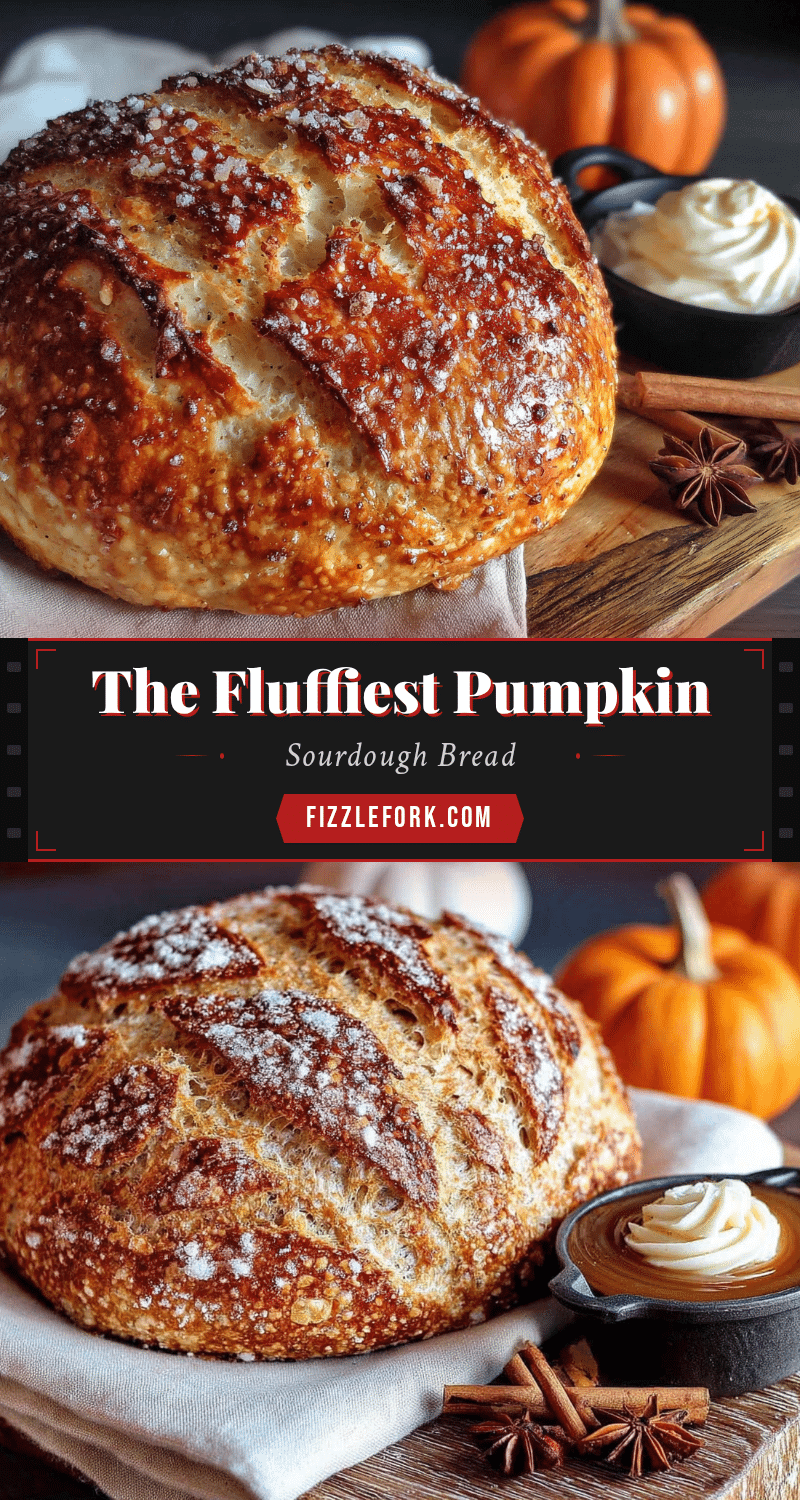
Easy Pumpkin Sourdough Discard Bread: Best Fall Recipe

This easy pumpkin sourdough discard bread is a moist, tender-crumbed loaf that uses up sourdough discard and pumpkin puree. It’s simple, forgiving, and produces a loaf that tastes like you put way more effort into it than you actually did.
- Prep Time: 15 minutes
- Cook Time: 55 minutes
- Total Time: 1 hour 10 minutes
- Yield: 10 servings 1x
- Category: Bread
- Cuisine: American
Ingredients
- 1 cup (240g) pumpkin puree (not pumpkin pie filling)
- 1 cup (240g) sourdough discard, unfed, straight from the fridge
- 2 cups (250g) all-purpose flour
- ¾ cup (150g) granulated sugar
- ½ cup (100g) packed brown sugar (light or dark)
- ½ cup (120ml) vegetable oil (or other neutral oil)
- 2 large eggs, room temperature
- 2 teaspoons vanilla extract
- 1 teaspoon baking soda
- ½ teaspoon baking powder
- ½ teaspoon salt
- 2 teaspoons ground cinnamon
- 1 teaspoon ground ginger
- ½ teaspoon ground nutmeg
- ¼ teaspoon ground cloves
Instructions
- Preheat your oven to 350°F (175°C). Position the rack in the center of the oven. Line a 9×5-inch loaf pan with parchment paper, leaving overhang on the long sides.
- In a medium bowl, whisk together the all-purpose flour, baking soda, baking powder, salt, cinnamon, ginger, nutmeg, and cloves until evenly distributed.
- In a large bowl, whisk together the pumpkin puree, sourdough discard, granulated sugar, brown sugar, vegetable oil, eggs, and vanilla extract until smooth and glossy.
- Add the dry mixture to the wet mixture in two additions, folding gently with a rubber spatula until just combined. Do not overmix; a few lumps are fine.
- Pour the batter into the prepared loaf pan and spread evenly. Tap the pan gently on the counter to release air bubbles.
- Bake for 50-60 minutes, until a toothpick inserted into the center comes out clean or with a few moist crumbs. If browning too quickly, tent with foil for the last 15 minutes.
- Cool in the pan for 15 minutes, then use the parchment sling to lift the loaf onto a wire rack to cool completely.
- Let the bread cool for at least 1 hour before slicing. For best flavor, wait until the next day.
Notes
Don’t overmix the batter. Use room temperature ingredients. Check baking soda freshness. Rotate the pan halfway through baking. Let cool completely before slicing. The bread tastes better the next day.
Nutrition
- Serving Size: 1 slice
- Calories: 285
- Sugar: 22
- Sodium: 300
- Fat: 12
- Saturated Fat: 2
- Carbohydrates: 40
- Fiber: 2
- Protein: 5
Keywords: pumpkin sourdough discard bread, easy pumpkin bread, sourdough discard recipe, fall baking, pumpkin bread with sourdough discard