It was 11:47 PM on a random Tuesday in late December, and I was wide awake with a very specific, almost irrational craving. I wanted the grandest, most celebratory roast imaginable—the kind you only see on holiday tables or in glossy magazine spreads. But here’s the thing: it was nearly midnight, the grocery store had been closed for hours, and my kitchen held the usual suspects—a bag of potatoes, some sad-looking carrots, and a stick of butter. I didn’t have a fancy standing rib roast (who does on a Tuesday night?), but I had a beautiful, thick-cut bone-in ribeye steak I’d stashed in the freezer for a “rainy day.” And then the idea arrived, clear as a bell: what if I treated that single, lonely steak like a miniature prime rib? What if I slathered it in a garlic-herb butter, slow-roasted it low and slow, and finished it with a screaming-hot sear? Honestly, it felt a little unhinged. But there, in the quiet of my kitchen with only the hum of the fridge for company, I gave it a shot. The result was so stupidly good, so tender and flavorful, that I knew I had to scale it up for the real deal. This Perfect Garlic Butter Prime Rib Roast is that midnight experiment, fully realized and ready for your holiday table. It’s the recipe that proves you don’t need a special occasion to make something spectacular—you just need a little bit of late-night bravery and a whole lot of garlic butter.
Why You’ll Love This Recipe
Let’s be honest—cooking a prime rib can feel intimidating. It’s expensive, it’s the centerpiece of your meal, and there’s a lot of pressure to get it right. But this recipe takes all that stress and tosses it out the window. I’ve tested this method more times than I can count (my neighbors have become very happy beneficiaries of my “mistakes”), and I can tell you with confidence: this is the one.
- Foolproof Method: The reverse-sear technique guarantees an evenly cooked, perfectly pink interior from edge to edge. No more gray bands and a raw center.
- Simple Ingredients: You don’t need a dozen exotic spices. Garlic, butter, salt, pepper, and fresh herbs—that’s the magic. You probably have most of this already.
- Perfect for Holiday Feasts: This roast is the undisputed star of Christmas dinner, New Year’s Eve, or any special gathering. It’s impressive without being fussy.
- Crowd-Pleaser: I have yet to meet someone who doesn’t go silent after their first bite of this. It’s that good. Kids and adults alike devour it.
- Unbelievably Tender: The garlic butter does double duty—it flavors the meat and helps create a crust that shatters, while the low-and-slow cook makes the meat so tender you can cut it with a fork.
This isn’t just another prime rib recipe. The secret is in the compound butter—a generous smear of softened butter packed with fresh garlic, rosemary, and thyme. It’s the kind of simple technique that transforms a great cut of beef into an unforgettable one. You know that feeling when you take a bite and just have to close your eyes for a second? That’s what we’re going for here. It’s comfort food at its most elegant, and it’s easier than you think.
What Ingredients You Will Need
This recipe relies on a handful of high-quality ingredients to deliver maximum flavor. The beauty is in the simplicity—each component plays a crucial role, from the rich fat in the butter to the aromatic punch of fresh herbs.
- For the Garlic Butter:
- 1/2 cup (1 stick) unsalted butter, softened: (I prefer Kerrygold for its rich, grassy flavor) Make sure it’s at room temperature so it spreads easily.
- 6-8 cloves garlic, minced: Don’t skimp here. The garlic mellows and sweetens as it roasts, infusing the entire roast.
- 2 tablespoons fresh rosemary, finely chopped: (adds a piney, aromatic note)
- 2 tablespoons fresh thyme leaves: (use lemon thyme if you can find it for a subtle citrus lift)
- 1 teaspoon kosher salt: (Diamond Crystal is my go-to for its clean taste)
- 1/2 teaspoon freshly ground black pepper: (don’t use pre-ground—it makes a difference)
- For the Prime Rib:
- 1 (4-5 pound) bone-in prime rib roast: (look for one with good marbling—the fat is flavor). Ask your butcher to French the bones for a cleaner look.
- 2 tablespoons kosher salt: For that perfect crust. I use a flaky sea salt like Maldon for the final sprinkle.
- 1 tablespoon freshly ground black pepper
- 1 tablespoon olive oil: (helps the seasoning stick and promotes browning)
Ingredient Selection Tips: When choosing your roast, look for one that has a nice, even layer of fat on top. This fat cap bastes the meat as it renders, keeping it juicy. If you’re using a boneless roast, reduce the cooking time slightly (by about 10-15 minutes per pound). For a dairy-free option, you can substitute the butter with a high-quality vegan butter or even duck fat for a different flavor profile. I’ve also made this with a grass-fed roast, and while it’s leaner, it’s still incredibly delicious—just be careful not to overcook it.
Equipment Needed
You don’t need a ton of fancy gear for this recipe, but a few key tools will make your life much easier. I’ve learned the hard way that a cheap meat thermometer can ruin a roast, so invest in a good one.
- Roasting Pan with a Rack: The rack elevates the roast so hot air can circulate, ensuring even cooking. No rack? No problem. Place the roast on a bed of thick carrot and onion slices.
- Instant-Read Meat Thermometer: This is non-negotiable. A digital probe thermometer that you can leave in the roast while it cooks is ideal. I love my Thermapen—it’s fast and accurate.
- Chef’s Knife: A sharp 8-inch chef’s knife makes mincing garlic and herbs a breeze.
- Kitchen Twine: For tying the roast between the bones. It helps the roast cook more evenly and keeps its shape.
- Small Bowl: For mixing your compound butter.
- Aluminum Foil: For tenting the roast while it rests.
Budget-Friendly Tip: If you don’t have a roasting rack, a wire cooling rack set inside a rimmed baking sheet works perfectly. I’ve used that setup for years and it’s never let me down. Just make sure the pan is sturdy enough to handle the weight.
Preparation Method
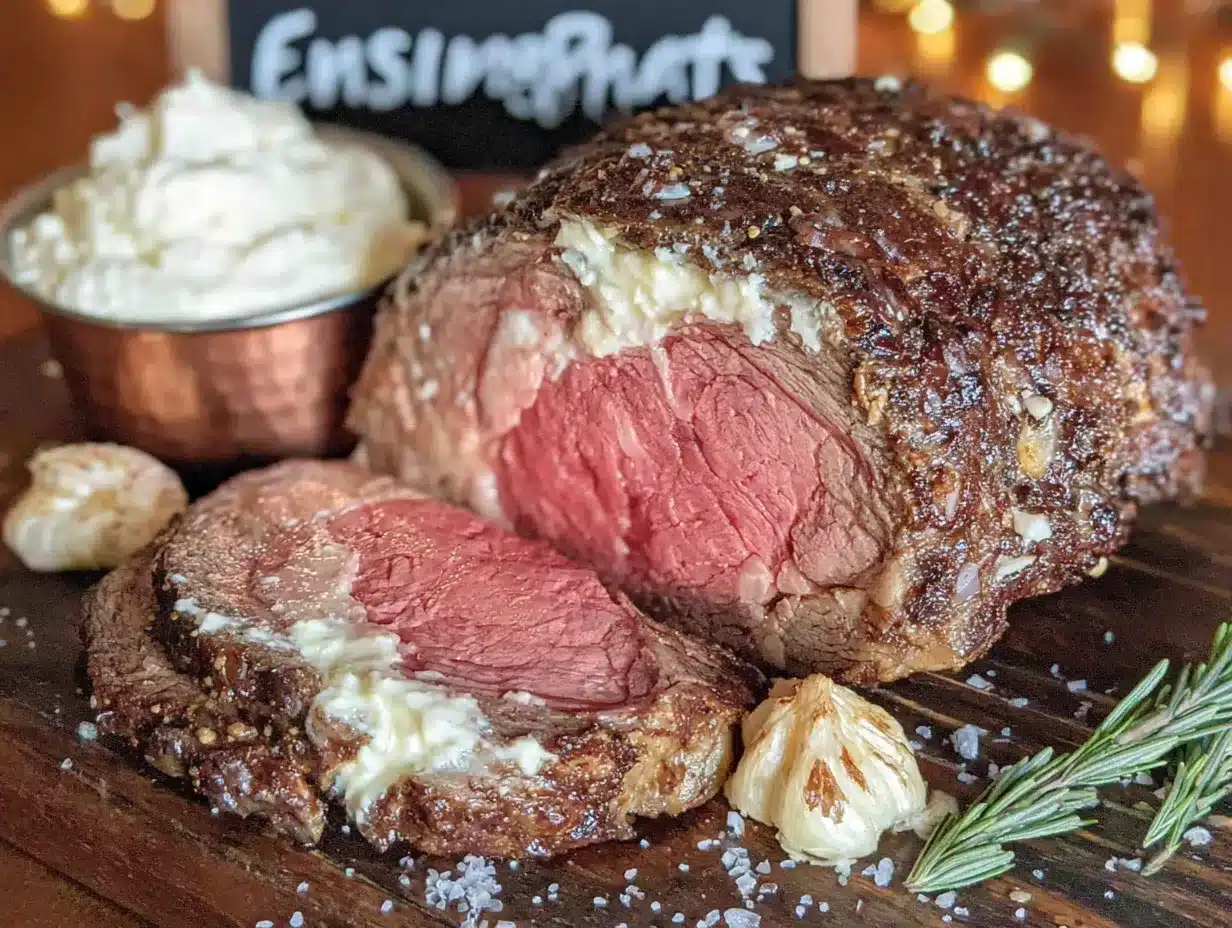
Alright, let’s get to the good part. This method is all about patience and trust. Follow these steps, and you will be rewarded with the most magnificent roast of your life.
- Take the Chill Off (2-3 hours before cooking): Remove your prime rib from the refrigerator and let it sit at room temperature for at least 2 hours. This is crucial for even cooking. A cold roast will cook unevenly, giving you a raw center and an overcooked exterior. Pat it dry with paper towels—dry meat browns better.
- Make the Garlic Butter (15 minutes before cooking): In a small bowl, combine the softened butter, minced garlic, rosemary, thyme, 1 teaspoon of salt, and 1/2 teaspoon of pepper. Mash it all together with a fork until it’s well combined and fragrant. Set it aside. (Pro tip: you can make this butter a day ahead and keep it in the fridge—just let it soften again before using.)
- Season the Roast (10 minutes before cooking): Drizzle the olive oil all over the roast. Then, season it generously with the remaining 2 tablespoons of salt and 1 tablespoon of pepper. Don’t be shy—most of the seasoning will fall off during cooking, so you need to be liberal. Rub it into all the nooks and crannies, including the bones.
- Slather on the Butter (5 minutes): Now, take your garlic butter and spread it evenly over the entire surface of the roast. Don’t forget the ends! This butter is going to create a beautiful, flavorful crust as it melts and bastes the meat. Tie the roast between the bones with kitchen twine—this helps it cook evenly.
- Low and Slow Roast (Cooking time: about 2.5-3 hours): Preheat your oven to 250°F (120°C). Place the roast on a rack in a roasting pan, fat side up. Insert your probe thermometer into the thickest part of the meat, making sure it’s not touching bone. Roast until the internal temperature reaches 120°F (49°C) for medium-rare. This usually takes about 25-30 minutes per pound, but always trust your thermometer over time. The roast will look pale and unassuming at this stage—don’t worry, that’s normal.
- The Searing Finish (15 minutes): Once the roast hits 120°F, remove it from the oven. Increase the oven temperature to 500°F (260°C). While it’s heating up, tent the roast loosely with foil. Once the oven is screaming hot, remove the foil and return the roast to the oven. Roast for 8-12 minutes, or until the crust is deeply browned and the internal temperature reaches 130-135°F (54-57°C) for medium-rare. Keep a close eye on it—it can go from perfect to overdone very quickly at this temperature.
- Rest, Rest, Rest (20-30 minutes): This is the most important step. Remove the roast from the oven and transfer it to a cutting board. Tent it loosely with foil and let it rest for at least 20 minutes. The internal temperature will continue to rise by about 5-10 degrees during this time (this is called carryover cooking). The resting period allows the juices to redistribute throughout the meat. If you cut into it too soon, all those precious juices will run out onto the cutting board instead of staying in the meat.
- Carve and Serve (5 minutes): After resting, remove the twine and slice the roast between the bones into thick, glorious slices. Serve immediately with your favorite sides, like creamy mashed potatoes, roasted vegetables, or a fresh horseradish sauce.
Sensory Cues: At the end of the low-and-slow roast, the meat should feel springy to the touch, not firm. When you insert your thermometer, it should slide in with very little resistance. During the searing stage, you’ll hear a satisfying sizzle as the butter hits the hot pan—that’s the sound of flavor being created.
Cooking Tips & Techniques
I’ve made every mistake in the book with prime rib, so you don’t have to. Here are the lessons I learned the hard way.
- Don’t Skip the Rest: I know it’s tempting to carve right away, especially when everyone is hungry and the kitchen smells amazing. But I once caved and cut into a roast after only 10 minutes of resting. The juices flooded the cutting board, and the meat was noticeably drier. Trust me on this one—20 minutes minimum.
- Use a Probe Thermometer: The oven temperature is a suggestion, not a rule. Every oven runs differently. The only way to guarantee perfect doneness is to use a thermometer. I learned this after serving a well-done prime rib to a table of medium-rare lovers. It was a quiet dinner.
- The Reverse Sear is Your Friend: This method (cooking low and slow, then searing at high heat) is superior to the traditional method of searing first and then roasting. Why? Because it cooks the meat more evenly. The traditional method can leave you with a thick, overcooked “gray band” under the crust. The reverse sear gives you a beautiful, even pink from edge to edge.
- Don’t Overcrowd the Pan: If you’re making a large roast, make sure it has room in the pan. The hot air needs to circulate. If the roast is touching the sides of the pan, it will steam instead of roast.
- Salt Early: If you have time, salt the roast the night before and leave it uncovered in the fridge. This dry-brines the meat, drawing out moisture and then reabsorbing it with the salt for deeper seasoning. I do this whenever I can, and the difference is real.
Variations & Adaptations
This recipe is a fantastic base, but don’t be afraid to make it your own. Here are a few ways I’ve played with it.
- Herb Crust Variation: Add 2 tablespoons of finely chopped fresh parsley and 1 tablespoon of fresh oregano to the garlic butter. This gives the crust a more complex, herbaceous flavor that pairs beautifully with the beef.
- Spicy Garlic Butter: For a kick, add 1 teaspoon of red pepper flakes or 1/2 teaspoon of cayenne pepper to the butter. The heat cuts through the richness of the meat perfectly.
- Red Wine Au Jus: After removing the roast to rest, place the roasting pan on the stovetop over medium heat. Add 1 cup of dry red wine and 1 cup of beef broth. Scrape up the browned bits from the bottom of the pan (this is called deglazing). Simmer for 5 minutes, then strain. This makes a simple, delicious sauce.
- Horseradish Cream Sauce: Mix 1/2 cup sour cream, 2 tablespoons prepared horseradish (drained), 1 tablespoon fresh lemon juice, and a pinch of salt. This tangy, creamy sauce is the classic companion to prime rib.
- Dairy-Free Adaptation: Use a high-quality vegan butter or ghee (which is lactose-free) in place of the regular butter. The result is still rich and flavorful.
I once made a version with a coffee-chili rub instead of the garlic butter, just to see what would happen. It was good, but honestly? It didn’t hold a candle to the original. The garlic butter is the star here, and I always come back to it.
Serving & Storage Suggestions
This roast is a showstopper, so let it shine. Here’s how to serve and store it like a pro.
Serving: Serve the prime rib hot, right after its rest. Arrange the slices on a warm platter. I like to spoon a little of the pan juices over the top just before serving for extra moisture and flavor. It’s gorgeous alongside creamy mashed potatoes, roasted Brussels sprouts with balsamic glaze, or a simple arugula salad with lemon vinaigrette to cut through the richness. A full-bodied red wine, like a Cabernet Sauvignon or a Malbec, is the perfect pairing.
Storage: Leftover prime rib is a gift. Store any leftover slices in an airtight container in the refrigerator for up to 4 days. The meat will actually become more tender as it sits in its own juices.
Reheating: The key to reheating prime rib is to do it gently. The worst thing you can do is nuke it in the microwave—it will turn it into shoe leather. Instead, place the slices in a single layer in a baking dish, add a splash of beef broth or au jus, cover with foil, and warm in a 300°F (150°C) oven for 10-15 minutes. You can also reheat slices in a skillet over medium-low heat with a pat of butter, flipping once. The flavors actually deepen overnight, making leftover sandwiches the next day an absolute treat. Try it on a crusty roll with some horseradish sauce and arugula—you’ll thank me later.
Nutritional Information & Benefits
While prime rib is certainly a treat, it does offer some nutritional benefits when enjoyed in moderation. Here’s a rough estimate for a 6-ounce serving (about the size of two thick slices).
- Calories: 450-550
- Protein: 40-45g
- Fat: 35-40g
- Saturated Fat: 15-18g
- Iron: 15% of the Daily Value (DV)
- Vitamin B12: 80% of the DV
- Zinc: 35% of the DV
Health Benefits: Beef is an excellent source of high-quality protein, which is essential for muscle building and repair. It’s also rich in iron, which helps carry oxygen in the blood, and Vitamin B12, which supports nerve function. The grass-fed version, if you can find it, has a better ratio of omega-3 to omega-6 fatty acids. This is a meal for celebration, not for every day, but it’s one that can absolutely be part of a balanced diet. I always feel satisfied and nourished after a serving—never heavy or guilty.
Dietary Considerations: This recipe is gluten-free and low-carb. It contains dairy (butter). For a dairy-free option, use the vegan butter or ghee as mentioned above.
Conclusion
This Perfect Garlic Butter Prime Rib Roast isn’t just a recipe—it’s an experience. It’s the centerpiece that turns a holiday meal into a memory. It’s the dish that makes everyone at the table go quiet for a moment, then erupt into praise. It’s the recipe you’ll pull out year after year, the one your family will start asking for as soon as the weather turns cold.
I love this recipe because it proves that you don’t need to be a professional chef to create something truly spectacular. With a little patience, a good thermometer, and a whole lot of garlic butter, anyone can pull this off. It’s forgiving, it’s impressive, and it’s absolutely delicious.
Now, I want to hear from you! Have you tried this recipe? Did you add your own twist? Let me know in the comments below. And if you loved it, please share this post with a friend who needs a showstopper for their next holiday feast. Happy cooking, and here’s to a table full of joy and incredible food!
Frequently Asked Questions
Can I use a boneless prime rib roast for this recipe?
Absolutely! A boneless roast works perfectly. The main difference is cooking time—boneless roasts tend to cook a little faster because the bone isn’t there to insulate the meat. I recommend checking the temperature about 10-15 minutes earlier than you would for a bone-in roast. The flavor is just as incredible.
What if I don’t have fresh herbs? Can I use dried?
You can, but the flavor won’t be quite as bright. If using dried herbs, use about one-third of the amount. So, for 2 tablespoons of fresh rosemary, use about 2 teaspoons of dried. I personally think fresh herbs make a noticeable difference in this recipe, but in a pinch, dried will work.
How do I know when the prime rib is done without a thermometer?
Honestly, I really recommend using a thermometer. It’s the only foolproof way. But if you’re in a bind, you can use the “hand test.” Touch the fleshy part of your palm under your thumb. For medium-rare, the meat should feel like that when you touch your thumb to your ring finger. It’s not perfect, but it’s a decent guide. Still, get a thermometer—your future self will thank you.
Can I prepare the garlic butter ahead of time?
Yes, and I often do! You can make the compound butter up to 3 days in advance. Just roll it into a log using plastic wrap, twist the ends, and store it in the fridge. When you’re ready to use it, let it sit at room temperature for about 30 minutes to soften enough to spread.
My roast is bigger or smaller than 4-5 pounds. How do I adjust the cooking time?
The general rule of thumb is 25-30 minutes per pound at 250°F (120°C) for medium-rare. So, a 6-pound roast would take about 2.5 to 3 hours. But again, I cannot stress this enough: use a meat thermometer. Time is just a guideline; temperature is the truth. Start checking the internal temperature about 20 minutes before you think it should be done.
Pin This Recipe!
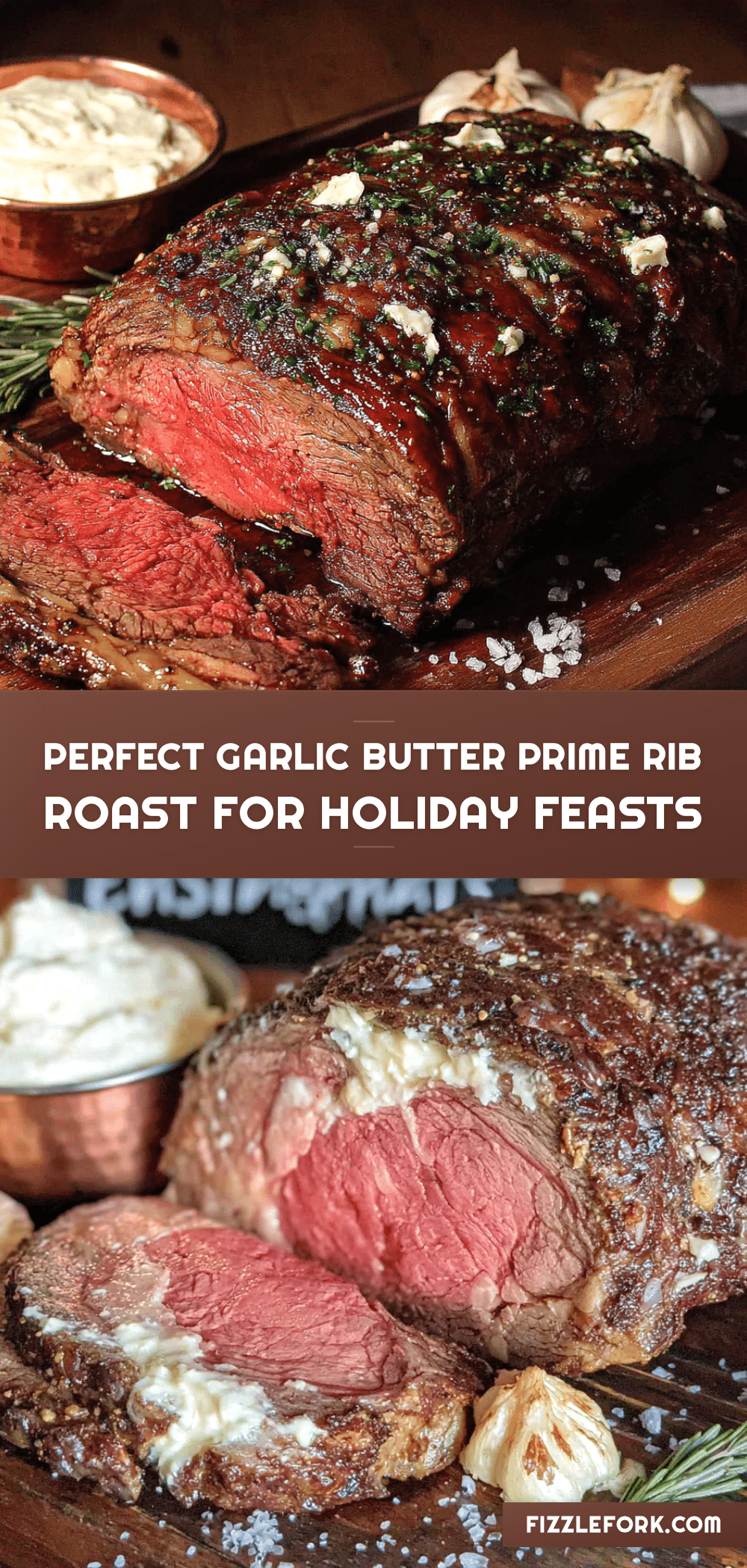
Perfect Garlic Butter Prime Rib Roast Recipe
This Perfect Garlic Butter Prime Rib Roast is a showstopper for holiday feasts, featuring a foolproof reverse-sear method and a rich garlic-herb butter that creates an incredibly tender, flavorful roast with a perfectly pink interior.
- Prep Time: 15 minutes
- Cook Time: 2 hours 45 minutes
- Total Time: 3 hours 30 minutes
- Yield: 8 servings 1x
- Category: Main Course
- Cuisine: American
Ingredients
- 1/2 cup (1 stick) unsalted butter, softened
- 6–8 cloves garlic, minced
- 2 tablespoons fresh rosemary, finely chopped
- 2 tablespoons fresh thyme leaves
- 1 teaspoon kosher salt
- 1/2 teaspoon freshly ground black pepper
- 1 (4-5 pound) bone-in prime rib roast
- 2 tablespoons kosher salt
- 1 tablespoon freshly ground black pepper
- 1 tablespoon olive oil
Instructions
- Remove the prime rib from the refrigerator and let it sit at room temperature for at least 2 hours. Pat it dry with paper towels.
- In a small bowl, combine the softened butter, minced garlic, rosemary, thyme, 1 teaspoon of salt, and 1/2 teaspoon of pepper. Mash together with a fork until well combined.
- Drizzle the olive oil all over the roast. Season generously with the remaining 2 tablespoons of salt and 1 tablespoon of pepper, rubbing into all nooks and crannies.
- Spread the garlic butter evenly over the entire surface of the roast. Tie the roast between the bones with kitchen twine.
- Preheat oven to 250°F (120°C). Place the roast on a rack in a roasting pan, fat side up. Insert a probe thermometer into the thickest part of the meat, avoiding bone.
- Roast until internal temperature reaches 120°F (49°C) for medium-rare, about 25-30 minutes per pound (2.5-3 hours total).
- Remove roast from oven. Increase oven temperature to 500°F (260°C). Tent roast loosely with foil while oven heats.
- Remove foil and return roast to the hot oven. Roast for 8-12 minutes until crust is deeply browned and internal temperature reaches 130-135°F (54-57°C) for medium-rare.
- Remove roast from oven and transfer to a cutting board. Tent loosely with foil and let rest for at least 20 minutes.
- Remove twine and slice between the bones into thick slices. Serve immediately.
Notes
For best results, use a meat thermometer. The reverse sear method ensures even cooking. Let the roast rest at least 20 minutes before carving to retain juices. For a dairy-free option, substitute with vegan butter or ghee.
Nutrition
- Serving Size: 6 ounces
- Calories: 500
- Sodium: 800
- Fat: 38
- Saturated Fat: 17
- Carbohydrates: 1
- Protein: 43
Keywords: prime rib, garlic butter, roast beef, holiday recipe, Christmas dinner, reverse sear, bone-in prime rib