My roommate Jen asked why I couldn’t just pour the glaze on before baking. I started to explain why that wouldn’t work—something about the sugar burning, the glaze separating, the whole thing turning into a sticky mess. Then I stopped. Honestly? I had no real reason. I’d just always done it the other way, brushing it on in layers halfway through like some kind of meatloaf ritual handed down from the gods of home economics.
“You know what,” I said, “let’s try it.”
I was trying to teach her how to make my grandmother’s meatloaf that Tuesday night—the one with the brown sugar glaze that everyone in my family fights over. Jen had never made meatloaf before. She’d watched me mix the meat, crush the saltines, dice the onion. But when I reached for the glaze ingredients, she stopped me. “Why don’t you just put it all on at the start and let it caramelize?”
I felt that twinge of kitchen superiority. You know the one—when you’re sure your way is the only way because that’s how it’s always been done. I almost launched into a whole explanation about moisture ratios and sugar crystallization. But something made me pause. Maybe it was the way she was looking at the recipe with fresh eyes, unburdened by twenty years of “that’s how Mom did it.”
So I handed her the bowl. “You do it.”
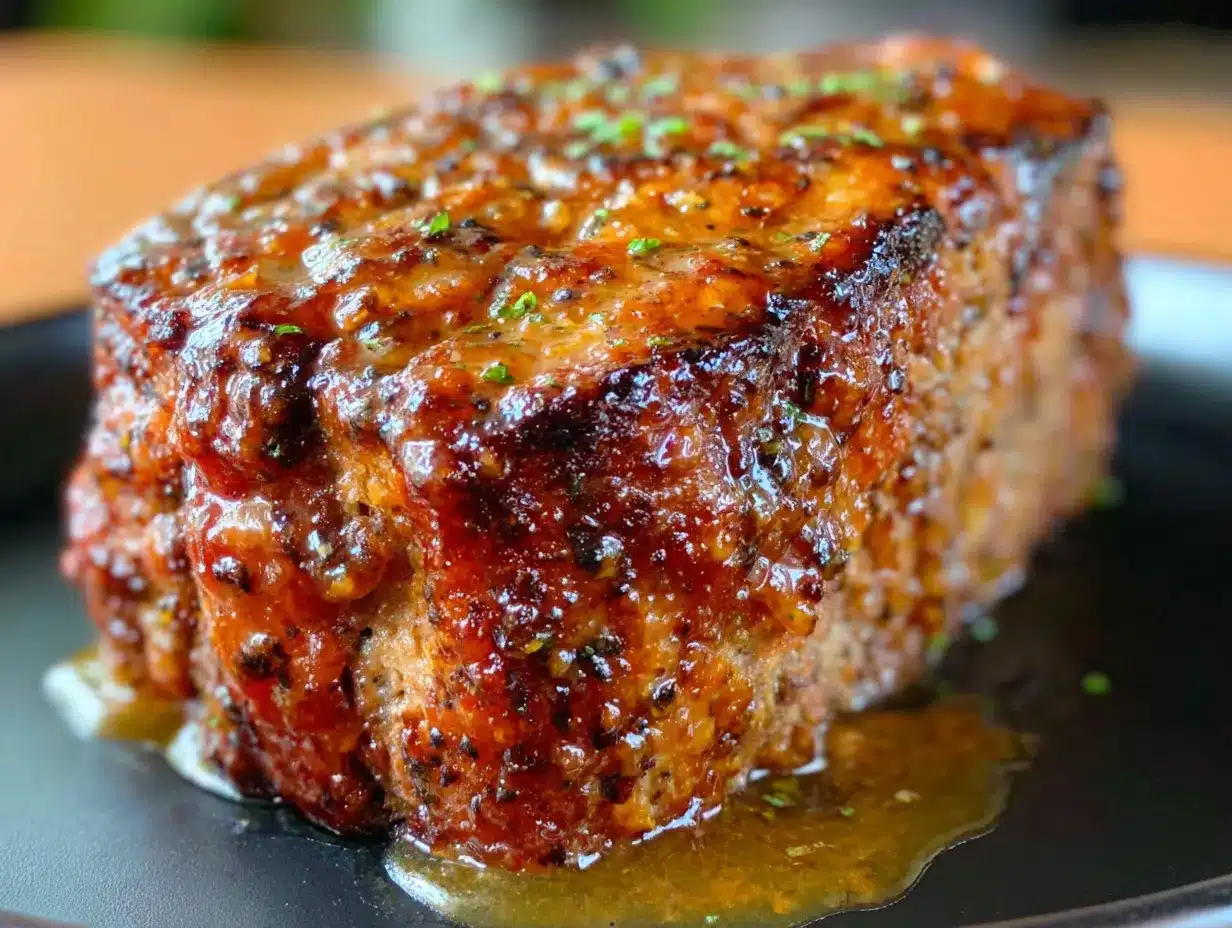
She poured the entire brown sugar glaze over the top of the meatloaf before it even hit the oven. I winced internally. We baked it for an hour, and let me tell you—that glaze didn’t burn. It didn’t separate. It turned into this incredible, sticky, caramelized crust that was somehow better than any version I’d ever made. The brown sugar melted into the meat, creating these little pockets of sweetness that balanced the savory beef perfectly.
I stood there eating a slice at the counter, genuinely humbled. Jen just smiled and said, “Told you.”
That night changed how I make meatloaf forever. And now every time I pull this old-fashioned meatloaf with brown sugar glaze out of the oven, I think about how sometimes the best cooking advice comes from someone who doesn’t know they’re not supposed to know better.
Why You’ll Love This Recipe
This isn’t just another meatloaf recipe—it’s the one that gets requested for birthdays, the one that disappears at potlucks, the one people text you about the next day asking for the recipe. I’ve tested this version at least a dozen times, tweaking the ratio of beef to pork, adjusting the glaze thickness, and timing the bake until it was absolutely foolproof. Here’s why it works:
- Incredibly Moist: The combination of ground beef and pork, plus the milk-soaked breadcrumbs, keeps every slice tender and juicy. No dry meatloaf here.
- That Brown Sugar Glaze: This is the star. The sweet-tangy glaze caramelizes into a sticky crust that contrasts perfectly with the savory meat. You’ll want to put it on everything.
- Simple Pantry Ingredients: No fancy trips to specialty stores. Everything you need is probably in your kitchen right now—onion, ketchup, brown sugar, Worcestershire sauce.
- Perfect for Entertaining: This meatloaf feeds a crowd, looks impressive on a platter, and can be prepped entirely ahead of time. Your guests will think you spent hours on it.
- Leftovers Are Legendary: Cold meatloaf sandwiches the next day? Yes, please. This recipe tastes even better after the flavors meld overnight.
What makes this old-fashioned meatloaf with brown sugar glaze different from all the others? It’s the technique of applying the glaze before baking—letting it caramelize slowly into the meat rather than brushing it on as an afterthought. Plus, I add a pinch of smoked paprika that gives it a subtle warmth you won’t find in standard recipes. It’s comfort food at its finest, the kind that makes you close your eyes after the first bite and forget whatever stressful thing happened that day.
What Ingredients You Will Need
This recipe uses simple, honest ingredients to create something genuinely special. Most of these are pantry staples, which is exactly what you want when you’re hosting and need something reliable. Here’s what you’ll need:
For the Meatloaf
- 2 pounds ground beef (80/20) — The fat content is important here. 80/20 gives you enough moisture without being greasy. I prefer ground chuck for the best flavor.
- 1 pound ground pork — This adds richness and keeps the meatloaf from being too dense. If you can’t find ground pork, substitute with more beef.
- 1 cup plain breadcrumbs — Not seasoned. You want control over the seasoning. Panko works great too if that’s what you have.
- 1 cup whole milk — This soaks into the breadcrumbs and keeps everything tender. Use 2% if that’s what’s in your fridge, but avoid skim.
- 1 medium yellow onion, finely diced — About 1 cup. Don’t skip this—it adds moisture and sweetness as it cooks.
- 3 cloves garlic, minced — Fresh garlic only. The jarred stuff won’t give you the same punch.
- 2 large eggs, lightly beaten — These bind everything together. Make sure they’re room temperature so they incorporate evenly.
- 1/4 cup ketchup — Adds a touch of sweetness and acidity. I use Heinz, but any brand works.
- 2 tablespoons Worcestershire sauce — This is non-negotiable. It gives that deep umami flavor that makes meatloaf taste like meatloaf.
- 1 tablespoon Dijon mustard — Adds a subtle tang. Yellow mustard works in a pinch.
- 1 teaspoon smoked paprika — My secret ingredient. It adds a gentle smokiness that complements the brown sugar glaze perfectly.
- 1 teaspoon salt — Use kosher salt if you have it. If using table salt, reduce to 3/4 teaspoon.
- 1/2 teaspoon black pepper — Freshly ground is always better.
- 1/2 teaspoon dried thyme — Optional but lovely. It adds an earthy note that cuts through the richness.
For the Brown Sugar Glaze
- 1/2 cup packed light brown sugar — Light brown sugar gives you that molasses flavor without being overpowering. Dark brown sugar works too, but the glaze will be more intense.
- 1/2 cup ketchup — The base of the glaze. This balances the sweetness of the brown sugar.
- 2 tablespoons apple cider vinegar — Adds brightness and cuts through the richness. White vinegar works in a pinch.
- 1 tablespoon Worcestershire sauce — For depth. You can never have too much Worcestershire in a meatloaf.
- 1 teaspoon garlic powder — Not fresh garlic here—the powder dissolves better into the glaze.
- 1/2 teaspoon smoked paprika — To tie it back to the meatloaf itself. Everything should feel cohesive.
Equipment Needed
You don’t need much for this recipe, which is part of its beauty. Here’s what you’ll need:
- Large mixing bowl — Big enough to get your hands in there. I use a stainless steel bowl because it doesn’t retain odors.
- 9×5-inch loaf pan — Standard size. If you don’t have one, you can shape the meatloaf free-form on a baking sheet lined with parchment paper.
- Baking sheet — Place the loaf pan on a baking sheet to catch any drips. Trust me, you’ll thank me later.
- Measuring cups and spoons — For accuracy. Meatloaf is forgiving, but the glaze ratios matter.
- Chef’s knife and cutting board — For dicing the onion and mincing the garlic.
- Small saucepan — For making the glaze. You can also whisk it together in a bowl, but heating it helps the sugar dissolve.
- Whisk — For combining the glaze ingredients smoothly.
- Spatula or spoon — For spreading the glaze. An offset spatula works beautifully if you have one.
- Meat thermometer — This is crucial. Don’t guess doneness—use a thermometer. It’s the difference between perfect and overdone.
If you don’t have a loaf pan, shape the meatloaf into a free-form log on a parchment-lined baking sheet. It cooks faster and gets more of that caramelized crust on the sides. I actually prefer this method now—the edges get extra crispy.
Preparation Method
Let’s get cooking. This old-fashioned meatloaf with brown sugar glaze comes together in about 15 minutes of active prep time, then the oven does the rest. Perfect for when you’re hosting and need something that looks impressive without keeping you stuck in the kitchen.
- Preheat your oven to 350°F (175°C). Position the rack in the center of the oven. While it’s heating, line a baking sheet with parchment paper or foil for easy cleanup.
- Soak the breadcrumbs in milk. In your large mixing bowl, combine the breadcrumbs and milk. Let them sit for 5 minutes until the breadcrumbs have absorbed most of the liquid. This creates what’s called a panade—it’s the secret to tender meatloaf. Don’t skip this step.
- Prepare the glaze. While the breadcrumbs soak, make the glaze. In a small saucepan over medium heat, combine the brown sugar, ketchup, apple cider vinegar, Worcestershire sauce, garlic powder, and smoked paprika. Whisk until the sugar dissolves and the mixture is smooth, about 2-3 minutes. Remove from heat and set aside. Taste it—it should be sweet, tangy, and a little smoky. Adjust with more vinegar if you want more tang.
- Cook the aromatics. In a small skillet over medium heat, add a splash of olive oil. Sauté the diced onion for 4-5 minutes until translucent. Add the minced garlic and cook for another 30 seconds until fragrant. Let this cool for a few minutes—you don’t want hot onions cooking the meat prematurely.
- Combine the meat mixture. To the soaked breadcrumbs, add the ground beef, ground pork, sautéed onion and garlic, beaten eggs, ketchup, Worcestershire sauce, Dijon mustard, smoked paprika, salt, pepper, and thyme if using. Here’s the important part: use your hands to mix everything together gently. Overmixing makes meatloaf tough. Just combine until you don’t see any streaks of raw meat. It should look homogenous but not compacted.
- Test the seasoning. Take a small spoonful of the mixture and cook it in the microwave for 15-20 seconds. Taste it. Adjust salt and pepper if needed. This little step has saved me from serving underseasoned meatloaf more times than I can count.
- Shape the meatloaf. Transfer the meat mixture to your loaf pan or shape it into a free-form loaf on your prepared baking sheet. If using a loaf pan, gently press the mixture in—don’t pack it tight. If shaping free-form, form it into a uniform log about 8 inches long and 4 inches wide. Make sure the top is slightly domed so it bakes evenly.
- Apply the glaze. Here’s where Jen’s method comes in. Pour about two-thirds of the glaze over the top of the meatloaf. Use a spatula to spread it evenly, letting it drip down the sides. Reserve the remaining glaze for later. Don’t worry if it seems like a lot—it will caramelize and reduce as it bakes.
- Bake the meatloaf. Place the meatloaf on the middle rack and bake for 45 minutes. After 45 minutes, remove it from the oven and brush on the remaining glaze. Return it to the oven and continue baking for another 15-20 minutes, or until the internal temperature reaches 160°F (71°C) when measured at the center. The glaze should be dark, sticky, and bubbling.
- Rest before slicing. This is non-negotiable. Remove the meatloaf from the oven and let it rest on the counter for 10-15 minutes. The internal temperature will continue rising to about 165°F (74°C) during this time. Resting allows the juices to redistribute so your slices stay intact instead of crumbling apart.
- Slice and serve. Use a sharp knife to cut even slices, about 1-inch thick. Spoon any glaze that’s pooled on the baking sheet over the slices. Serve warm.
Cooking Tips & Techniques
After making this old-fashioned meatloaf with brown sugar glaze more times than I can count, I’ve learned a few things the hard way. Here’s what I wish someone had told me:
Don’t skip the panade. I once tried to save time by mixing the breadcrumbs dry into the meat. The result was a dense, crumbly meatloaf that fell apart on the plate. The milk-soaked breadcrumbs create steam as the meatloaf bakes, keeping everything tender and moist. It’s worth the extra five minutes.
Use a thermometer. I’ve overcooked more meatloaves than I want to admit, convinced that “it looked done.” Ground meat needs to reach 160°F for safety, but going past 170°F dries it out. A meat thermometer takes the guesswork out. Insert it into the center of the loaf, not touching the pan.
Let it rest. I know you’re hungry. I know the smell is driving you crazy. But slicing into a hot meatloaf is like cutting into a cake that’s still in the oven—it will fall apart. The resting period is when the magic happens. The juices redistribute, the structure sets, and you get clean, beautiful slices.
Line your pan. The brown sugar glaze gets sticky as it caramelizes. If you’re using a loaf pan, line it with parchment paper, leaving overhang on the sides. This lets you lift the whole meatloaf out cleanly without scraping the bottom. I learned this after spending twenty minutes scrubbing a pan.
Make extra glaze. The recipe makes just enough for one loaf, but I always double it. Having extra glaze to spoon over the slices at the table feels indulgent and makes the presentation look restaurant-worthy. Plus, leftovers reheat beautifully with a little extra glaze brushed on top.
Don’t overmix. This is the most common mistake. Mixing the meat too much develops the proteins and makes the meatloaf tough. Use your hands and a light touch. Stop as soon as everything is combined—even if there are a few small streaks. They’ll disappear during baking.
Variations & Adaptations
One of the best things about this old-fashioned meatloaf with brown sugar glaze is how adaptable it is. Here are some variations I’ve tried and loved:
Turkey Meatloaf: Substitute the ground beef and pork with 3 pounds of ground turkey (93/7). Add 2 tablespoons of olive oil to compensate for the lower fat content. The cooking time stays about the same, but check the temperature at 50 minutes. Turkey meatloaf can dry out quickly, so don’t skip the panade.
Gluten-Free Version: Replace the breadcrumbs with gluten-free panko or crushed rice crackers. I’ve used both with excellent results. Make sure your Worcestershire sauce is gluten-free—Lea & Perrins is, but some generic brands aren’t. The texture is slightly different but still delicious.
Spicy Kick: Add 1-2 tablespoons of sriracha or your favorite hot sauce to the meat mixture, and stir a teaspoon of cayenne pepper into the glaze. The sweetness of the brown sugar balances the heat beautifully. I made this version for a Super Bowl party and it disappeared faster than the regular one.
Cheese-Stuffed Meatloaf: Flatten the meat mixture into a rectangle on a piece of parchment paper. Spread a layer of shredded cheddar or mozzarella down the center, then use the parchment to roll it up like a log. Seal the edges and bake as directed. The cheese melts into the center and creates pockets of gooey goodness.
Mini Meatloaves: Divide the mixture into 6-8 individual portions and shape them into small loaves on a baking sheet. Reduce the baking time to 25-30 minutes. These are perfect for meal prep or when you’re feeding a smaller crowd. Plus, everyone gets extra edges with that caramelized glaze.
Serving & Storage Suggestions
This meatloaf is a showstopper on a dinner table. Here’s how to serve it and what to do with leftovers:
Serving Temperature: Serve warm, right after the resting period. The glaze should be glossy and sticky. If you’re hosting, let the meatloaf rest on a cutting board, then transfer it to a serving platter. Spoon any extra glaze over the top and garnish with fresh parsley or thyme sprigs for color.
What to Serve Alongside: Classic mashed potatoes are the obvious choice—the gravy from the meatloaf pools perfectly in them. Roasted green beans or steamed broccoli add color and freshness. For something lighter, a simple arugula salad with lemon vinaigrette cuts through the richness. And don’t forget crusty bread for sopping up any extra glaze.
Storage: Leftover meatloaf keeps in the refrigerator for up to 4 days. Wrap it tightly in foil or store it in an airtight container. The flavors actually deepen overnight, so leftovers taste even better. I’ve been known to make this meatloaf specifically for next-day sandwiches.
Reheating: For best results, reheat slices in a 300°F oven for 10-15 minutes, covered with foil to prevent drying. The microwave works in a pinch, but the texture won’t be as good. If you have extra glaze, brush it on before reheating to restore that sticky sweetness.
Freezing: This meatloaf freezes beautifully. Let it cool completely, then wrap it tightly in plastic wrap, followed by a layer of foil. Freeze for up to 3 months. To thaw, transfer to the refrigerator overnight. Reheat in a 300°F oven until warmed through. I like to freeze individual slices for quick lunches.
Cold Meatloaf Sandwiches: This deserves its own mention. Slice cold meatloaf thick, layer it on toasted white bread with a smear of mayonnaise and a squirt of ketchup. Add crisp lettuce and a slice of tomato if you’re feeling fancy. It’s the best part of making meatloaf, hands down.
Nutritional Information & Benefits
While this old-fashioned meatloaf with brown sugar glaze is definitely comfort food, it does have some redeeming nutritional qualities. Here’s a rough breakdown per serving (based on 8 servings):
| Nutrient | Amount Per Serving |
|---|---|
| Calories | 485 |
| Protein | 32g |
| Fat | 28g |
| Carbohydrates | 28g |
| Fiber | 1g |
| Sugar | 18g |
| Sodium | 780mg |
The beef and pork provide high-quality protein and essential B vitamins, including B12 for energy and iron for healthy blood. The onions and garlic offer antioxidants and anti-inflammatory compounds. And hey—the tomatoes in the ketchup and glaze contain lycopene, a powerful antioxidant. It’s not health food, but it’s real food made from real ingredients, which is always a win.
Dietary Considerations: This recipe contains gluten (breadcrumbs), dairy (milk), and eggs. For a gluten-free version, use gluten-free breadcrumbs. For a dairy-free version, substitute the milk with unsweetened almond milk or oat milk. The eggs help with binding, so I don’t recommend omitting them unless you’re using a flax egg substitute.
Conclusion
This old-fashioned meatloaf with brown sugar glaze has become my go-to for potlucks, family dinners, and any occasion where I need to feed a crowd without stress. It’s reliable, forgiving, and always gets compliments. The brown sugar glaze caramelizes into something magical, and the meat stays tender and juicy every single time.
I love this recipe because it reminds me that cooking isn’t about being right—it’s about being open to new ideas, even when they come from someone who’s never made the dish before. Jen taught me that sometimes the best version of a classic comes from breaking the rules a little. Now I pass that lesson on to everyone I share this recipe with.
Try it for your next gathering. Customize it however you like—swap the meat, add some heat, stuff it with cheese. Make it your own. And when someone asks why you put the glaze on before baking, tell them you learned it from a friend who didn’t know any better. That’s the best kind of cooking advice.
I’d love to hear how yours turns out. Leave a comment below and let me know what variations you tried. Did you add bacon? Use turkey? Make it into meatloaf muffins? Share your stories—I read every single one.
Frequently Asked Questions
Can I make this meatloaf ahead of time?
Absolutely. You can assemble the meatloaf completely, cover it, and refrigerate it up to 24 hours before baking. Just hold the glaze until you’re ready to bake. Add about 10-15 minutes to the baking time since you’re starting from cold.
Why did my meatloaf fall apart?
Most likely, it didn’t rest long enough before slicing, or the mixture was too dry. Make sure you’re using enough binding ingredients (eggs and breadcrumbs) and that you’re letting it rest for a full 10-15 minutes after baking. If it’s still falling apart, add an extra egg next time.
Can I use all beef instead of beef and pork?
Yes, you can use 3 pounds of ground beef instead of the beef-pork combination. The meatloaf will be slightly leaner and a bit denser. Consider using 80/20 ground beef to maintain moisture. You might also want to add an extra tablespoon of olive oil to compensate.
How do I know when the meatloaf is done?
Use a meat thermometer inserted into the center of the loaf. It should read 160°F (71°C). The glaze should be dark and caramelized, and the edges should be pulling away from the pan slightly. Don’t rely on visual cues alone—the thermometer is your best friend here.
Can I double this recipe?
Yes, this recipe doubles beautifully. Use two loaf pans or shape two free-form loaves on separate baking sheets. Make sure they’re not touching so the heat circulates evenly. The baking time may increase slightly—start checking the temperature at 55 minutes.
Pin This Recipe!
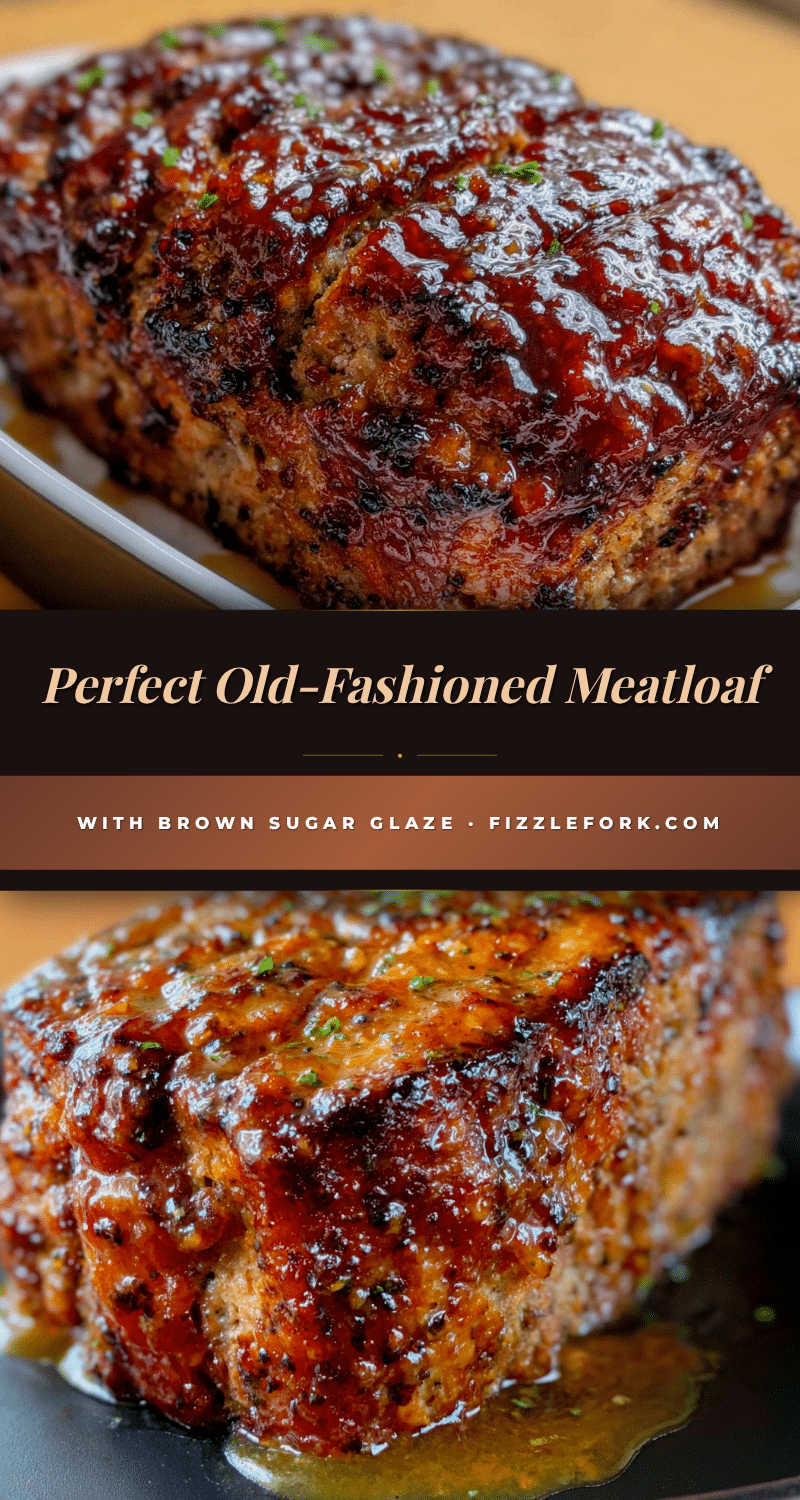
Perfect Old-Fashioned Meatloaf with Brown Sugar Glaze Recipe
This old-fashioned meatloaf with brown sugar glaze is incredibly moist, thanks to a combination of ground beef and pork plus a milk-soaked panade. The sweet-tangy glaze caramelizes into a sticky crust that contrasts perfectly with the savory meat, making it a crowd-pleasing comfort food classic.
- Prep Time: 15 minutes
- Cook Time: 1 hour
- Total Time: 1 hour 15 minutes
- Yield: 8 servings 1x
- Category: Main Course
- Cuisine: American
Ingredients
- 2 pounds ground beef (80/20)
- 1 pound ground pork
- 1 cup plain breadcrumbs
- 1 cup whole milk
- 1 medium yellow onion, finely diced
- 3 cloves garlic, minced
- 2 large eggs, lightly beaten
- 1/4 cup ketchup
- 2 tablespoons Worcestershire sauce
- 1 tablespoon Dijon mustard
- 1 teaspoon smoked paprika
- 1 teaspoon salt
- 1/2 teaspoon black pepper
- 1/2 teaspoon dried thyme (optional)
- 1/2 cup packed light brown sugar
- 1/2 cup ketchup
- 2 tablespoons apple cider vinegar
- 1 tablespoon Worcestershire sauce
- 1 teaspoon garlic powder
- 1/2 teaspoon smoked paprika
Instructions
- Preheat your oven to 350°F (175°C). Position the rack in the center of the oven. Line a baking sheet with parchment paper or foil for easy cleanup.
- In a large mixing bowl, combine the breadcrumbs and milk. Let them sit for 5 minutes until the breadcrumbs have absorbed most of the liquid.
- While the breadcrumbs soak, make the glaze. In a small saucepan over medium heat, combine the brown sugar, ketchup, apple cider vinegar, Worcestershire sauce, garlic powder, and smoked paprika. Whisk until the sugar dissolves and the mixture is smooth, about 2-3 minutes. Remove from heat and set aside.
- In a small skillet over medium heat, add a splash of olive oil. Sauté the diced onion for 4-5 minutes until translucent. Add the minced garlic and cook for another 30 seconds until fragrant. Let cool for a few minutes.
- To the soaked breadcrumbs, add the ground beef, ground pork, sautéed onion and garlic, beaten eggs, ketchup, Worcestershire sauce, Dijon mustard, smoked paprika, salt, pepper, and thyme if using. Use your hands to mix everything together gently until just combined.
- Take a small spoonful of the mixture and cook it in the microwave for 15-20 seconds. Taste and adjust salt and pepper if needed.
- Transfer the meat mixture to a 9×5-inch loaf pan or shape it into a free-form loaf on the prepared baking sheet. If using a loaf pan, gently press the mixture in—don’t pack it tight. If shaping free-form, form it into a uniform log about 8 inches long and 4 inches wide.
- Pour about two-thirds of the glaze over the top of the meatloaf. Use a spatula to spread it evenly, letting it drip down the sides. Reserve the remaining glaze.
- Place the meatloaf on the middle rack and bake for 45 minutes. After 45 minutes, remove it from the oven and brush on the remaining glaze. Return to the oven and continue baking for another 15-20 minutes, or until the internal temperature reaches 160°F (71°C) when measured at the center.
- Remove the meatloaf from the oven and let it rest on the counter for 10-15 minutes. The internal temperature will continue rising to about 165°F (74°C) during this time.
- Use a sharp knife to cut even slices, about 1-inch thick. Spoon any glaze that has pooled on the baking sheet over the slices. Serve warm.
Notes
Don’t skip the panade (milk-soaked breadcrumbs) as it keeps the meatloaf tender. Use a meat thermometer to ensure doneness without overcooking. Let the meatloaf rest for 10-15 minutes before slicing to allow juices to redistribute. For easier cleanup, line the loaf pan with parchment paper. The recipe can be doubled and freezes well.
Nutrition
- Serving Size: 1 slice (1/8 of loaf
- Calories: 485
- Sugar: 18
- Sodium: 780
- Fat: 28
- Saturated Fat: 10
- Carbohydrates: 28
- Fiber: 1
- Protein: 32
Keywords: meatloaf, old-fashioned meatloaf, brown sugar glaze, comfort food, ground beef, ground pork, easy dinner, family meal