I was standing in the middle of a chilly Saturday afternoon, staring into my refrigerator like it held the secrets to the universe. The truth is, I was just trying to figure out what to do with a whole chicken I’d bought on a whim two days earlier. That’s when my phone buzzed — a text from my neighbor, Miss Eula, who had lived three houses down for thirty-something years. “You lookin’ at that chicken like it’s gonna cook itself,” she wrote. I laughed out loud. She’d been watching me through her kitchen window — which, honestly, is just how things work in our neighborhood. Five minutes later, she was on my porch with a worn-out index card, her handwriting looping across the page in blue ink. “Chicken and dumplings,” she said. “My mama’s recipe. You need it more than I do today.”
Now, I’d had chicken and dumplings before. The kind from a can, the kind from a box, the kind at diners that tastes like salty gravy with something floating in it. But this was different. Miss Eula’s recipe didn’t start with shortcuts. It started with a whole bird, some patience, and a feeling that you were making something that mattered. The way she handed me that card — like she was passing along a secret — I knew this wasn’t just food. It was a conversation across generations, across kitchens, across women who understood that a pot of soup could hold more than just ingredients.
I’ll be honest with you: the first time I made it, I messed up the dumplings. They came out dense and chewy, like little hockey pucks floating in the broth. Miss Eula just shrugged when I told her. “First batch is always a lesson,” she said. “Second batch is where the magic happens.” She was right. And now, after making this recipe more times than I can count, I’ve learned exactly what makes it work. This cozy Southern chicken and dumplings from scratch is the kind of meal that wraps around you like a warm blanket on a cold day. It’s the recipe you turn to when you need comfort, when you need something real, when you need to remember that the best things in life take a little time. Maybe you’ve been there — standing in your kitchen, wanting to make something that feels like home but not sure where to start. Let me walk you through it.
Why You’ll Love This Recipe
I’ve tested this recipe more times than I care to admit — probably a dozen batches before I felt confident enough to write it down for good. Each time, I learned something new. The right simmer temperature, the perfect dumpling thickness, the moment when the broth transforms from good to unforgettable. Here’s why I think this version stands out from every other chicken and dumpling recipe out there.
- Completely from scratch, but totally doable : This isn’t one of those recipes that requires a culinary degree. You start with a whole chicken, some pantry staples, and a little patience. The process is straightforward — I promise — and the payoff is massive.
- Rich, velvety broth without canned soup : Most shortcut versions rely on cream of chicken soup for body. This one builds flavor slowly, letting the chicken do the work. The result is a broth that’s deeply savory, slightly creamy, and absolutely nothing like what comes from a can.
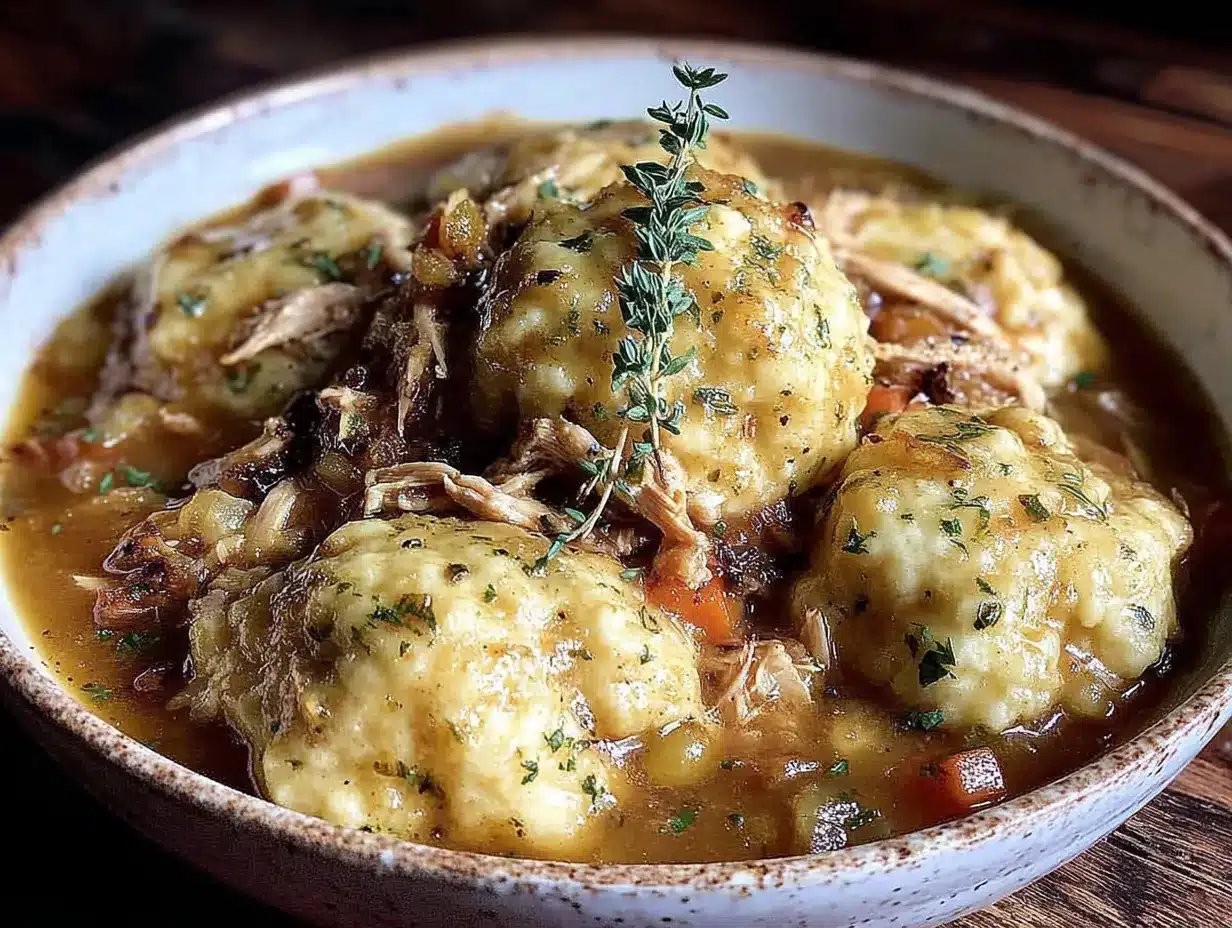
- Fluffy, tender dumplings every time : The trick is in how you handle the dough — and I’ll show you exactly what to do. No hockey pucks here, I promise. These dumplings are pillowy, soft, and soak up all that beautiful broth.
- Perfect for a cozy Sunday supper : This is the kind of meal that fills your house with the smell of comfort. It’s ideal for lazy weekends, rainy afternoons, or any time you need a hug in a bowl.
- Crowd-pleaser through and through : I’ve served this to picky kids, skeptical in-laws, and friends who swore they didn’t like chicken and dumplings. Every single person went back for seconds. It’s that good.
What makes this recipe different from the rest? It’s the technique. Instead of dumping everything in one pot and hoping for the best, you build flavor in layers. You brown the chicken first. You let the vegetables sweat. You simmer the broth until it’s rich and golden. And the dumplings — oh, the dumplings — they’re made with a simple drop-biscuit style dough that cooks right on top of the simmering stew. No rolling, no cutting, no fuss. Just fluffy clouds of goodness.
This recipe isn’t just good — it’s the kind that makes you close your eyes after the first bite. It’s comfort food reimagined: richer, more satisfying, but with the same soul-soothing warmth your grandmother would have recognized. Perfect for impressing guests without stress, or turning a simple Tuesday night into something memorable.
What Ingredients You Will Need
This recipe uses simple, wholesome ingredients to deliver bold flavor and satisfying texture without the fuss. Most of these are pantry staples, but I’ve included a few notes on what to look for when you’re shopping. The quality of your ingredients really does matter here — especially the chicken and the butter.
For the Broth and Chicken
- 1 whole chicken (3-4 pounds) — Look for a good-quality bird, ideally free-range or organic. The better the chicken, the better the broth. I prefer a smaller bird for more concentrated flavor. (If you can only find a larger one, that’s fine — just adjust the simmering time slightly.)
- 2 tablespoons unsalted butter — I use butter for browning the chicken because it adds richness that oil alone can’t match. If you need dairy-free, use a high-quality olive oil.
- 1 large yellow onion, diced — About 1.5 cups. Yellow onions have the right balance of sweetness and savory depth for this broth.
- 3 medium carrots, peeled and diced — About 1 cup. I like to dice them small so they soften into the broth without turning mushy.
- 3 celery stalks, diced — About 1 cup. Celery adds that essential aromatic backbone.
- 4 cloves garlic, minced — Fresh garlic only, please. The jarred stuff just doesn’t bring the same brightness.
- 6 cups low-sodium chicken broth — I use store-bought for convenience, but homemade would be even better. Low-sodium is important so you can control the salt level.
- 2 cups water — Enough to cover the chicken completely during simmering.
- 2 bay leaves — Dried is fine. Fresh works too, but dried is more common and just as effective.
- 1 teaspoon dried thyme — Thyme and chicken are a classic pairing. If you have fresh, use 1 tablespoon of leaves.
- 1 teaspoon salt — Start here and adjust at the end. Different broths have different salt levels.
- 1/2 teaspoon black pepper — Freshly ground is best. It makes a difference in the final flavor.
- 1/2 cup heavy cream — This is optional, but it adds a beautiful richness to the broth. You can skip it for a lighter version, or use half-and-half.
For the Dumplings
- 2 cups all-purpose flour — Regular AP flour works perfectly. I’ve tested this with whole wheat pastry flour, and it’s okay but not as tender.
- 1 tablespoon baking powder — Make sure it’s fresh. Old baking powder will give you flat, dense dumplings.
- 1 teaspoon salt — Don’t skip this. The dumplings need salt to taste right.
- 1/2 teaspoon black pepper — A little warmth in the dumplings is lovely.
- 1/4 cup cold unsalted butter, cut into small cubes — Cold butter is key for flaky, tender dumplings. I cut mine into tiny cubes and pop them back in the fridge while I prep everything else.
- 3/4 cup whole milk — Whole milk gives the richest texture. Buttermilk works beautifully too — just reduce it to 2/3 cup since buttermilk is thinner.
- 2 tablespoons fresh parsley, chopped (optional) — For color and a little freshness at the end.
Ingredient sourcing notes: I’ve tried this recipe with several brands of chicken broth, and I keep coming back to Swanson for its clean flavor. For butter, Kerrygold is my go-to — it has a higher fat content that makes everything taste richer. And for flour, King Arthur is consistently reliable. These aren’t requirements, just personal preferences I’ve developed through trial and error.
Substitution guidance: If you need a gluten-free version, use a 1:1 gluten-free flour blend (I like King Arthur Measure for Measure) and add 1/4 teaspoon xanthan gum if your blend doesn’t already include it. For dairy-free, use plant-based butter and unsweetened oat milk in the dumplings — oat milk has the closest consistency to whole milk.
Equipment Needed
You don’t need a fancy kitchen to make this recipe. A few basic tools will get the job done beautifully.
- Large Dutch oven or heavy-bottomed pot (6-8 quart) — This is your workhorse. A Dutch oven holds heat evenly, which is crucial for the slow simmer that makes the broth so good. I use a Lodge enameled cast iron pot, but any heavy pot with a tight-fitting lid will work.
- Sharp chef’s knife — You’ll be doing a fair amount of chopping. A sharp knife makes it faster and safer.
- Cutting board — Preferably a large one so you have room to work.
- Wooden spoon or spatula — For stirring and scraping up the browned bits from the bottom of the pot.
- Tongs — For handling the hot chicken. Trust me, you don’t want to try this with forks.
- Mixing bowl — For making the dumpling dough.
- Pastry cutter or two forks — For cutting the butter into the flour. A food processor works too, but I prefer doing it by hand for more control.
- Measuring cups and spoons — Accuracy matters in baking, even for drop dumplings.
- Ladle — For serving.
Budget-friendly alternatives: If you don’t have a Dutch oven, any large, heavy-bottomed stockpot will work. Just keep an eye on the heat — thinner pots can scorch the bottom. No pastry cutter? Two forks or even your fingertips work fine — just work quickly so the butter stays cold.
Personal experience: I made this recipe for years with a beat-up stockpot I found at a thrift store. It had a wobbly lid and a dent in the side, but it did the job. Upgrading to a Dutch oven was nice, but honestly, the recipe worked just as well in that old pot. Don’t let equipment hold you back.
Preparation Method
This recipe takes about 2 hours from start to finish, but most of that is hands-off simmering time. The active prep is about 30 minutes. Let me walk you through it step by step.
Step 1: Brown the Chicken
Pat the whole chicken dry with paper towels. This is important — a dry surface browns better. Season it generously with salt and pepper, inside and out. Heat the butter in your Dutch oven over medium-high heat until it’s foamy but not browning. Carefully place the chicken breast-side down in the pot. Let it cook undisturbed for 5-6 minutes, until the skin is golden brown and crispy. Use your tongs to flip it and brown the other side for another 4-5 minutes. Don’t rush this step — those browned bits on the bottom of the pot are pure flavor. Once the chicken is browned all over, transfer it to a plate. It won’t be cooked through, and that’s fine.
Pro tip: If the chicken sticks to the pot when you try to flip it, it’s not ready yet. Give it another minute. It will release naturally when it’s properly browned.
Step 2: Sauté the Vegetables
Reduce the heat to medium. Add the diced onion, carrots, and celery to the pot. Stir them around, scraping up all those browned bits from the bottom — that’s called deglazing, and it’s where the flavor lives. Cook for 5-7 minutes, stirring occasionally, until the vegetables are softened and the onions are translucent. Add the minced garlic and cook for another minute until fragrant. Your kitchen should smell incredible at this point.
Personal note: The first time I made this, I burned the garlic because I walked away to answer the phone. Garlic goes from perfect to bitter in about 30 seconds. Stay close, and keep stirring.
Step 3: Build the Broth
Pour in the chicken broth and water, scraping the bottom of the pot one more time to release any remaining flavor. Add the bay leaves, dried thyme, salt, and pepper. Return the chicken to the pot, along with any juices that accumulated on the plate. The liquid should come about three-quarters of the way up the chicken — if it doesn’t, add a little more water. Bring everything to a boil, then reduce the heat to low, cover the pot, and let it simmer gently for 45 minutes.
What to look for: The broth should be at a gentle simmer — small bubbles breaking the surface, not a rolling boil. Boiling can make the chicken tough and the broth cloudy. If you see big, aggressive bubbles, turn the heat down.
Step 4: Shred the Chicken
After 45 minutes, carefully transfer the chicken to a cutting board. It will be very tender — almost falling apart. Let it cool for 5-10 minutes until you can handle it. Use two forks to shred the meat, discarding the skin and bones. Don’t worry about being perfect — rustic shreds are part of the charm. Return the shredded chicken to the pot. Stir in the heavy cream if you’re using it. Taste the broth and adjust the salt and pepper — this is your chance to get it just right.
Time-saving tip: While the chicken cools, you can start making the dumpling dough. Multitasking makes the whole process smoother.
Step 5: Make the Dumpling Dough
In a mixing bowl, whisk together the flour, baking powder, salt, and pepper. Add the cold butter cubes. Use a pastry cutter or two forks to cut the butter into the flour until the mixture looks like coarse meal with some pea-sized butter pieces remaining. Don’t overwork it — those little butter pockets are what make the dumplings tender. Pour in the milk and stir with a fork just until the dough comes together. It will be thick and slightly sticky. That’s exactly right. Don’t knead it or stir it too much, or the dumplings will be tough.
Personal failure: I once used melted butter because I was in a hurry. The dumplings turned out like little bricks. Cold butter is non-negotiable here. Trust me on this.
Step 6: Cook the Dumplings
Bring the broth back to a gentle simmer over medium heat. Using a spoon or a small cookie scoop, drop rounded tablespoons of the dumpling dough directly onto the surface of the simmering broth. Don’t submerge them — they’ll cook on top. You should get about 12-14 dumplings. Cover the pot tightly with the lid and let them cook for 15 minutes without lifting the lid. I know it’s tempting to peek, but the steam is what cooks the dumplings through. After 15 minutes, remove the lid and let them cook for another 5 minutes uncovered to allow any excess moisture to evaporate.
Sensory cue: The dumplings will puff up and look fluffy and golden on top. When you gently press one, it should spring back. If it feels doughy, cover and cook for another 3-4 minutes.
Step 7: Serve
Sprinkle with fresh parsley if you’re using it. Ladle the chicken and dumplings into bowls, making sure each serving gets a good mix of broth, chicken, vegetables, and a couple of dumplings. Serve hot, with crusty bread or biscuits on the side if you want something to soak up every last drop.
Cooking Tips & Techniques
Over the years, I’ve made every mistake in the book with this recipe. Here are the lessons I learned so you don’t have to.
Don’t rush the broth. The 45-minute simmer isn’t just about cooking the chicken — it’s about extracting flavor from the bones and skin. If you try to cut this time short, your broth will be thin and watery. Let it do its thing. Go fold laundry, read a chapter of a book, or just sit and enjoy the smell filling your house.
The dumpling dough is forgiving — but not that forgiving. I’ve said it before, but it bears repeating: cold butter, minimal mixing, and don’t lift the lid while they’re cooking. The steam is what makes them fluffy. Every time I’ve lifted the lid early, I’ve regretted it. The dumplings come out dense and sad. Leave that lid on.
Season in layers. Add a little salt at the beginning, a little more when you add the broth, and taste again at the end. Seasoning gradually builds depth. If you wait until the end to add all the salt, you’ll end up with a flat, one-dimensional flavor. I learned this from a chef friend who told me, “Salt is not a finishing move — it’s a process.”
Multitasking strategy: While the chicken simmers, chop your parsley, measure your flour, and cut your butter. Having everything ready means you can make the dumpling dough in about 3 minutes flat while the chicken cools. It makes the whole process feel less frantic.
Consistency tips: If your broth seems too thin after simmering, you can let it cook uncovered for 10-15 minutes to reduce and concentrate. If it’s too thick, add a splash of broth or water. The perfect consistency is somewhere between a soup and a stew — thick enough to coat a spoon, but not gloppy.
One more thing: Don’t skip the step where you brown the chicken. I know it adds 10 minutes to the prep time, but it’s the single most important thing you can do for flavor. That golden-brown skin creates compounds called Maillard reaction products — which is just a fancy way of saying “tastes amazing.” Without it, your broth will be pale and bland. With it, it’s liquid gold.
Variations & Adaptations
One of the best things about this recipe is how flexible it is. Here are some ways to make it your own.
Herb and lemon variation: Add the zest of one lemon and a handful of fresh dill or tarragon along with the thyme. The brightness cuts through the richness beautifully. I tried this on a whim one spring afternoon and it’s been my go-to ever since. The lemon doesn’t make it taste like lemon chicken — it just lifts the whole dish.
Spicy Southern version: Add 1/2 teaspoon of cayenne pepper and 1 teaspoon of smoked paprika to the broth. A dash of hot sauce at the end doesn’t hurt either. This version has a warmth that’s especially nice on cold winter nights. My neighbor’s husband, who claims he doesn’t like chicken and dumplings, ate three bowls of this version.
Vegetable-heavy adaptation: Add a cup of frozen peas or green beans in the last 10 minutes of cooking. You can also throw in a handful of chopped kale or spinach — just stir it in and let it wilt for 2 minutes before serving. This makes the dish a little more balanced and adds some color.
Slow cooker method: Brown the chicken and sauté the vegetables on the stovetop, then transfer everything to a slow cooker. Cook on low for 6-8 hours or on high for 3-4 hours. Shred the chicken, then add the dumpling dough on top during the last 30 minutes on high. The texture won’t be quite the same — the dumplings come out softer — but it’s a great option for busy days.
Gluten-free adaptation: As I mentioned earlier, use a 1:1 gluten-free flour blend. I’ve tested this with King Arthur Measure for Measure and it works well. The dumplings are a little more delicate, so handle them gently. Add an extra tablespoon of milk if the dough seems too dry.
Dairy-free adaptation: Skip the heavy cream and use unsweetened oat milk in the dumplings. Use plant-based butter or coconut oil in the dough. The broth will be slightly less rich, but still delicious. I’ve made this for dairy-free friends and they didn’t feel like they were missing anything.
Serving & Storage Suggestions
This dish is best served hot, straight from the pot. Ladle it into wide, shallow bowls so the dumplings have room to show off. A sprinkle of fresh parsley or chives on top adds a pop of color and freshness. I like to serve it with buttermilk biscuits or crusty sourdough bread for sopping up every last drop of broth. A simple side salad with a tangy vinaigrette cuts through the richness nicely.
What to drink with it: A cold glass of sweet tea is the classic pairing, but a crisp white wine like Sauvignon Blanc or a light Pinot Noir works too. For beer drinkers, a pale ale or a brown ale complements the savory flavors.
Storage instructions: Leftovers keep well in the refrigerator for up to 4 days. Store them in an airtight container. The dumplings will absorb some of the broth overnight and become softer, which some people actually prefer. If you want to keep them firmer, store the dumplings separately from the broth and combine them when reheating.
Freezing: This recipe freezes beautifully — without the dumplings. The broth and chicken can be frozen for up to 3 months. To freeze, let the broth cool completely, then transfer to freezer-safe containers. When you’re ready to serve, thaw overnight in the refrigerator, reheat on the stovetop, and make a fresh batch of dumplings. The dumplings don’t freeze well — they turn mushy when thawed.
Reheating: Reheat gently on the stovetop over medium-low heat, stirring occasionally. If the broth has thickened too much, add a splash of chicken broth or water to loosen it up. Microwave reheating works in a pinch, but the dumplings can get rubbery. If you must use the microwave, do it in 30-second bursts and stop as soon as it’s hot.
How flavors develop: Like many soups and stews, this one tastes even better the next day. The flavors meld together overnight, creating a deeper, more harmonious broth. I’ve been known to make this a day ahead on purpose, just so I can have the leftovers. Don’t tell anyone.
Nutritional Information & Benefits
Here’s an approximate nutritional breakdown per serving (based on 6 servings):
| Nutrient | Amount per Serving |
|---|---|
| Calories | 485 |
| Total Fat | 22g |
| Saturated Fat | 11g |
| Cholesterol | 135mg |
| Sodium | 890mg |
| Total Carbohydrates | 38g |
| Dietary Fiber | 2g |
| Sugars | 4g |
| Protein | 32g |
This dish is a solid source of protein from the chicken, which supports muscle health and keeps you feeling full. The carrots provide vitamin A for eye health, and the celery offers a small amount of vitamin K. The broth itself is rich in collagen from the bones, which is great for skin and joint health. If you skip the heavy cream, the fat and calorie content drops significantly — but honestly, a little cream now and then is good for the soul.
Dietary considerations: This recipe contains gluten (from the flour) and dairy (from the butter, milk, and cream). As noted in the variations section, both can be adapted. It’s not suitable for a vegan diet, but the dairy-free version works for lacto-ovo vegetarians if you substitute the chicken with a plant-based protein or extra vegetables.
Personal wellness perspective: I don’t believe in labeling food as “good” or “bad.” This is comfort food — it’s meant to nourish you in more ways than one. Yes, it’s rich. Yes, it’s indulgent. But it’s also made with real ingredients, cooked with care, and shared with people you love. That counts for something. Balance is about having a bowl of this on a cold night and not feeling guilty about it.
Conclusion
This cozy Southern chicken and dumplings from scratch is more than just a recipe — it’s a reminder that the best food doesn’t come from a box or a can. It comes from taking your time, using good ingredients, and cooking with intention. Miss Eula’s index card is still tucked in my recipe box, a little splattered and worn, and I pull it out every time the temperature drops. It’s become my go-to for sick days, bad days, and days when I just need something warm to hold onto.
I hope you’ll give this recipe a try. Don’t worry if your first batch isn’t perfect — mine wasn’t either. That’s part of the journey. Make it your own. Add more thyme, skip the cream, throw in some extra vegetables. The beauty of a recipe like this is that it welcomes your fingerprints. It wants to be adapted, shared, and passed along.
When you make it — and I hope you do — come back and let me know how it turned out. Did you add something unexpected? Did your family ask for seconds? Did you finally figure out the dumpling trick? I’d love to hear your story. Drop a comment below, share a photo, or tag me on social media. Cooking is a conversation, and I’m listening.
Until next time, keep your pot simmering and your heart full. You’ve got this.
Frequently Asked Questions
Can I use boneless, skinless chicken breasts instead of a whole chicken?
You can, but the broth won’t be as rich. The bones and skin add depth and body that you just can’t get from boneless meat. If you’re short on time, use bone-in, skin-on chicken thighs — they have more flavor than breasts and stay tender during simmering. Just brown them the same way you would the whole chicken.
Why did my dumplings turn out dense and heavy?
This usually happens for one of three reasons: the butter wasn’t cold enough, you overmixed the dough, or you lifted the lid while the dumplings were cooking. Cold butter creates steam pockets that make the dumplings light. Overmixing develops gluten, which makes them tough. And lifting the lid releases the steam they need to cook through properly. Try again with these three things in mind, and you’ll see a big difference.
Can I make this in an Instant Pot or pressure cooker?
Yes, with some adjustments. Brown the chicken using the sauté function, then add the broth and cook on high pressure for 20 minutes. Quick release, shred the chicken, then add the dumpling dough. Cook on sauté mode (not pressure) for 15 minutes covered, then 5 minutes uncovered. The texture won’t be identical to the stovetop version, but it’s a solid shortcut when you’re in a hurry.
How can I thicken the broth if it’s too thin?
If your broth is thinner than you’d like, try one of these methods: let it simmer uncovered for 10-15 minutes to reduce and concentrate, or make a cornstarch slurry by whisking 1 tablespoon cornstarch with 2 tablespoons cold water, then stirring it into the simmering broth. The slurry method works instantly but can make the broth slightly cloudy. For a more natural thickener, mash a few of the cooked vegetables against the side of the pot and stir them in.
Can I prepare this recipe ahead of time for a party or gathering?
Absolutely. Make the broth and chicken up to 2 days ahead, but wait to make the dumplings until you’re ready to serve. Store the broth and shredded chicken in the refrigerator, then reheat gently on the stovetop. Make the dumpling dough fresh, drop it into the simmering broth, and cook as directed. The dumplings are best within an hour of being made, so timing them close to serving gives the best results. Your guests will think you spent all day in the kitchen — and you can just smile and enjoy the compliments.
Pin This Recipe!
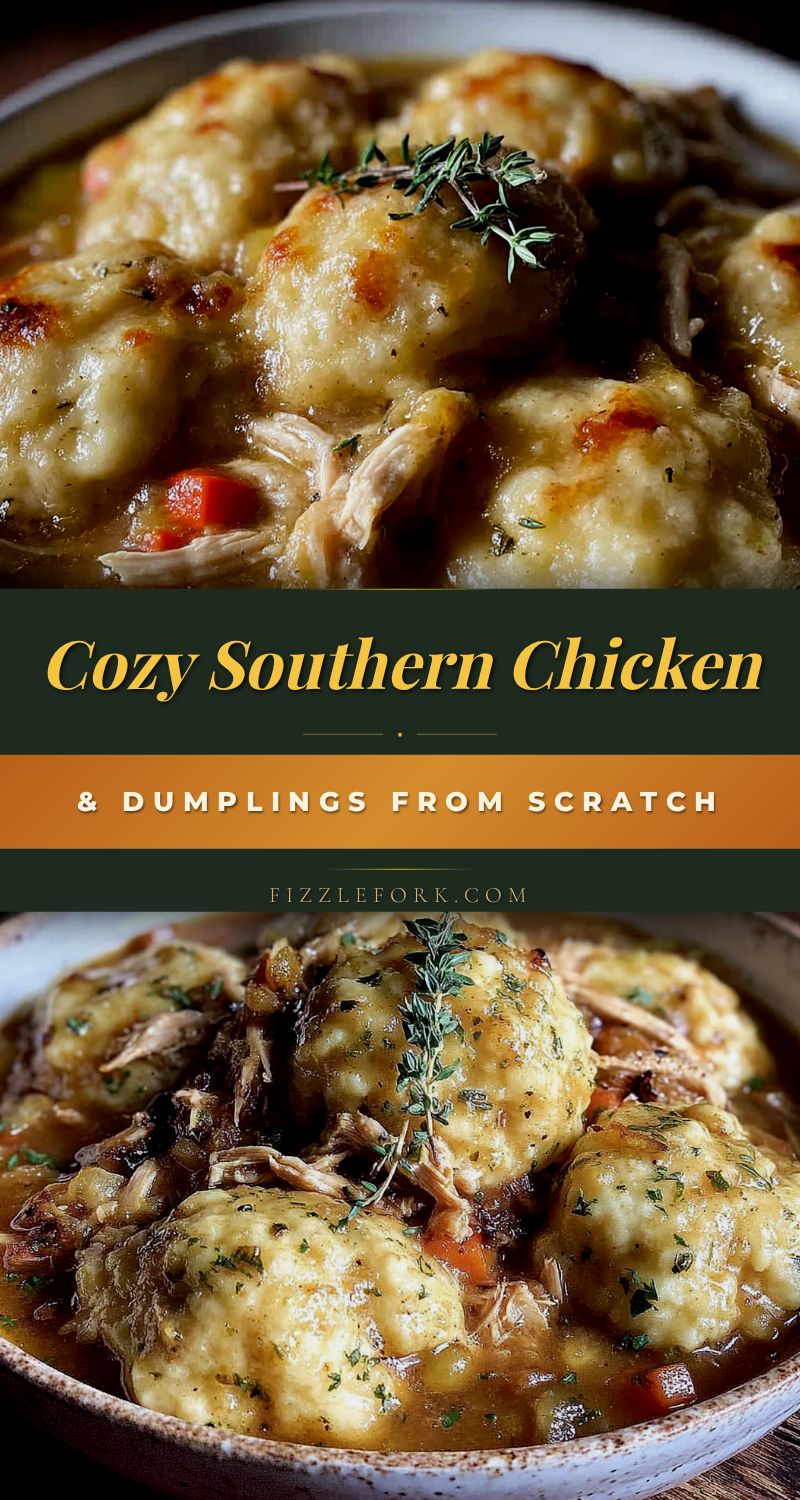
Cozy Southern Chicken and Dumplings from Scratch | Easy Homemade Recipe
This cozy Southern chicken and dumplings from scratch is the kind of meal that wraps around you like a warm blanket on a cold day. It’s the recipe you turn to when you need comfort, when you need something real, when you need to remember that the best things in life take a little time.
- Prep Time: 30 minutes
- Cook Time: 1 hour 30 minutes
- Total Time: 2 hours
- Yield: 6 servings 1x
- Category: Main Course
- Cuisine: Southern
Ingredients
- 1 whole chicken (3–4 pounds)
- 2 tablespoons unsalted butter
- 1 large yellow onion, diced (about 1.5 cups)
- 3 medium carrots, peeled and diced (about 1 cup)
- 3 celery stalks, diced (about 1 cup)
- 4 cloves garlic, minced
- 6 cups low-sodium chicken broth
- 2 cups water
- 2 bay leaves
- 1 teaspoon dried thyme
- 1 teaspoon salt
- 1/2 teaspoon black pepper
- 1/2 cup heavy cream (optional)
- 2 cups all-purpose flour
- 1 tablespoon baking powder
- 1 teaspoon salt
- 1/2 teaspoon black pepper
- 1/4 cup cold unsalted butter, cut into small cubes
- 3/4 cup whole milk
- 2 tablespoons fresh parsley, chopped (optional)
Instructions
- Pat the whole chicken dry with paper towels. Season generously with salt and pepper, inside and out. Heat the butter in a Dutch oven over medium-high heat until foamy. Place the chicken breast-side down and cook undisturbed for 5-6 minutes until golden brown. Flip and brown the other side for 4-5 minutes. Transfer to a plate.
- Reduce heat to medium. Add diced onion, carrots, and celery to the pot. Cook for 5-7 minutes, stirring occasionally, until softened and onions are translucent. Add minced garlic and cook for 1 minute until fragrant.
- Pour in chicken broth and water, scraping the bottom of the pot. Add bay leaves, dried thyme, salt, and pepper. Return the chicken to the pot along with any accumulated juices. Bring to a boil, then reduce heat to low, cover, and simmer gently for 45 minutes.
- Carefully transfer the chicken to a cutting board. Let cool for 5-10 minutes. Use two forks to shred the meat, discarding skin and bones. Return shredded chicken to the pot. Stir in heavy cream if using. Taste and adjust salt and pepper.
- In a mixing bowl, whisk together flour, baking powder, salt, and pepper. Add cold butter cubes. Use a pastry cutter or two forks to cut butter into flour until mixture resembles coarse meal with some pea-sized butter pieces. Pour in milk and stir with a fork just until dough comes together. Do not overmix.
- Bring broth back to a gentle simmer over medium heat. Drop rounded tablespoons of dumpling dough onto the surface of the simmering broth (about 12-14 dumplings). Cover tightly with lid and cook for 15 minutes without lifting the lid. Remove lid and cook for another 5 minutes uncovered.
- Sprinkle with fresh parsley if using. Ladle into bowls, ensuring each serving gets broth, chicken, vegetables, and dumplings. Serve hot with crusty bread or biscuits if desired.
Notes
Don’t rush the broth; the 45-minute simmer extracts flavor from bones and skin. Cold butter is non-negotiable for tender dumplings. Do not lift the lid while dumplings are cooking. Season in layers for depth. Leftovers keep in the refrigerator for up to 4 days. Freeze broth and chicken without dumplings for up to 3 months.
Nutrition
- Serving Size: 1 serving
- Calories: 485
- Sugar: 4
- Sodium: 890
- Fat: 22
- Saturated Fat: 11
- Carbohydrates: 38
- Fiber: 2
- Protein: 32
Keywords: chicken and dumplings, Southern chicken and dumplings, homemade chicken and dumplings, comfort food, chicken stew, dumplings from scratch