My sister asked why I couldn’t just use puff pastry squares instead of cutting circles. I started to explain why that wouldn’t work—then stopped. Honestly, I had no good reason. I’d been making these mini beef wellington bites for three New Year’s Eves the “proper” way, cutting perfect circles and rerolling scraps like some kind of pastry martyr. She stood there holding a box of frozen puff pastry, looking at me like I was overcomplicating a snack. Which, let’s face it, I absolutely was.
The power went out halfway through that first attempt with squares. Not dramatically—just a quick flicker that reset my oven timer and made me lose track of where I was in the process. My sister laughed and said maybe the universe was giving me permission to try her method. So I did. I folded the puff pastry squares around the seared beef like little envelopes, brushed them with egg wash, and crossed my fingers. They came out golden, flaky, and somehow even more uniform than my carefully cut circles. I’ve never gone back.
These mini beef wellington bites have become my New Year’s Eve signature. They’re the thing people ask about before they ask what time to show up. And every time I make them, I remember that moment of being wrong in the best possible way. Maybe you’ve been there—stuck in a cooking routine that feels like the only way, until someone casually suggests something simpler and you realize you’ve been making extra work for yourself for years. That’s this recipe. It’s the shortcut that actually works better.
The thing about these bites is they deliver everything people love about classic beef wellington—the tender beef, the earthy mushroom duxelles, the buttery pastry—but in a two-bite package that’s perfect for passing around at a party. No carving, no plating drama, no worrying about soggy bottoms. They’re elegant enough for a champagne toast but forgiving enough that you can make them ahead and reheat. That’s the kind of recipe worth keeping around.
Why You’ll Love This Recipe
These mini beef wellington bites have saved my New Year’s Eve more times than I can count. They look like you spent hours fussing, but honestly, they come together faster than you’d think. Here’s why they’ve earned a permanent spot on my party menu:
- Party-Perfect Size: Two bites each means guests can grab one with a napkin and keep mingling. No plates, no forks, no awkward balancing acts.
- Make-Ahead Friendly: Assemble them the morning of your party, refrigerate, and bake right before guests arrive. You get to enjoy your own party.
- Simple Ingredients, Fancy Results: Store-bought puff pastry, beef tenderloin, mushrooms, and pantry staples. Nothing weird, nothing hard to find.
- Always Impresses: I’ve brought these to three different New Year’s Eve parties and they disappear within minutes. People think you’re a culinary genius.
- No Special Equipment: A sharp knife, a baking sheet, and a skillet. That’s it. No food processors, no pastry cutters, no stress.
What makes these different from other wellington recipes is the square-fold method. Most recipes have you cut circles, which leaves you with pastry scraps you have to reroll and hope for the best. By using square pieces of puff pastry, you get neat little parcels with no waste and no rerolling. The pastry stays cold, the layers stay distinct, and every single bite comes out perfectly flaky.
There’s something about biting into one of these that makes people close their eyes for a second. Maybe it’s the contrast between the crisp pastry and the tender beef. Maybe it’s the earthy mushroom filling that ties everything together. Or maybe it’s just the joy of eating something that feels special without the stress of making it. Whatever it is, these bites deliver that moment every time.
What Ingredients You Will Need
This recipe uses simple, high-quality ingredients to create something that tastes far more complicated than it is. Most of these are pantry staples or easy to find at any grocery store. Here’s what you’ll need:
For the Beef Wellington Bites
- 1 pound beef tenderloin, trimmed of silver skin (look for a center-cut piece for even thickness; I prefer Omaha Steaks or your local butcher)
- 2 tablespoons olive oil (use a good quality one for searing)
- Salt and freshly ground black pepper (don’t skimp on the pepper)
- 8 ounces cremini mushrooms, finely chopped (you can use white button mushrooms too, but cremini have more flavor)
- 2 shallots, finely minced (about 1/4 cup)
- 2 cloves garlic, minced
- 2 tablespoons unsalted butter
- 2 tablespoons fresh thyme leaves (or 1 teaspoon dried, but fresh really shines here)
- 1 tablespoon Dijon mustard (I use Grey Poupon for the right tang)
- 1 sheet frozen puff pastry, thawed (Pepperidge Farm works great; just follow the thawing instructions on the box)
- 1 large egg, beaten with 1 tablespoon water (for egg wash)
- Flaky sea salt (like Maldon) for finishing
Ingredient Notes and Substitutions
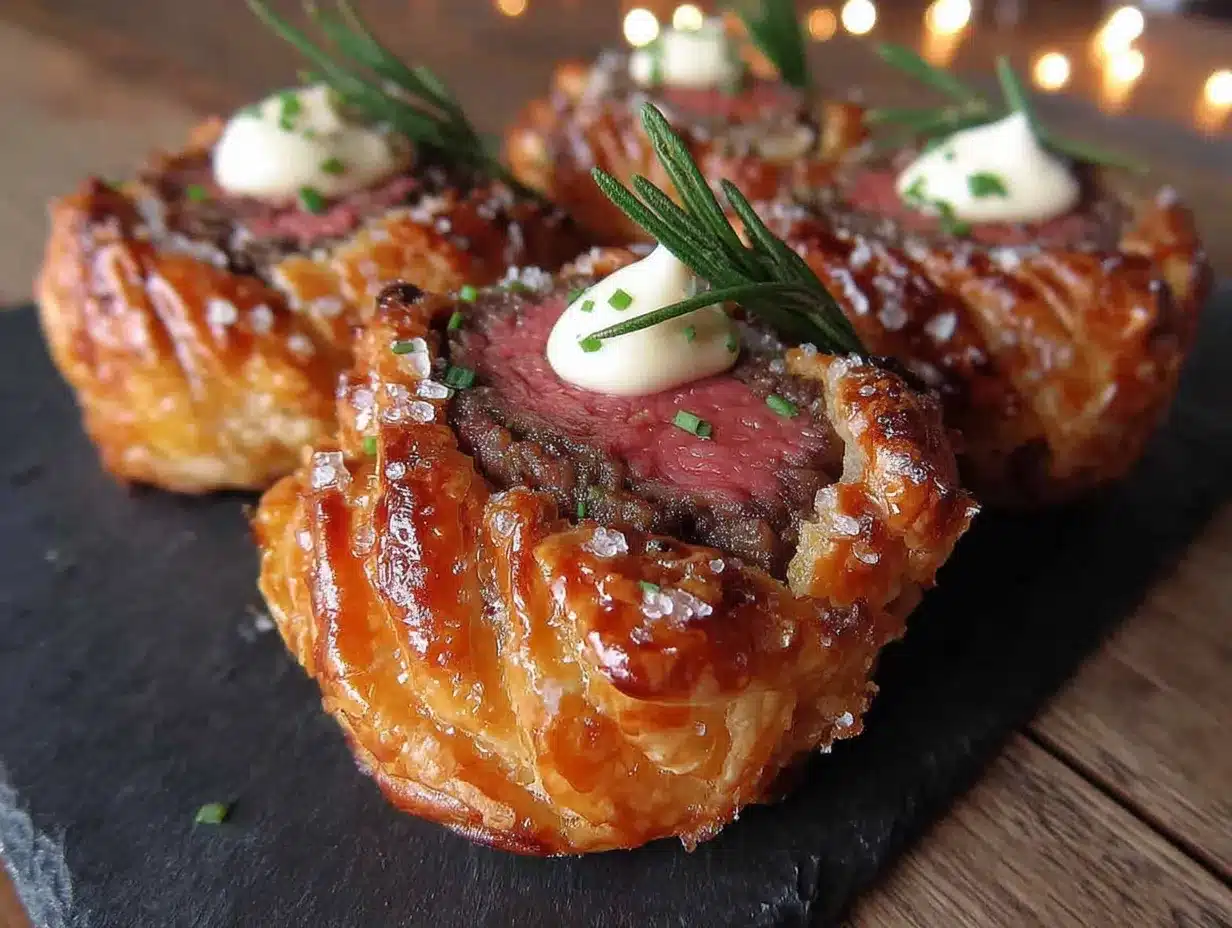
- Beef tenderloin: This is the star. Don’t substitute with sirloin or round—they’ll be tough. If you’re feeding a crowd, look for tenderloin tips or trimmings, which are cheaper than a whole center-cut roast. Your butcher might even have them in the case.
- Mushrooms: Cremini are my go-to, but a mix of cremini and shiitake adds even more umami. If you’re using dried mushrooms, rehydrate them in warm water for 20 minutes and squeeze dry before chopping.
- Puff pastry: Store-bought is non-negotiable here. Making puff pastry from scratch for these bites is a level of dedication I admire but don’t have. Just make sure it’s fully thawed but still cold to the touch before you work with it.
- Dijon mustard: This adds a subtle tang that cuts through the richness. If you’re not a mustard fan, you can skip it, but I really think it makes a difference. Whole grain mustard works too for a different texture.
- Fresh thyme: Dried thyme works in a pinch, but fresh herbs elevate these bites from good to memorable. If you’re using dried, use half the amount.
Equipment Needed
The beauty of this recipe is how little equipment it actually requires. Here’s what you’ll need:
- Large skillet (cast iron is ideal for even searing, but any heavy-bottomed pan works)
- Sharp chef’s knife (a dull knife will squish the mushrooms instead of chopping them)
- Cutting board
- Baking sheet (rimmed, to catch any butter drips)
- Parchment paper (non-stick foil works too, but parchment is my preference)
- Pastry brush (for the egg wash; a silicone one is easier to clean)
- Small bowl (for the egg wash)
- Ruler or tape measure (optional, but helpful for cutting even pastry squares)
If you don’t have a pastry brush, you can use a paper towel to dab the egg wash on. It’s not as pretty, but it works. And if you don’t have a ruler, just eyeball it—puff pastry squares don’t need to be perfect. I’ve used the back of a butter knife to mark measurements more times than I care to admit.
Preparation Method
Let me walk you through this step by step. I’ve made these bites probably twenty times now, and these are the exact steps that work every time.
- Prep the beef. Cut your beef tenderloin into 1-inch cubes. You want them roughly the same size so they cook evenly. Pat them dry with paper towels—this is crucial for a good sear. Season generously with salt and pepper on all sides. Let them sit at room temperature for 15 minutes while you get everything else ready.
- Make the mushroom duxelles. Heat 1 tablespoon of butter and 1 tablespoon of olive oil in your skillet over medium-high heat. Add the finely chopped mushrooms and shallots. Cook for about 8-10 minutes, stirring occasionally, until the mushrooms release their liquid and it evaporates. You’ll see the mixture go from wet to dry and starting to brown. Add the minced garlic and thyme, and cook for another minute until fragrant. Season with salt and pepper, then transfer to a plate to cool completely. This step is important—warm duxelles will make your puff pastry soggy.
- Sear the beef. Wipe out the skillet and add the remaining olive oil. Heat over high heat until the oil shimmers. Working in batches so you don’t crowd the pan, sear the beef cubes for about 1 minute per side. You want a deep brown crust on all sides, but the inside should still be rare. Transfer to a plate and let cool for 5 minutes. Brush each piece with a thin layer of Dijon mustard.
- Prepare the puff pastry. On a lightly floured surface, unfold your thawed puff pastry sheet. Use a sharp knife to cut it into 9 equal squares—about 3 inches each. If the pastry feels warm or sticky, pop it in the fridge for 5 minutes. Cold pastry is easier to work with and puffs up better in the oven.
- Assemble the bites. Place a spoonful of cooled mushroom duxelles in the center of each pastry square. Top with a seared beef cube. Gently bring the corners of the pastry up to meet in the center, pinching the edges to seal. Don’t worry if they look a little rustic—that’s part of the charm. Place each assembled bite seam-side down on a parchment-lined baking sheet, leaving about 2 inches between them.
- Chill and egg wash. Refrigerate the assembled bites for at least 15 minutes. This is non-negotiable—cold pastry guarantees those beautiful flaky layers. While they chill, preheat your oven to 400°F. Just before baking, brush each bite with the egg wash and sprinkle with flaky sea salt.
- Bake. Bake for 18-20 minutes, until the pastry is deep golden brown and puffed. The internal temperature of the beef should reach 125°F for medium-rare. Let them rest on the baking sheet for 5 minutes before transferring to a serving platter. This rest period lets the juices redistribute so you don’t end up with a soggy bottom.
A few things I’ve learned the hard way: Don’t skip the chilling step. I did once when I was in a hurry, and the pastry leaked butter everywhere and came out greasy instead of flaky. Also, if you’re making these ahead, stop after step 5 and refrigerate for up to 24 hours. Then do steps 6 and 7 right before serving.
Cooking Tips & Techniques
After making these mini beef wellington bites more times than I can count, I’ve collected a few tricks that make the process smoother and the results better.
The biggest mistake I see people make is overworking the duxelles. You want the mushrooms cooked until they’re dry, not until they’re mushy. If you stop cooking while they’re still releasing liquid, that moisture will steam the pastry from the inside and you’ll end up with a sad, soggy bite. Keep cooking until the mixture looks like a coarse paste and pulls away from the pan. That’s your signal it’s ready.
Another thing I messed up early on was overcrowding the pan when searing the beef. If you put too many pieces in at once, they steam instead of sear. You don’t get that deep brown crust that adds so much flavor. Cook in batches, and give each piece room to breathe. Your patience will reward you with better flavor.
Here’s a timing trick I use for parties: I make the duxelles and sear the beef the night before. I refrigerate them separately. The next day, I assemble the bites, chill them for 15 minutes, and bake. This spreads the work across two days and means I’m not scrambling the day of the party. The duxelles actually tastes better after sitting overnight—the flavors meld together.
For the best puff pastry results, keep everything cold. If your kitchen is warm, work quickly and pop the pastry back in the fridge between steps. Warm butter in puff pastry melts before it puffs, and you lose those beautiful layers. I’ve literally held the baking sheet with cold hands because my kitchen was too warm. It sounds ridiculous, but it works.
One more thing: If you’re nervous about the beef being undercooked, use a meat thermometer. 125°F for medium-rare is the sweet spot. If you prefer medium, pull them at 135°F. But honestly, these bites are small enough that they cook quickly, and medium-rare gives you that tender, almost buttery texture that makes beef wellington so special.
Variations & Adaptations
One of the best things about this recipe is how flexible it is. Here are some variations I’ve tried and loved:
For a different protein: Chicken breast works surprisingly well here. Cut it into 1-inch cubes and cook it through before assembling. You’ll lose a bit of the “wow” factor, but it’s a more budget-friendly option. I’ve also used pork tenderloin with great results—just make sure it’s cooked to 145°F.
For a vegetarian version: Replace the beef with a mixture of roasted portobello mushrooms and caramelized onions. The earthy flavor stands up well to the pastry and duxelles. I made these for a vegetarian friend last year and she asked for the recipe before she finished her second bite.
For a different flavor profile: Add a teaspoon of truffle oil to the duxelles for an extra-luxurious version. Or swap the thyme for rosemary and add a pinch of smoked paprika to the beef before searing. I tried a version with a tiny piece of blue cheese tucked under the duxelles, and it was incredible—if you’re a blue cheese fan, give it a shot.
For dietary needs: These are naturally egg-free if you skip the egg wash and use milk or cream instead. For a gluten-free version, use gluten-free puff pastry (I’ve had good luck with the brand from Whole Foods) and make sure your Dijon mustard is certified gluten-free.
For a different cooking method: You can air fry these at 375°F for about 12-14 minutes. They come out incredibly crispy. Just make sure to work in batches so you don’t overcrowd the basket. The only downside is you lose that beautiful even browning you get from the oven.
Serving & Storage Suggestions
These mini beef wellington bites are designed for parties, so serving them is all about making them look as good as they taste.
Serve them warm, not hot. Let them rest for 5 minutes after baking so the pastry sets and the beef relaxes. Arrange them on a wooden board or a white platter—the contrast between the golden pastry and the dark board is stunning. Sprinkle a few fresh thyme sprigs around for color. If you’re feeling fancy, add a small bowl of Dijon mustard or horseradish cream for dipping.
For drinks, these pair beautifully with champagne or a crisp sparkling wine. The bubbles cut through the richness of the beef and pastry. If you’re serving cocktails, a gin and tonic with a sprig of rosemary works surprisingly well. Red wine lovers should go with a light Pinot Noir—nothing too heavy that overwhelms the delicate flavors.
To store leftovers: Keep them in an airtight container in the refrigerator for up to 3 days. The pastry will soften slightly, but they’re still delicious. To reheat, pop them in a 350°F oven for 5-7 minutes. The microwave will make the pastry soggy, so avoid it if you can. I’ve reheated them in an air fryer at 350°F for 3 minutes and they came out almost as crispy as fresh.
These actually freeze beautifully. Assemble the bites up to step 5, then freeze them on a baking sheet until solid. Transfer to a freezer bag and store for up to 3 months. Bake from frozen at 400°F for 22-25 minutes, adding a few extra minutes for the egg wash to brown. This is my secret weapon for unexpected guests—I always have a batch in the freezer.
The flavors actually improve after a day in the fridge. The mushroom duxelles melds with the beef, and the pastry absorbs just a hint of the savory flavors. If you’re making these for a party, I actually prefer making them a day ahead and reheating. They’re somehow even better the next day.
Nutritional Information & Benefits
Let’s be real—these are indulgent party bites, not health food. But here’s what you’re looking at per bite (assuming 9 servings):
- Calories: Approximately 280 per bite
- Protein: 18g
- Fat: 18g (mostly from the pastry and beef)
- Carbohydrates: 12g
- Fiber: 1g
- Sugar: 1g
The good news: Beef tenderloin is an excellent source of iron, zinc, and B vitamins. Mushrooms are packed with antioxidants and immune-supporting compounds. And while puff pastry isn’t exactly a health food, it does provide some energy in the form of carbohydrates. These bites are meant to be a treat, and there’s nothing wrong with enjoying them in moderation.
For those watching their intake: These are naturally low in sugar and can fit into a balanced diet as an occasional indulgence. If you’re serving them at a party, one or two bites is plenty—they’re rich enough to satisfy without overdoing it.
Allergen note: These contain wheat (puff pastry) and eggs (egg wash). If you’re serving a crowd with allergies, make sure to label them clearly or offer a gluten-free alternative.
Conclusion
These mini beef wellington bites have become my New Year’s Eve tradition for good reason. They’re the recipe that taught me to stop overcomplicating things and trust the simpler path. Every time I make them, I think about that moment in my kitchen, the power flickering, my sister’s patient smile, and the realization that sometimes the best version of a recipe comes from letting go of the way you’ve always done it.
I hope you’ll try these for your next celebration—whether it’s New Year’s Eve, a birthday party, or just a Tuesday that needs something special. Don’t be afraid to make them your own. Add a different herb, try a different mustard, or experiment with the filling. That’s the beauty of cooking: every batch is a chance to discover something new.
If you make these, I’d love to hear how they turn out. Drop a comment below and tell me about your version—did you add blue cheese? Use chicken instead? Serve them at a party that turned into a dance-off? I want to know. And if you take a picture, tag me on social media so I can see your beautiful bites. Happy cooking, and here’s to a New Year filled with good food and even better company!
Frequently Asked Questions
Can I make these ahead of time?
Absolutely. Assemble them up to 24 hours in advance and keep them covered in the refrigerator. Bake them right before serving for the best texture. You can also freeze them unbaked for up to 3 months.
What if I can’t find beef tenderloin?
You can use filet mignon steaks and cut them into cubes. Just trim any excess fat or silver skin. Sirloin is too tough for this recipe—stick with tender cuts from the loin area.
Can I use frozen mushrooms instead of fresh?
I wouldn’t recommend it. Frozen mushrooms release too much water and won’t dry out properly in the pan. Fresh mushrooms give you that concentrated, earthy flavor that makes the duxelles so good.
Why did my pastry come out soggy?
This usually happens for one of two reasons: the duxelles wasn’t cooked dry enough, or you skipped the chilling step before baking. Make sure your mushroom mixture is completely dry and your assembled bites spend at least 15 minutes in the fridge.
How do I reheat leftovers without ruining them?
The oven is your best friend here. Reheat at 350°F for 5-7 minutes. An air fryer works too—3 minutes at 350°F. Avoid the microwave unless you’re okay with soft, sad pastry.
Pin This Recipe!

Perfect Mini Beef Wellington Bites for New Year’s Eve

These mini beef wellington bites deliver everything people love about classic beef wellington—tender beef, earthy mushroom duxelles, and buttery pastry—in a two-bite package perfect for parties. The square-fold method makes them easier and more uniform than traditional circles.
- Prep Time: 30 minutes
- Cook Time: 20 minutes
- Total Time: 50 minutes
- Yield: 9 servings 1x
- Category: Appetizer
- Cuisine: American
Ingredients
- 1 pound beef tenderloin, trimmed of silver skin
- 2 tablespoons olive oil
- Salt and freshly ground black pepper
- 8 ounces cremini mushrooms, finely chopped
- 2 shallots, finely minced (about 1/4 cup)
- 2 cloves garlic, minced
- 2 tablespoons unsalted butter
- 2 tablespoons fresh thyme leaves (or 1 teaspoon dried)
- 1 tablespoon Dijon mustard
- 1 sheet frozen puff pastry, thawed
- 1 large egg, beaten with 1 tablespoon water (for egg wash)
- Flaky sea salt (like Maldon) for finishing
Instructions
- Prep the beef. Cut beef tenderloin into 1-inch cubes. Pat dry with paper towels. Season generously with salt and pepper on all sides. Let sit at room temperature for 15 minutes.
- Make the mushroom duxelles. Heat 1 tablespoon butter and 1 tablespoon olive oil in a skillet over medium-high heat. Add finely chopped mushrooms and shallots. Cook for 8-10 minutes, stirring occasionally, until liquid evaporates and mixture starts to brown. Add minced garlic and thyme, cook for 1 minute until fragrant. Season with salt and pepper. Transfer to a plate to cool completely.
- Sear the beef. Wipe out the skillet and add remaining olive oil. Heat over high heat until oil shimmers. Working in batches, sear beef cubes for about 1 minute per side until deep brown crust forms but inside is still rare. Transfer to a plate and let cool for 5 minutes. Brush each piece with a thin layer of Dijon mustard.
- Prepare the puff pastry. On a lightly floured surface, unfold thawed puff pastry sheet. Cut into 9 equal squares, about 3 inches each. If pastry feels warm, refrigerate for 5 minutes.
- Assemble the bites. Place a spoonful of cooled mushroom duxelles in the center of each pastry square. Top with a seared beef cube. Bring corners of pastry up to meet in the center, pinching edges to seal. Place seam-side down on a parchment-lined baking sheet, leaving about 2 inches between them.
- Chill and egg wash. Refrigerate assembled bites for at least 15 minutes. Preheat oven to 400°F. Just before baking, brush each bite with egg wash and sprinkle with flaky sea salt.
- Bake for 18-20 minutes until pastry is deep golden brown and puffed. Internal temperature of beef should reach 125°F for medium-rare. Let rest on baking sheet for 5 minutes before serving.
Notes
Don’t skip the chilling step—cold pastry guarantees flaky layers. Make duxelles and sear beef the night before to spread out prep. For best results, keep everything cold. If making ahead, assemble up to step 5 and refrigerate for up to 24 hours, then bake before serving. Freeze unbaked bites for up to 3 months.
Nutrition
- Serving Size: 1 bite
- Calories: 280
- Sugar: 1
- Sodium: 250
- Fat: 18
- Saturated Fat: 6
- Carbohydrates: 12
- Fiber: 1
- Protein: 18
Keywords: mini beef wellington, beef wellington bites, New Year's Eve appetizer, puff pastry appetizer, party appetizer, beef tenderloin bites