There used to be a tiny Puerto Rican bakery on a side street in my old neighborhood, just off the main drag where nobody ever walked unless they knew exactly where they were going. The place was called La Esquina Dulce, and it was nothing fancy—just a few mismatched tables, a counter that always had a little crack in the Formica, and the most incredible smell of warm coconut and cinnamon hitting you the second you walked through the door. Every December, they’d bring out this massive glass jar filled with their coquito, and they’d pour you a little sample in these tiny paper cups while you waited for your pastelitos. When they closed their doors three years ago—the landlord raised the rent, like they always do—I honestly felt like I’d lost a piece of my holiday season. I tried recreating that creamy, coconutty goodness from memory that same week, and let me tell you, the first batch was a disaster. Too thin, not enough spice, and the coconut flavor was barely there. After seven tries—seven, I’m not kidding—I finally got it. This creamy coquito with toasted coconut is the one that finally made me stop missing that bakery.
The thing about coquito is that it’s not just a drink. It’s a tradition, a memory, a way of saying “hey, you matter” to the people around you. Every family has their own version, passed down through generations, and everyone swears theirs is the best. I’m not here to argue with your abuela’s recipe—honestly, I wouldn’t dare. But this version, with the toasted coconut folded right into the creaminess, it’s something special. It’s the kind of drink that makes you slow down, take a breath, and actually taste the holidays.
I remember the first time I got it right. It was a Tuesday night, pouring rain outside, and I had coconut flakes all over my kitchen counter. My neighbor Linda knocked on my door to borrow sugar, and I handed her a cup without thinking. She stood there in my doorway, took one sip, and just closed her eyes. “This is it,” she said. “This is the one.” And honestly? She was right.
Why You’ll Love This Recipe
Let me be real with you for a second—there are about a million coquito recipes floating around the internet, and most of them are fine. But this one? This one is different. I’ve tested it on everyone from my picky cousin who “doesn’t do coconut” to my friend Maria who grew up making coquito with her grandmother in San Juan. The feedback was unanimous: this is the one you keep coming back to.
Here’s what makes this creamy coquito with toasted coconut stand out:
- Quick & Easy: You can have this ready in about 15 minutes of active prep time. The hardest part is waiting for it to chill in the fridge—which, okay, is actually the hardest part because you’re going to want to drink it immediately.
- Simple Ingredients: No weird, hard-to-find stuff here. You probably already have most of these in your pantry, minus maybe the coconut cream and the rum. But those are easy to grab at any grocery store.
- Perfect for Holiday Gatherings: This is the drink that shows up at every Christmas party, every Nochebuena celebration, every cozy night in with friends. It’s a crowd-pleaser in the truest sense.
- Crowd-Pleaser: I’ve served this to people who “don’t like coconut” and watched them go back for thirds. It’s that good. The toasted coconut adds this nutty, warm depth that even coconut skeptics can’t resist.
- Unbelievably Delicious: The texture is what gets you. It’s creamy without being heavy, sweet without being cloying, and that little crunch from the toasted coconut on top? Chef’s kiss.
What really sets this recipe apart is the toasting technique. Most coquito recipes just throw in some coconut flakes or coconut milk and call it a day. But taking the extra five minutes to toast the coconut until it’s golden and fragrant changes everything. It brings out this almost caramel-like flavor that plays perfectly with the warm spices. Plus, I use a mix of coconut cream and cream of coconut—two different things, I know, but trust me on this—to get that perfectly balanced sweetness and texture.
This isn’t just a drink. It’s the kind of thing that makes you close your eyes after the first sip. It’s comfort in a glass, the liquid equivalent of a warm blanket and your favorite sweater. Perfect for those cold winter nights when you need something to warm you from the inside out, or for holiday parties where you want to impress without spending hours in the kitchen.
What Ingredients You Will Need
This recipe uses simple, wholesome ingredients to deliver that rich, creamy flavor without any fuss. Most of these are pantry staples or easy to find at your local grocery store. Let me walk you through what you’ll need and why each one matters.
For the Coquito Base
- Cream of coconut, 15 ounces (like Coco López) – This is the sweet, thick stuff that gives coquito its signature sweetness and creamy texture. Don’t confuse it with coconut milk or coconut cream—cream of coconut is sweetened and has that thick, syrupy consistency. I personally prefer Coco López for its consistent quality, but any brand works.
- Coconut cream, 13.5 ounces (unsweetened) – This adds richness without making it too sweet. Look for the cans in the international aisle or near the Thai cooking ingredients. Chaokoh is my go-to brand for its thick, creamy texture.
- Sweetened condensed milk, 14 ounces – This is what gives coquito that velvety, almost luxurious mouthfeel. It also adds just the right amount of sweetness. Use full-fat for the best results—trust me on this one.
- Evaporated milk, 12 ounces – This thins things out just enough while adding a subtle caramel-like flavor. It balances the richness of the coconut cream and condensed milk perfectly.
- White rum, 1 cup (or to taste) – Use a good quality white rum like Bacardi or Don Q. The rum should complement the coconut, not overpower it. If you want a stronger kick, you can add up to 1 ½ cups, but start with 1 cup and adjust from there.
- Vanilla extract, 1 teaspoon – Pure vanilla extract makes a difference here. The artificial stuff has a weird aftertaste that doesn’t play well with the coconut. Trust me, I learned this the hard way.
- Cinnamon sticks, 2 whole – These infuse the coquito with that warm, holiday spice flavor as it chills. Don’t skip them—they’re essential.
- Whole cloves, 4 to 5 – Just a few cloves add depth and complexity. Be careful not to overdo it, though. Cloves are potent, and you want them to whisper, not shout.
- Ground cinnamon, ½ teaspoon – This reinforces the cinnamon flavor from the sticks and gives the coquito that beautiful warm color.
- Ground nutmeg, ¼ teaspoon – Freshly grated is best if you have it, but pre-ground works fine. Nutmeg adds that slightly sweet, nutty note that makes coquito taste like Christmas.
For the Toasted Coconut Topping
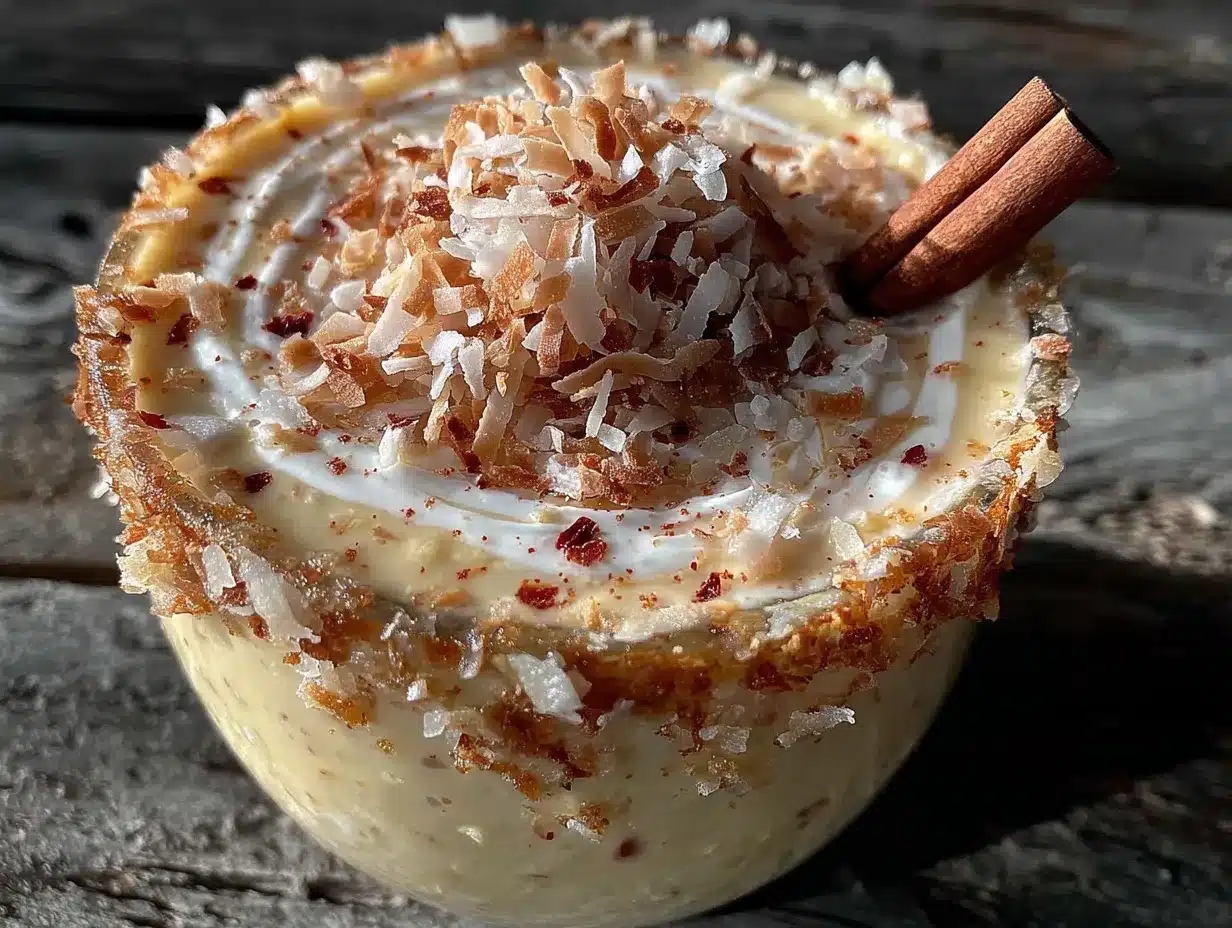
- Unsweetened shredded coconut, ½ cup – Look for the fine shreds, not the big flakes. They toast more evenly and are easier to sprinkle on top. I like the Let’s Do Organic brand for its consistent texture.
- Sweetened shredded coconut, ¼ cup (optional) – If you want a slightly sweeter, more caramelized topping, mix in a little sweetened coconut. The sugar helps it brown beautifully.
Substitution Notes
If you’re dairy-free, you can substitute the evaporated milk with unsweetened oat milk and the sweetened condensed milk with a dairy-free version. Just know that the texture will be slightly thinner. For a lower-sugar version, use light coconut milk instead of cream of coconut and add a sugar-free sweetener to taste. And if you want to make this non-alcoholic, simply omit the rum and add a little extra coconut milk or a splash of coconut water for thinning.
Equipment Needed
You don’t need any fancy equipment for this recipe, which is one of the things I love about it. Here’s what you’ll need:
- Large blender or food processor – This is where you’ll combine all the liquid ingredients. A high-speed blender works best, but any blender will do. I use my trusty Ninja that I’ve had for years—it’s seen better days, but it still gets the job done.
- Medium skillet – For toasting the coconut. A non-stick skillet works best because the coconut can stick to stainless steel if you’re not careful.
- Large pitcher or glass jar – For storing the coquito as it chills. A 64-ounce mason jar is perfect, but any large container with a lid works.
- Fine-mesh strainer or cheesecloth – This is optional but recommended if you want a super smooth coquito. It catches any bits of cinnamon or clove that might have broken off.
- Measuring cups and spoons – For accuracy. I know some people eyeball it, but with coquito, the ratios matter.
- Rubber spatula – For scraping every last bit of coconut cream out of the can. Waste not, want not.
- Small bowl – For holding the toasted coconut topping.
If you don’t have a blender, you can whisk everything together by hand—just make sure the cream of coconut is fully incorporated. It takes a little more elbow grease, but it works. And if you don’t have a fine-mesh strainer, you can just fish out the cinnamon sticks and cloves before serving. No big deal.
Preparation Method
Alright, let’s get to the fun part. Here’s how to make this creamy coquito with toasted coconut, step by step. I’ve included all the little details that make a difference—the things I wish someone had told me the first time I tried making this.
Step 1: Toast the Coconut
Start by toasting the coconut. This is the step that sets this recipe apart, so don’t skip it. Place a medium skillet over medium-low heat and add the shredded coconut. Spread it out in an even layer and let it toast, stirring occasionally, for about 3 to 5 minutes. You’ll know it’s done when it turns a light golden brown and smells incredibly nutty and fragrant. Keep a close eye on it—coconut can go from perfectly toasted to burnt in about 30 seconds. I learned this the hard way when I got distracted by my phone and ended up with a skillet full of blackened coconut. Not my finest moment.
Once it’s toasted, transfer it to a small bowl and set it aside to cool. It will continue to darken slightly as it cools, so pull it off the heat when it’s just a shade lighter than you want it.
Step 2: Combine the Liquid Ingredients
In a large blender, combine the cream of coconut, coconut cream, sweetened condensed milk, evaporated milk, white rum, and vanilla extract. Blend on low speed for about 30 seconds, just until everything is combined. Don’t over-blend—you don’t want to incorporate too much air, which can make the coquito frothy. A smooth, silky consistency is what we’re after.
If you’re using a food processor instead of a blender, pulse it a few times and then let it run on low for about 15 seconds. Same rule applies—don’t overdo it.
Step 3: Add the Spices
Add the ground cinnamon and ground nutmeg to the blender and pulse a few times to incorporate. Then, pour the mixture into your large pitcher or glass jar. Drop in the whole cinnamon sticks and cloves. This is where the magic happens—as the coquito chills, the spices will infuse the mixture, giving it that deep, warm holiday flavor.
I like to give it a good stir with a long spoon at this point to make sure the spices are evenly distributed. You don’t want one glass to be super cinnamon-y and another to be bland.
Step 4: Chill the Coquito
Cover the pitcher or jar and place it in the refrigerator. This is the hardest part—waiting. The coquito needs at least 4 hours to chill and for the flavors to meld together, but overnight is even better. I know, I know, it’s torture. But trust me, the patience pays off.
If you’re in a rush, you can speed things up by placing the pitcher in the freezer for about an hour, then transferring it to the fridge. Just don’t forget it’s in there—frozen coquito is not nearly as enjoyable.
Step 5: Strain and Serve
After the coquito has chilled, give it a taste. This is your chance to adjust the sweetness or rum level. If it’s too sweet, add a splash more evaporated milk or coconut milk. If it’s not sweet enough, add a little more cream of coconut. If you want more rum kick, add another splash. It’s your coquito—make it your own.
If you want a super smooth texture, strain the coquito through a fine-mesh strainer or cheesecloth into a clean pitcher. This will catch any bits of cinnamon or clove that might have broken off. I usually skip this step because I like the visual of the cinnamon sticks floating in the pitcher, but it’s totally up to you.
To serve, pour the coquito into small glasses—shot glasses or small juice glasses work perfectly—and sprinkle a pinch of the toasted coconut on top. The contrast between the creamy, silky coquito and the crunchy, nutty coconut is absolutely divine.
Cooking Tips & Techniques
After making this recipe more times than I care to count, I’ve picked up a few tricks that make the process smoother and the results more consistent. Here are my best tips:
Don’t Skip the Toasting
I know I’ve said this already, but it bears repeating. Toasting the coconut is not optional. It transforms the flavor from flat and one-dimensional to rich, nutty, and complex. The heat releases the natural oils in the coconut, which intensifies its flavor and adds a subtle caramel note that pairs perfectly with the warm spices.
Use Room Temperature Ingredients
This is a tip I picked up from baking, but it applies here too. Room temperature ingredients blend more smoothly and incorporate more evenly. Take your cans of coconut cream and condensed milk out of the fridge about 30 minutes before you start. It makes a noticeable difference in the texture.
Adjust the Rum to Your Taste
The amount of rum in this recipe is flexible. I like it with a full cup because I want to taste the rum, but I’ve made it with as little as ½ cup for friends who prefer a milder drink. You can also use dark rum for a deeper, more molasses-like flavor, or spiced rum for extra warmth. Just remember that the rum flavor will mellow as the coquito chills, so if it tastes strong at first, give it time.
Let It Rest Overnight
I know I mentioned this in the preparation method, but it’s worth repeating. Coquito is one of those drinks that gets better with time. The flavors meld and deepen as it sits, and the texture becomes smoother and more cohesive. If you can, make it a day ahead and let it chill overnight. Your future self will thank you.
Don’t Over-Blend
Resist the urge to let the blender run for too long. Over-blending incorporates air, which can make the coquito frothy and thin. You want a smooth, creamy consistency, not a milkshake texture. Pulse it a few times and call it done.
My Biggest Failure
The first time I made this, I used light coconut milk instead of coconut cream because I was trying to be “healthy.” Big mistake. The coquito was watery, thin, and had none of that luscious creaminess that makes it so special. I ended up trying to fix it by adding more sweetened condensed milk, which just made it cloyingly sweet. It was a disaster. Learn from my mistakes—use the full-fat stuff. This is a holiday treat, not a diet smoothie.
Variations & Adaptations
One of the best things about coquito is how adaptable it is. Here are some variations I’ve tried and loved:
Vegan Coquito
Replace the evaporated milk with unsweetened oat milk or cashew milk, and use a dairy-free sweetened condensed coconut milk (Nature’s Charm makes a great one). The texture will be slightly thinner, but the flavor is still incredible. I made this for my vegan friend Sarah last Christmas, and she said it was the best coquito she’d ever had. High praise.
Spiced Coquito
Add a pinch of ground cardamom, a star anise pod, or a strip of orange peel to the mixture as it chills. These spices add a whole new layer of complexity that’s perfect for holiday gatherings. I tried this with cardamom last year, and it was a huge hit. Just don’t overdo it—cardamom can be overpowering if you use too much.
Chocolate Coquito
Melt ¼ cup of dark chocolate and blend it in with the liquid ingredients. The chocolate and coconut combination is absolutely divine. This version is richer and more decadent, perfect for dessert. I serve it in tiny cups with a chocolate shavings on top.
Non-Alcoholic Version
Simply omit the rum and add an extra ½ cup of coconut milk or coconut water to thin it out. You can also add a splash of rum extract if you want that flavor without the alcohol. This version is perfect for kids or for anyone who doesn’t drink. It’s still creamy, sweet, and satisfying.
Spicy Coquito
Add a small pinch of cayenne pepper or a slice of fresh ginger to the mixture. The heat plays beautifully with the sweetness and the coconut. I tried this on a whim one year and was surprised by how well it worked. Just go easy on the cayenne—a little goes a long way.
Serving & Storage Suggestions
Coquito is best served cold, straight from the fridge. Pour it into small glasses—shot glasses, small juice glasses, or even tiny mason jars work perfectly. The small servings are intentional; coquito is rich and decadent, and a little goes a long way.
Presentation Ideas
Sprinkle the toasted coconut on top just before serving. You can also add a cinnamon stick or a star anise pod for garnish. For a festive touch, rim the glasses with toasted coconut and a little cinnamon sugar. It looks beautiful and adds an extra layer of flavor.
What to Serve With It
Coquito pairs beautifully with traditional holiday cookies like polvorones, mantecaditos, or shortbread. It’s also wonderful alongside a slice of pound cake or a piece of dark chocolate. For a full holiday spread, serve it with pastelillos, arroz con dulce, or tembleque.
Storage Instructions
Store leftover coquito in an airtight container in the refrigerator for up to 2 weeks. The flavors will continue to develop and deepen over time, so it actually gets better as it sits. Just give it a good stir before serving, as the ingredients may separate slightly.
Freezing Instructions
You can freeze coquito for up to 3 months. Pour it into a freezer-safe container, leaving about an inch of headspace for expansion. When you’re ready to serve, thaw it in the refrigerator overnight and give it a good shake or stir. The texture might be slightly different after freezing, but it’s still delicious.
Reheating Notes
Coquito is meant to be served cold, so I don’t recommend reheating it. If you prefer it warm, you can gently heat it on the stove over low heat, stirring constantly. Just don’t let it boil, or the dairy might curdle. I’ve never tried it warm myself, but I’ve heard it’s lovely on a cold winter night.
Nutritional Information & Benefits
Let’s be real—coquito is not health food. It’s a rich, indulgent holiday treat meant to be enjoyed in moderation. But that doesn’t mean it’s without its redeeming qualities.
Estimated Nutritional Information (per 4-ounce serving)
| Nutrient | Amount |
|---|---|
| Calories | 280-320 |
| Total Fat | 15-18g |
| Saturated Fat | 12-14g |
| Carbohydrates | 30-35g |
| Sugar | 28-32g |
| Protein | 3-4g |
| Sodium | 80-100mg |
Health Benefits
Coconut is rich in medium-chain triglycerides (MCTs), which are a type of healthy fat that can support brain function and energy levels. Cinnamon and nutmeg are both packed with antioxidants and have anti-inflammatory properties. And let’s be honest—sometimes the best thing you can do for your health is to enjoy a little treat and feel good about it.
Dietary Considerations
This recipe contains dairy and coconut. It is gluten-free and can be made vegan with the substitutions mentioned above. If you’re watching your sugar intake, you can reduce the amount of sweetened condensed milk or use a sugar-free alternative. Just know that the texture will be affected.
Conclusion
This creamy coquito with toasted coconut is more than just a recipe—it’s a little piece of holiday magic in a glass. It’s the drink that brings people together, that sparks conversations, that makes you slow down and savor the moment. Whether you’re serving it at a big holiday party or sipping it quietly by the fire on a cold winter night, it has a way of making everything feel a little more special.
I’ve made this recipe for friends, family, neighbors, and complete strangers who happened to be at the right place at the right time. Every single time, I watch that first sip happen, and every single time, I see that little smile that says “this is good.” That’s why I keep making it. That’s why I’m sharing it with you.
So go ahead—give it a try. Make it your own. Add a little extra cinnamon, a splash more rum, a pinch of something unexpected. Share it with the people you love, and watch their faces light up. And when you do, come back and tell me about it. I’d love to hear how your coquito turned out, what variations you tried, and who you shared it with.
Here’s to warm nights, good company, and the perfect holiday drink. Cheers, my friend.
Frequently Asked Questions
Can I make coquito without alcohol?
Absolutely! Simply omit the rum and add an extra ½ cup of coconut milk or coconut water to thin it out. You can also add a splash of rum extract for that familiar flavor without the alcohol. It’s just as creamy and delicious.
How long does homemade coquito last in the fridge?
Stored in an airtight container, coquito will keep for up to 2 weeks in the refrigerator. The flavors actually get better as they meld together, so don’t be afraid to make it a few days ahead. Just give it a good stir before serving.
Why is my coquito separating?
Separation is normal, especially after it’s been sitting in the fridge. The coconut cream and other ingredients can separate as they chill. Just give it a good shake or stir before serving, and it will come back together beautifully. If it’s separating while you’re drinking it, you might have over-blended it, which incorporates too much air.
Can I freeze coquito?
Yes! Coquito freezes well for up to 3 months. Pour it into a freezer-safe container, leaving about an inch of headspace for expansion. Thaw it in the refrigerator overnight and give it a good shake or stir before serving. The texture might be slightly different, but it’s still delicious.
What’s the best rum to use for coquito?
A good quality white rum like Bacardi or Don Q is traditional and works beautifully. You can also use dark rum for a deeper, more molasses-like flavor, or spiced rum for extra warmth. Just avoid using flavored rums, as they can clash with the coconut and spices.
Pin This Recipe!
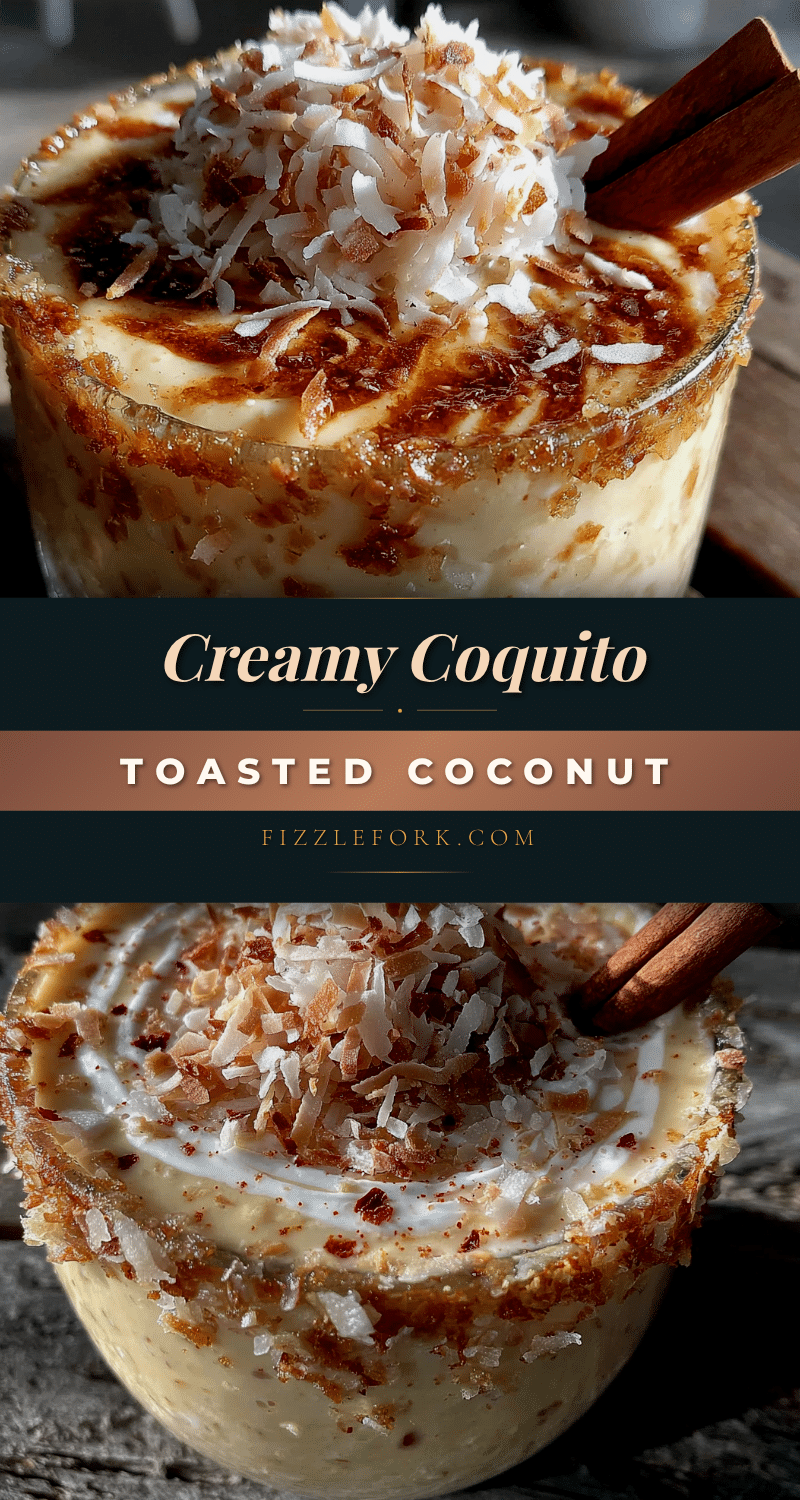
Creamy Coquito with Toasted Coconut – Easy Holiday Drink Recipe
This creamy coquito with toasted coconut is a rich, indulgent holiday drink that combines coconut cream, sweetened condensed milk, and warm spices with a nutty toasted coconut topping. It’s a crowd-pleasing Puerto Rican tradition that’s quick to make and perfect for festive gatherings.
- Prep Time: 15 minutes
- Cook Time: 5 minutes
- Total Time: 4 hours 20 minutes (includes chilling time)
- Yield: 8 servings 1x
- Category: Beverage
- Cuisine: Puerto Rican
Ingredients
- 15 ounces cream of coconut (like Coco López)
- 13.5 ounces unsweetened coconut cream
- 14 ounces sweetened condensed milk
- 12 ounces evaporated milk
- 1 cup white rum (or to taste, up to 1 ½ cups)
- 1 teaspoon vanilla extract
- 2 whole cinnamon sticks
- 4 to 5 whole cloves
- ½ teaspoon ground cinnamon
- ¼ teaspoon ground nutmeg
- ½ cup unsweetened shredded coconut (for topping)
- ¼ cup sweetened shredded coconut (optional, for topping)
Instructions
- Toast the coconut: Place a medium skillet over medium-low heat. Add the shredded coconut (both unsweetened and sweetened if using) and spread in an even layer. Toast, stirring occasionally, for 3 to 5 minutes until light golden brown and fragrant. Transfer to a small bowl and set aside to cool.
- Combine the liquid ingredients: In a large blender, combine cream of coconut, coconut cream, sweetened condensed milk, evaporated milk, white rum, and vanilla extract. Blend on low speed for about 30 seconds until just combined. Do not over-blend.
- Add the spices: Add ground cinnamon and ground nutmeg to the blender and pulse a few times to incorporate. Pour the mixture into a large pitcher or glass jar. Drop in the whole cinnamon sticks and cloves. Stir well to distribute spices evenly.
- Chill the coquito: Cover the pitcher or jar and refrigerate for at least 4 hours, preferably overnight, to allow flavors to meld.
- Strain and serve: After chilling, taste and adjust sweetness or rum level if desired. For a smoother texture, strain through a fine-mesh strainer or cheesecloth into a clean pitcher. Pour into small glasses, sprinkle toasted coconut on top, and serve cold.
Notes
Toasting the coconut is essential for flavor—don’t skip it. Use room temperature ingredients for smoother blending. The coquito gets better after resting overnight. Adjust rum to taste; start with 1 cup and add more if desired. For a non-alcoholic version, omit rum and add ½ cup extra coconut milk or coconut water. Store in an airtight container in the fridge for up to 2 weeks. Freeze for up to 3 months.
Nutrition
- Serving Size: 4 ounces
- Calories: 300
- Sugar: 30
- Sodium: 90
- Fat: 16.5
- Saturated Fat: 13
- Carbohydrates: 32.5
- Fiber: 1
- Protein: 3.5
Keywords: coquito, creamy coquito, toasted coconut, holiday drink, Puerto Rican coquito, coconut drink, Christmas drink, easy coquito recipe