“Hey, have you tried making Pancit Canton at home yet?” my coworker asked during one particularly hectic lunch break. I shrugged, honestly skeptical—how hard could it be, right? My first attempt was more of a happy accident than a planned culinary feat. I had a pile of random veggies, some leftover chicken, and a pack of those bright yellow noodles that looked inviting but intimidating. The kitchen was chaotic, the clock ticked loud, and I was pretty sure I was about to mess this up. But surprisingly, the flavors came together in a way that had me sneaking bites before plating, and by the end of it, I had a steaming bowl of savory Filipino Pancit Canton noodles that felt like a little victory wrapped in comfort.
Since that day, I’ve made this recipe multiple times—sometimes when I’m craving a quick dinner, other times when I want to impress friends with something a bit different but not complicated. The noodles soak up the savory sauce perfectly, and the mix of crunchy vegetables and tender meat hits just the right note. It’s become one of those dishes I turn to when I want something satisfying without endless prep. Honestly, I never expected this recipe to stick with me like it has, but it’s proof that sometimes the easiest meals can surprise you the most.
What I love about this Savory Filipino Pancit Canton Noodles recipe is that it’s approachable for any home cook. No fancy tools or hard-to-find ingredients—just honest, flavorful cooking that feels like a warm hug. It’s the kind of meal that brings a bit of the Philippines to your table, easily and quickly, with every bite.
Why You’ll Love This Recipe
After a few times testing and tweaking, I’m confident this Savory Filipino Pancit Canton Noodles recipe hits the mark in ways that go beyond just “good.” It’s:
- Quick & Easy: Ready in about 30 minutes, perfect for those busy weeknights when you want something tasty without the fuss.
- Simple Ingredients: Uses common pantry staples and basic veggies you probably already have on hand, no need for specialty stores.
- Perfect for Casual Gatherings: Great for casual dinners, potlucks, or even a comforting solo meal that feels special.
- Crowd-Pleaser: The savory sauce and mix of textures always get compliments from both kids and adults alike.
- Unbelievably Delicious: The combination of soy sauce, garlic, and a touch of sweetness creates a flavor that’s rich without being overwhelming.
What makes this Pancit Canton recipe stand out? It’s all about the balance. The noodles are cooked just right—slightly chewy but tender—and tossed with a medley of vibrant veggies and juicy chicken, all coated in a savory sauce that clings perfectly. I like to add a pinch of ground black pepper and a splash of calamansi juice (or lemon if you don’t have it) at the end for that authentic zing. It’s not just another stir-fry; it’s a recipe that feels homemade but with restaurant-worthy flavor.
Honestly, this recipe has become my go-to comfort food because it brings a little joy on even the busiest days. If you’ve ever loved the idea of Filipino food but were daunted by the complexity, this is your gateway dish—a simple, satisfying meal that’s both nostalgic and fresh.
What Ingredients You Will Need
This recipe uses simple, wholesome ingredients to create bold flavor and satisfying texture without any fuss. Most of these are pantry staples or easy to find at your local grocery store.
- Pancit Canton noodles (egg noodles) – about 8 ounces (225 grams). Look for the fresh or dried variety; fresh cooks faster but dried works great too.
- Chicken breast or thigh, sliced thinly – about 1/2 pound (225 grams). Thighs add more flavor, but breasts keep it lean.
- Garlic, minced – 3 cloves (adds that signature savory punch).
- Onion, sliced – 1 small to medium (for sweetness and depth).
- Carrots, julienned or thinly sliced – 1 medium (for crunch and color).
- Green beans, trimmed and cut into 2-inch pieces – 1 cup (adds a fresh snap).
- Cabbage, shredded – 1 cup (softens nicely and balances the dish).
- Soy sauce – 3 tablespoons. I prefer a naturally brewed one, like Kikkoman, for its rich umami.
- Oyster sauce – 2 tablespoons (the secret to that savory depth).
- Chicken broth or water – 1 cup (helps cook the noodles and meld flavors).
- Vegetable oil – 2 tablespoons (for stir-frying).
- Ground black pepper, to taste.
- Calamansi juice or lemon juice – 1 tablespoon (optional but highly recommended for brightness).
- Spring onions, chopped – 2 stalks (for garnish and fresh bite).
For substitutions, if you’re gluten-free, try tamari instead of soy sauce and check for gluten-free oyster sauce alternatives. You can swap chicken with shrimp or tofu for a different protein twist. In the summer, I sometimes add fresh bell peppers or snap peas for extra crunch. This recipe is flexible and forgiving, which is why I love it so much.
Equipment Needed
Here’s what you’ll want handy to make this savory Filipino Pancit Canton noodles recipe with ease:
- Large wok or deep skillet: Ideal for stir-frying and tossing all the ingredients evenly. A non-stick pan works if you don’t have a wok.
- Sharp knife and cutting board: For prepping the vegetables and slicing the chicken thinly.
- Measuring spoons and cups: To get the soy sauce, oyster sauce, and broth just right.
- Mixing spoon or spatula: For stirring without mashing the noodles.
- Colander or strainer: To drain any excess water if using fresh noodles.
If you don’t have a wok, a large sauté pan is fine; just cook in batches if your pan isn’t big enough. I personally find a carbon steel wok gives the best heat distribution, but a sturdy non-stick skillet is a great budget-friendly option and easier to clean. Keep your knives sharp—it makes slicing the chicken and veggies less frustrating and safer. The right tools make this recipe a breeze!
Preparation Method
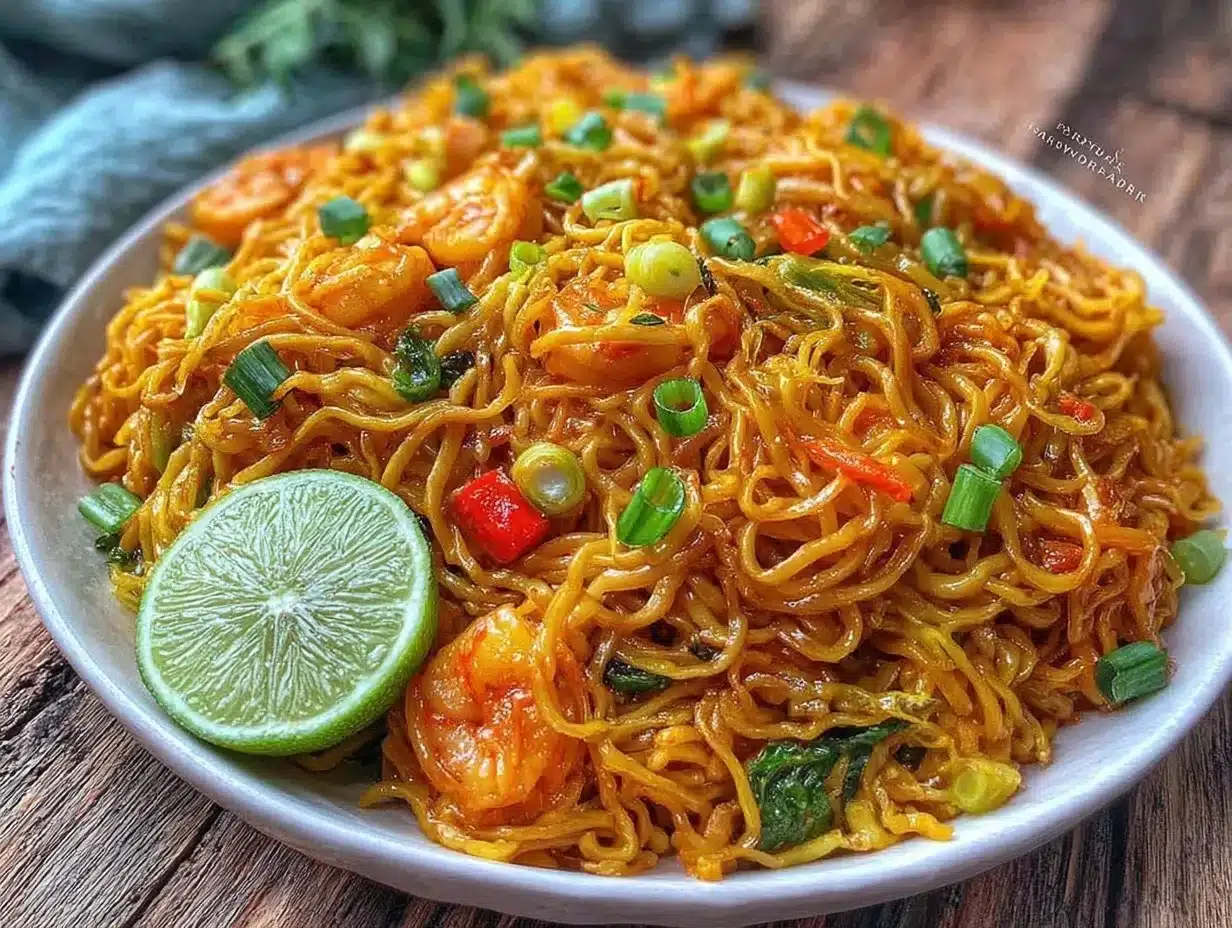
- Prep your ingredients: Slice the chicken into thin strips (about 1/4 inch thick), mince the garlic, slice the onion, julienne the carrots, trim and cut green beans, and shred the cabbage. This should take about 10-15 minutes. Having everything ready keeps the cooking smooth.
- Cook the noodles: If using dried Pancit Canton noodles, soak them in warm water for 5-7 minutes until pliable but not fully soft. Drain and set aside. Fresh noodles don’t need soaking but separate gently to avoid clumps.
- Heat the wok or pan over medium-high heat: Add 2 tablespoons vegetable oil. Once shimmering, toss in the garlic and onion. Stir-fry until fragrant and translucent, about 1-2 minutes.
- Add the chicken strips: Cook, stirring occasionally, until the chicken is no longer pink, about 4-5 minutes. Season lightly with black pepper here.
- Stir in the carrots and green beans: Cook for 2-3 minutes until they start to soften but still have a crunch.
- Add the drained noodles: Toss gently with the veggies and chicken, making sure not to break them.
- Pour in the soy sauce, oyster sauce, and chicken broth: Stir carefully to coat everything evenly. Let the noodles soak up the liquid for 3-4 minutes, stirring occasionally to prevent sticking.
- Add the shredded cabbage last: Toss it in and cook for another 2 minutes until wilted but still fresh.
- Taste and adjust seasoning: Add more soy sauce or pepper if needed. For a final touch, squeeze in the calamansi or lemon juice to brighten up the flavors.
- Garnish: Sprinkle chopped spring onions on top before serving.
Tips: Keep the heat fairly high to get that slight char and wok hei flavor, but watch the garlic so it doesn’t burn. If the noodles feel dry, add a splash more broth or water. This recipe serves 3-4 comfortably, perfect for leftovers or sharing.
Cooking Tips & Techniques
One thing I’ve learned making this recipe over and over is that timing really matters—especially with the veggies. You want them cooked but still crisp to give a nice textural contrast to the noodles. Toss the cabbage in last since it wilts quickly.
Don’t rush the chicken cooking; letting it brown slightly adds flavor. Also, keep stirring but gently—egg noodles can break if handled roughly.
Using fresh garlic is a game-changer here—it gives the dish that punchy aroma. If you want to avoid bitterness, add the garlic after the oil heats up but before it’s smoking.
Sometimes I swap the chicken broth for a splash of water with a bouillon cube; it’s not the same but still adds depth when you’re out of broth. And a pinch of white pepper alongside black pepper gives it a subtle kick.
Multitasking tip: Prep all ingredients first and soak noodles while chopping; it keeps the cooking flow steady and prevents overcooking anything.
Variations & Adaptations
This Savory Filipino Pancit Canton noodles recipe is super flexible. Here are a few ways I’ve played around with it:
- Protein swaps: Try shrimp or pork slices instead of chicken for a different flavor profile. Just adjust cooking times accordingly.
- Vegetarian version: Use tofu and vegetable broth with extra mushrooms, and swap oyster sauce for a mushroom-based vegetarian sauce.
- Spicy twist: Add sliced chili peppers or a dash of chili garlic sauce to the soy-oyster sauce mix for some heat.
- Gluten-free adaptation: Use tamari or coconut aminos instead of soy sauce and look for gluten-free oyster sauce.
- Seasonal veggies: Bell peppers, snow peas, or baby corn work great if you want to switch up the vegetable medley.
Once, I added a handful of chopped fresh basil at the end—it brought a surprisingly fresh finish to the savory noodles. Experimenting is part of the fun, and this recipe holds up well to tweaks.
Serving & Storage Suggestions
Serve your Pancit Canton hot from the wok with a wedge of calamansi or lemon on the side for extra zing. It pairs beautifully with simple grilled meats or a fresh cucumber salad to balance the savory richness.
Leftovers keep well in an airtight container in the fridge for up to 3 days. Reheat gently in a skillet or microwave, adding a splash of water or broth to prevent drying out. The flavors actually deepen a bit overnight, making it even tastier.
For a quick snack, I sometimes scoop some onto a plate and top it with a fried egg—classic comfort food vibes. This dish also travels well, making it a solid option for packed lunches or picnics.
Nutritional Information & Benefits
This Pancit Canton recipe is a balanced meal with protein from the chicken, fiber and vitamins from fresh vegetables, and carbs from the noodles. A typical serving contains approximately 350-400 calories, with moderate fat and protein content.
Chicken provides lean protein supporting muscle health, while garlic and onions add antioxidants. Using fresh vegetables boosts vitamin C and fiber intake. For those watching carbs, you can reduce noodles and bulk up on veggies or swap for shirataki noodles.
Note: Contains gluten from soy sauce and noodles, so gluten-sensitive individuals should adapt accordingly. This recipe offers a wholesome, home-cooked alternative to takeout, with control over ingredients and sodium levels.
Conclusion
Making savory Filipino Pancit Canton noodles at home turns a simple meal into something genuinely satisfying. This recipe’s ease and flexibility mean you can enjoy authentic flavors without stress or long prep times. Whether you’re cooking for family, friends, or just yourself, it’s a dish that invites you to savor every bite and maybe even make it a regular on your dinner rotation.
I keep coming back to this recipe because it reminds me that good food doesn’t have to be complicated. Feel free to tweak the veggies, proteins, or seasonings to suit your taste—it’s all about making this dish your own. If you love rich flavors and comforting noodles, this is definitely one to try.
And hey, if you enjoy this, you might appreciate another simple crowd-pleaser like my crispy air fryer breaded pork chops or the garlic butter shrimp scampi linguine—both quick, flavorful, and perfect for weeknight dinners.
FAQs
What is Pancit Canton?
Pancit Canton is a popular Filipino stir-fried noodle dish made with egg noodles, meat, vegetables, and a savory sauce. It’s a comfort food staple often served at celebrations and family dinners.
Can I use other types of noodles?
Yes! While egg noodles are traditional, you can substitute with spaghetti, ramen, or even rice noodles, but cooking times and textures will vary.
Is this recipe spicy?
This basic recipe is mild, but you can add chili peppers or chili sauce if you prefer a spicy kick.
How do I store leftover Pancit Canton?
Store leftovers in an airtight container in the refrigerator for up to 3 days. Reheat gently with a splash of water or broth to keep noodles moist.
Can I make Pancit Canton vegetarian?
Absolutely! Replace the chicken with tofu or mushrooms and use vegetable broth and vegetarian oyster sauce to keep it meat-free.
Pin This Recipe!
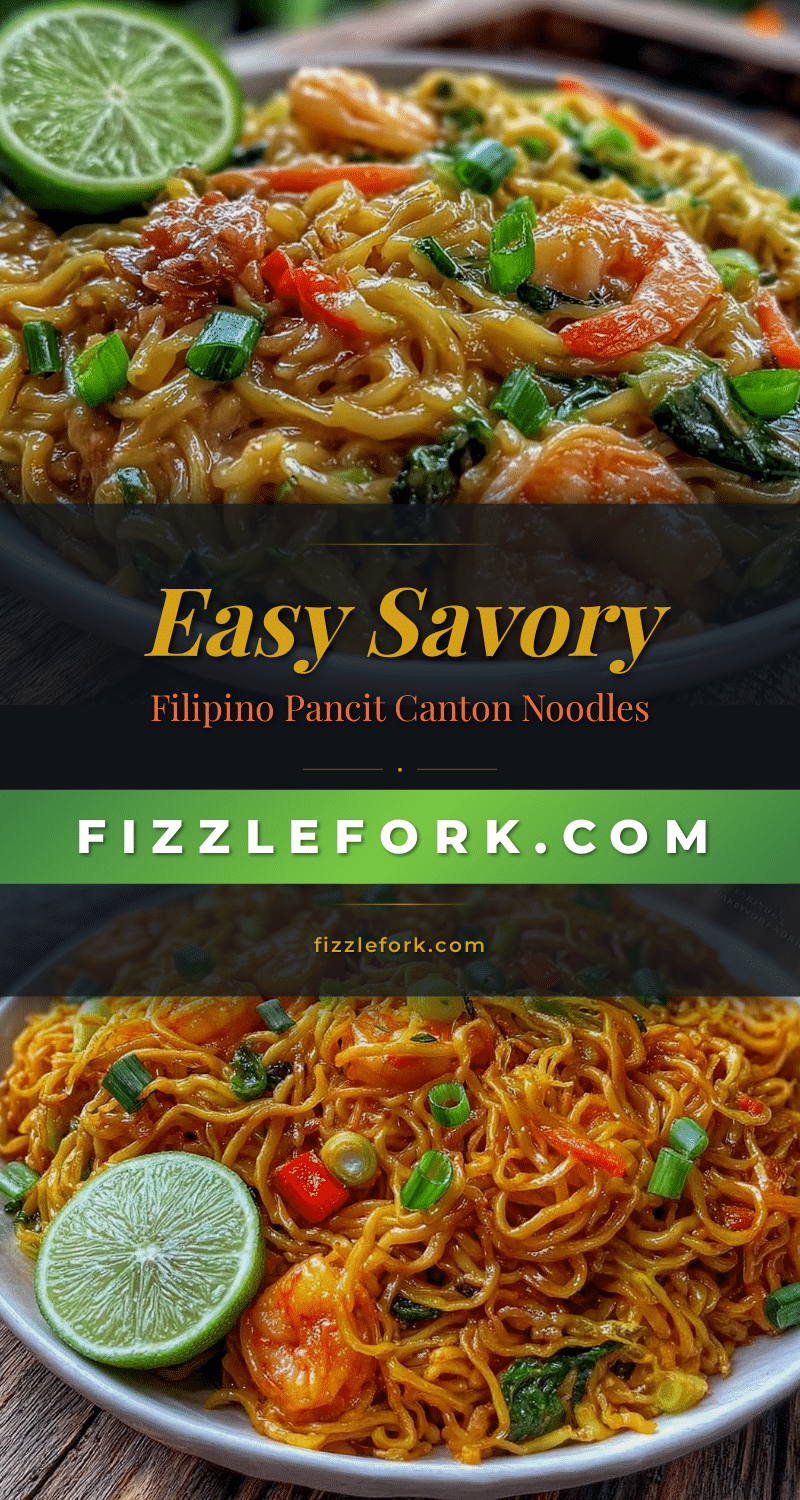
Savory Filipino Pancit Canton Noodles Recipe Easy Homemade Guide

A quick and easy Filipino stir-fried noodle dish featuring egg noodles, tender chicken, and a medley of fresh vegetables tossed in a savory soy-oyster sauce.
- Prep Time: 15 minutes
- Cook Time: 15 minutes
- Total Time: 30 minutes
- Yield: 3-4 servings 1x
- Category: Main Course
- Cuisine: Filipino
Ingredients
- 8 ounces Pancit Canton noodles (egg noodles), fresh or dried
- 1/2 pound chicken breast or thigh, thinly sliced
- 3 cloves garlic, minced
- 1 small to medium onion, sliced
- 1 medium carrot, julienned or thinly sliced
- 1 cup green beans, trimmed and cut into 2-inch pieces
- 1 cup cabbage, shredded
- 3 tablespoons soy sauce
- 2 tablespoons oyster sauce
- 1 cup chicken broth or water
- 2 tablespoons vegetable oil
- Ground black pepper, to taste
- 1 tablespoon calamansi juice or lemon juice (optional)
- 2 stalks spring onions, chopped for garnish
Instructions
- Prep your ingredients: Slice the chicken into thin strips (about 1/4 inch thick), mince the garlic, slice the onion, julienne the carrots, trim and cut green beans, and shred the cabbage. This should take about 10-15 minutes.
- If using dried Pancit Canton noodles, soak them in warm water for 5-7 minutes until pliable but not fully soft. Drain and set aside. Fresh noodles don’t need soaking but separate gently to avoid clumps.
- Heat a large wok or deep skillet over medium-high heat. Add 2 tablespoons vegetable oil. Once shimmering, toss in the garlic and onion. Stir-fry until fragrant and translucent, about 1-2 minutes.
- Add the chicken strips and cook, stirring occasionally, until the chicken is no longer pink, about 4-5 minutes. Season lightly with black pepper.
- Stir in the carrots and green beans. Cook for 2-3 minutes until they start to soften but still have a crunch.
- Add the drained noodles. Toss gently with the veggies and chicken, making sure not to break them.
- Pour in the soy sauce, oyster sauce, and chicken broth. Stir carefully to coat everything evenly. Let the noodles soak up the liquid for 3-4 minutes, stirring occasionally to prevent sticking.
- Add the shredded cabbage last. Toss it in and cook for another 2 minutes until wilted but still fresh.
- Taste and adjust seasoning by adding more soy sauce or pepper if needed. For a final touch, squeeze in the calamansi or lemon juice to brighten up the flavors.
- Garnish with chopped spring onions before serving.
Notes
Keep the heat fairly high to get a slight char and wok hei flavor but watch the garlic to avoid burning. If noodles feel dry, add a splash more broth or water. Use tamari and gluten-free oyster sauce for gluten-free adaptation. Protein swaps like shrimp or tofu work well. Add chili for a spicy twist.
Nutrition
- Serving Size: Approximately 1 bowl
- Calories: 375
- Sugar: 5
- Sodium: 900
- Fat: 10
- Saturated Fat: 2
- Carbohydrates: 45
- Fiber: 4
- Protein: 25
Keywords: Pancit Canton, Filipino noodles, stir-fry noodles, chicken pancit, easy Filipino recipe, savory noodles, egg noodles, quick dinner