An older woman at the farmers market watched me eyeing a pile of beef chuck, a full head shorter than me and wrapped in a cardigan that looked like it had seen fifty winters. She didn’t say anything at first, just gave a little nod toward the meat and then pointed at a stall selling stout across the aisle. “That one,” she said, her voice rough like gravel, “needs that one.” I laughed, thinking she was just being chatty, but she shook her head and tapped my arm. “You boil the stout with the beef, not drink it while you cook. That’s the secret.” I almost walked away, honestly, but something about the way she said it—like she was letting me in on a family code—made me buy both. I went home with a heavy bag and no real plan, just her words rattling around in my head. That night, I threw everything into a pot and crossed my fingers. The stew that came out of that kitchen was so good I called my neighbor the next morning to apologize for the smell keeping her up, but she asked for the recipe instead. I’ve been making it ever since, tweaking it here and there, but that first pot taught me something no cookbook ever could: sometimes the best recipes come from strangers who see you struggling and decide to help.
Why You’ll Love This Recipe
This isn’t just another beef stew recipe you find online and forget about by Tuesday. This is the kind of dish that makes people stop mid-conversation at the dinner table and ask, “What did you put in this?” I’ve tested this version at least a dozen times, tweaking the stout-to-broth ratio and the timing on the vegetables until it hit that sweet spot where every bite feels like a warm hug. Here’s why this one stands out from the crowd:
- Perfect for Hosting: This stew practically begs to be made for a crowd. You can double it without breaking a sweat, and it actually tastes better the next day—which means zero stress when your guests arrive.
- Simple Ingredients, Complex Flavor: No fancy cuts of meat or imported spices. Just beef, stout beer, root vegetables, and patience. The magic happens in the pot, not at the grocery store.
- Make-Ahead Miracle: You can prep this entirely the day before. Just reheat it low and slow while you set the table and pour the wine. Your future self will thank you.
- Impressive Without the Stress: It looks and tastes like you spent hours fussing, but honestly, most of the cooking time is hands-off. You’re just letting the oven do the work while you relax.
- Guaranteed Crowd-Pleaser: I’ve served this to picky eaters, vegetarians who made an exception, and my uncle who claims he “doesn’t like stew.” Every single bowl came back empty.
The stout gives the broth this deep, almost smoky richness that you just can’t get from wine or broth alone. It’s not boozy or bitter—it mellows out during the long simmer and leaves behind a savory complexity that makes people close their eyes after the first spoonful. Honestly, this is the recipe I pull out when I want to remind myself that cooking doesn’t have to be complicated to be memorable.
What Ingredients You Will Need
This recipe relies on humble ingredients that come together to create something far greater than the sum of their parts. Most of these are probably already in your kitchen or easy to find at any grocery store. The stout is the star here, so don’t skimp on it—use one you’d actually enjoy drinking.
- Beef chuck (2 lbs or 900g), cut into 1.5-inch cubes: Chuck is my go-to for stew because it has enough marbling to stay tender during the long cook. Don’t bother with expensive cuts like sirloin—they’ll dry out. Look for pieces with nice fat streaks running through them.
- Stout beer (12 oz or 355ml, one bottle): I prefer Guinness for its smooth, roasty flavor, but any dry stout works. Avoid sweet stouts or porters here—they’ll make the broth too sugary. (I learned that the hard way with a chocolate stout experiment that went sideways.)
- Yellow onions (2 large), diced: Onions form the backbone of the flavor base. Don’t rush the browning—let them get soft and golden before you add anything else.
- Carrots (4 medium), peeled and cut into 1-inch chunks: Regular orange carrots are fine, but if you can find rainbow carrots at the market, they add a nice visual pop. Just know they cook at the same rate.
- Celery (3 stalks), sliced: Celery adds that subtle savory note that rounds out the broth. I never skip it, even when I’m tempted to.
- Yukon Gold potatoes (1.5 lbs or 680g), cut into 1-inch chunks: These hold their shape better than russets and get creamy without falling apart. Red potatoes work too if that’s what you have.
- Garlic (4 cloves), minced: Fresh garlic makes a difference here. The jarred stuff tastes flat in a slow-cooked dish like this.
- Tomato paste (2 tablespoons): This adds depth and helps thicken the broth. I like the double-concentrated kind in a tube—it keeps in the fridge for weeks.
- Beef broth (4 cups or 960ml): Use low-sodium if you can, so you control the salt. Homemade is lovely, but store-bought works perfectly. I swear by the Better Than Bouillon paste for flavor.
- Fresh thyme (4 sprigs) and bay leaves (2): Dried thyme works in a pinch (use 1 teaspoon), but fresh herbs really shine here. Tie them together with kitchen twine for easy removal later.
- All-purpose flour (3 tablespoons): This helps thicken the stew. You can use gluten-free flour blend if needed, but the texture will be slightly different.
- Olive oil (2 tablespoons) and butter (1 tablespoon): The combo gives you better browning and richer flavor than either alone.
- Salt and black pepper (to taste): Go easy at first—the stout adds its own savory notes. You can always adjust at the end.
- Fresh parsley (for garnish): Optional but nice for color when you’re serving guests.
Equipment Needed
You don’t need a fancy kitchen to pull this off. Most of these tools are probably already in your cabinets. Here’s what you’ll need:
- Dutch oven or heavy-bottomed pot (at least 6-quart capacity): This is the MVP of the recipe. The heavy lid traps steam and keeps the stew cooking evenly. If you don’t have a Dutch oven, a large stockpot works, but you’ll need to stir more often to prevent sticking.
- Sharp chef’s knife: A dull knife makes cutting beef and vegetables a chore. I learned this after nearly slicing my finger on a slippery onion—get your knives sharpened.
- Cutting board: Wood or plastic, doesn’t matter. Just make sure it’s big enough to hold all your prepped ingredients.
- Measuring cups and spoons: For the broth and seasonings. Eyeballing works for some things, but not the flour or tomato paste.
- Wooden spoon or spatula: For stirring and scraping up the browned bits from the bottom of the pot. Those bits are pure flavor.
- Tongs: For flipping the beef while browning. A fork will pierce the meat and release juices, so tongs are better.
- Optional but helpful: A kitchen scale for weighing the beef and potatoes, and kitchen twine for tying the herbs together.
Preparation Method
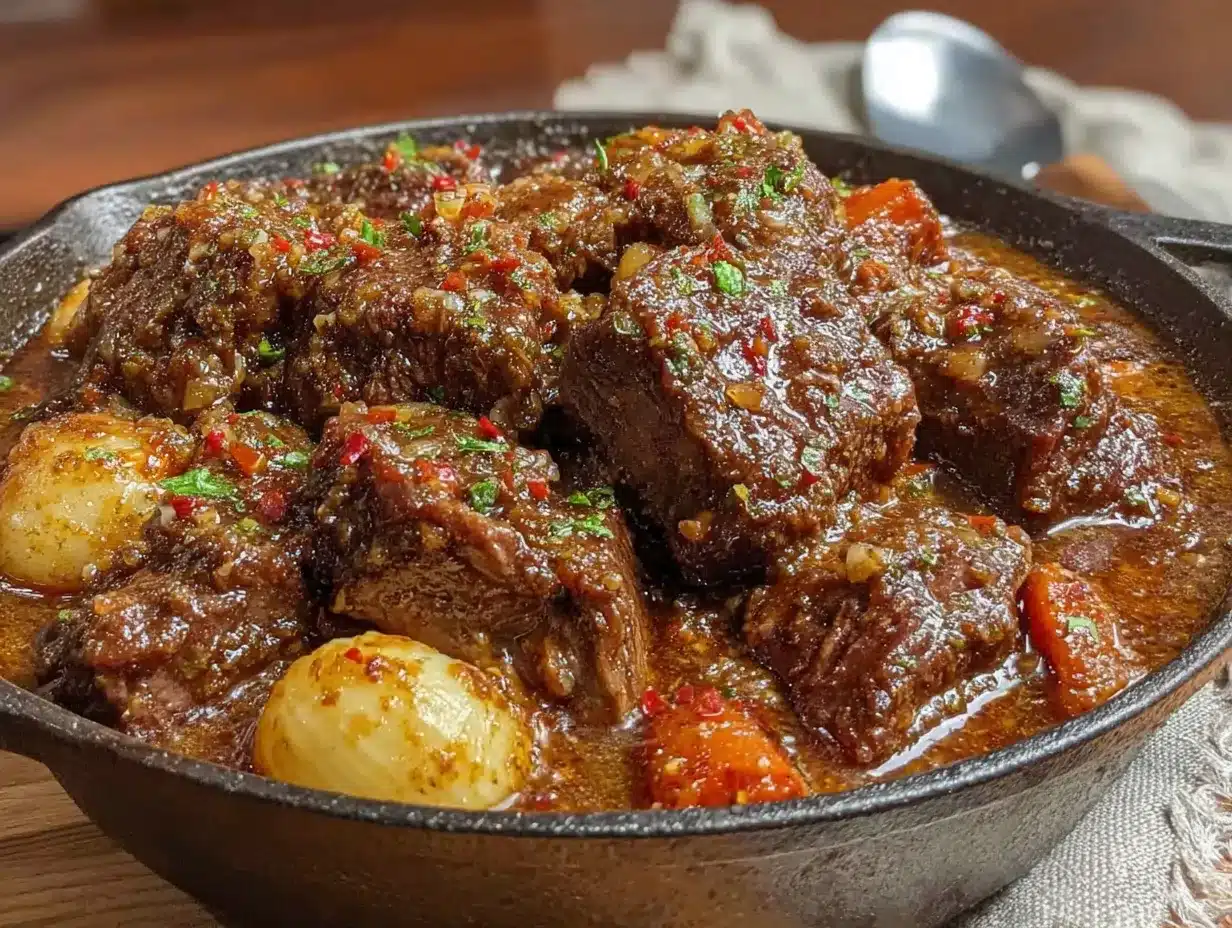
Take your time with the browning step—it’s where all the flavor starts. The rest is mostly hands-off, which is perfect for hosting because you can prep everything before your guests arrive.
- Prep the beef (10 minutes): Pat the beef cubes dry with paper towels. This is crucial—wet meat won’t brown properly. Season generously with salt and pepper. Let them sit at room temperature for 15 minutes while you prep the vegetables.
- Brown the beef in batches (15-20 minutes): Heat 1 tablespoon of olive oil in your Dutch oven over medium-high heat until it shimmers. Add the beef in a single layer—don’t crowd the pot. Work in batches if needed. Let each piece brown undisturbed for 3-4 minutes per side. You’re looking for a deep, dark crust, not just pale gray. Transfer the browned beef to a plate and set aside.
- Sauté the aromatics (8-10 minutes): Reduce the heat to medium. Add the remaining tablespoon of olive oil and the butter. Toss in the diced onions, carrots, and celery. Cook, stirring occasionally, until the onions turn translucent and start to brown at the edges. Add the minced garlic and cook for 1 more minute until fragrant. (If the bottom of the pot looks dark, don’t panic—that’s flavor. Just scrape it up with your wooden spoon.)
- Add the tomato paste (2 minutes): Stir in the tomato paste and cook for 2 minutes, stirring constantly. It’ll darken and smell almost sweet. This step deepens the overall flavor.
- Sprinkle the flour (1 minute): Sprinkle the flour over the vegetables and stir well. Cook for 1 minute to get rid of the raw flour taste. The mixture will look thick and pasty—that’s perfect.
- Deglaze with stout (2 minutes): Pour in the stout beer and stir vigorously, scraping up all the browned bits from the bottom of the pot. Let it bubble for 2 minutes to cook off some of the alcohol. The smell at this point is incredible—earthy and rich.
- Return the beef and add broth (5 minutes): Add the browned beef back to the pot, along with any juices that collected on the plate. Pour in the beef broth, add the thyme sprigs and bay leaves, and stir everything together. Bring the stew to a gentle boil, then reduce the heat to low.
- Simmer low and slow (1.5 to 2 hours): Cover the pot and let it simmer on the stovetop over low heat, or transfer it to a 325°F (160°C) oven. Check it every 30 minutes to give it a stir and make sure it’s not sticking. The broth should be bubbling gently, not boiling hard.
- Add the potatoes (last 30 minutes): After 1.5 hours of simmering, add the potato chunks. Stir them in and continue cooking for another 30-45 minutes, or until the potatoes are tender and the beef is fork-tender. The broth should have thickened nicely by now.
- Finish and adjust seasoning (5 minutes): Remove the thyme sprigs and bay leaves. Taste the stew and add more salt and pepper if needed. If it tastes flat, a splash of Worcestershire sauce or a pinch of sugar can brighten it up. Let it rest off the heat for 10 minutes before serving—the flavors settle and deepen during this time.
Cooking Tips & Techniques
I’ve made this stew more times than I can count, and I’ve messed it up plenty along the way. Here are the lessons I learned so you don’t have to repeat my mistakes.
Don’t rush the browning. I know it’s tempting to crank the heat and get it over with, but medium-high is your friend. If the pot is too hot, the beef will burn on the outside and stay raw inside. If it’s too low, the meat will steam instead of brown. That deep brown crust is where the savory flavor comes from—it’s not just for looks. I once rushed through this step because I was hungry, and the stew tasted like boiled meat. Never again.
Use the right stout. A dry stout like Guinness is ideal because it’s roasty and slightly bitter, which balances the richness of the beef. Sweet stouts or milk stouts will make the broth cloying. I tried a chocolate stout once thinking it would be amazing, and the stew ended up tasting like dessert gone wrong. Stick with the classic.
Let it rest overnight if you can. This is my number one hosting tip. Make the stew a day ahead, let it cool, and refrigerate it overnight. The next day, the flavors meld together in a way that’s almost magical. The beef gets even more tender, and the broth thickens beautifully. Just reheat it gently on the stovetop before serving.
Skim the fat if needed. After the stew has chilled, any excess fat will solidify on top. You can easily scoop it off with a spoon before reheating. This gives you a cleaner, more refined broth without being greasy. If you’re serving it the same day, you can skim the surface with a spoon while it simmers.
Keep the potatoes separate if you’re meal prepping. If you plan to freeze the stew or keep it for more than a couple days, add the potatoes fresh when you reheat. Frozen potatoes get grainy and fall apart. I learned this after pulling a container out of the freezer and finding sad, mushy chunks floating in the broth.
Variations & Adaptations
This stew is forgiving, so feel free to play around with it based on what you have or who you’re feeding. Here are some variations I’ve tried and loved:
- Gluten-Free Version: Skip the flour and use 2 tablespoons of cornstarch mixed with 3 tablespoons of cold water (a slurry) added at the end. Stir it in and let it simmer for 5 minutes to thicken. The texture is slightly different—a bit glossier—but just as delicious.
- Vegetarian Adaptation: Swap the beef for 2 cans of drained chickpeas or 1.5 lbs of cremini mushrooms, halved. Use vegetable broth instead of beef broth. The mushrooms give you that savory, umami depth that mimics the meaty flavor. It’s not the same stew, but it’s a hearty alternative that even meat-eaters will enjoy.
- Slow Cooker Method: Brown the beef and sauté the vegetables on the stovetop first (don’t skip this step—it’s essential for flavor). Then transfer everything to a slow cooker, add the stout and broth, and cook on low for 8 hours or high for 4 hours. Add the potatoes during the last 2 hours so they don’t turn to mush.
- Herb Swap: If you don’t have fresh thyme, use 1 teaspoon of dried rosemary or 2 sprigs of fresh sage. Both pair beautifully with stout and beef. I tried rosemary once when I ran out of thyme, and honestly, I might like it even better now.
- Spicy Kick: Add a pinch of smoked paprika or a diced chipotle pepper in adobo sauce along with the tomato paste. It adds a subtle warmth that doesn’t overpower the stew but keeps people guessing.
Serving & Storage Suggestions
This stew is a meal in itself, but the right accompaniments can turn it into a full-on dinner party centerpiece.
Serving Temperature: Serve it piping hot straight from the pot. Ladle it into wide, shallow bowls so the broth doesn’t cool down too fast. A sprinkle of fresh parsley on top adds a pop of green that looks beautiful against the dark broth.
What to Serve Alongside: Crusty sourdough bread is non-negotiable—you need something to soak up every last drop of that stout-infused broth. A simple green salad with a tangy vinaigrette cuts through the richness nicely. For a heartier spread, serve it with buttery mashed potatoes or a side of roasted Brussels sprouts. If you’re hosting a St. Patrick’s Day dinner, pair it with a pint of the same stout you used in the stew.
Storage Instructions: Let the stew cool completely before transferring it to airtight containers. It keeps in the refrigerator for up to 5 days. The flavors actually improve after the first day, so don’t be afraid to make it ahead. For longer storage, freeze it in portion-sized containers for up to 3 months. Just remember to leave out the potatoes if you plan to freeze it—add fresh ones when you reheat.
Reheating Tips: Reheat gently on the stovetop over medium-low heat, stirring occasionally. Add a splash of beef broth or water if the stew has thickened too much during storage. If you’re reheating from frozen, let it thaw overnight in the fridge first, then warm it up slowly. Avoid the microwave—it heats unevenly and can toughen the beef.
How Flavors Develop Over Time: The first day, the stew is good—rich and hearty. The second day, it’s great—the stout mellows out, the beef gets even more tender, and the vegetables soak up all that savory broth. By the third day, it’s transcendent. That’s why I always make this stew at least 24 hours before I plan to serve it.
Nutritional Information & Benefits
This stew is comfort food at its finest, but it also brings some solid nutritional value to the table. Here’s a rough breakdown per serving (based on 6 servings):
- Calories: Approximately 480-520 per serving
- Protein: 35-40g (thanks to the beef)
- Carbohydrates: 30-35g (mostly from the potatoes and vegetables)
- Fat: 20-25g (from the beef and butter)
- Fiber: 4-6g
- Iron: 25% of the daily recommended intake
- Vitamin A: 80% of the daily recommended intake (from the carrots)
Beef is an excellent source of high-quality protein, iron, and B vitamins, which support energy levels and immune function. The carrots and celery add fiber and antioxidants, while the potatoes provide potassium and vitamin C. The stout beer, believe it or not, contains B vitamins and antioxidants from the barley. It’s not health food by any stretch, but it’s a balanced meal that will leave you feeling satisfied and nourished—especially on a cold winter night.
If you’re watching your sodium, use low-sodium broth and go easy on the added salt. The tomato paste and stout bring plenty of flavor on their own.
Conclusion
This cozy beef and stout Irish stew is the kind of recipe that makes you look like a hero in the kitchen without breaking a sweat. It’s rich, deeply flavorful, and somehow gets better every time you make it. The best part? It practically cooks itself once you’ve done the initial browning, which means you can focus on your guests instead of hovering over the stove.
I honestly believe this stew has a little bit of magic in it—maybe it’s the stout, maybe it’s the slow simmer, or maybe it’s just the memory of that woman at the farmers market who shared a secret she didn’t have to share. Whatever it is, it works. Every time I serve this, someone asks for the recipe, and I’m happy to pass it along.
So go ahead and make it for your next dinner party, potluck, or just a quiet night in. Customize it however you like—swap the herbs, add more vegetables, or double the batch for a crowd. And when your guests start asking questions, just smile and tell them it’s a secret. (Then give them the recipe anyway.)
If you try this recipe, I’d love to hear how it turned out. Drop a comment below or tag me in your photos—I’m always excited to see this stew in someone else’s kitchen.
Frequently Asked Questions
Can I use a different type of beer?
Absolutely, but stick with dry, roasty beers. A brown ale or a dark lager works well. Avoid IPAs—they’ll make the stew bitter in an unpleasant way. And skip anything sweet or fruity.
How do I make this in a slow cooker?
Brown the beef and sauté the vegetables on the stovetop first, then transfer everything to the slow cooker. Cook on low for 8 hours or high for 4 hours. Add the potatoes during the last 2 hours so they don’t turn mushy.
Can I freeze this stew?
Yes, but leave out the potatoes if you plan to freeze it. Potatoes get grainy and fall apart after freezing. Freeze the stew in portion-sized containers for up to 3 months. When you reheat it, add fresh potatoes and cook until tender.
What if I don’t have a Dutch oven?
A large, heavy-bottomed pot with a tight-fitting lid works fine. You might need to stir more often to prevent sticking. If your pot doesn’t have a lid, cover it tightly with aluminum foil.
How can I thicken the stew if it’s too thin?
Mix 2 tablespoons of cornstarch with 3 tablespoons of cold water to make a slurry. Stir it into the simmering stew and cook for 5 minutes. The broth will thicken nicely without changing the flavor. Alternatively, you can mash a few of the cooked potatoes against the side of the pot and stir them in.
Pin This Recipe!
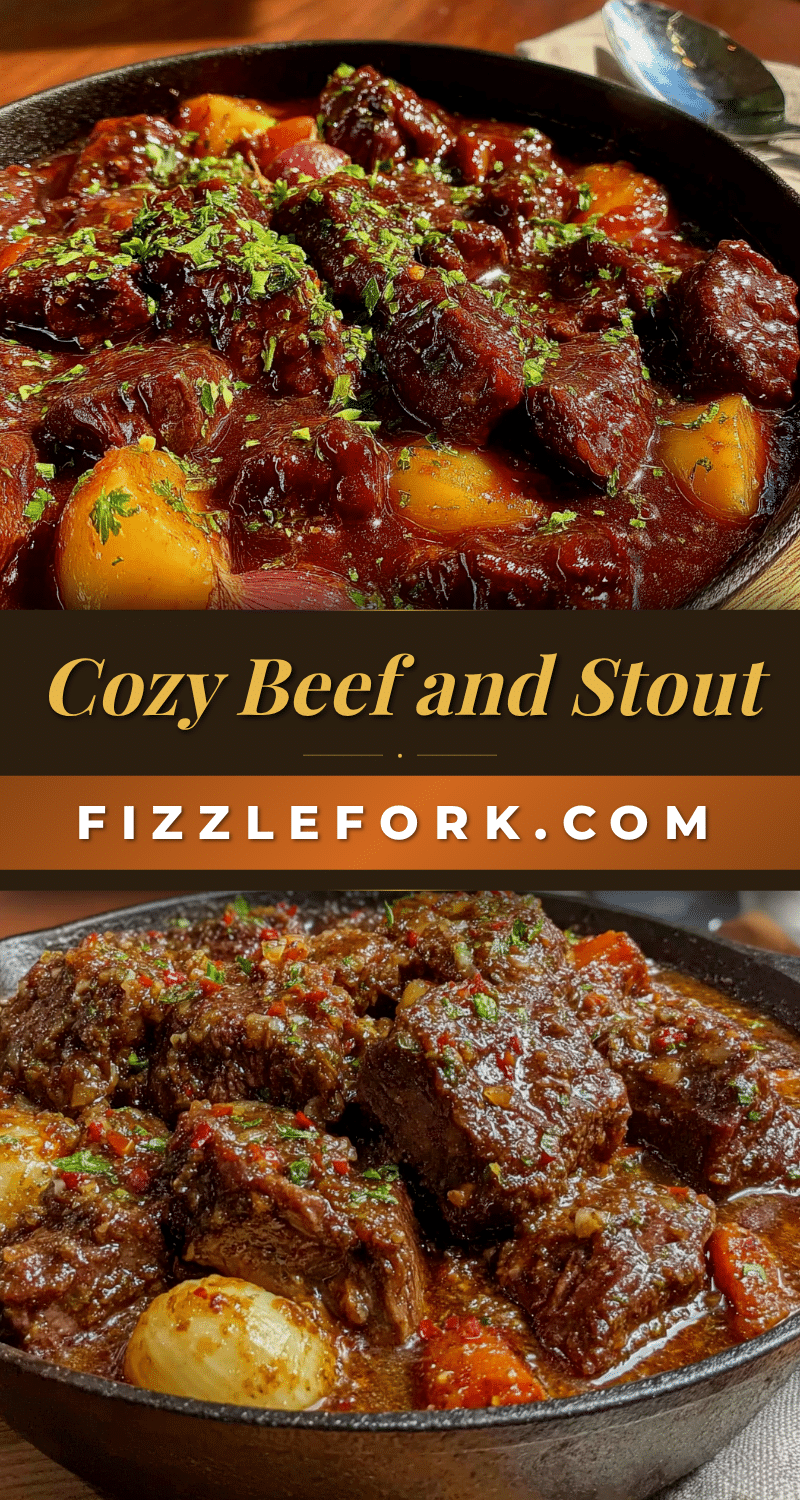
Cozy Beef and Stout Irish Stew Your Guests Will Ask For
This hearty beef and stout Irish stew is rich, deeply flavorful, and perfect for hosting. Made with simple ingredients like beef chuck, stout beer, and root vegetables, it’s a make-ahead miracle that tastes even better the next day.
- Prep Time: 15 minutes
- Cook Time: 2 hours 30 minutes
- Total Time: 2 hours 45 minutes
- Yield: 6 servings 1x
- Category: Main Course
- Cuisine: Irish
Ingredients
- 2 lbs (900g) beef chuck, cut into 1.5-inch cubes
- 12 oz (355ml) stout beer (e.g., Guinness)
- 2 large yellow onions, diced
- 4 medium carrots, peeled and cut into 1-inch chunks
- 3 stalks celery, sliced
- 1.5 lbs (680g) Yukon Gold potatoes, cut into 1-inch chunks
- 4 cloves garlic, minced
- 2 tablespoons tomato paste
- 4 cups (960ml) low-sodium beef broth
- 4 sprigs fresh thyme
- 2 bay leaves
- 3 tablespoons all-purpose flour
- 2 tablespoons olive oil
- 1 tablespoon butter
- Salt and black pepper to taste
- Fresh parsley for garnish (optional)
Instructions
- Prep the beef: Pat the beef cubes dry with paper towels. Season generously with salt and pepper. Let sit at room temperature for 15 minutes.
- Brown the beef in batches: Heat 1 tablespoon olive oil in a Dutch oven over medium-high heat. Add beef in a single layer, working in batches. Brown undisturbed for 3-4 minutes per side until a deep crust forms. Transfer to a plate.
- Sauté the aromatics: Reduce heat to medium. Add remaining 1 tablespoon olive oil and butter. Add onions, carrots, and celery. Cook 8-10 minutes until onions are translucent and edges brown. Add garlic and cook 1 minute more.
- Add tomato paste: Stir in tomato paste and cook for 2 minutes, stirring constantly.
- Sprinkle flour: Sprinkle flour over vegetables and stir well. Cook for 1 minute.
- Deglaze with stout: Pour in stout beer and stir vigorously, scraping up browned bits. Let bubble for 2 minutes.
- Return beef and add broth: Add beef back to pot along with any juices. Pour in beef broth, add thyme sprigs and bay leaves. Stir to combine. Bring to a gentle boil, then reduce heat to low.
- Simmer low and slow: Cover and simmer on stovetop over low heat or transfer to a 325°F (160°C) oven for 1.5 to 2 hours, stirring every 30 minutes.
- Add potatoes: After 1.5 hours, add potato chunks. Continue cooking for 30-45 minutes until potatoes are tender and beef is fork-tender.
- Finish and adjust seasoning: Remove thyme sprigs and bay leaves. Taste and adjust salt and pepper. Let rest off heat for 10 minutes before serving. Garnish with fresh parsley if desired.
Notes
Don’t rush the browning step—it’s where the flavor starts. Use a dry stout like Guinness; avoid sweet stouts. For best results, make the stew a day ahead and refrigerate overnight to let flavors meld. If freezing, leave out potatoes and add fresh ones when reheating.
Nutrition
- Serving Size: 1 serving (about 1.5
- Calories: 500
- Sugar: 8
- Sodium: 600
- Fat: 22
- Saturated Fat: 8
- Carbohydrates: 33
- Fiber: 5
- Protein: 38
Keywords: beef stew, Irish stew, stout stew, comfort food, winter recipe, dinner party, make-ahead