“You sure you want that much spice?” my roommate asked as I dumped a hefty spoonful of gochujang into the sizzling pan. Honestly, I wasn’t planning on making a fancy dinner that night—more like throwing something together after a long day that left me too tired to care. The unexpected thing? That quick spicy Korean beef bowl turned out to be the dinner I kept craving all week. The deep red color, that sticky-sweet heat, and the nutty crunch of sesame seeds filled the kitchen with warmth and promise. It wasn’t just a meal; it was an instant comfort with a kick, ready in under 20 minutes.
Usually, I’m not the type to fuss over homemade sauces or complex dishes, but this one hit just the right notes. The balance of sweet, salty, and fiery flavors made me realize Korean food doesn’t have to be intimidating or time-consuming. Plus, tossing together a bowl like this felt like a little victory after a chaotic day—simple, bold, and satisfying. I never thought a sprinkle of sesame seeds and a dollop of gochujang could turn ground beef into something so addictive.
It’s funny how sometimes the quickest meals become your favorites. This beef bowl stuck around because it’s honest food that doesn’t pretend to be anything else—just a straightforward, spicy, savory bowl that feels like a hug on a plate. If you’re curious about whipping up something fast that packs a punch, this recipe might just become your go-to, too.
Why You’ll Love This Recipe
This quick spicy Korean beef bowl recipe has been tested multiple times in my kitchen—sometimes twice in one week, no joke. It’s the kind of meal that’s forgiving, fast, and full of personality. Here’s what makes it stand out:
- Quick & Easy: Ready in about 20 minutes, perfect for busy evenings or when cravings hit hard.
- Simple Ingredients: Uses common pantry staples like ground beef, garlic, and soy sauce, plus that magical jar of gochujang.
- Perfect for Weeknight Dinners: No need to plan ahead or hunt for obscure spices, just straightforward flavors.
- Crowd-Pleaser: Whether it’s family or friends, this bowl gets nods of approval (and second servings).
- Unbelievably Delicious: The combination of spicy, sweet, and nutty textures keeps you coming back for more.
Unlike other Korean-inspired dishes that can feel complicated, this recipe leans on a few key flavors done really well. The secret? A well-balanced gochujang sauce that’s not too spicy but with enough kick to wake up your taste buds. Toss in toasted sesame seeds and a splash of sesame oil, and you’ve got layers of flavor that taste like you spent hours in the kitchen when really, you didn’t. This bowl isn’t just food; it’s a quick comfort fix with a bold personality.
What Ingredients You Will Need
This recipe keeps things straightforward with simple, wholesome ingredients that come together beautifully. Most of these are pantry staples or easy-to-find items, and I’ll share a few tips on picking the best versions.
- Ground Beef (1 lb / 450 g) – I go for 85% lean for a good balance of flavor and moisture.
- Gochujang (2 tbsp) – The star of the show. Look for a good-quality Korean brand; it’s a fermented chili paste that’s spicy, sweet, and umami-rich.
- Soy Sauce (3 tbsp) – Adds salty depth; low-sodium if you want to keep it light.
- Brown Sugar (1 tbsp) – Balances the heat with a touch of sweetness.
- Garlic (3 cloves, minced) – Fresh is best for that punchy aroma.
- Ginger (1 tsp, grated) – Adds a warm, zesty note.
- Sesame Oil (1 tbsp) – Toasted sesame oil gives a nutty, rich finish.
- Green Onions (2 stalks, sliced) – Fresh crunch and color.
- Sesame Seeds (1 tbsp, toasted) – For that signature Korean crunch and aroma.
- Cooked Rice (4 cups / 960 ml) – Jasmine or short-grain rice works best to hold the sauce.
- Optional: Red pepper flakes for extra heat, or steamed veggies like bok choy or carrots for added freshness.
If you want to keep things gluten-free, swap soy sauce for tamari. For a leaner option, ground turkey or chicken works well, though beef gives that richer flavor I love. I usually keep a jar of gochujang in my fridge—it’s surprisingly versatile beyond this dish.
Equipment Needed
- Large Skillet or Nonstick Pan: Essential for evenly browning the ground beef and allowing the sauce to reduce nicely. I prefer a heavy-bottomed skillet to avoid hotspots.
- Wooden Spoon or Spatula: For breaking up the beef as it cooks and stirring in the sauce without scratching your pan.
- Measuring Spoons and Cups: For accuracy, especially with the gochujang and soy sauce to keep the flavor balance just right.
- Rice Cooker or Pot: To prepare the rice. A rice cooker saves time and keeps rice perfectly fluffy, but stovetop works fine too.
- Small Bowl: For mixing the sauce before adding it to the meat.
If you don’t have a skillet, a sauté pan or even a wok will do just fine—just watch the heat so the meat doesn’t burn. I once tried this recipe in a cast iron pan and loved how it caramelized the beef, though it needed a bit more stirring to prevent sticking. For toasting sesame seeds, a small dry pan on medium heat works wonders; just shake frequently to avoid burning.
Preparation Method
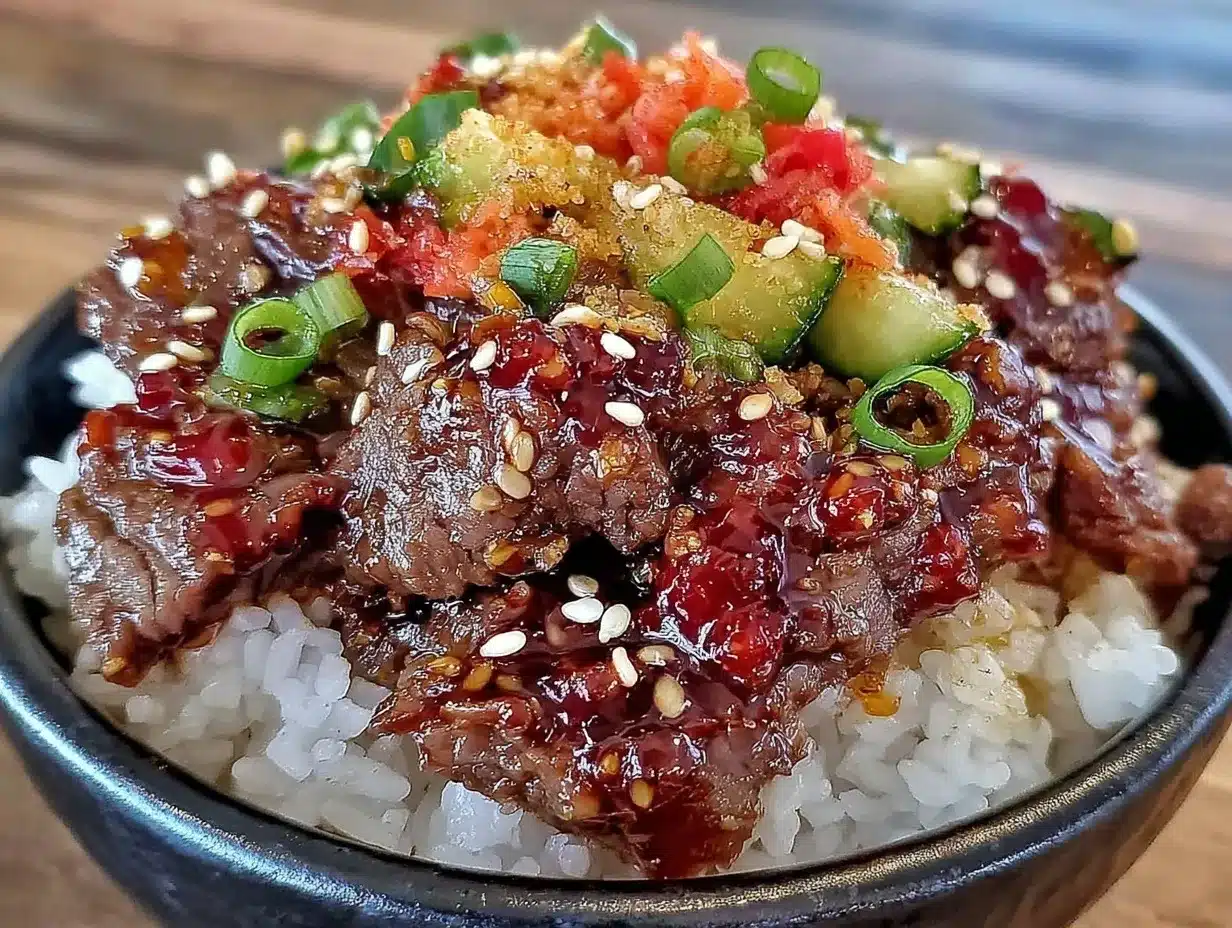
- Cook the rice: Start by cooking 4 cups (960 ml) of rice according to package instructions. This usually takes about 15-20 minutes. If you’re short on time, use leftover rice—it actually works great here.
- Mix the sauce: In a small bowl, combine 2 tbsp gochujang, 3 tbsp soy sauce, 1 tbsp brown sugar, 1 tbsp toasted sesame oil, 3 minced garlic cloves, and 1 tsp grated ginger. Stir until smooth and set aside.
- Brown the beef: Heat a large skillet over medium-high heat. Add 1 lb (450 g) of ground beef, breaking it apart with a wooden spoon. Cook for about 5-7 minutes until browned and no longer pink. Drain excess fat if desired.
- Add the sauce: Pour the prepared sauce over the beef. Stir well to coat all the meat evenly. Reduce heat to medium and simmer for 3-5 minutes, allowing the sauce to thicken slightly. It should cling to the beef, glossy and fragrant.
- Toast sesame seeds: While the beef simmers, toast 1 tbsp sesame seeds in a dry skillet over medium heat for 2 minutes until golden and fragrant. Watch closely to avoid burning.
- Finish the dish: Remove the beef from heat. Stir in sliced green onions (2 stalks) and sprinkle toasted sesame seeds on top. Give it a final stir.
- Assemble bowls: Spoon the hot rice into bowls and top with the spicy Korean beef mixture. Add optional steamed veggies or a fried egg if you feel fancy.
Watch for the sauce consistency during simmering—it should reduce just enough to stick to the beef without drying out. If it looks too thick, splash a bit of water or broth. You’ll know it’s ready when the kitchen smells like a cozy Korean street food stall, and the beef is tender with a slight caramelized edge.
Cooking Tips & Techniques
One thing I learned the hard way is not to rush browning the beef. Let it sit in the hot pan a few seconds before stirring—that’s how you get those little crispy bits that add texture. Also, don’t skip draining excess fat if your beef is super fatty; it can make the dish greasy. But if you like richness, leave some in for flavor.
When mixing the sauce, taste a tiny bit before adding it to the beef. Some gochujang brands vary in heat, so you can tweak sugar or soy sauce amounts to balance spicy and sweet. I usually add a pinch of red pepper flakes if I want it hotter, but that’s personal.
Time-saving hack: cook your rice ahead and refrigerate it. Cold rice also holds up better if you want to turn this into a quick lunch bowl. Multitasking works great here—start your rice, prep sauce, brown beef—all overlapping to shave minutes.
Lastly, don’t forget to toast your sesame seeds! It’s a small step but adds an irresistible nutty aroma that pulls the whole dish together. I keep a jar of toasted sesame oil handy for drizzling a little more on top just before serving.
Variations & Adaptations
Want to switch things up? Here are some twists I’ve tried or considered:
- Protein Swap: Use ground turkey or chicken for a lighter version. The sauce still works perfectly with those leaner meats.
- Vegetarian Option: Replace beef with crumbled firm tofu or cooked mushrooms. Add a splash of soy sauce for umami depth.
- Rice Alternatives: Try brown rice for nuttier texture or cauliflower rice for a low-carb spin. The flavors hold up great either way.
- Extra Veggies: Toss in shredded carrots, steamed broccoli, or snap peas for freshness and crunch. I sometimes add quick-pickled cucumbers on top for zing.
- Spice Level: Adjust the gochujang amount or add fresh sliced chili for more heat. For milder taste, dilute the sauce with a bit of honey or more soy sauce.
One of my favorite variations is pairing this beef bowl with a fried egg on top—breaking the yolk creates a silky sauce that blends beautifully. It’s also a nice partner to dishes like firecracker grilled shrimp skewers when you want a full spread without fuss.
Serving & Storage Suggestions
Serve this quick spicy Korean beef bowl hot, right off the stove, preferably in shallow bowls that let the steam mingle with the sesame aroma. Fresh green onions or extra toasted sesame seeds sprinkled on top add a pop of color and texture. It pairs wonderfully with simple sides like steamed greens or a crisp cucumber salad to balance the heat.
If you’re meal prepping, store the beef and rice separately in airtight containers in the fridge for up to 3 days. Reheat gently in a skillet or microwave, adding a splash of water to loosen the sauce if it thickened too much. The flavors actually deepen after a day, making leftovers extra tasty.
For freezing, portion the beef mixture without rice into freezer-safe bags. Thaw overnight in the fridge and reheat on the stovetop. I avoid freezing the rice since it can get mushy.
This meal also works great as a quick lunch bowl, especially if you pack some fresh veggies on the side. The spicy, savory sauce makes it a satisfying, no-fuss option anytime.
Nutritional Information & Benefits
Per serving (rough estimate for 4 servings):
| Nutrient | Amount |
|---|---|
| Calories | 450 kcal |
| Protein | 28 g |
| Carbohydrates | 40 g |
| Fat | 18 g |
| Fiber | 2 g |
| Sodium | 700 mg |
This dish hits a nice balance of macronutrients, with protein-rich ground beef and complex carbs from rice. Gochujang contains fermented chili peppers, offering probiotics and vitamins while adding a spicy kick. Sesame seeds provide healthy fats and minerals like calcium and magnesium.
If you’re watching sodium, opt for low-sodium soy sauce or reduce added salt in other meals that day. The recipe is naturally gluten-containing due to soy sauce, but tamari or coconut aminos can make it gluten-free. Overall, it’s a flavorful meal that satisfies cravings without overloading on processed ingredients.
Conclusion
This quick spicy Korean beef bowl with gochujang and sesame is one of those recipes that feels like a secret weapon for busy nights. It’s fast, flavorful, and hits all the right comfort-food notes without a ton of fuss. I love how it brings bold Korean flavors into a simple bowl that anyone can make at home.
Feel free to tweak the spice level or swap in your favorite veggies to make it your own. Personally, this dish reminds me that sometimes the best meals come from mixing pantry staples with just a little creativity and a touch of heat. If you ever need a quick fix that doesn’t sacrifice flavor, this bowl has your back.
Let me know how you make it your own, or if you’ve paired it with other dishes like the juicy pulled pork sliders from that recipe for a fun fusion meal. Happy cooking!
Frequently Asked Questions
Can I make this recipe gluten-free?
Yes! Substitute regular soy sauce with tamari or coconut aminos to keep it gluten-free without sacrificing flavor.
How spicy is this dish?
The gochujang provides moderate heat with a sweet undertone. You can adjust the spice by adding less gochujang or more sugar, or kick it up with extra chili flakes.
Can I use other meats besides ground beef?
Definitely. Ground turkey, chicken, or even crumbled tofu work well. Adjust cooking times accordingly, especially for leaner meats.
What can I serve with this beef bowl?
Steamed or stir-fried vegetables, a simple cucumber salad, or even a fried egg on top complement it perfectly.
How do I store leftovers?
Keep the beef and rice in separate airtight containers in the fridge for up to 3 days. Reheat gently on the stovetop or microwave, adding a splash of water if needed.
Pin This Recipe!
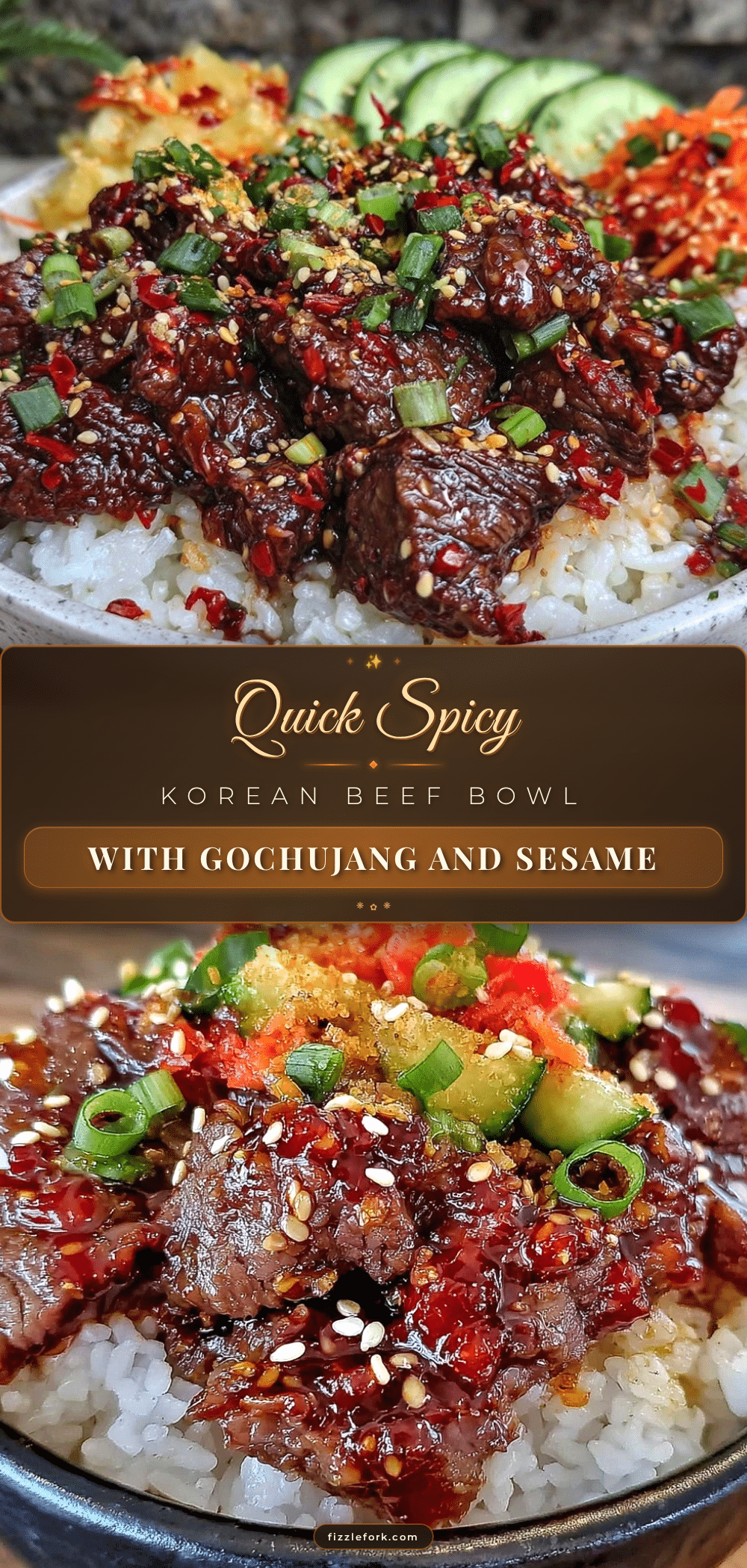
Quick Spicy Korean Beef Bowl Recipe Easy Homemade Gochujang Sesame Meal
A quick and easy Korean beef bowl featuring a spicy, sweet gochujang sauce with toasted sesame seeds, ready in under 20 minutes. Perfect for busy weeknights and packed with bold flavors.
- Prep Time: 5 minutes
- Cook Time: 15 minutes
- Total Time: 20 minutes
- Yield: 4 servings 1x
- Category: Main Course
- Cuisine: Korean
Ingredients
- 1 lb (450 g) ground beef (85% lean)
- 2 tbsp gochujang (Korean chili paste)
- 3 tbsp soy sauce (low-sodium optional)
- 1 tbsp brown sugar
- 3 cloves garlic, minced
- 1 tsp ginger, grated
- 1 tbsp toasted sesame oil
- 2 stalks green onions, sliced
- 1 tbsp sesame seeds, toasted
- 4 cups cooked rice (jasmine or short-grain)
- Optional: red pepper flakes for extra heat
- Optional: steamed veggies like bok choy or carrots
Instructions
- Cook 4 cups (960 ml) of rice according to package instructions, about 15-20 minutes. Leftover rice can be used.
- In a small bowl, mix 2 tbsp gochujang, 3 tbsp soy sauce, 1 tbsp brown sugar, 1 tbsp toasted sesame oil, 3 minced garlic cloves, and 1 tsp grated ginger until smooth. Set aside.
- Heat a large skillet over medium-high heat. Add 1 lb ground beef, breaking it apart with a wooden spoon. Cook 5-7 minutes until browned and no longer pink. Drain excess fat if desired.
- Pour the prepared sauce over the beef. Stir to coat evenly. Reduce heat to medium and simmer 3-5 minutes until sauce thickens and clings to beef.
- Toast 1 tbsp sesame seeds in a dry skillet over medium heat for 2 minutes until golden and fragrant, stirring frequently to avoid burning.
- Remove beef from heat. Stir in sliced green onions and sprinkle toasted sesame seeds on top. Mix gently.
- Assemble bowls by spooning hot rice into bowls and topping with the spicy Korean beef mixture. Add optional steamed veggies or a fried egg if desired.
Notes
Toast sesame seeds carefully to avoid burning. Adjust spice level by varying gochujang and adding red pepper flakes. Drain excess fat from beef if preferred to reduce greasiness. Use tamari or coconut aminos to make gluten-free. Leftover rice works well and saves time.
Nutrition
- Serving Size: 1 bowl (approximatel
- Calories: 450
- Sodium: 700
- Fat: 18
- Carbohydrates: 40
- Fiber: 2
- Protein: 28
Keywords: Korean beef bowl, gochujang recipe, spicy beef bowl, quick Korean dinner, sesame beef bowl, easy weeknight meal