The way the light hits the glossy surface of the glaze—like amber glass stretched taut over the flakes—is what I was chasing. That specific, almost lacquered sheen that says this is going to be good before you even take a bite. I spent three Sundays in a row trying to get it right, tweaking the honey-to-soy ratio, testing different oven temperatures, and frankly, making a mess of my kitchen. The first version was too runny, sliding off the fish like rain on a window. The second was burnt at the edges. But this one? This one had that perfect sticky, clingy quality that made me text a photo to my sister with no context. She replied, “Send the recipe. Now.” So here it is, not just a method, but the result of a minor obsession with getting that glossy, sweet-savory coating just right. It’s a small thing, but honestly, it’s the whole point.
This Sticky Honey Garlic Baked Salmon in Foil has become my secret weapon for busy weeknights when I want something that feels special but takes almost no effort. The foil packet does all the heavy lifting, trapping steam to keep the salmon incredibly tender while the honey garlic caramelizes into a thick, luscious glaze. It’s a complete meal in a parcel—just add a quick side and you’re done. I love that I can prep the packets in the morning and just pop them in the oven when I walk in the door. No fuss, no heavy cleanup, just pure, unapologetic flavor.
Why You’ll Love This Sticky Honey Garlic Baked Salmon in Foil
Let’s be real—you don’t need another complicated recipe in your life. You need one that works every single time, with ingredients you already have, and that makes you look like a kitchen hero. That’s what this is. I’ve tested this method more times than I care to admit, tweaking the heat and the timing until it was absolutely foolproof. Here’s why this one is different:
- Quick & Easy : From start to table in under 20 minutes. Seriously. The oven does the work while you steam some broccoli or toss a salad.
- Simple Ingredients : You probably have everything in your pantry right now. Honey, soy sauce, garlic, a little sriracha—that’s it. No fancy grocery trip required.
- Perfect for Busy Weeknights : This is the dinner you make when you’re tired, hungry, and want something that tastes like you tried, even when you didn’t. It’s also great for a last-minute dinner party because it looks so impressive.
- Crowd-Pleaser : The sweet-savory combo is universally loved. Kids devour it, adults ask for seconds, and even folks who think they don’t like salmon change their minds after one bite of this sticky, garlicky goodness.
- Unbelievably Delicious : The texture is what gets me. The salmon stays incredibly moist and tender from steaming in the foil, while the glaze reduces into a thick, sticky coating that clings to every flake. It’s next-level comfort food, and it takes fifteen minutes to bake.
What makes this recipe different from all the others? It’s the foil. Baking the salmon in a sealed packet creates a miniature steam oven that keeps the fish from drying out, which is the number one mistake people make with salmon. The glaze doesn’t burn because it’s protected inside the packet, and when you open it at the end, the aroma of honey and garlic hits you like a warm hug. This isn’t just another salmon recipe—it’s my best version, perfected through trial and error so you don’t have to make the mistakes I did.
What Ingredients You Will Need
This recipe uses simple, wholesome ingredients to deliver that signature sticky, sweet, and savory flavor. Most are pantry staples, which is exactly why I make this so often. Here’s what you’ll need:
- Salmon Fillets (4 fillets, about 6 oz / 170g each): Look for fillets that are roughly the same thickness so they cook evenly. I prefer center-cut fillets for their even shape and rich flavor. Skin-on or skinless both work here—the skin will peel right off after cooking if you leave it on. I usually buy wild-caught when I can find it on sale, but farm-raised Atlantic salmon is also delicious and a bit more forgiving.
- Honey (1/3 cup / 113g): This is the star of the glaze. Use a good-quality, runny honey for the best texture. Local honey is great if you have it—it adds a subtle floral note that really shines. Do not use crystallized honey unless you warm it up first, as it won’t blend smoothly into the sauce.
- Soy Sauce (3 tablespoons / 45ml): This provides the salty, umami backbone that balances the sweetness of the honey. I use low-sodium soy sauce (like Kikkoman) to control the salt level. If you’re gluten-free, swap in tamari or coconut aminos—both work beautifully.
- Garlic (4 cloves, minced): Fresh garlic is non-negotiable here. The pre-minced stuff in a jar just doesn’t have the same punch. You want that sharp, aromatic hit that mellows into sweetness as it bakes. I usually add an extra clove because I’m a garlic fiend.
- Rice Vinegar (1 tablespoon / 15ml): A splash of acidity cuts through the richness of the honey and salmon, brightening the whole dish. Unseasoned rice vinegar is my go-to, but apple cider vinegar or fresh lemon juice also work in a pinch.
- Sriracha (1 teaspoon, or to taste): This is optional, but I highly recommend it. It doesn’t make the dish spicy—it just adds a subtle warmth that makes the flavor more complex. If you’re sensitive to heat, start with 1/2 teaspoon or leave it out entirely.
- Sesame Oil (1 teaspoon): A tiny drizzle of toasted sesame oil adds a nutty, aromatic finish that makes the glaze taste incredibly sophisticated. It’s one of those secret ingredients that makes people ask, “What did you put in this?”
- Salt and Pepper (to taste): I season the salmon lightly before adding the glaze. Go easy on the salt since the soy sauce already brings plenty of sodium.
- Optional Garnishes: Sliced green onions, toasted sesame seeds, and a squeeze of fresh lemon juice right before serving. These aren’t just for looks—they add freshness and crunch that contrast beautifully with the sticky glaze.
Equipment Needed
You don’t need any fancy gadgets for this recipe—just a few basics you probably already have. Here’s what you’ll need:
- Baking Sheet (rimmed): A standard half-sheet pan works perfectly. The rim is important to catch any juices that might leak from the foil packets. I use my old Nordic Ware sheet pan that’s seen better days but still bakes evenly.
- Aluminum Foil (heavy-duty): Regular foil works, but heavy-duty is less likely to tear when you’re sealing the packets. You’ll need enough to create a sealed packet for each fillet, plus a little extra for folding. I always tear off pieces that are about 12 inches long.
- Small Bowl (for the glaze): Any small mixing bowl will do. I use a glass measuring cup because it has a spout for easy pouring.
- Whisk or Fork: For mixing the glaze ingredients together. A fork works just fine if your whisk is in the dishwasher.
- Instant-Read Thermometer (optional but recommended): This is the best way to ensure perfectly cooked salmon. The USDA recommends 145°F (63°C), but I prefer to pull it at 130-135°F (54-57°C) for a tender, medium-done center. The residual heat will carry it up a few more degrees as it rests.
- Tongs: For handling the hot foil packets. Trust me, you don’t want to do this with your fingers.
If you don’t have a baking sheet, a large cast-iron skillet works in a pinch. Just be careful opening the packets over the hot pan. And if you’re out of foil? You can bake the salmon in a covered baking dish, but the individual packets really do make the best glaze.
Preparation Method
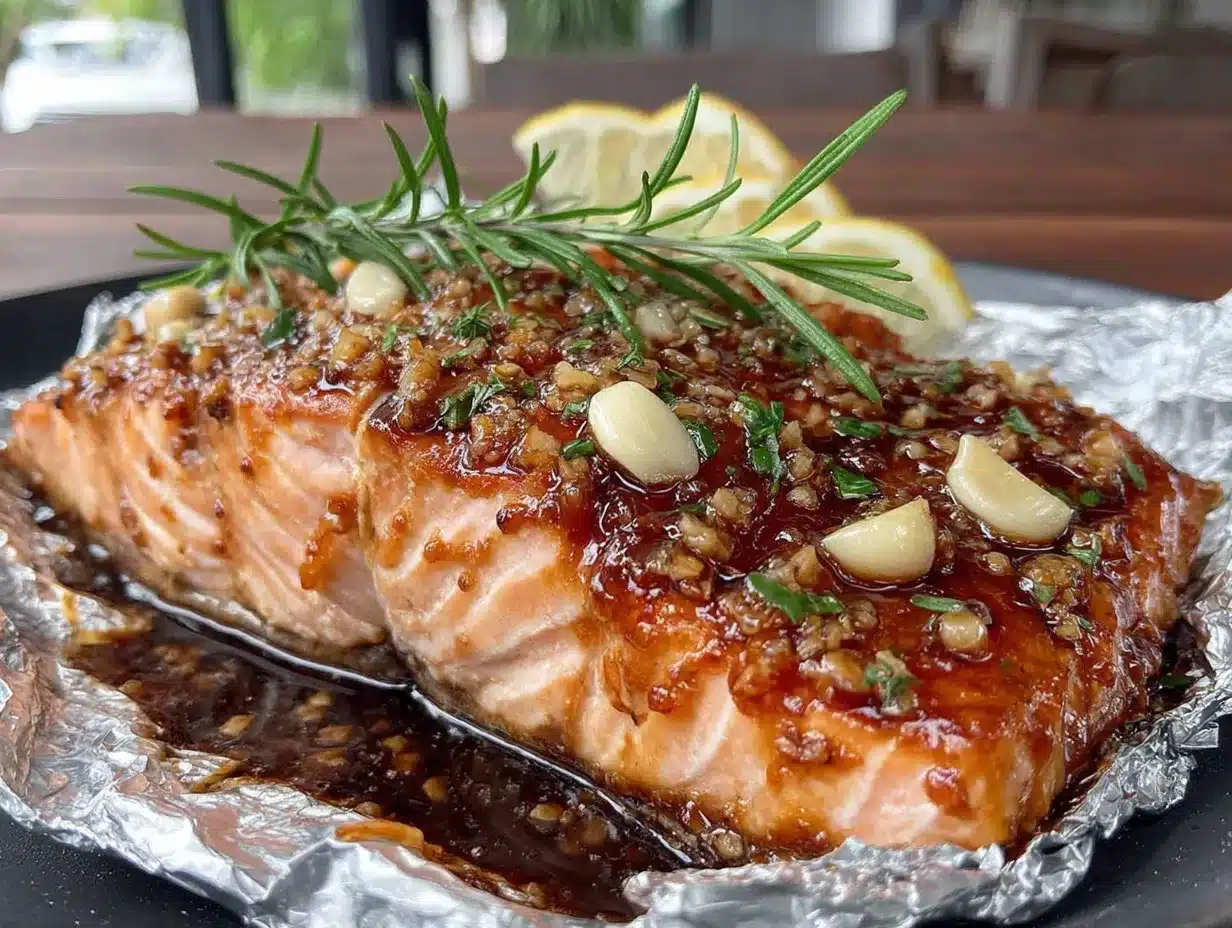
Alright, let’s get cooking. This is the easy part. Follow these steps, and you’ll have a restaurant-quality dinner on the table in no time.
- Preheat your oven to 400°F (200°C). While it’s heating up, take your salmon fillets out of the fridge and let them sit at room temperature for about 10 minutes. This helps them cook more evenly. Pat them dry with paper towels—this is crucial for the glaze to stick properly.
- Make the glaze. In your small bowl, whisk together the honey, soy sauce, minced garlic, rice vinegar, sriracha, and sesame oil. Give it a good stir until everything is well combined. The color should be a beautiful amber, and the smell should be intoxicating. Set it aside for a minute.
- Prepare the foil packets. Tear off four pieces of heavy-duty aluminum foil, each about 12 inches long. Place one salmon fillet in the center of each piece, skin-side down if you left the skin on. Season the fillets lightly with salt and pepper. Spoon about 2 tablespoons of the glaze over each fillet, making sure to coat the top and sides evenly. Reserve a little bit of the glaze for brushing on after baking.
- Seal the packets. Fold the foil over the salmon and crimp the edges tightly to create a sealed packet. Make sure there are no gaps for steam to escape—this is what keeps the salmon moist. I usually fold the edges over twice to create a secure seal. Place the packets on your rimmed baking sheet.
- Bake for 12-15 minutes. The exact time depends on the thickness of your fillets. For standard 1-inch thick fillets, 13 minutes is usually perfect. The salmon is done when it flakes easily with a fork and the internal temperature reaches 130-135°F (54-57°C) for medium-done. If you like it more well-done, go to 145°F (63°C).
- Open the packets carefully. This is the most important step—there will be hot steam trapped inside! Use tongs to carefully open one end of the packet, letting the steam escape away from your face. Then, open the top fully. The glaze should have reduced into a thick, sticky coating that clings to the salmon.
- Finish under the broiler (optional but recommended). For that extra-sticky, slightly caramelized top, switch your oven to broil. Brush the salmon with the reserved glaze and broil for 1-2 minutes, watching closely so it doesn’t burn. The glaze will bubble and darken slightly, creating that gorgeous lacquered finish I mentioned earlier.
- Garnish and serve. Sprinkle with sliced green onions and toasted sesame seeds. A squeeze of fresh lemon juice right before serving brightens everything up. Serve immediately over rice, quinoa, or alongside your favorite vegetables.
One note from personal experience: don’t skip the patting-dry step. I learned this the hard way when my first batch of salmon came out watery instead of sticky. The moisture on the surface of the fish dilutes the glaze and prevents it from caramelizing properly. A dry fillet is a happy fillet.
Cooking Tips & Techniques
After making this recipe more times than I can count, I’ve picked up a few tricks that make a big difference. Here are my top tips for perfect sticky honey garlic salmon every time:
Don’t Overcrowd the Pan
If you’re making more than four fillets, use two baking sheets. Overcrowding traps steam and prevents the glaze from reducing properly. You want each packet to have a little breathing room so the heat circulates evenly.
Use a Thermometer
I cannot stress this enough. Salmon goes from perfectly cooked to dry and chalky in about 90 seconds. An instant-read thermometer takes the guesswork out of the equation. Pull the salmon at 130-135°F for a tender, juicy center. The residual heat will carry it to 140-145°F as it rests.
Make Extra Glaze
I always make a double batch of the glaze. I use half for cooking and save the other half to drizzle over the finished dish. It’s also amazing on roasted vegetables or as a dipping sauce for steamed dumplings. Just don’t use the same batch that touched raw salmon for serving—keep some separate.
The Broiler is Your Friend
That 1-2 minutes under the broiler at the end is what takes this from “good” to “I can’t stop eating this.” It caramelizes the sugars in the honey, creating a slightly crispy, sticky crust that’s absolutely addictive. Just watch it like a hawk—honey burns fast.
Let the Salmon Rest
After you open the foil packets, let the salmon rest for 2-3 minutes before serving. This allows the juices to redistribute throughout the fish, making it even more tender. I know it’s hard to wait, but trust me, it’s worth it.
Variations & Adaptations
This recipe is wonderfully flexible. Here are some of my favorite ways to switch it up:
Spicy Mango Twist
Replace the honey with mango puree (blended canned mango works great) and add an extra teaspoon of sriracha. The sweetness of the mango pairs beautifully with the heat, and the color is stunning. I tried this on a whim last summer and it’s now my go-to for warm-weather dinners.
Lemon Herb Version
Swap the soy sauce for fresh lemon juice and add a teaspoon of dried dill or thyme to the glaze. Omit the sriracha and sesame oil. This version is lighter and brighter, perfect for spring. Serve it with a side of roasted asparagus for a complete meal.
Maple Dijon Alternative
Use maple syrup instead of honey and add 1 tablespoon of whole-grain Dijon mustard. The mustard adds a tangy complexity that cuts through the sweetness. This variation is especially good if you’re serving the salmon with roasted Brussels sprouts—the flavors just sing together. If you love this combo, you’ll also enjoy my Flavorful Maple Dijon Baked Salmon Recipe with Roasted Brussels Sprouts.
Garlic Lover’s Dream
Double the garlic. Use 8 cloves instead of 4. Roast the garlic in the foil with the salmon for a mellower, sweeter flavor. I’ve done this many times, and it never disappoints. Just make sure you have gum on hand afterward.
Low-Carb / Keto Adaptation
Replace the honey with a sugar-free honey substitute (like Lakanto) or use 2 tablespoons of monk fruit sweetener dissolved in 1 tablespoon of water. The texture will be slightly different, but the flavor is still fantastic. Serve with cauliflower rice or steamed broccoli to keep it low-carb.
Serving & Storage Suggestions
This sticky honey garlic salmon is incredibly versatile when it comes to serving. Here’s how I like to enjoy it:
Serving Temperature and Presentation
Serve the salmon hot, straight from the foil packet. Transfer the fillets to a serving platter and spoon any remaining glaze from the packet over the top. Garnish with sliced green onions, toasted sesame seeds, and a squeeze of fresh lemon juice. It looks gorgeous on a bed of fluffy jasmine rice or alongside a simple green salad. For a heartier meal, serve it with roasted baby potatoes or steamed edamame.
Complementary Dishes
This salmon pairs beautifully with almost any side. I love it with steamed broccoli or roasted green beans for a quick, healthy dinner. For something more substantial, try it with coconut rice or garlic noodles. If you’re in the mood for soup, a bowl of Cozy Dutch Oven Chicken and Mushroom Wild Rice Soup makes a wonderful starter. And for a complete salmon-themed meal, my Quick Honey Garlic Glazed Salmon Recipe with Easy Steamed Broccoli Side is another favorite.
Storage Instructions
Leftover salmon keeps well in an airtight container in the refrigerator for up to 3 days. The glaze will thicken as it cools, but it still tastes amazing. I do not recommend freezing cooked salmon, as the texture becomes watery and mushy when thawed.
Reheating Methods
The best way to reheat this salmon is in a low oven. Place the fillets on a baking sheet and warm them at 300°F (150°C) for about 10 minutes. You can also reheat them in a non-stick skillet over medium-low heat with a splash of water, covered, for 3-4 minutes. Avoid the microwave—it will overcook the fish and make the glaze rubbery.
How Flavors Develop Over Time
Interestingly, the flavors of this salmon actually meld and deepen overnight. The garlic mellows, the honey soaks into the fish, and the overall taste becomes more cohesive. I often make extra on purpose just to have leftovers for lunch the next day. It’s fantastic cold, flaked over a salad with a simple vinaigrette.
Nutritional Information & Benefits
This sticky honey garlic salmon is not only delicious but also packed with nutrients. Here’s the estimated nutritional breakdown per serving (one fillet with glaze, not including sides):
- Calories: Approximately 380-420 calories
- Protein: 35-40 grams
- Fat: 18-22 grams (mostly healthy omega-3s from the salmon)
- Carbohydrates: 20-25 grams (from the honey and soy sauce)
- Fiber: 0 grams
- Sugar: 18-22 grams (naturally occurring from honey)
- Sodium: 600-700 mg (varies based on soy sauce brand)
Health Benefits of Key Ingredients
Salmon is one of the best sources of omega-3 fatty acids, which are essential for heart and brain health. It’s also rich in high-quality protein, vitamin D, and B vitamins. Garlic has natural antibacterial properties and may help support immune function. Honey, while still a sugar, contains antioxidants and can help soothe a sore throat. This meal is a wonderful way to nourish your body while enjoying something truly delicious.
Dietary Considerations
This recipe is naturally gluten-free if you use tamari or coconut aminos instead of soy sauce. It’s also dairy-free and nut-free. For a lower-sugar option, reduce the honey to 1/4 cup or use a sugar-free honey substitute. If you’re watching your sodium, use low-sodium soy sauce and go easy on the additional salt.
Frequently Asked Questions
Can I use frozen salmon for this recipe?
Yes, you can use frozen salmon, but you’ll need to thaw it completely first. Thaw the fillets in the refrigerator overnight or place them in a sealed bag and submerge in cold water for 30-45 minutes. Pat them dry thoroughly before using. Frozen salmon tends to release more water as it cooks, so you may need to bake it for an extra 2-3 minutes.
Can I grill the foil packets instead of baking?
Absolutely! This recipe works beautifully on the grill. Preheat your grill to medium-high heat (about 400°F/200°C). Place the foil packets directly on the grates and cook for 10-12 minutes, flipping once halfway through. The grill adds a subtle smoky flavor that’s fantastic with the honey garlic glaze.
What if I don’t have rice vinegar?
No problem! You can substitute apple cider vinegar, white wine vinegar, or fresh lemon juice. Each will add a slightly different flavor profile, but all will provide the necessary acidity to balance the sweetness. Start with 1 tablespoon and adjust to taste.
Can I make this recipe ahead of time?
Yes, you can assemble the foil packets up to 24 hours in advance. Place the sealed packets on a baking sheet and refrigerate. When you’re ready to cook, just pop them in the oven straight from the fridge—you may need to add 2-3 minutes to the baking time. This is a great option for meal prep or when you’re hosting a dinner party.
How do I know when the salmon is done without a thermometer?
If you don’t have a thermometer, look for visual cues. The salmon should be opaque and flake easily when gently pressed with a fork. The flesh should separate into large, moist flakes. If it looks translucent or resists flaking, it needs more time. The glaze should be thick and sticky, not watery.
Conclusion
This Sticky Honey Garlic Baked Salmon in Foil has become a staple in my kitchen for good reason. It’s quick, it’s easy, and it delivers incredible flavor with almost no effort. The foil packet method ensures perfectly cooked, moist salmon every single time, while the honey garlic glaze caramelizes into a thick, glossy coating that’s absolutely irresistible. Whether you’re feeding your family on a busy weeknight or impressing guests at a dinner party, this recipe never disappoints.
I love that this recipe is flexible enough to adapt to whatever you have on hand. Swap the honey for maple syrup, add extra garlic, or throw in some red pepper flakes for heat—it’s all good. The beauty of cooking is making a recipe your own, and this one is a perfect canvas for your creativity.
I’d love to hear how this turns out for you! Leave a comment below and let me know if you tried any variations. Did you add extra sriracha? Serve it with something unexpected? Share your photos and tag me on social media—I can’t wait to see your sticky, garlicky creations. Happy cooking!
Pin This Recipe!
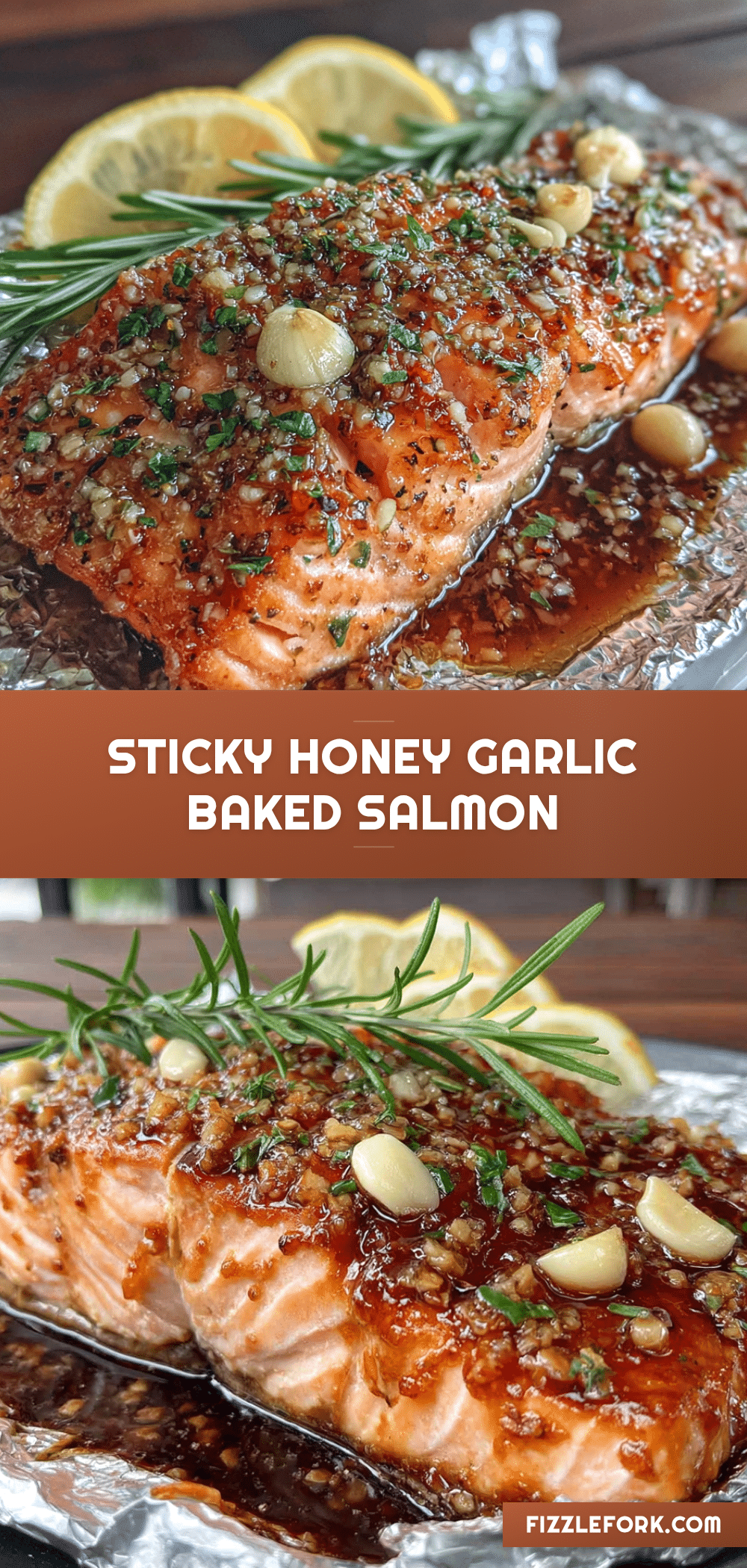
Sticky Honey Garlic Baked Salmon in Foil: Easy 20-Minute Dinner
This Sticky Honey Garlic Baked Salmon in Foil is a quick and easy weeknight dinner that delivers incredible flavor with almost no effort. The foil packet method ensures perfectly cooked, moist salmon every time, while the honey garlic glaze caramelizes into a thick, glossy coating that’s absolutely irresistible.
- Prep Time: 5 minutes
- Cook Time: 15 minutes
- Total Time: 20 minutes
- Yield: 4 servings 1x
- Category: Main Course
- Cuisine: American
Ingredients
- 4 salmon fillets (about 6 oz / 170g each)
- 1/3 cup honey (113g)
- 3 tablespoons low-sodium soy sauce (45ml)
- 4 cloves garlic, minced
- 1 tablespoon rice vinegar (15ml)
- 1 teaspoon sriracha (or to taste)
- 1 teaspoon toasted sesame oil
- Salt and pepper to taste
- Optional garnishes: sliced green onions, toasted sesame seeds, fresh lemon juice
Instructions
- Preheat your oven to 400°F (200°C). Let salmon fillets sit at room temperature for about 10 minutes. Pat them dry with paper towels.
- In a small bowl, whisk together honey, soy sauce, minced garlic, rice vinegar, sriracha, and sesame oil until well combined.
- Tear off four pieces of heavy-duty aluminum foil, each about 12 inches long. Place one salmon fillet in the center of each piece, skin-side down if skin is on. Season lightly with salt and pepper. Spoon about 2 tablespoons of glaze over each fillet, coating evenly. Reserve a little glaze for after baking.
- Fold the foil over the salmon and crimp the edges tightly to create a sealed packet. Place packets on a rimmed baking sheet.
- Bake for 12-15 minutes, depending on thickness. Salmon is done when it flakes easily with a fork and internal temperature reaches 130-135°F (54-57°C) for medium-done.
- Carefully open the packets, letting steam escape away from your face. The glaze should be thick and sticky.
- Optional: Switch oven to broil. Brush salmon with reserved glaze and broil for 1-2 minutes, watching closely, until glaze bubbles and darkens slightly.
- Garnish with sliced green onions, toasted sesame seeds, and a squeeze of fresh lemon juice. Serve immediately.
Notes
Pat the salmon dry thoroughly before adding glaze to ensure the glaze sticks and caramelizes properly. For extra sticky finish, broil for 1-2 minutes after baking. Leftovers keep in the refrigerator for up to 3 days; reheat in a low oven or skillet, not the microwave.
Nutrition
- Serving Size: 1 fillet with glaze
- Calories: 400
- Sugar: 20
- Sodium: 650
- Fat: 20
- Saturated Fat: 4
- Carbohydrates: 22
- Protein: 37
Keywords: salmon, honey garlic, baked salmon, foil packet, quick dinner, weeknight dinner, sticky glaze, easy recipe