I was standing in the grocery store parking lot last Tuesday, fumbling for my keys, when the wind carried a scent from somewhere — someone’s dinner, maybe, drifting out of a nearby car. It was butter, and lemon, and something green and herby, and suddenly I was seven years old, sitting at my aunt Margie’s tiny kitchen table in Portland. The table had a wobbly leg she fixed with a folded napkin, and she was setting down a plate of salmon that glistened like something magic. I remember thinking it looked fancy, like restaurant food, but she just laughed and said, “It’s the easiest thing in the world, honey. Butter and lemons fix everything.” She passed away a few years ago, and I haven’t thought about that kitchen in ages. But that smell in the parking lot — it hit me so hard I almost dropped my groceries. I stood there for a minute, letting the memory wash over me, and decided right then I had to figure out how to make that salmon myself. I mean, I’d tried before, but it never tasted like hers. It was always a little dry, or the lemon was too sharp, or the kids would push it around their plates. But this time, I was determined. And honestly, after a few tries (and one very sad, overcooked fillet that I’m not proud of), I finally cracked it. This kid-approved lemon dill butter salmon is the result — a recipe that tastes like a warm memory but comes together in under 20 minutes. Maybe you’ve been there, chasing a taste from your past that you can almost but not quite hold onto? Well, this is the one that finally brought it back for me.
Why You’ll Love This Recipe
Let me tell you, this isn’t just another salmon recipe. I’ve tested this thing six times — yes, six — to get it just right. I wanted it to be buttery and tender, with that bright pop of lemon and the gentle, almost sweet flavor of dill. But most importantly, I needed it to be something my kids would actually eat without a five-minute negotiation. And you know what? It worked. Here’s why this one’s different:
- Quick & Easy: From start to table in 20 minutes flat. No marinating, no complicated steps. Just sear, baste, and serve.
- Simple Ingredients: You probably have butter, lemons, and garlic in your kitchen right now. The only “special” thing is fresh dill, and it’s worth the extra dollar.
- Kid-Approved: My youngest, who usually treats fish like it’s a science experiment, asked for seconds. I’m not kidding.
- Budget-Friendly: Salmon fillets can be pricey, but this recipe stretches beautifully — you only need a few ounces per person, and leftovers reheat like a dream.
- Crowd-Pleaser: It’s fancy enough for a dinner party but easy enough for a Tuesday night. Everyone I’ve served it to has asked for the recipe.
This recipe isn’t just good — it’s the kind that makes you close your eyes after the first bite. The butter sauce is rich but not heavy, the lemon cuts through beautifully, and the dill adds this freshness that feels like spring on a plate. It’s comfort food reimagined — healthier, faster, but with the same soul-soothing satisfaction. Perfect for impressing guests without stress, or turning a simple weeknight meal into something memorable.
What Ingredients You Will Need
This recipe uses simple, wholesome ingredients to deliver bold flavor and satisfying texture without the fuss. Most of these are pantry staples, and the fresh ones are easy to find at any grocery store.
- Salmon fillets (4 fillets, about 6 oz each, skin on or off — I prefer skin on for extra crispiness)
- Unsalted butter (4 tablespoons, softened — I use Kerrygold for the richest flavor)
- Fresh lemon juice (from 1 large lemon, about 2 tablespoons — bottled won’t give you the same brightness)
- Lemon zest (from the same lemon — don’t skip this, it’s where the real lemon punch lives)
- Fresh dill (2 tablespoons, finely chopped — dried dill works in a pinch, but fresh is way better)
- Garlic (2 cloves, minced — or 1 teaspoon garlic paste if you’re in a hurry)
- Salt (1 teaspoon, or to taste — I use kosher salt)
- Black pepper (½ teaspoon, freshly ground)
- Olive oil (1 tablespoon, for searing — avocado oil works too)
- Optional garnish: extra fresh dill sprigs and lemon slices for serving
Ingredient Tips: Look for salmon fillets that are bright orange-pink and smell like the ocean, not fishy. If you’re buying frozen, thaw them overnight in the fridge. I recommend wild-caught salmon for best texture, but farm-raised works fine and is often more affordable. For the dill, I’ve found that the frilly, soft leaves are more flavorful than the thicker stems — just give them a good chop. And please, use real butter here. Margarine or spreads won’t give you that silky sauce we’re after.
Substitution Guidance: If you’re dairy-free, swap the butter for a high-quality vegan butter or ghee (which is lactose-free). No fresh dill? Use 1 teaspoon dried dill, but add it to the butter sauce rather than sprinkling it on top. If salmon isn’t your thing, this butter sauce is incredible on trout or even chicken breasts — just adjust cooking times accordingly.
Equipment Needed
You don’t need a fancy kitchen to pull this off. Here’s what you’ll need:
- Large non-stick skillet (12-inch is ideal — if you don’t have non-stick, a well-seasoned cast iron works too, just be careful with sticking)
- Fish spatula (or any thin, slotted spatula — it makes flipping salmon so much easier)
- Cutting board (for chopping dill and zesting lemon)
- Chef’s knife (a sharp one — dull knives are more dangerous than sharp ones)
- Microplane or zester (for getting that fine lemon zest without the bitter white pith)
- Small bowl (for mixing the butter sauce)
- Measuring spoons (or just eyeball it — I won’t tell)
- Tongs (for flipping and serving)
If you don’t have a fish spatula, a regular thin spatula works fine — just be gentle when flipping. And honestly, I’ve made this in a beat-up non-stick pan from Target and it turned out great. Don’t overthink the equipment.
Preparation Method
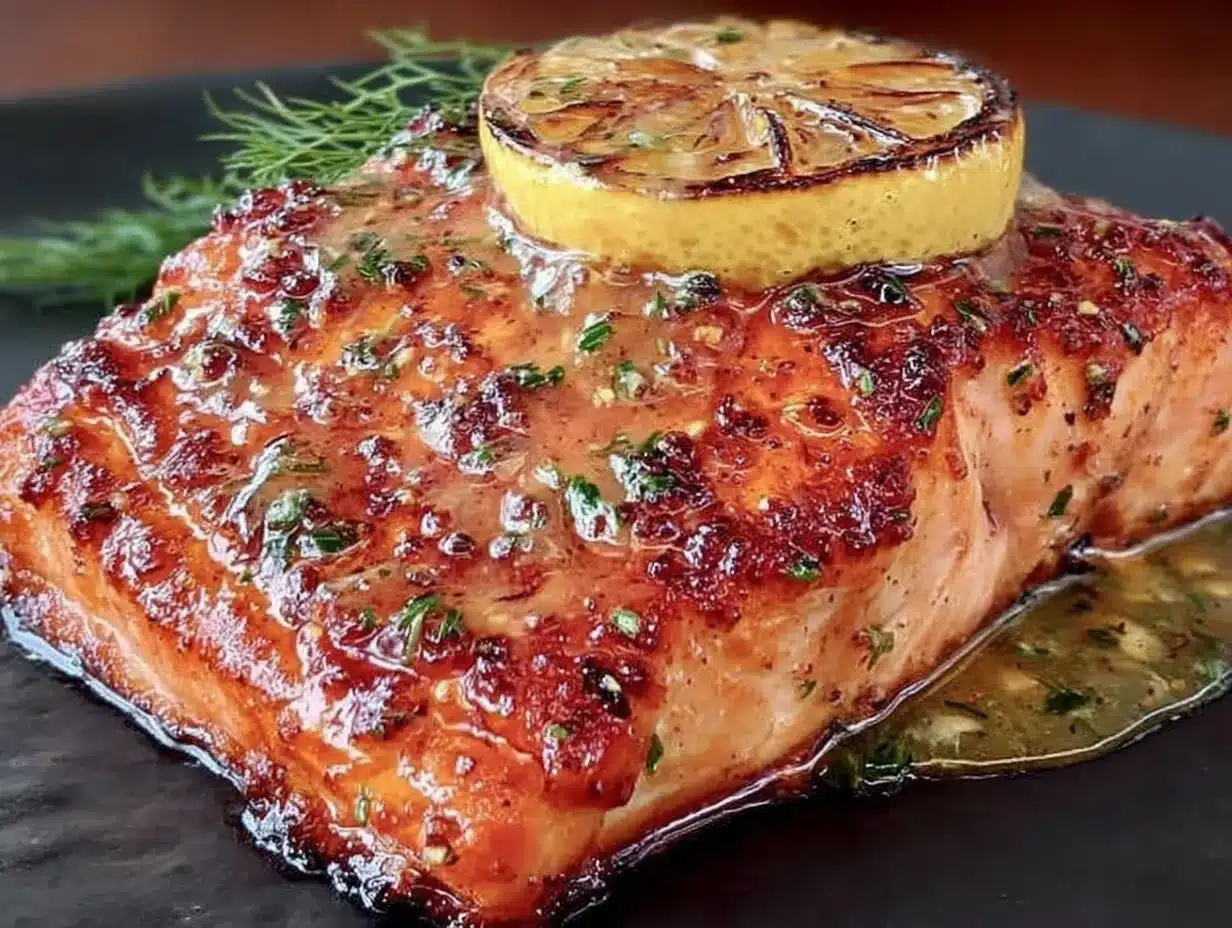
Alright, let’s get cooking. This comes together fast, so I like to have everything prepped and ready before I turn on the stove. Trust me on this one — it makes the whole process smoother.
- Prep the salmon (5 minutes): Pat the salmon fillets dry with paper towels. This is crucial — wet salmon won’t sear properly. Season both sides with salt and pepper. Let them sit at room temperature for 10 minutes while you prep the other ingredients. This helps them cook more evenly.
- Make the compound butter (3 minutes): In a small bowl, mash the softened butter with a fork. Add the minced garlic, chopped dill, lemon zest, and 1 tablespoon of the lemon juice. Mix until everything is well combined. Set aside. The butter should be soft but not melted — if it’s too hard, microwave it for 5 seconds.
- Heat the skillet (2 minutes): Place your skillet over medium-high heat and add the olive oil. Swirl it around to coat the bottom. Wait until the oil is shimmering but not smoking — about 2 minutes. You can test it by flicking a drop of water in the pan; if it sizzles, you’re ready.
- Sear the salmon (4 minutes): Carefully place the salmon fillets in the hot skillet, skin-side down (if using skin-on). Press down gently with the spatula for a few seconds to ensure even contact. Let them cook without moving for 3-4 minutes. You’ll see the edges turn opaque and the skin get crispy. If you try to flip and the salmon sticks, it’s not ready yet — give it another 30 seconds.
- Flip and baste (3 minutes): Flip the fillets using your fish spatula. They should release easily. Add the compound butter to the pan — it will melt quickly into a glorious, bubbly sauce. Tilt the pan slightly and use a spoon to baste the salmon with the butter sauce for about 2-3 minutes. The salmon should be just cooked through — it will flake easily with a fork but still be moist in the center.
- Finish with lemon (1 minute): Squeeze the remaining lemon juice over the salmon. Let it cook for another 30 seconds, then remove the pan from heat. The residual heat will finish cooking the fish gently.
- Rest and serve (2 minutes): Let the salmon rest in the pan for 1-2 minutes. This allows the juices to redistribute. Transfer to a serving platter, spoon the remaining butter sauce over the top, and garnish with fresh dill sprigs and lemon slices. Serve immediately.
Sensory cues: The salmon should be opaque all the way through but still moist. When you press it gently with a fork, it should flake apart easily. The butter sauce should be bubbly and fragrant — you’ll smell the garlic and dill before you even taste it. If the sauce looks too thin, let it bubble for another minute to reduce slightly.
Cooking Tips & Techniques
I’ve made this salmon more times than I can count, and I’ve definitely made my share of mistakes. Here’s what I’ve learned so you don’t have to repeat them.
Don’t overcrowd the pan. If you’re cooking more than 4 fillets, do it in batches. Crowding lowers the pan temperature and steams the fish instead of searing it. You want that golden-brown crust, not pale, sad salmon. I learned this the hard way when I tried to cook 6 fillets at once for a family dinner — they turned out gray and unappealing.
Patience is key. I know you’re hungry, but don’t rush the sear. Let the salmon sit undisturbed for those first 3-4 minutes. If you try to flip it too early, it’ll stick and fall apart. Trust the process. When it’s ready, it will release from the pan like magic.
Room temperature matters. Cold salmon straight from the fridge will cook unevenly — the outside will be overdone while the center stays raw. Let it sit out for 10-15 minutes before cooking. This is one of those small steps that makes a big difference.
Butter basting is your friend. Once you flip the salmon, spoon that melted butter over the top continuously. It keeps the fish moist and infuses it with all that garlic-lemon-dill flavor. I like to tilt the pan slightly so the butter pools on one side, making it easier to baste.
Watch the heat. If the butter starts browning too quickly (you’ll smell a nutty aroma), reduce the heat to medium. Burnt butter tastes bitter, and we want that sweet, creamy flavor. I’ve definitely scorched a batch before — the whole kitchen smelled like burned popcorn, and the salmon was a write-off.
Multitasking tip: While the salmon rests, I like to quickly steam some green beans or microwave some rice. That way, everything comes together at the same time. It’s not fancy, but it works.
Variations & Adaptations
This recipe is wonderfully flexible. Here are some ways I’ve adapted it for different needs and moods.
- Dairy-Free Version: Swap the butter for a good quality vegan butter or ghee (which is technically lactose-free). I’ve used Miyoko’s European-style cultured vegan butter with great results — it melts and browns beautifully.
- Herb Swap: Not a dill fan? Try fresh parsley, chives, or tarragon instead. Tarragon gives it a subtle anise flavor that’s lovely with lemon. I made a parsley version last spring when my herb garden went wild, and it was a hit.
- Spicy Kick: Add a pinch of red pepper flakes or a teaspoon of sriracha to the butter sauce. My husband loves this version — it gives the salmon a little warmth without overpowering the lemon.
- Sheet Pan Method: If you want to go hands-off, place the salmon on a lined baking sheet, top with pats of the compound butter, and bake at 400°F for 12-15 minutes. No basting needed, but you’ll miss that crispy skin. I do this on busy nights when I can’t stand at the stove.
- Grilled Version: In summer, I grill the salmon over medium-high heat for 4-5 minutes per side, brushing with the melted butter sauce. The smoky char with the lemon-dill butter is incredible. Just oil the grates well first.
- Kid-Friendly Twist: For picky eaters, you can reduce the dill to 1 tablespoon and add a teaspoon of honey to the butter sauce. The sweetness balances the lemon and makes it even more appealing to little taste buds. My nephew, who “doesn’t like green things,” ate this version without complaint.
Serving & Storage Suggestions
This salmon is best served right away, while the butter sauce is still warm and bubbly. I like to plate it over a bed of fluffy rice or alongside some buttery mashed potatoes — both soak up that sauce beautifully. A simple side of steamed green beans or a crisp cucumber salad rounds out the meal nicely. For a low-carb option, serve it with roasted asparagus or a fresh arugula salad with lemon vinaigrette.
Storage: Leftovers keep well in an airtight container in the refrigerator for up to 3 days. The flavors actually meld together overnight, so it’s great for next-day lunch. To reheat, I recommend gently warming it in a skillet over low heat with a splash of water or extra lemon juice to refresh the sauce. Microwaving works in a pinch, but it can dry out the fish — if you must, microwave on 50% power in 30-second intervals.
Freezing: You can freeze cooked salmon for up to 2 months. Wrap each fillet tightly in plastic wrap, then place in a freezer bag. Thaw overnight in the fridge before reheating. The texture won’t be quite as silky as fresh, but it’s still delicious. I’ve done this for meal prep, and it’s a lifesaver on busy weeks.
How flavors develop: The lemon and dill flavors mellow slightly overnight, becoming more integrated. Some people actually prefer the leftovers because the fish absorbs more of the butter sauce. I think it’s great both ways — fresh and bright, or mellow and comforting.
Nutritional Information & Benefits
This recipe is a nutritional powerhouse disguised as comfort food. Here’s the breakdown per serving (1 fillet with sauce):
| Nutrient | Amount |
|---|---|
| Calories | ~380 |
| Protein | 34g |
| Fat | 26g |
| Saturated Fat | 12g |
| Carbohydrates | 2g |
| Fiber | 0g |
| Sugar | 1g |
| Sodium | ~500mg |
| Omega-3 Fatty Acids | ~2.5g |
| Vitamin D | ~570 IU |
Health Benefits: Salmon is one of the best sources of omega-3 fatty acids, which support heart and brain health. It’s also rich in high-quality protein, B vitamins, and selenium. Dill is a good source of antioxidants and has been used traditionally to aid digestion. Lemon provides a boost of vitamin C, which helps with iron absorption. This meal is naturally gluten-free and low-carb, making it suitable for a variety of dietary needs. Just be mindful of the butter if you’re watching saturated fat — you can reduce it to 2 tablespoons and still get great flavor.
Allergen Note: This recipe contains fish and dairy (butter). For a dairy-free version, see the variations section above.
Conclusion
This kid-approved lemon dill butter salmon has become a staple in my kitchen, and I honestly think it will be in yours too. It’s one of those rare recipes that feels special enough for a celebration but simple enough for a random Tuesday. The butter sauce is silky and rich, the lemon is bright and fresh, and the dill adds this lovely, gentle herbiness that ties everything together. It’s the kind of meal that makes you slow down and actually enjoy dinner, even on the busiest nights.
I love that this recipe is forgiving — you can tweak it, swap things out, and it still turns out delicious. It’s perfect for those nights when you want to feed your family something wholesome without spending an hour in the kitchen. And honestly, watching my kids ask for seconds of salmon? That’s a win I’ll take every single time.
I’d love to hear how it goes for you. Did your kids love it? Did you try a fun variation? Drop a comment below and let me know — I read every single one. And if you’re looking for another quick weeknight win, check out this easy garlic butter chicken that’s been a lifesaver in my house. Happy cooking, friends!
Frequently Asked Questions
Can I use frozen salmon for this recipe?
Yes, absolutely. Just thaw the fillets overnight in the refrigerator, or place them in a sealed bag and submerge in cold water for about 30 minutes. Pat them very dry before cooking, as frozen fish tends to release more moisture. The cooking time may be slightly longer — add an extra minute per side.
How do I know when the salmon is cooked through?
The easiest way is to use a fork. Gently press into the thickest part of the fillet — if it flakes easily and is opaque all the way through, it’s done. The internal temperature should reach 145°F if you’re using a thermometer. But honestly, I just go by the flake test and it works every time.
Can I make the compound butter ahead of time?
Yes, and I actually recommend it. You can make the butter up to 3 days in advance and keep it in the fridge. Just let it soften at room temperature for 10-15 minutes before using. You can also freeze it for up to 3 months — roll it into a log in plastic wrap, then slice off what you need.
What if I don’t have fresh dill?
Dried dill works in a pinch, but the flavor is more subtle. Use 1 teaspoon dried dill instead of the 2 tablespoons fresh, and mix it into the butter sauce rather than sprinkling it on top. You can also substitute fresh parsley or chives — they won’t taste exactly the same, but they’ll still be delicious.
Is this recipe safe for kids who are picky about fish?
This is actually the recipe I use to convert fish skeptics. The butter and lemon mellow out the “fishy” flavor that some kids find off-putting. Start with a small portion and let them dip it in the sauce — my kids love the dipping part. You can also reduce the dill slightly if they’re not used to herbs. It’s worked for my two picky eaters, so I have high hopes!
Pin This Recipe!
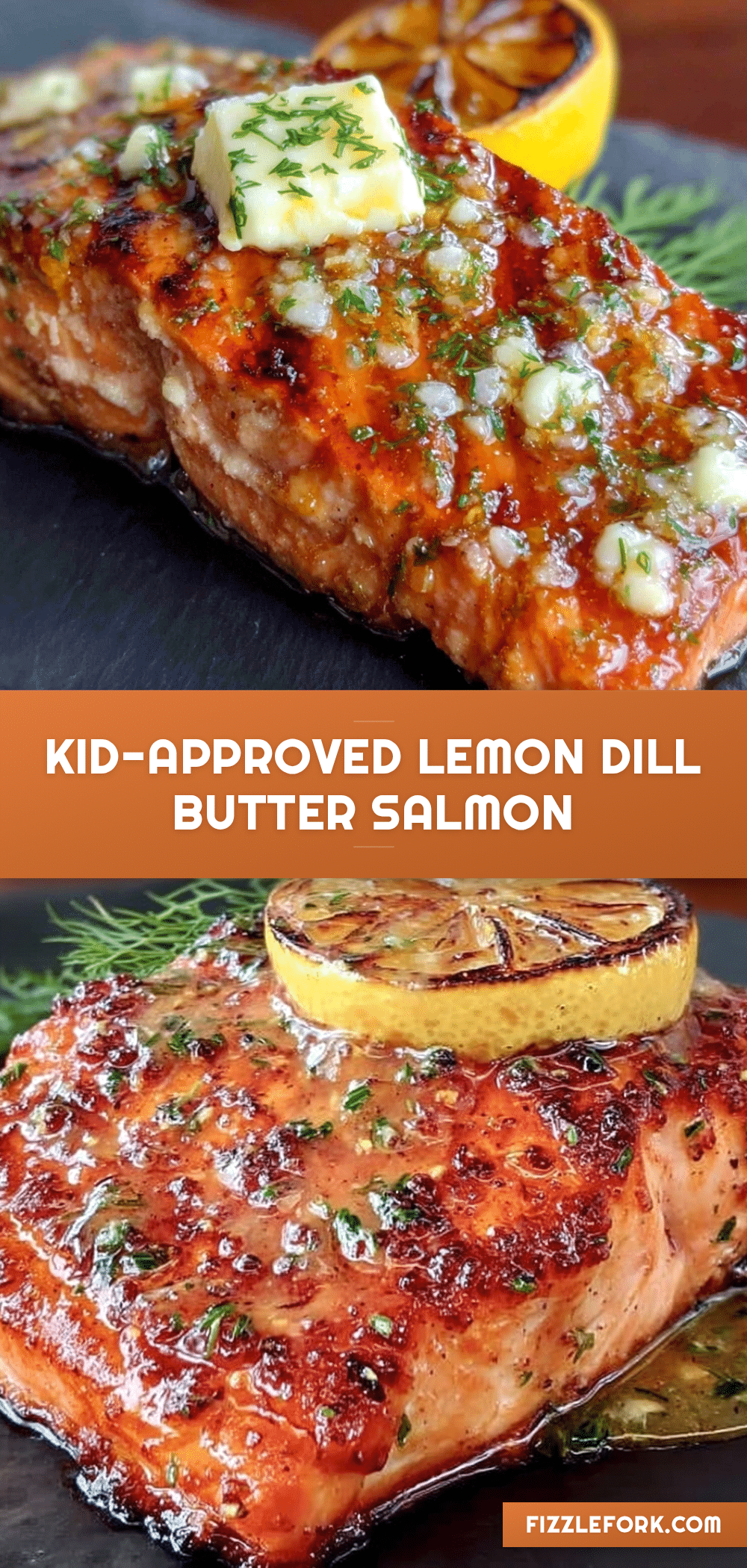
Easy Kid-Approved Lemon Dill Butter Salmon in 20 Minutes

A quick and easy salmon recipe with a buttery lemon-dill sauce that’s kid-approved and ready in under 20 minutes. Perfect for busy weeknights or impressing guests.
- Prep Time: 10 minutes
- Cook Time: 10 minutes
- Total Time: 20 minutes
- Yield: 4 servings 1x
- Category: Main Course
- Cuisine: American
Ingredients
- 4 salmon fillets (about 6 oz each, skin on or off)
- 4 tablespoons unsalted butter, softened
- 2 tablespoons fresh lemon juice (from 1 large lemon)
- 1 tablespoon lemon zest (from the same lemon)
- 2 tablespoons fresh dill, finely chopped
- 2 cloves garlic, minced
- 1 teaspoon salt (kosher salt preferred)
- ½ teaspoon black pepper, freshly ground
- 1 tablespoon olive oil (for searing)
- Optional garnish: extra fresh dill sprigs and lemon slices
Instructions
- Prep the salmon (5 minutes): Pat the salmon fillets dry with paper towels. Season both sides with salt and pepper. Let them sit at room temperature for 10 minutes while you prep the other ingredients.
- Make the compound butter (3 minutes): In a small bowl, mash the softened butter with a fork. Add the minced garlic, chopped dill, lemon zest, and 1 tablespoon of the lemon juice. Mix until well combined. Set aside.
- Heat the skillet (2 minutes): Place a large non-stick skillet over medium-high heat and add the olive oil. Swirl to coat the bottom. Wait until the oil is shimmering but not smoking (about 2 minutes).
- Sear the salmon (4 minutes): Carefully place the salmon fillets in the hot skillet, skin-side down (if using skin-on). Press down gently with a spatula for a few seconds. Cook without moving for 3-4 minutes until edges turn opaque and skin is crispy.
- Flip and baste (3 minutes): Flip the fillets using a fish spatula. Add the compound butter to the pan; it will melt quickly. Tilt the pan slightly and use a spoon to baste the salmon with the butter sauce for 2-3 minutes until just cooked through.
- Finish with lemon (1 minute): Squeeze the remaining lemon juice over the salmon. Cook for another 30 seconds, then remove from heat.
- Rest and serve (2 minutes): Let the salmon rest in the pan for 1-2 minutes. Transfer to a serving platter, spoon remaining butter sauce over the top, and garnish with fresh dill sprigs and lemon slices. Serve immediately.
Notes
Pat salmon dry for best sear. Let salmon sit at room temperature before cooking for even cooking. Don’t overcrowd the pan; cook in batches if needed. Butter basting keeps fish moist. If butter browns too quickly, reduce heat to medium. Leftovers keep in the fridge for up to 3 days; reheat gently in a skillet with a splash of water or lemon juice.
Nutrition
- Serving Size: 1 fillet with sauce
- Calories: 380
- Sugar: 1
- Sodium: 500
- Fat: 26
- Saturated Fat: 12
- Carbohydrates: 2
- Protein: 34
Keywords: salmon, lemon dill butter salmon, easy salmon recipe, kid-friendly salmon, quick salmon dinner, 20-minute meal