My neighbor, a retired butcher named Frank, watched me one Tuesday evening through my kitchen window as I tried to shape a meatloaf that was falling apart faster than I could patch it together. He didn’t say anything at first. He just stood there, leaning on his fence with that knowing look folks get when they’ve seen you mess up the same thing a dozen times. Then he walked over, knocked on my door, and said, “You’re overworking the meat, kid. Let me show you something.”
He came in, washed his hands, and gently showed me how to handle ground beef like it was something precious, not something to wrestle into submission. He told me about his mother’s recipe, the one with the brown sugar glaze that turned into this sticky, caramelized crust that everyone fought over. I scribbled notes on a napkin while he talked, and honestly, I’ve never looked back. That conversation changed how I think about comfort food entirely.
This Classic Meatloaf with Brown Sugar Glaze is the result of that evening and about fifteen attempts to get it just right. It’s the kind of dish that fills your kitchen with a smell that makes everyone wander in asking, “What’s for dinner?” The glaze is the real star here—sweet, tangy, and it gets this beautiful crackly finish that contrasts perfectly with the tender, juicy meat underneath. Maybe you’ve had dry, crumbly meatloaf before. I know I have. But this one? It stays moist, it holds together perfectly, and it makes you feel like you’ve got this whole dinner thing figured out.
I keep making it because it’s the recipe that taught me to slow down. To listen. To let the ingredients do their thing without forcing them. And every time I pull that golden loaf out of the oven, I think of Frank standing at my door with flour on his apron and a story on his lips.
Why You’ll Love This Recipe
I’ve tested this recipe more times than I care to admit. I’ve swapped meats, adjusted binders, and played with the glaze ratio until it hit that sweet spot. Here’s why this version stands out from every other meatloaf recipe out there.
- Incredibly Juicy, Never Dry: The secret is a combination of ground beef with the right fat content and a panade (that’s soaked bread and milk) that locks in moisture. No more sawdust-texture meatloaf.
- Simple Pantry Ingredients: You likely have everything you need already. Onions, ketchup, brown sugar, eggs, breadcrumbs. No fancy trips to specialty stores.
- Perfect for Busy Weeknights or Sunday Dinner: It comes together in about 15 minutes of active prep time. The oven does the rest. It’s equally at home on a Tuesday night or as the centerpiece of a family gathering.
- That Brown Sugar Glaze: This isn’t just a topping. It bakes into a sticky, caramelized crust that adds sweetness and tang. It’s the part everyone fights over.
- Crowd-Pleaser Guaranteed: Kids love it. Adults love it. Even picky eaters ask for seconds. I’ve brought this to potlucks and come home with an empty dish every single time.
- Leftovers Are a Gift: Cold meatloaf sandwiches the next day? Yes, please. The flavor actually gets better overnight.
What makes this recipe different is the balance. The glaze isn’t too sweet. The meat isn’t too dense. It’s comfort food that feels like a hug, but it’s also practical enough for a busy cook. I’ve had friends tell me this is the first meatloaf they’ve made that didn’t fall apart or dry out. That’s the kind of feedback that keeps me testing recipes.
What Ingredients You Will Need
This recipe uses straightforward ingredients, but each one plays a specific role. Let me walk you through what you need and why it matters.
For the Meatloaf
- Ground beef (2 lbs, 80/20 blend): The 20% fat content is crucial. Leaner blends (like 90/10) will give you a drier meatloaf. I prefer ground chuck for the best flavor-to-moisture ratio. If you want to mix it up, you can use half ground beef and half ground pork for extra richness.
- Yellow onion (1 medium, finely diced): Onion adds moisture and sweetness. Make sure you dice it small enough that it disappears into the meat. Nobody wants a crunchy chunk of raw onion in their meatloaf. Sautéing it briefly before adding it to the mix is optional but recommended—it mellows the sharpness.
- Garlic (3 cloves, minced): Fresh garlic is non-negotiable here. The jarred stuff has a different flavor. Trust me on this one.
- Eggs (2 large): Eggs act as a binder, holding everything together. If you have extra-large eggs, that’s fine too.
- Breadcrumbs (1 cup, plain or panko): I prefer panko for a lighter texture, but plain breadcrumbs work perfectly. You can also use crushed crackers or rolled oats in a pinch.
- Milk (½ cup, whole milk preferred): This soaks into the breadcrumbs to create a panade, which keeps the meatloaf tender. You can use any milk you have, even plant-based options like oat milk.
- Ketchup (¼ cup): Adds acidity and sweetness. I recommend Heinz for consistency, but any brand works.
- Worcestershire sauce (2 tablespoons): This adds that deep, savory umami flavor. Lea & Perrins is my go-to.
- Dried thyme (1 teaspoon): Earthy and aromatic. Fresh thyme works too—use 1 tablespoon of fresh leaves.
- Salt (1½ teaspoons): Season generously. Meatloaf can handle more salt than you think.
- Black pepper (1 teaspoon, freshly ground): Freshly ground pepper makes a noticeable difference in flavor.
- Fresh parsley (2 tablespoons, chopped, optional): Adds a touch of freshness and color. I toss it in when I have it on hand.
For the Brown Sugar Glaze
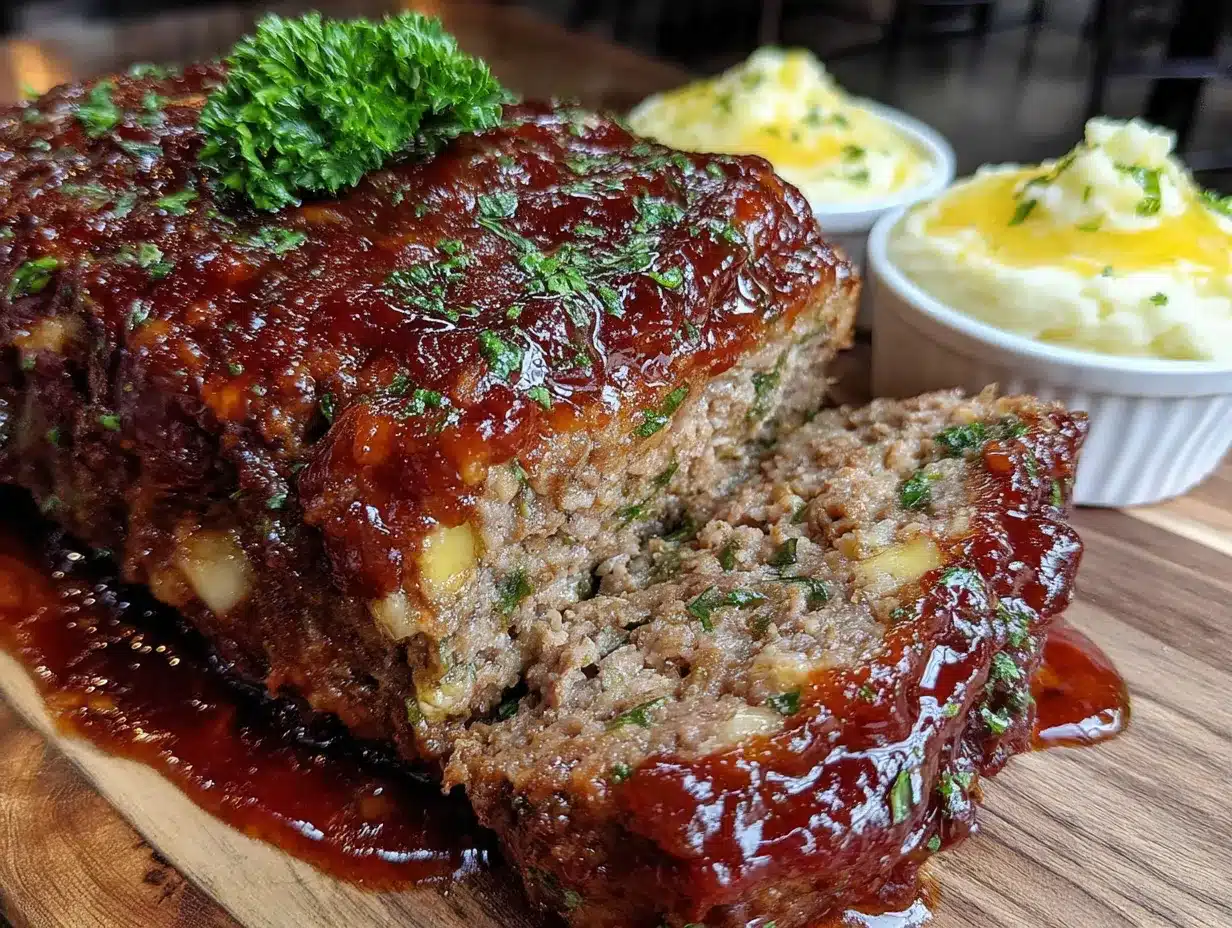
- Ketchup (½ cup): The base of the glaze. It thickens and caramelizes beautifully in the oven.
- Brown sugar (⅓ cup, packed, light or dark): Light brown sugar gives a milder caramel flavor. Dark brown sugar makes it richer and more molasses-forward. I use dark brown sugar because I like the depth.
- Apple cider vinegar (1 tablespoon): Cuts through the sweetness and adds a tangy kick. You can substitute white vinegar or even lemon juice.
- Worcestershire sauce (1 teaspoon): Adds savory balance to the sweet glaze.
- Garlic powder (½ teaspoon): A subtle savory note that keeps the glaze from being one-dimensional.
I recommend using a good-quality ketchup for the glaze. The cheaper brands tend to be thinner and more watery, which affects the texture. Also, if your brown sugar has hardened into a brick, pop it in the microwave for 10 seconds with a damp paper towel over it. It’ll soften right up.
Equipment Needed
- Large mixing bowl: You need space to get your hands in there and mix everything gently.
- 9×5-inch loaf pan: The standard size for a 2-pound meatloaf. You can also shape the loaf free-form on a baking sheet lined with parchment paper.
- Baking sheet (optional but helpful): If you shape the loaf free-form, place it on a baking sheet to catch any drips.
- Small saucepan or microwave-safe bowl: For making the glaze. A saucepan gives you more control, but the microwave works in a pinch.
- Whisk or fork: For mixing the glaze ingredients together.
- Chef’s knife and cutting board: For dicing the onion and mincing the garlic.
- Measuring cups and spoons: Accuracy matters, especially for the glaze.
- Aluminum foil: You’ll cover the meatloaf for the first part of baking to keep it moist.
- Meat thermometer (highly recommended): The only reliable way to know when your meatloaf is done. I use a simple digital probe thermometer.
If you don’t have a loaf pan, don’t worry. Shape the meat mixture into a loaf on a parchment-lined baking sheet. It will cook slightly faster, so start checking the temperature about 10 minutes earlier. I’ve also used a cast iron skillet in a pinch—it works beautifully and gives the edges a nice crust.
Preparation Method
Let’s walk through this step by step. I’ve included all the little details that make the difference between a good meatloaf and a great one.
- Preheat your oven to 350°F (175°C). Position the rack in the center of the oven. While it’s heating, line your baking sheet with parchment paper if you’re going free-form, or lightly grease your loaf pan with a bit of oil or cooking spray.
- Make the panade. In your large mixing bowl, combine the breadcrumbs and milk. Stir them together and let it sit for 5 minutes. The breadcrumbs will absorb the milk and turn into a paste. This is your panade, and it’s the secret to a tender meatloaf. If you skip this step, your meatloaf will be dense and dry.
- Sauté the aromatics (optional but recommended). Heat a small skillet over medium heat with a drizzle of oil. Add the diced onion and cook for 3-4 minutes until translucent. Add the minced garlic and cook for another 30 seconds until fragrant. Let this cool for a few minutes before adding it to the meat mixture. Raw onion can work, but sautéing it first brings out its sweetness and prevents any harsh bite.
- Mix the meatloaf ingredients. To the bowl with the panade, add the eggs, ketchup, Worcestershire sauce, dried thyme, salt, pepper, and the sautéed onion and garlic (if using). Stir everything together with a fork until it’s well combined. Now add the ground beef. Here’s the most important part: use your hands to gently mix everything together. Don’t squeeze or knead the meat. Just fold and combine until you don’t see any more streaks of breadcrumb mixture. Overmixing makes the meatloaf tough. I learned this the hard way after making a meatloaf that could have doubled as a baseball.
- Shape the meatloaf. Transfer the mixture to your loaf pan and press it gently into an even shape. Don’t pack it down hard—just smooth the top. If you’re going free-form, shape it into a loaf about 5 inches wide and 4 inches tall on your prepared baking sheet. Make sure the edges are even so it cooks uniformly.
- Make the brown sugar glaze. In a small saucepan over medium heat, combine the ketchup, packed brown sugar, apple cider vinegar, Worcestershire sauce, and garlic powder. Whisk everything together and bring it to a gentle simmer. Let it cook for 2-3 minutes, stirring occasionally, until the sugar dissolves and the glaze thickens slightly. Remove it from the heat. Taste it and adjust if needed—a pinch of salt can balance the sweetness.
- Apply the first layer of glaze. Brush about half of the glaze over the top and sides of the meatloaf. Reserve the remaining glaze for later. Don’t pour it all on at once—you want that beautiful caramelized crust, not a pool of sauce.
- Bake covered. Place the meatloaf in the oven and bake uncovered for 30 minutes. Then, carefully remove it from the oven and brush on another layer of the reserved glaze. This builds up that sticky, caramelized coating.
- Continue baking. Return the meatloaf to the oven and bake for another 20-25 minutes. The internal temperature should reach 160°F (71°C) when measured with a meat thermometer inserted into the center. If you’re using a free-form loaf, check the temperature at the 40-minute mark—it might cook faster.
- Rest before slicing. Remove the meatloaf from the oven and let it rest in the pan for 10-15 minutes. This is critical. The juices need time to redistribute throughout the meat. If you slice into it immediately, it will fall apart and all those delicious juices will run out onto the cutting board. Patience pays off here.
- Slice and serve. Use a sharp knife to cut even slices. The glaze might stick a little, so wipe your knife clean between cuts for the prettiest presentation. Spoon any extra glaze from the pan over the slices.
One more thing: if the top of your meatloaf starts to get too dark before it reaches the right internal temperature, tent a piece of aluminum foil loosely over the top. Ovens run differently, so keep an eye on it after the first 45 minutes.
Cooking Tips & Techniques
I’ve made this recipe dozens of times, and I’ve collected a few tricks that make the process smoother and the results more consistent.
Don’t skip the panade. I know it sounds fussy, but it’s the single most important step for a moist meatloaf. The breadcrumbs absorb the milk and create a gel-like texture that traps moisture as the meat cooks. Without it, the proteins in the meat tighten up and squeeze out all the juices. You end up with dry, crumbly meatloaf. I once tried to save time by skipping this step and mixing the breadcrumbs in dry. Never again. The texture was off, and I spent the whole meal apologizing.
Use a light hand when mixing. Overworking ground meat is the fastest way to a tough meatloaf. Use your fingers to gently combine the ingredients until they just come together. If you see streaks of breadcrumb mixture, that’s okay. They’ll disappear as you shape the loaf. Think of it like making biscuits—you want to handle it as little as possible.
Let the onion cool before adding it. If you sauté the onion and garlic, let them cool completely before mixing them into the meat. Hot aromatics can start cooking the meat prematurely, which changes the texture. I usually spread them out on a plate and pop them in the fridge for 5 minutes while I prep the other ingredients.
Use a meat thermometer. I cannot stress this enough. Meatloaf is thick, and it’s hard to judge doneness by sight alone. The USDA recommends 160°F (71°C) for ground beef. I pull mine out at 158°F and let carryover cooking bring it to 160°F during the rest. If you don’t have a thermometer, make a small cut in the center—the juices should run clear, and there should be no pinkness. But honestly, a $10 thermometer is worth the investment.
Let it rest. I know you’re hungry. I know it smells incredible. But slicing into a meatloaf right out of the oven is a tragedy waiting to happen. The juices need time to settle. Ten minutes makes all the difference between a slice that holds together and a slice that crumbles into a pile of delicious but messy meat.
Double the glaze. I always make extra glaze. It’s great spooned over the slices at the table or used as a dipping sauce on the side. You can also brush it on leftover slices when you reheat them to restore that sticky, caramelized finish.
Variations & Adaptations
One of the best things about meatloaf is how adaptable it is. Here are some ways to make this recipe your own.
Turkey or chicken meatloaf: Swap the ground beef for ground turkey or chicken. Since poultry is leaner, add 2 tablespoons of olive oil or an extra egg yolk to keep it moist. Cook to 165°F (74°C) for food safety. The glaze becomes even more important here because it adds moisture and flavor.
Stuffed meatloaf: This is a fun twist. After shaping the loaf, make a deep groove down the center and fill it with sautéed mushrooms, shredded cheese (cheddar or mozzarella works well), or even leftover mashed potatoes. Seal the groove closed with the meat mixture and bake as directed. The filling adds a surprise element that kids especially love.
Gluten-free version: Substitute the breadcrumbs with gluten-free rolled oats or crushed gluten-free crackers. The panade works just as well with oat milk or any dairy-free milk. Check your Worcestershire sauce—some brands contain malt vinegar (from barley), so look for a gluten-free labeled version.
Add vegetables: Finely grate a carrot or zucchini and squeeze out the excess moisture before adding it to the meat mixture. This adds moisture and nutrients without changing the flavor much. You can also add a handful of finely chopped spinach. It wilts down and disappears into the meat.
Spicy kick: Add 1-2 teaspoons of sriracha or a pinch of cayenne pepper to the glaze. You can also mix diced jalapeños (seeds removed) into the meat mixture. The sweetness of the brown sugar balances the heat beautifully.
Cheese lover’s version: Mix ½ cup of shredded cheddar or Parmesan cheese into the meat mixture. The cheese melts into the meatloaf and adds a savory richness. You can also sprinkle extra cheese on top during the last 10 minutes of baking.
BBQ glaze swap: Replace the brown sugar glaze with your favorite BBQ sauce for a smoky, tangy twist. Brush it on the same way—halfway through and at the end. This version is perfect for summer cookouts.
I once made a version with crumbled bacon mixed into the meat and a maple syrup glaze. It was absurdly good, if a little over the top. That’s the beauty of this recipe—it’s a canvas for whatever you’re craving.
Serving & Storage Suggestions
The way you serve and store this meatloaf can make a big difference in how much you enjoy it. Here’s what I’ve learned.
Serving temperature: Serve the meatloaf warm, right after its 10-minute rest. The glaze will be sticky and glossy, and the interior will be tender and juicy. Slice it into 1-inch thick pieces and arrange them on a platter. Spoon any remaining glaze from the pan over the top.
What to serve with it: Classic sides are the way to go. Mashed potatoes are the obvious choice—they soak up any extra glaze and juices. Roasted green beans, steamed broccoli, or a simple side salad add freshness and balance. For a truly comforting meal, serve it with creamy mac and cheese or buttery corn on the cob. I also love it with a side of crusty bread to mop up the plate.
Leftovers: This meatloaf might be even better the next day. The flavors meld together overnight, and the texture stays moist. Store leftover slices in an airtight container in the refrigerator for up to 4 days. For longer storage, wrap individual slices tightly in plastic wrap and then foil, and freeze for up to 3 months.
Reheating: The best way to reheat meatloaf is in a skillet over medium-low heat with a splash of beef broth or water. Cover the skillet and let it steam for 3-4 minutes per side. This brings back the moisture without drying it out. You can also reheat slices in the microwave at 50% power for 1-2 minutes, but the texture won’t be as good. If you’re reheating from frozen, thaw the slices in the refrigerator overnight first.
Cold meatloaf sandwiches: This is my favorite way to enjoy leftovers. Slice the cold meatloaf thick, layer it on toasted bread with a smear of mayonnaise or mustard, and add lettuce and tomato. The cold, firm texture of the meatloaf is completely different from warm—and equally delicious. I’ve been known to make these for lunch three days in a row.
How flavors develop: The meatloaf is good fresh, but the flavors deepen and meld after a day in the fridge. The onion and garlic become more subtle, and the glaze soaks into the outer layer of the meat. If you’re planning ahead, you can make the meatloaf a day in advance, refrigerate it unbaked, and bake it the next day. Just add 10-15 minutes to the baking time since you’re starting from cold.
Nutritional Information & Benefits
Here’s the approximate nutritional breakdown for one serving (based on 8 servings, using 80/20 ground beef and the full glaze recipe):
- Calories: 385
- Protein: 28g
- Fat: 22g
- Saturated Fat: 9g
- Carbohydrates: 18g
- Fiber: 1g
- Sugar: 12g
- Sodium: 720mg
This is comfort food, so it’s not a light meal, but it does have some redeeming qualities. Ground beef is an excellent source of protein, iron, zinc, and B vitamins. The onions and garlic provide antioxidants and compounds that support immune health. The parsley (if you use it) adds a small amount of vitamin K and vitamin C.
Dietary considerations: This recipe is not gluten-free in its standard form due to the breadcrumbs and Worcestershire sauce, but both can be substituted. It’s also not dairy-free because of the milk, but you can use plant-based milk. It’s naturally nut-free and egg-free if you use an egg substitute (like a flax egg). For a lower-sodium version, use low-sodium ketchup and Worcestershire sauce, and reduce the added salt to 1 teaspoon.
Allergen note: This recipe contains gluten (breadcrumbs, Worcestershire sauce), dairy (milk), and eggs. If you’re serving guests with allergies, make sure to check all ingredient labels.
I believe in balance. This meatloaf isn’t health food, but it’s real food made with real ingredients. It’s the kind of meal that nourishes more than just your body—it nourishes the soul. And sometimes, that’s exactly what you need.
Conclusion
This Classic Meatloaf with Brown Sugar Glaze is more than just a recipe. It’s the one I turn to when I need something reliable, something that brings people together, something that tastes like home. The glaze caramelizes into a sticky, sweet-tangy crust that perfectly complements the tender, juicy meat. It’s the kind of meal that makes you close your eyes after the first bite.
I hope you give this recipe a try, and I hope you make it your own. Maybe you’ll add a little extra garlic, or swap in some ground pork, or experiment with a different glaze. That’s the beauty of cooking—it’s always a conversation. And this recipe is just the beginning of that conversation.
I’d love to hear how it turns out for you. Did you try a variation? Did your family ask for seconds? Did you discover a trick I haven’t thought of? Drop a comment below and let me know. Your feedback helps me keep improving these recipes, and it helps other readers too.
Until next time, happy cooking. And remember—the best meals are the ones shared with the people you love.
Frequently Asked Questions
Can I make this meatloaf ahead of time?
Absolutely. You can assemble the meatloaf mixture and shape it in the loaf pan, then cover and refrigerate for up to 24 hours before baking. When you’re ready to bake, let it sit at room temperature for 15 minutes while the oven preheats, then follow the baking instructions. You may need to add 10-15 minutes to the total baking time since you’re starting from cold.
Why did my meatloaf fall apart?
There are a few common reasons. The most likely culprit is not enough binder—make sure you’re using the full amount of breadcrumbs and eggs. Another possibility is that you didn’t let it rest after baking. The resting time allows the proteins to set and the juices to redistribute, which helps the slices hold together. Finally, overmixing can break down the meat’s structure, so use a gentle hand.
Can I freeze this meatloaf?
Yes, and it freezes beautifully. You can freeze it baked or unbaked. For baked meatloaf, let it cool completely, wrap it tightly in plastic wrap and then foil, and freeze for up to 3 months. Thaw in the refrigerator overnight and reheat in a 350°F oven for 20-25 minutes. For unbaked meatloaf, shape it in the loaf pan, wrap it well, and freeze. Thaw in the refrigerator overnight before baking as directed.
How do I know when my meatloaf is done?
The most reliable method is a meat thermometer. Insert it into the center of the meatloaf—it should read 160°F (71°C). If you don’t have a thermometer, make a small cut in the center. The juices should run clear, and there should be no pinkness in the meat. The internal temperature will continue to rise a few degrees during the resting period.
Can I use a different type of ground meat?
Definitely. Ground pork, ground turkey, or a mix of beef and pork all work well. Just keep in mind that leaner meats like turkey will produce a drier meatloaf, so you’ll want to add extra moisture. You can add an extra egg yolk, a tablespoon of olive oil, or even some finely grated zucchini to compensate. And always cook poultry-based meatloaf to 165°F (74°C).
Pin This Recipe!
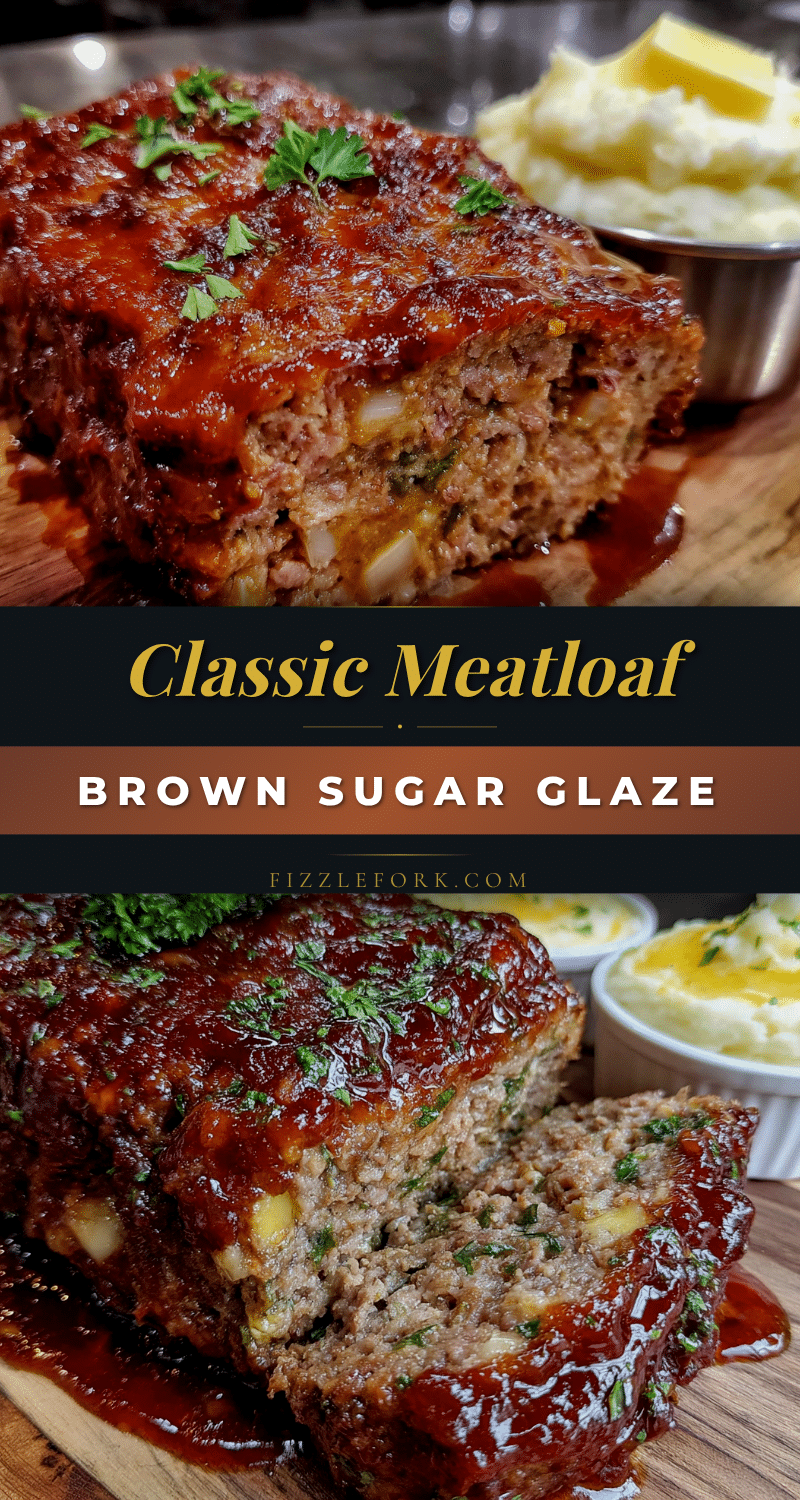
Classic Meatloaf with Brown Sugar Glaze: Easy & Juicy Recipe
This Classic Meatloaf with Brown Sugar Glaze is tender, juicy, and topped with a sticky, caramelized crust. It’s the perfect comfort food for busy weeknights or Sunday dinners.
- Prep Time: 15 minutes
- Cook Time: 50 minutes
- Total Time: 1 hour 5 minutes
- Yield: 8 servings 1x
- Category: Main Course
- Cuisine: American
Ingredients
- 2 lbs ground beef (80/20 blend)
- 1 medium yellow onion, finely diced
- 3 cloves garlic, minced
- 2 large eggs
- 1 cup plain or panko breadcrumbs
- ½ cup whole milk
- ¼ cup ketchup
- 2 tablespoons Worcestershire sauce
- 1 teaspoon dried thyme
- 1½ teaspoons salt
- 1 teaspoon freshly ground black pepper
- 2 tablespoons fresh parsley, chopped (optional)
- ½ cup ketchup (for glaze)
- ⅓ cup packed light or dark brown sugar
- 1 tablespoon apple cider vinegar
- 1 teaspoon Worcestershire sauce (for glaze)
- ½ teaspoon garlic powder
Instructions
- Preheat oven to 350°F (175°C). Line a baking sheet with parchment paper or lightly grease a 9×5-inch loaf pan.
- Make the panade: In a large mixing bowl, combine breadcrumbs and milk. Stir and let sit for 5 minutes until the breadcrumbs absorb the milk and form a paste.
- Sauté aromatics (optional): Heat a small skillet over medium heat with a drizzle of oil. Add diced onion and cook 3-4 minutes until translucent. Add minced garlic and cook 30 seconds until fragrant. Let cool.
- Mix meatloaf ingredients: To the panade, add eggs, ¼ cup ketchup, 2 tablespoons Worcestershire sauce, dried thyme, salt, pepper, and sautéed onion and garlic. Stir with a fork until combined. Add ground beef and gently mix with your hands until just combined—do not overmix.
- Shape the meatloaf: Transfer mixture to the loaf pan or shape into a loaf on the prepared baking sheet (about 5 inches wide, 4 inches tall). Press gently to shape.
- Make the glaze: In a small saucepan over medium heat, combine ½ cup ketchup, brown sugar, apple cider vinegar, 1 teaspoon Worcestershire sauce, and garlic powder. Whisk and bring to a gentle simmer. Cook 2-3 minutes until sugar dissolves and glaze thickens slightly. Remove from heat.
- Apply first layer of glaze: Brush about half of the glaze over the top and sides of the meatloaf. Reserve the rest.
- Bake covered: Place meatloaf in the oven and bake uncovered for 30 minutes. Remove, brush on another layer of reserved glaze.
- Continue baking: Return to oven and bake for another 20-25 minutes, until internal temperature reaches 160°F (71°C). If top browns too quickly, tent loosely with foil.
- Rest before slicing: Remove from oven and let rest in the pan for 10-15 minutes. This allows juices to redistribute.
- Slice and serve: Use a sharp knife to cut even slices. Spoon any extra glaze from the pan over the slices.
Notes
For a juicier meatloaf, use 80/20 ground beef and do not overmix. Let the meatloaf rest for 10-15 minutes before slicing to prevent it from falling apart. If the top browns too quickly, tent with foil. Double the glaze for extra to serve on the side.
Nutrition
- Serving Size: 1 slice (1/8 of reci
- Calories: 385
- Sugar: 12
- Sodium: 720
- Fat: 22
- Saturated Fat: 9
- Carbohydrates: 18
- Fiber: 1
- Protein: 28
Keywords: meatloaf, brown sugar glaze, classic meatloaf, easy meatloaf, juicy meatloaf, comfort food, ground beef recipe