I was standing in the frozen foods aisle last November, holding a bag of frozen Brussels sprouts and feeling absolutely nothing. No excitement, no nostalgia, no pull toward the dinner I was about to make. Just the hum of the freezer case and the vague pressure of a holiday side dish slot I needed to fill. And then I saw them — a display of pomegranates stacked like little crimson grenades, their skins tight and glossy. I picked one up, and the weight of it in my hand — dense, cool, promising — hit me with a memory I hadn’t touched in years.
Suddenly I was maybe nine, sitting cross-legged on my aunt Lena’s kitchen floor in early December. She was the one who never followed a recipe exactly, the one who’d toss things together and call it dinner with a shrug that somehow made you trust her completely. I remember her cracking open a pomegranate over a bowl of roasted carrots she’d just pulled from the oven. The seeds tumbled down like jewels, and she stirred them in with a spoon, saying, “There. Now it’s a party.” I didn’t understand what she meant then. But I watched her eat one of those glistening carrots, and the way she closed her eyes told me she’d made something special. I wanted to recreate that exact feeling for years, honestly, but I kept overcomplicating it. I tried reductions and syrups and reductions of syrups. I made messes, wasted pomegranates, and ended up with sticky counters and disappointment. But last November, standing in that freezer aisle, I finally got it — the point wasn’t a complicated glaze. It was the simplicity of letting the vegetable and the fruit speak to each other. No fussing, no chef-y tricks. Just heat, sweetness, and a little tang.
This Lighter Pomegranate Glazed Roasted Root Vegetables recipe is the result of that moment. It’s the side dish I’ve been chasing since I was nine, and I think you’re going to love it too. Maybe you’ve been there — staring at a vegetable tray, wondering how to make it feel like more than just a vegetable tray. This is that answer.
Why You’ll Love This Recipe
Let me tell you why this recipe has become my go-to for everything from a quiet Tuesday dinner to a holiday table that needs a little sparkle. I’ve tested it six times (and yes, I burned the first batch), and I can promise you it delivers on every level.
- Quick & Easy: From prep to table in about 40 minutes. The oven does most of the work, which means you get to relax or tackle other parts of the meal.
- Simple Ingredients: You probably already have olive oil, salt, and pepper. The pomegranate juice is easy to find, and the seeds add a pop that feels fancy without any actual effort.
- Perfect for Holidays or Weeknights: It’s colorful enough for Thanksgiving but simple enough for a Wednesday roast chicken dinner. No special occasion required.
- Crowd-Pleaser: I brought this to a potluck last month, and someone actually asked for the recipe before they finished their first serving. Kids like it because of the sweetness. Adults like it because it feels sophisticated.
- Unbelievably Delicious: The glaze caramelizes around the edges of the vegetables, creating these little sticky-sweet spots that contrast perfectly with the earthy root flavors. And the pomegranate seeds? They burst in your mouth and cut through the richness with a bright, tart pop.
What makes this different from other roasted vegetable recipes is the balance. I’m not drowning the vegetables in syrup or honey. I’m using pure pomegranate juice as the base, which gives you that deep fruity sweetness without being cloying. It’s lighter, fresher, and honestly, it lets the vegetables shine instead of hiding them. This recipe isn’t just good — it’s the kind that makes you close your eyes after the first bite. It’s comfort food reimagined: healthier, faster, but with the same soul-soothing satisfaction.
What Ingredients You Will Need
This recipe uses simple, wholesome ingredients to deliver bold flavor and satisfying texture without the fuss. Most of these are pantry staples or easy to find at any grocery store. Here’s what you’ll need and why each one matters.
- 2 medium sweet potatoes, peeled and cubed (about 3 cups): Sweet potatoes bring natural creaminess and a mild sweetness that pairs beautifully with the tart pomegranate glaze. I prefer organic sweet potatoes when I can find them — the skins are thinner and the flavor is a bit more concentrated.
- 3 large carrots, peeled and cut into 1-inch chunks (about 2 cups): Carrots add that classic earthy sweetness that roasting intensifies. Look for carrots that are firm and bright orange — limp ones won’t caramelize as well.
- 2 medium parsnips, peeled and cubed (about 1.5 cups): Parsnips are the unsung heroes of root vegetable roasting. They have a subtle peppery, almost nutty flavor that becomes buttery and sweet when roasted. Don’t skip them if you can help it.
- 1 medium red onion, cut into wedges: Red onion adds color and a mild sharpness that mellows beautifully in the oven. The wedges should be thick enough to hold their shape but thin enough to get tender.
- 3 tablespoons olive oil: Use a good-quality extra virgin olive oil for the best flavor. It helps the vegetables caramelize and carries the seasoning.
- 1/2 cup pure pomegranate juice (not from concentrate, if possible): This is the star of the glaze. Pure pomegranate juice has a deep, tangy sweetness that concentrates beautifully when reduced. I recommend Pom Wonderful or Lakewood Organic — both are widely available and deliver consistent results.
- 2 tablespoons honey or maple syrup: A touch of extra sweetness helps the glaze stick to the vegetables and promotes caramelization. Maple syrup adds a slightly smoky note, while honey keeps it floral. Both work wonderfully.
- 1 tablespoon balsamic vinegar: Balsamic vinegar adds depth and a tiny bit of acidity that balances the sweetness. It’s the secret ingredient that makes the glaze taste more complex than it is.
- 1 teaspoon fresh thyme leaves (or 1/2 teaspoon dried): Thyme brings an earthy, slightly floral note that complements root vegetables. Fresh is best, but dried works in a pinch.
- 1/2 teaspoon salt: I use fine sea salt. It seasons the vegetables evenly and helps draw out their natural moisture for better roasting.
- 1/4 teaspoon black pepper: Freshly ground black pepper adds a gentle warmth. Don’t skip it — it balances the sweetness of the glaze.
- 1/2 cup fresh pomegranate seeds (from about 1 pomegranate): These are for the finishing touch. They add texture, color, and a burst of tart juice that cuts through the roasted richness. If you’re short on time, pre-seeded pomegranate arils are available in many produce sections.
- Optional: Fresh parsley or mint for garnish: A sprinkle of fresh herbs adds a pop of green and a fresh finish. Mint is especially nice if you’re serving this with lamb or a Middle Eastern-inspired meal.
Equipment Needed
You don’t need a fancy kitchen to make this recipe work. Here’s what I use, along with some honest notes about what you can substitute if needed.
- Large baking sheet (18×13 inches or similar): A rimmed baking sheet is ideal — it catches any glaze drips and prevents a mess in your oven. I use a half-sheet pan from Nordic Ware, and it’s been going strong for years. If you don’t have a large sheet, use two smaller ones to avoid overcrowding the vegetables.
- Parchment paper or silicone baking mat: Parchment paper makes cleanup a breeze and prevents the glaze from sticking. Silicone mats work too, but they don’t crisp the vegetables quite as well on the bottom.
- Medium saucepan: You’ll need this to reduce the pomegranate glaze. A 1- or 2-quart saucepan is perfect. Avoid using a pan that’s too wide — the glaze will evaporate too quickly and could burn.
- Chef’s knife and cutting board: A sharp chef’s knife makes cubing vegetables much safer and faster. I learned the hard way that a dull knife is more dangerous than a sharp one.
- Mixing bowl: For tossing the vegetables with oil and seasoning before roasting. Any medium bowl will do.
- Small whisk or fork: For stirring the glaze as it reduces. A whisk helps incorporate the honey or maple syrup smoothly.
- Spatula or tongs: For flipping the vegetables halfway through roasting. Tongs give you more control, but a spatula works fine too.
Preparation Method
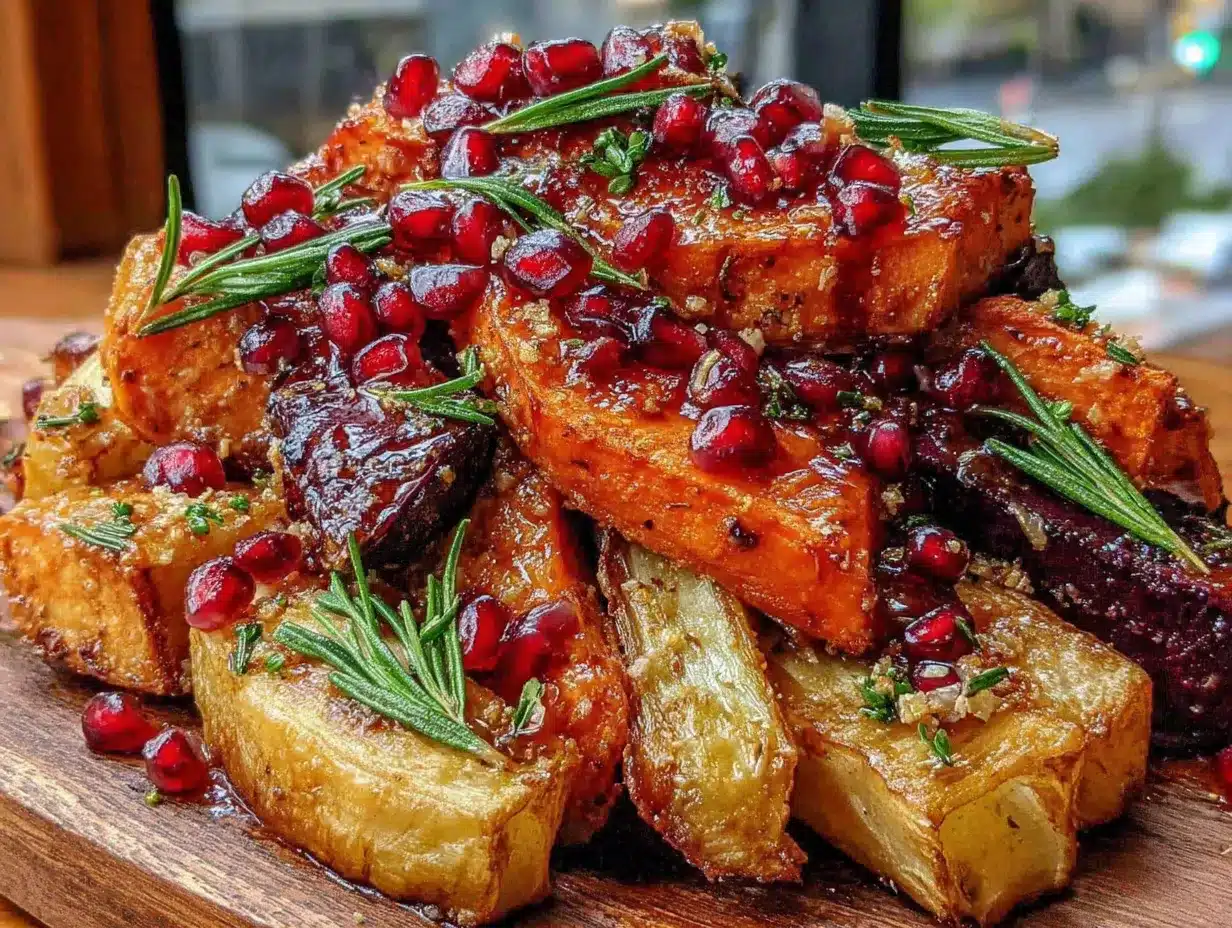
Let me walk you through this step by step. I’ve included time estimates and sensory cues so you know exactly what to look for at each stage.
- Preheat your oven to 425°F (220°C). This high temperature is key for caramelization. While the oven heats, line your baking sheet with parchment paper. Do not skip this — the glaze will stick, and you’ll be scrubbing for ages.
- Prepare the vegetables. Peel and cube the sweet potatoes into 1-inch pieces. Peel the carrots and parsnips, then cut them into similar-sized chunks. Cut the red onion into wedges, keeping the root end intact so the layers hold together. Try to keep all pieces roughly the same size — this ensures even cooking. I learned this the hard way when I had burnt sweet potato bits and undercooked parsnips in the same batch.
- Toss the vegetables with oil and seasoning. In a large mixing bowl, combine the sweet potatoes, carrots, parsnips, and red onion. Drizzle with 3 tablespoons olive oil, then sprinkle with 1/2 teaspoon salt and 1/4 teaspoon black pepper. Toss everything with your hands or a spatula until every piece is lightly coated. Spread the vegetables in a single layer on the prepared baking sheet. Make sure they’re not crowded — if they overlap, they’ll steam instead of roast. If needed, use two baking sheets.
- Roast the vegetables for 20 minutes. Place the baking sheet in the preheated oven and set a timer. After 20 minutes, remove the sheet and flip each piece using tongs or a spatula. The bottoms should be starting to brown and caramelize. This is a good moment to check your glaze.
- Make the pomegranate glaze while the vegetables roast. In a medium saucepan, combine 1/2 cup pomegranate juice, 2 tablespoons honey (or maple syrup), and 1 tablespoon balsamic vinegar. Bring to a simmer over medium heat, then reduce the heat to low. Let it gently bubble for about 8-10 minutes, stirring occasionally, until it thickens to a syrupy consistency. You’ll know it’s ready when it coats the back of a spoon and leaves a clear trail when you run your finger through it. Be careful not to let it boil too vigorously — it can burn quickly. If it gets too thick, whisk in a tablespoon of water to loosen it.
- Glaze the vegetables and finish roasting. Once you’ve flipped the vegetables, drizzle the reduced pomegranate glaze evenly over them. Sprinkle the fresh thyme leaves on top. Return the baking sheet to the oven and roast for another 15-20 minutes. The vegetables are done when they’re tender enough to pierce easily with a fork, with caramelized edges that are dark but not burnt. The glaze should be sticky and glossy, clinging to the vegetables like a beautiful coat.
- Add the finishing touch. Remove the baking sheet from the oven and let it cool for 2-3 minutes. Transfer the roasted vegetables to a serving platter. Sprinkle the fresh pomegranate seeds generously over the top. The heat from the vegetables will slightly warm the seeds, making them extra juicy. Garnish with fresh parsley or mint if you like. Serve immediately while the vegetables are still warm and the glaze is at its stickiest.
Cooking Tips & Techniques
I’ve made this recipe enough times to know where things can go wrong. Here are the lessons I learned the messy way so you don’t have to.
Don’t overcrowd the pan. This is the number one mistake I made the first time. If the vegetables are packed too tightly, they release steam instead of roasting, and you end up with soggy, pale chunks instead of caramelized gems. Give them breathing room. Use two baking sheets if you have to, and rotate them halfway through for even cooking.
Watch the glaze like a hawk. Pomegranate juice has natural sugars that can go from syrupy to burnt in about 30 seconds. I once walked away to answer a text, and came back to a saucepan that smelled like a campfire. Stay close, stir frequently, and pull it off the heat as soon as it coats the spoon. If it thickens too much as it cools, just whisk in a splash of warm water.
Cut your vegetables uniformly. I know it’s tedious, but it makes a huge difference. A 1-inch cube of sweet potato takes the same time to cook as a 1-inch chunk of parsnip — but a 1/2-inch piece will be mush before the larger pieces are done. Take the extra two minutes to be consistent.
Use the parchment paper. I tried making this without parchment once because I ran out. The glaze caramelized onto the pan so stubbornly that I had to soak it overnight and still ended up scrubbing for twenty minutes. Just use the parchment. Your future self will thank you.
Add the pomegranate seeds at the end. If you add them before roasting, they’ll burst and dry out, losing that beautiful pop of fresh juice. Sprinkle them on after the vegetables come out of the oven, while they’re still warm. The gentle heat will soften the seeds slightly without cooking them.
Variations & Adaptations
This recipe is flexible, and I’ve tried a few twists that turned out surprisingly well. Here are some variations you might enjoy.
- Add extra vegetables: Feel free to swap in other root vegetables like turnips, rutabaga, or celery root. Beets work too, but they’ll turn everything pink — which can be fun if you’re going for a dramatic presentation. Just keep the total volume the same to maintain the glaze-to-vegetable ratio.
- Make it vegan: Swap the honey for maple syrup or agave nectar. The flavor shifts slightly — maple adds a woodsy note that pairs beautifully with the pomegranate — but the texture remains identical.
- Spice it up: Add 1/2 teaspoon of ground cinnamon or a pinch of cayenne pepper to the glaze for a warm, spiced version. I tried this for a winter dinner party, and it was a hit. The cinnamon complements the sweetness of the sweet potatoes, while cayenne adds a subtle heat that lingers.
- Try a different citrus: If you can’t find pomegranate juice, use fresh orange juice instead. The flavor will be brighter and less tart, but still delicious. Add a tablespoon of lemon juice to balance the sweetness.
- Add a protein: Toss in some cooked chickpeas or cubed tofu during the last 10 minutes of roasting for a heartier meal. I’ve done this for a quick weeknight dinner, and it turns the side dish into a complete meal.
Serving & Storage Suggestions
These roasted vegetables are best served warm, straight from the oven, when the glaze is at its stickiest and the pomegranate seeds are still bright and juicy. I like to arrange them on a large white platter — the contrast of the deep orange and red against the white is stunning. Sprinkle the pomegranate seeds and herbs right before serving so they stay fresh.
This dish pairs beautifully with roasted chicken, grilled salmon, or a simple seared steak. For a vegetarian meal, serve it alongside a hearty grain like farro or quinoa and a dollop of yogurt or tahini sauce. It also works wonderfully as part of a holiday spread — think Thanksgiving or Christmas — where the jewel-toned colors add festive flair.
Storage: Leftovers can be stored in an airtight container in the refrigerator for up to 4 days. The vegetables will soften slightly, but the flavor deepens as they sit. I actually love eating them cold the next day, straight from the fridge — the glaze becomes almost jammy.
Reheating: To revive the texture, spread the leftovers on a baking sheet and reheat in a 350°F (175°C) oven for 8-10 minutes. The microwave will make them soggy, so avoid it if you can. If you’re in a hurry, a hot skillet with a tiny splash of water works too — just toss them over medium heat until warmed through.
Freezing: I don’t recommend freezing this dish. The vegetables become watery and the glaze loses its sticky quality. It’s best enjoyed fresh or within a few days.
Nutritional Information & Benefits
This recipe is packed with nutrients that make it a smart choice for health-minded eaters who still want food that tastes indulgent. Here’s a rough breakdown per serving (about 1 cup).
| Nutrient | Amount per Serving |
|---|---|
| Calories | 210 |
| Total Fat | 8g |
| Saturated Fat | 1g |
| Carbohydrates | 35g |
| Fiber | 6g |
| Sugar | 18g (natural from vegetables and juice) |
| Protein | 3g |
| Vitamin A | 280% DV |
| Vitamin C | 25% DV |
| Potassium | 15% DV |
The sweet potatoes and carrots are loaded with beta-carotene, which supports eye health and immune function. Pomegranate juice is rich in antioxidants called punicalagins, which are known for their anti-inflammatory properties. And the olive oil provides heart-healthy monounsaturated fats that help your body absorb the fat-soluble vitamins from the vegetables. This dish is naturally gluten-free, dairy-free, and can be made vegan with a simple swap. It’s a side dish that actually makes you feel good — no guilt, just vibrant, wholesome flavor.
Conclusion
This Lighter Pomegranate Glazed Roasted Root Vegetables recipe is the side dish I’ve been searching for since I was nine years old, sitting on my aunt Lena’s kitchen floor. It’s simple enough for a Tuesday night, special enough for a holiday table, and healthy enough that you can eat it without a second thought. The combination of caramelized root vegetables, tangy-sweet glaze, and fresh pomegranate seeds is honestly one of the most satisfying things I’ve ever made.
I hope you try this recipe and make it your own. Maybe you’ll add a pinch of cinnamon, swap in some beets, or serve it with a dollop of yogurt. Whatever you do, I’d love to hear about it. Drop a comment below and tell me how it turned out — or share your own twist. And if you loved it, please share this post with someone who needs a little vegetable inspiration. Happy cooking, friends.
Frequently Asked Questions
Can I use frozen vegetables for this recipe?
I don’t recommend it. Frozen vegetables release too much water during roasting, which prevents caramelization and makes the glaze watery. Fresh root vegetables are best for achieving that sticky, golden finish.
Can I make the glaze ahead of time?
Absolutely. You can make the glaze up to 3 days in advance and store it in an airtight container in the refrigerator. Let it come to room temperature before drizzling over the vegetables, or warm it gently on the stove with a splash of water to loosen it.
How do I seed a pomegranate without making a mess?
Cut the pomegranate in half horizontally. Hold one half cut-side down over a bowl of water, then whack the back of it firmly with a wooden spoon. The seeds will fall into the water, and the white pith will float. Skim off the pith, drain the seeds, and you’re done. It’s surprisingly neat.
Can I add other vegetables to this dish?
Yes! Beets, turnips, celery root, and butternut squash all work well. Just keep the pieces uniformly sized and adjust the roasting time if needed — denser vegetables like beets may need an extra 5-10 minutes.
Is this recipe suitable for meal prep?
It works well for meal prep if you plan to eat it within 3-4 days. Store the vegetables and pomegranate seeds separately, and add the seeds just before serving to keep them fresh. Reheat in the oven for best texture.
Pin This Recipe!
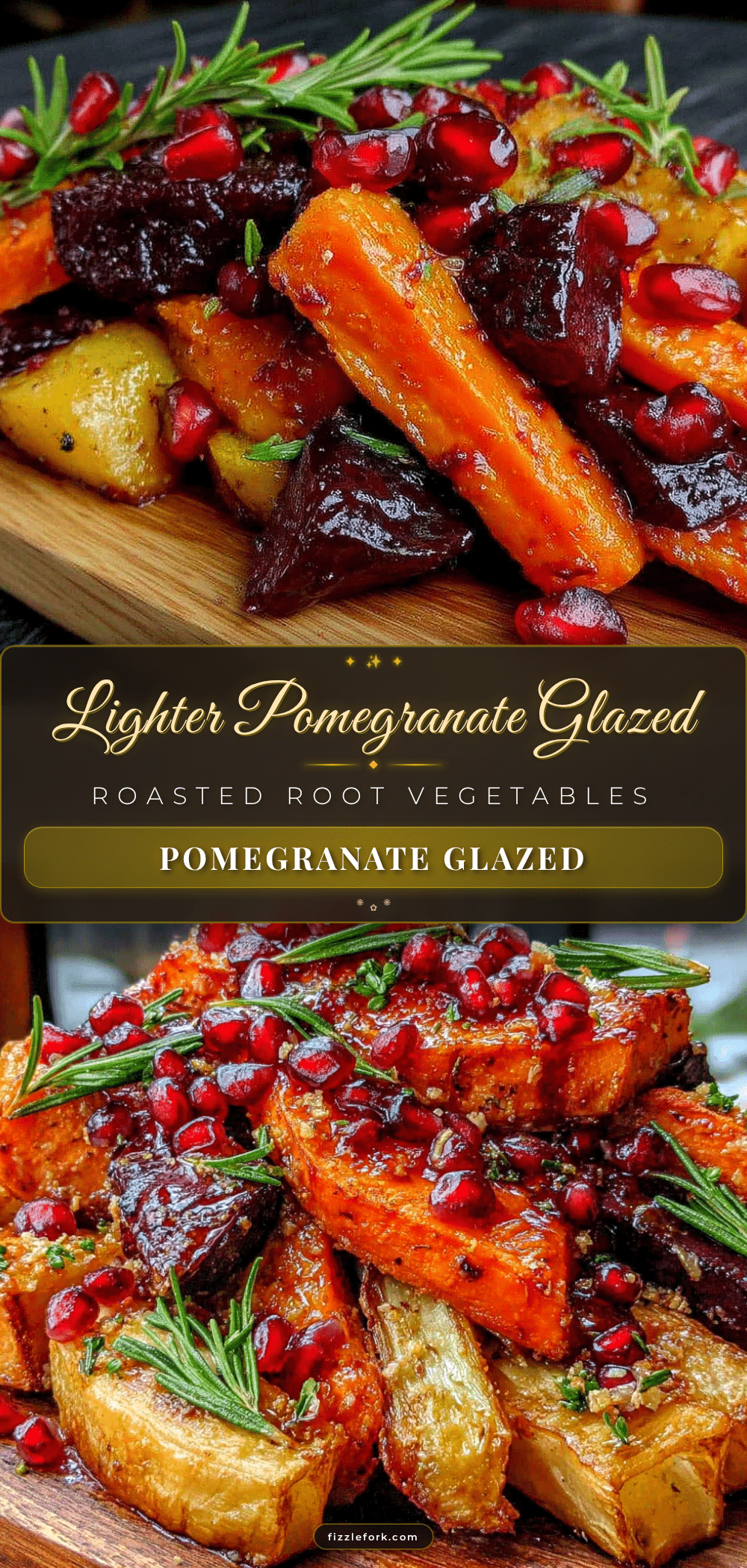
Lighter Pomegranate Glazed Roasted Root Vegetables
This Lighter Pomegranate Glazed Roasted Root Vegetables recipe is the side dish I’ve been searching for since I was nine years old. It’s simple enough for a Tuesday night, special enough for a holiday table, and healthy enough that you can eat it without a second thought.
- Prep Time: 10 minutes
- Cook Time: 35-40 minutes
- Total Time: 45-50 minutes
- Yield: 4 servings 1x
- Category: Side Dish
- Cuisine: American
Ingredients
- 2 medium sweet potatoes, peeled and cubed (about 3 cups)
- 3 large carrots, peeled and cut into 1-inch chunks (about 2 cups)
- 2 medium parsnips, peeled and cubed (about 1.5 cups)
- 1 medium red onion, cut into wedges
- 3 tablespoons olive oil
- 1/2 cup pure pomegranate juice (not from concentrate, if possible)
- 2 tablespoons honey or maple syrup
- 1 tablespoon balsamic vinegar
- 1 teaspoon fresh thyme leaves (or 1/2 teaspoon dried)
- 1/2 teaspoon salt
- 1/4 teaspoon black pepper
- 1/2 cup fresh pomegranate seeds (from about 1 pomegranate)
- Optional: Fresh parsley or mint for garnish
Instructions
- Preheat your oven to 425°F (220°C). Line your baking sheet with parchment paper.
- Prepare the vegetables: Peel and cube the sweet potatoes into 1-inch pieces. Peel the carrots and parsnips, then cut them into similar-sized chunks. Cut the red onion into wedges, keeping the root end intact so the layers hold together.
- In a large mixing bowl, combine the sweet potatoes, carrots, parsnips, and red onion. Drizzle with 3 tablespoons olive oil, then sprinkle with 1/2 teaspoon salt and 1/4 teaspoon black pepper. Toss until every piece is lightly coated. Spread the vegetables in a single layer on the prepared baking sheet.
- Roast the vegetables for 20 minutes. After 20 minutes, remove the sheet and flip each piece using tongs or a spatula.
- While the vegetables roast, make the pomegranate glaze: In a medium saucepan, combine 1/2 cup pomegranate juice, 2 tablespoons honey (or maple syrup), and 1 tablespoon balsamic vinegar. Bring to a simmer over medium heat, then reduce the heat to low. Let it gently bubble for about 8-10 minutes, stirring occasionally, until it thickens to a syrupy consistency.
- Once you’ve flipped the vegetables, drizzle the reduced pomegranate glaze evenly over them. Sprinkle the fresh thyme leaves on top. Return the baking sheet to the oven and roast for another 15-20 minutes, until the vegetables are tender and caramelized.
- Remove the baking sheet from the oven and let it cool for 2-3 minutes. Transfer the roasted vegetables to a serving platter. Sprinkle the fresh pomegranate seeds generously over the top. Garnish with fresh parsley or mint if you like. Serve immediately.
Notes
Don’t overcrowd the pan – use two baking sheets if needed. Watch the glaze carefully as it can burn quickly. Cut vegetables uniformly for even cooking. Add pomegranate seeds at the end to keep them fresh and juicy.
Nutrition
- Serving Size: 1 cup
- Calories: 210
- Sugar: 18
- Sodium: 300
- Fat: 8
- Saturated Fat: 1
- Carbohydrates: 35
- Fiber: 6
- Protein: 3
Keywords: roasted root vegetables, pomegranate glaze, holiday side dish, healthy side dish, vegetarian, gluten-free, easy roasted vegetables