There used to be a tiny, dimly lit bar called The Lonesome Fig on the corner of 7th and Spring in my old neighborhood. It wasn’t fancy—the stools were wobbly and the napkins were just paper towels—but they had this one appetizer that made the whole place worth visiting. They called them “Creepy Crawlers,” and they were these perfect, spooky deviled eggs topped with black olives cut to look like spiders. When The Lonesome Fig closed three years ago (the landlord wanted to put in a juice bar, can you believe it?), I honestly felt a little lost. I mean, where was I supposed to get my Halloween fix now?
After twelve tries—twelve!—I finally cracked the code. The first batch was a disaster; the yolks were too dry, and the olive spiders kept sliding off. The second batch? Let’s just say my kitchen looked like a crime scene. But somewhere around attempt number eight, something clicked. The filling got that perfect creamy texture, the paprika added just the right smoky kick, and those little olive spiders finally stayed put. You know that feeling when you take a bite of something and it tastes exactly like a memory? That’s what this recipe does for me.
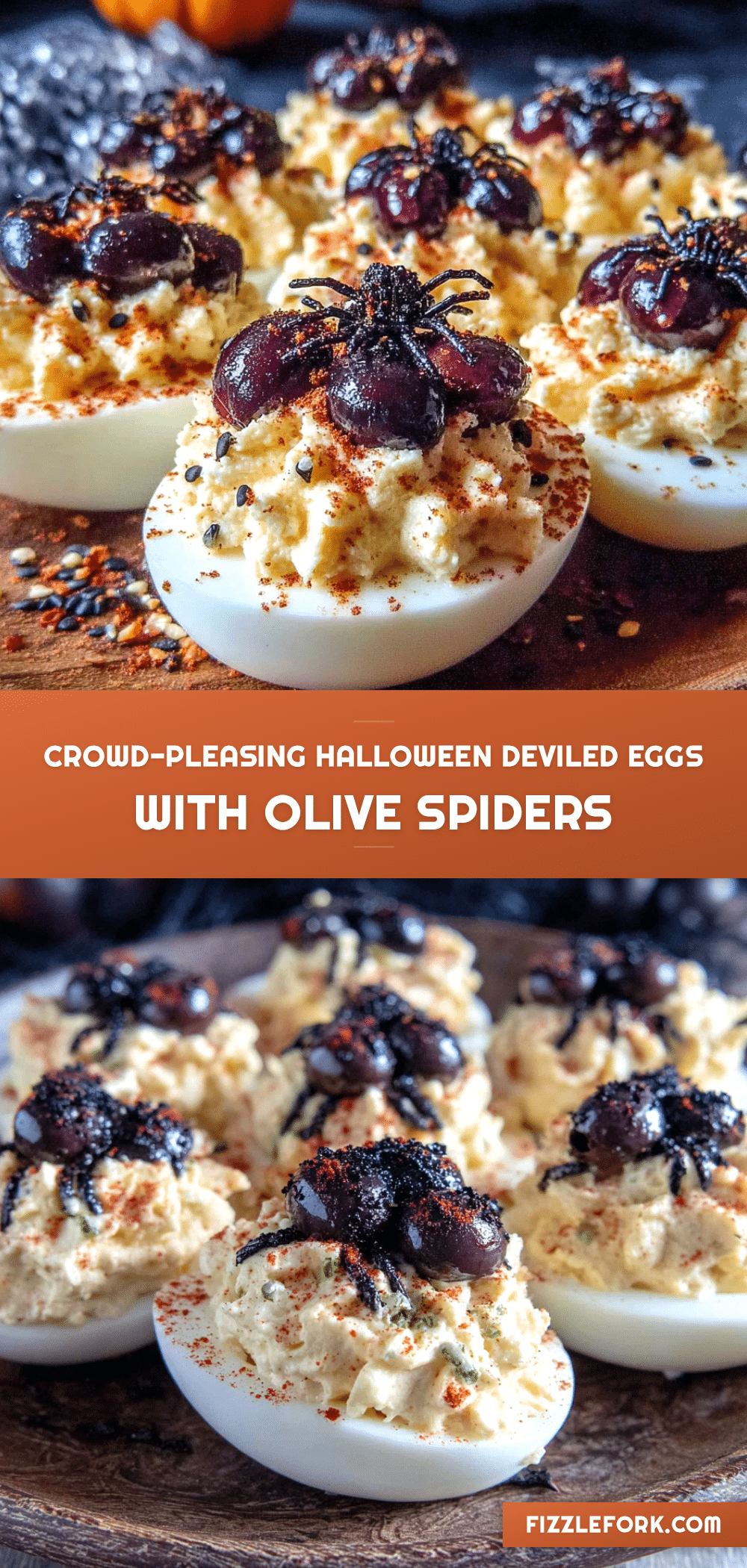
These Crowd-Pleasing Halloween Deviled Eggs with Olive Spiders aren’t just appetizers—they’re the centerpiece of any spooky gathering. They’re creepy, they’re delicious, and honestly, they’re the easiest way to steal the show at your Halloween party. I’ve brought them to potlucks, costume parties, and even my neighbor Karen’s annual pumpkin carving bash, and they disappear every single time. So grab your eggs and olives, and let me show you how to make the appetizer that’ll have everyone talking (and eating) all night long.
Why You’ll Love This Recipe
Let me tell you why these deviled eggs are about to become your go-to Halloween party trick. First off, they’re ridiculously easy to make. I’m talking about 30 minutes from start to finish, and most of that is just boiling eggs. You don’t need any fancy equipment or culinary school skills—just a pot, a bowl, and a little patience.
- Quick & Easy: Comes together in under 30 minutes, perfect for last-minute Halloween prep or when you realize the party’s tomorrow and you’ve got nothing to bring.
- Simple Ingredients: You probably already have everything in your kitchen right now. Eggs, mayo, mustard, paprika, and olives—that’s it. No weird specialty items or expensive garnishes.
- Perfect for Halloween Parties: These little guys are the life of the party. They look creepy enough to impress but taste so good nobody can stop eating them. Talk about a conversation starter!
- Crowd-Pleaser: I’ve watched kids squeal with delight and adults try to hide their excitement. Everyone loves a good deviled egg, and adding a spider on top? Pure genius.
- Unbelievably Delicious: The creamy, tangy filling paired with the briny olive spider creates this perfect bite that’s both familiar and surprising. It’s comfort food with a spooky twist.
What makes these different from every other deviled egg recipe out there? It’s the attention to detail. I’ve tested this recipe more times than I care to admit, and I’ve nailed down the exact ratios for a filling that’s smooth, rich, and perfectly seasoned. Plus, the olive spiders aren’t just for show—they add a salty pop that balances the creamy yolk perfectly. This isn’t just another deviled egg recipe; it’s the one that’ll have your friends asking for the recipe before the party’s even over.
These eggs are the kind of appetizer that makes you close your eyes after the first bite. They’re Halloween fun reimagined—spooky enough for the theme, but delicious enough to be the star of the spread. Perfect for impressing your guests without stressing yourself out, or turning a simple party snack into something memorable.
What Ingredients You Will Need
This recipe uses simple, everyday ingredients to create something truly special. The magic happens when these humble components come together—each one plays a crucial role in delivering that perfect balance of creamy, tangy, and savory.
For the Deviled Eggs
- 12 large eggs (room temperature works best for even cooking)
- 1/3 cup mayonnaise (I prefer Hellmann’s for its creamy texture and balanced tang)
- 2 teaspoons Dijon mustard (adds a subtle kick and helps emulsify the filling)
- 1 teaspoon white vinegar (brightens the flavor and cuts through the richness)
- 1/2 teaspoon salt (enhances all the other flavors)
- 1/4 teaspoon black pepper (freshly ground is always better)
- 1/2 teaspoon paprika (plus extra for garnish—smoked paprika adds a lovely depth)
- 1 tablespoon pickle juice (optional, but this is my secret ingredient for extra tanginess)
For the Olive Spiders
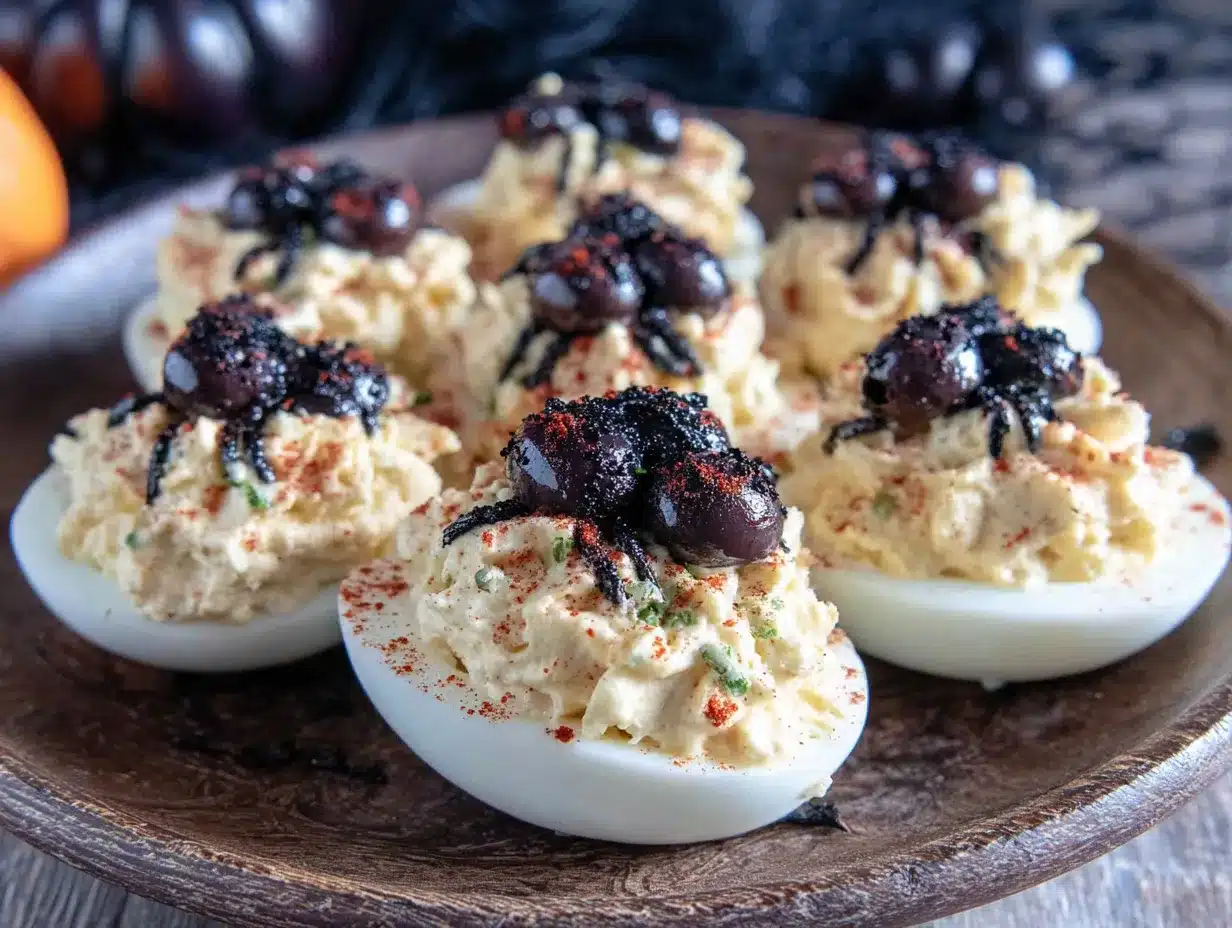
- 12 large black olives (pitted, whole olives work best for the spider bodies)
- 24 small black olives (pitted, sliced into thin rounds for the legs)
Ingredient Selection Tips
For the best results, use eggs that are at least a week old—they peel much easier than fresh eggs. I learned this the hard way after wrestling with stubborn shells for years. Look for large, uniform eggs so your deviled eggs look consistent on the platter.
When it comes to olives, I recommend Lindsay or Goya brands for their firm texture and consistent size. The large olives need to be whole and pitted so you can slice them properly into spider shapes. The small olives should be the regular pitted kind—not the jumbo or colossal ones, as those won’t look right proportionally.
Substitution Guidance
If you’re watching your calories, you can use light mayonnaise, but I find the full-fat version gives a much richer, more satisfying filling. For a dairy-free option, try vegan mayonnaise—just check the label to make sure it’s thick enough. You can swap the Dijon mustard for yellow mustard in a pinch, though the flavor will be slightly different. And if you don’t have white vinegar, apple cider vinegar works beautifully too.
Equipment Needed
You don’t need a professional kitchen to pull off these creepy crawlers. Here’s what you’ll need:
- Large pot (for boiling the eggs—make sure it’s big enough to hold all 12 eggs in a single layer)
- Medium mixing bowl (for combining the filling ingredients)
- Sharp knife (a paring knife works perfectly for slicing olives into spiders)
- Cutting board (preferably one with a groove to catch any olive juice)
- Measuring spoons (for precise seasoning)
- Fork or potato masher (for mashing the yolks—I’ve used both and prefer a fork for better control)
- Piping bag or zip-top bag (for filling the egg whites neatly; a zip-top bag with the corner snipped off works like a charm)
- Serving platter (something with a bit of a rim to keep the eggs from sliding around)
If you don’t have a piping bag, don’t worry. A simple zip-top bag does the job perfectly—just fill it, snip a tiny corner, and squeeze. I’ve been using this trick for years and it works every time. For the olive spiders, a sharp paring knife is essential; dull blades will squish the olives instead of slicing them cleanly.
One tip: invest in a good egg slicer if you make deviled eggs often. It’s not necessary for this recipe (you’ll be cutting the eggs lengthwise by hand), but it’s handy for other dishes. For today, just a steady hand and a sharp knife will do.
Preparation Method
Alright, let’s get cooking! Follow these steps carefully, and you’ll have a platter of spooky deviled eggs that’ll steal the show.
Step 1: Boil the Eggs
Place your 12 large eggs in a single layer in a large pot. Cover them with cold water by about an inch. Bring the water to a rolling boil over high heat. Once it’s boiling, turn off the heat, cover the pot, and let the eggs sit for exactly 12 minutes. This method gives you perfectly hard-boiled yolks without that nasty green ring around the yolk.
While the eggs are resting, prepare an ice bath—a large bowl filled with ice and cold water. After 12 minutes, transfer the eggs to the ice bath using a slotted spoon. Let them cool for at least 10 minutes. This shock treatment makes the shells practically fall off, I promise.
Step 2: Peel and Halve the Eggs
Gently tap each egg on the counter to crack the shell, then roll it between your palms to loosen the shell. Start peeling from the wider end where the air pocket is—it’s usually easier. Rinse any shell fragments off under cool running water. Pat the eggs dry with a paper towel.
Using a sharp knife, slice each egg lengthwise. Carefully pop out the yolks into a medium mixing bowl. Arrange the egg white halves on your serving platter, cut side up. If some tear or break, don’t worry—just hide them in the middle of the platter where nobody will notice.
Step 3: Make the Filling
Add the mayonnaise, Dijon mustard, white vinegar, salt, pepper, paprika, and pickle juice (if using) to the bowl with the yolks. Mash everything together with a fork until smooth and creamy. I like to mix it vigorously for about a minute to get that light, fluffy texture. Taste the filling and adjust the seasoning if needed—maybe a pinch more salt or an extra dash of paprika.
Step 4: Fill the Egg Whites
Spoon the filling into a piping bag or a zip-top bag with a small corner snipped off. Pipe the filling into each egg white half, using a gentle, steady pressure. You want a nice swirl that rises slightly above the edge of the egg white. If you don’t have a bag, you can spoon the filling in—just use a small spoon and mound it up nicely.
Step 5: Create the Olive Spiders
Now for the fun part! Take your 12 large black olives—these will be the spider bodies. Slice each large olive in half lengthwise, so you have two rounded pieces. Set these aside.
Take your 24 small black olives. Slice each one crosswise into thin rounds, about 1/8-inch thick. You should get about 4-5 slices per olive. These rounds will be the spider legs—you’ll need 8 legs per spider, so plan accordingly.
Step 6: Assemble the Spiders
Place one large olive half (cut side down) on top of each deviled egg, positioned slightly off-center toward one end. This is the spider’s body. Now, take 8 small olive rounds and arrange them as legs—4 on each side of the spider body, radiating outward like spider legs. Press them gently into the filling so they stay put.
For an extra creepy touch, you can add a tiny dot of paprika to each spider for “eyes.” Just dip a toothpick in paprika and dab it on the front of the olive body.
Step 7: Garnish and Serve
Sprinkle a light dusting of paprika over the entire platter for that finished look. Arrange the eggs on your serving platter in a circular pattern or in rows—whatever looks best to you. Serve immediately or refrigerate until you’re ready to wow your guests.
Cooking Tips & Techniques
After twelve batches of trial and error, I’ve picked up a few tricks that’ll save you time and frustration. Let me share them so you don’t make the same mistakes I did.
Perfect hard-boiled eggs every time: The key is the ice bath. I can’t stress this enough. Skipping the ice bath leads to overcooked yolks and stubborn shells. Also, use eggs that are at least a week old—fresh eggs are a nightmare to peel. I learned this after ruining three batches in a row.
Getting the filling just right: The texture should be smooth and creamy, not too thick or too runny. If your filling seems too dry, add a tiny splash of pickle juice or vinegar. If it’s too wet, add another yolk or a bit more paprika. Trust your instincts—you’ll know when it feels right.
Olive spider assembly: The biggest challenge is getting those olive legs to stay in place. Press them gently into the filling, but not so hard that they disappear. If your filling is too firm, let the eggs sit at room temperature for 10 minutes before adding the spiders—the filling will soften slightly and hold the legs better.
Timing and multitasking: Boil the eggs and make the filling while they cool. Then peel, halve, and fill while you slice the olives. This keeps the workflow smooth and efficient. I usually prep the olive spiders while the eggs are in the ice bath—it saves a good 10 minutes.
Consistency is key: For a uniform look, use a piping bag for the filling. It gives you control over the amount and shape. And when slicing the olives for legs, try to make them all the same thickness—it makes the spiders look more polished and professional.
Variations & Adaptations
One of the best things about this recipe is how easy it is to customize. Here are some variations I’ve tried that turned out surprisingly well:
Spicy Halloween Deviled Eggs
Add 1/2 teaspoon of hot sauce or a pinch of cayenne pepper to the filling for a spicy kick. The heat pairs beautifully with the briny olives. I tried this for a friend’s Halloween party and it was a hit with the spice lovers.
Avocado Deviled Eggs
Replace half the mayonnaise with mashed avocado for a creamier, greener filling. This version is a bit healthier and adds a subtle earthy flavor. Just be sure to add a squeeze of lemon juice to keep the avocado from browning.
Bacon-Wrapped Deviled Eggs
For the ultimate indulgence, wrap each deviled egg with a half-slice of cooked bacon before adding the spider. The salty, crispy bacon takes these to another level. I made these for a potluck and they were gone in 10 minutes flat.
Vegetarian and Gluten-Free
This recipe is naturally vegetarian and gluten-free, so no substitutions needed. Just double-check your mayonnaise and mustard labels to be sure they’re gluten-free—most are, but it’s worth confirming.
Make-Ahead Option
You can prepare the deviled eggs (without the olive spiders) up to 24 hours in advance. Store them in an airtight container in the refrigerator. Add the olive spiders just before serving to keep them looking fresh and crisp.
Serving & Storage Suggestions
These deviled eggs are best served chilled or at room temperature. I like to take them out of the refrigerator about 15 minutes before serving so they’re not ice-cold. Arrange them on a platter with a sprinkle of paprika and maybe some fresh parsley for a pop of color.
For a Halloween party, consider serving them alongside other spooky snacks like mummy hot dogs, pumpkin-shaped cheese balls, or ghost-shaped cookies. They pair wonderfully with a crisp white wine like Sauvignon Blanc or a light beer. For non-alcoholic options, try apple cider or sparkling water with a splash of cranberry juice.
Storage: Leftover deviled eggs can be stored in an airtight container in the refrigerator for up to 2 days. The olive spiders may soften slightly, but they’ll still taste great. I don’t recommend freezing deviled eggs—the texture of the filling changes and becomes watery when thawed.
Reheating: These are meant to be served cold, so no reheating needed. If you’ve stored them in the fridge, just let them sit at room temperature for 10-15 minutes before serving.
One thing I’ve noticed: the flavors actually develop and meld together beautifully after a few hours in the fridge. So if you can, make them the morning of your party—they’ll taste even better by evening.
Nutritional Information & Benefits
Here’s a rough estimate of the nutritional content per deviled egg (based on 24 servings):
| Nutrient | Amount per Serving |
|---|---|
| Calories | 65 |
| Protein | 5g |
| Fat | 4.5g |
| Carbohydrates | 1g |
| Fiber | 0g |
| Sugar | 0.5g |
| Sodium | 180mg |
Eggs are a fantastic source of high-quality protein and contain essential nutrients like vitamin D, vitamin B12, and choline. The olives add healthy monounsaturated fats and antioxidants. While deviled eggs aren’t exactly health food, they’re a relatively guilt-free indulgence compared to many party snacks.
This recipe is naturally low-carb and keto-friendly, making it a great option for guests with dietary restrictions. It’s also gluten-free and vegetarian. If you’re watching your sodium, you can use low-sodium olives or reduce the added salt in the filling.
Conclusion
There you have it—my tried-and-true recipe for Crowd-Pleasing Halloween Deviled Eggs with Olive Spiders. These little guys have become a tradition in my house, and I hope they become one in yours too. They’re creepy, they’re delicious, and honestly, they’re the easiest way to impress your Halloween guests without spending hours in the kitchen.
Don’t be afraid to make this recipe your own. Add a little extra spice, swap in avocado, or go wild with bacon—the possibilities are endless. The important thing is to have fun with it. After all, Halloween is all about creativity and a little bit of mischief.
I’d love to hear how yours turn out! Drop a comment below and let me know if your guests screamed with delight (or just screamed). Share your photos on Pinterest and tag me—I can’t wait to see your spooky creations. Happy Halloween, and happy cooking!
Frequently Asked Questions
Can I make these deviled eggs ahead of time?
Yes! You can prepare the deviled eggs (without the olive spiders) up to 24 hours in advance. Store them in an airtight container in the refrigerator. Add the olive spiders just before serving to keep them looking their best.
How do I keep the olive spiders from falling off?
Press the olive legs gently but firmly into the filling. If your filling is too firm, let the eggs sit at room temperature for 10 minutes before adding the spiders—this softens the filling slightly and helps the legs stay put.
Can I use different types of olives?
Absolutely! Green olives work well for a different look, though they’re a bit more briny. Kalamata olives add a richer flavor but are softer and harder to slice. Stick with black olives for the classic spider look.
How long do these deviled eggs last in the fridge?
They’ll keep for up to 2 days in an airtight container. The olive spiders may soften over time, but the flavor will still be great. I don’t recommend freezing them.
Can I make these without mayonnaise?
Yes! You can substitute mashed avocado, Greek yogurt, or hummus for the mayonnaise. Keep in mind that the texture and flavor will change, but it’s a great option if you’re avoiding mayo.
Pin This Recipe!
Crowd-Pleasing Halloween Deviled Eggs with Creepy Olive Spiders
These spooky deviled eggs topped with black olive spiders are the perfect Halloween party appetizer. Creamy, tangy, and easy to make, they’re sure to be a hit at any gathering.
- Prep Time: 15 minutes
- Cook Time: 12 minutes
- Total Time: 27 minutes
- Yield: 24 servings 1x
- Category: Appetizer
- Cuisine: American
Ingredients
- 12 large eggs
- 1/3 cup mayonnaise
- 2 teaspoons Dijon mustard
- 1 teaspoon white vinegar
- 1/2 teaspoon salt
- 1/4 teaspoon black pepper
- 1/2 teaspoon paprika (plus extra for garnish)
- 1 tablespoon pickle juice (optional)
- 12 large black olives (pitted, whole)
- 24 small black olives (pitted)
Instructions
- Place the eggs in a single layer in a large pot and cover with cold water by about an inch. Bring to a rolling boil over high heat, then turn off the heat, cover, and let sit for exactly 12 minutes.
- Prepare an ice bath. Transfer the eggs to the ice bath using a slotted spoon and let cool for at least 10 minutes.
- Peel the eggs, rinse off any shell fragments, and pat dry. Slice each egg lengthwise and pop out the yolks into a medium mixing bowl. Arrange the egg white halves on a serving platter.
- Add the mayonnaise, Dijon mustard, white vinegar, salt, pepper, paprika, and pickle juice (if using) to the bowl with the yolks. Mash together with a fork until smooth and creamy. Taste and adjust seasoning if needed.
- Spoon the filling into a piping bag or a zip-top bag with a small corner snipped off. Pipe the filling into each egg white half, creating a nice swirl.
- For the olive spiders: Slice each large olive in half lengthwise to create the spider bodies. Slice the small olives crosswise into thin rounds (about 1/8-inch thick) for the legs.
- Place one large olive half (cut side down) on top of each deviled egg, positioned slightly off-center. Arrange 8 small olive rounds as legs (4 on each side) radiating outward. Press gently into the filling.
- For extra creepiness, dip a toothpick in paprika and dab tiny ‘eyes’ on the front of each spider body. Sprinkle a light dusting of paprika over the platter. Serve immediately or refrigerate.
Notes
Use eggs that are at least a week old for easier peeling. The ice bath is crucial for perfect hard-boiled eggs. For best results, prepare the deviled eggs (without olive spiders) up to 24 hours in advance and add spiders just before serving. If filling is too firm, let eggs sit at room temperature for 10 minutes before adding spiders to help legs stay put.
Nutrition
- Serving Size: 1 deviled egg
- Calories: 65
- Sugar: 0.5
- Sodium: 180
- Fat: 4.5
- Saturated Fat: 1.5
- Carbohydrates: 1
- Protein: 5
Keywords: Halloween deviled eggs, olive spiders, spooky appetizer, party snack, deviled eggs recipe