My neighbor Carol wasn’t making a big deal of it. I’d stopped by to drop off a package that got delivered to my house by mistake, and the smell hit me before I even got to her front door. It was December, sure, but this wasn’t the usual pine-and-cinnamon candle situation. This was warm, creamy, and distinctly boozy—but not in a way that screamed “cocktail hour.” It smelled like Christmas had decided to take a nap in a saucepan.
Carol opened the door with a wooden spoon in her hand and a smear of something on her glasses. “Oh good, you’re here,” she said, like she’d been expecting me. She wasn’t. She was just the kind of person who assumes everyone shows up at the right time. “Taste this and tell me if it needs more nutmeg.”
I followed her into the kitchen, and let me tell you, the place was a wreck. Not in a dirty way—in a “someone is actually cooking” way. There was a whisk on the counter, a carton of eggs next to the stove, and a small saucepan with a gentle simmer happening. She ladled some into a mug, handed it to me, and went back to stirring like she was just making oatmeal.
That first sip stopped me cold. It was eggnog, obviously, but it was different. It was smoother, somehow. Richer. And there was none of that weird raw-egg guilt that usually comes with homemade nog. I asked her what she did, and she just shrugged and said, “Oh, I just cook it. It’s not a big deal.”
Honestly, that casualness stuck with me more than the drink itself. Here was someone making what I’d always thought was a complicated, risky holiday project, and she was treating it like scrambled eggs. So I watched. I asked questions. And I realized that quick cooked custard eggnog is maybe the easiest thing you’ll make this season—if you know what you’re doing. Maybe you’ve been avoiding homemade eggnog because of the raw egg thing. I get it. But this version? It’s safe, it’s fast, and it tastes like someone spent hours on it. Carol did it in about fifteen minutes.
I’ve been making it ever since, and I keep coming back to it because it’s one of those rare recipes that feels both special and completely unfussy. You don’t need a party. You don’t need a fancy punch bowl. You just need a saucepan, a whisk, and maybe someone to hand a mug to when you’re done.
Why You’ll Love This Recipe
Let’s be real for a second. Eggnog is one of those things people either buy in a carton or make from some elaborate recipe that involves separating eggs, beating whites to stiff peaks, and worrying about salmonella. This quick cooked custard eggnog skips all of that drama. It gives you the real deal—thick, creamy, spiced perfectly—without the stress or the raw eggs.
- Quick & Easy: You can have this on the table in under 20 minutes. No overnight chilling required (though it’s great chilled too). Perfect for when guests show up unexpectedly or you just want a cozy nightcap without the wait.
- Simple Ingredients: Eggs, milk, cream, sugar, vanilla, nutmeg. That’s it. No weird stabilizers, no condensed milk, no shortcuts that taste like shortcuts. You probably have everything already.
- Perfect for Holiday Gatherings: Whether it’s Christmas Eve, a cookie exchange, or just a random Tuesday in December, this eggnog fits. It’s fancy enough for a party but easy enough for a Tuesday.
- Crowd-Pleaser: I’ve served this to people who swear they hate eggnog. They don’t hate eggnog—they hate the carton stuff. This converts people. Every time.
- Unbelievably Delicious: The texture is what gets you. It’s not thin like store-bought. It’s not heavy like some custards. It’s that perfect middle ground—silky, rich, and just thick enough to coat the back of a spoon.
What makes this recipe different from the rest? It’s the technique. Most cooked eggnog recipes have you temper eggs slowly, which is fussy and easy to mess up. This method uses a quick custard approach—you cook the base directly, stirring constantly, and it comes together in minutes. No double boiler. No complicated steps. It’s the kind of recipe that makes you wonder why you ever bothered with the raw version.
And honestly? This is the kind of drink that makes you close your eyes after the first sip. It’s comfort in a mug—faster, safer, but with the same soul-soothing satisfaction as the old-fashioned kind. Perfect for impressing guests without breaking a sweat, or turning a quiet evening into something a little more special.
What Ingredients You Will Need
This recipe uses simple, wholesome ingredients to deliver that classic eggnog flavor without any fuss. Most of these are pantry staples, especially during the holiday season, so you’re probably already set.
- 4 large egg yolks — These are the heart of the custard. They give the eggnog its rich, velvety texture and that signature golden color. Save the whites for an omelet or meringue cookies.
- 1/2 cup granulated sugar — Just regular white sugar works perfectly. It sweetens the custard without overpowering the spices. If you want a deeper flavor, you can swap in light brown sugar, but it will change the color slightly.
- 2 cups whole milk — Whole milk is non-negotiable here for the creamiest result. Low-fat or skim will make a thinner, less satisfying nog. I personally prefer organic whole milk for the flavor, but any good-quality whole milk works.
- 1 cup heavy cream — This is what gives the eggnog that luxurious mouthfeel. Don’t substitute half-and-half if you can help it—the cream is what makes it feel indulgent. I like using local cream when I can find it, but any brand works.
- 1 teaspoon vanilla extract — Pure vanilla extract, not imitation. It adds warmth and depth that artificial vanilla just can’t match. If you have a vanilla bean, scraping the seeds into the milk while it heats is a lovely upgrade.
- 1/2 teaspoon freshly grated nutmeg — This is the star spice. Pre-ground nutmeg is fine in a pinch, but freshly grated is a game-changer. The aroma alone is worth the extra ten seconds. I use a Microplane for this.
- 1/4 teaspoon ground cinnamon — Adds a gentle warmth that complements the nutmeg without stealing the show. You can skip it if you’re a purist, but I think it rounds out the flavor nicely.
- Pinch of salt — Just a tiny pinch. Salt doesn’t make it salty—it brightens all the other flavors and balances the sweetness. Don’t skip it.
- Optional: 1-2 tablespoons bourbon, rum, or brandy — This is completely optional. Add it after cooking if you want a boozy version. For a non-alcoholic version that still feels grown-up, try a splash of vanilla extract or a dash of almond extract.
For the best texture, look for eggs that are fresh and at room temperature. Cold eggs can cause the custard to seize up when you add them to the hot milk. If your eggs are cold, just let them sit on the counter for 15 minutes before you start.
If you’re dairy-sensitive, you can substitute the whole milk with oat milk and the heavy cream with full-fat coconut cream. The flavor will be different—coconut cream adds a slight tropical note—but the texture will still be creamy and satisfying.
Equipment Needed
You don’t need a lot of fancy tools for this recipe, which is part of why I love it. Here’s what you’ll need:
- Medium saucepan — A heavy-bottomed saucepan is best. It distributes heat evenly and reduces the risk of scorching the milk. I use a 2-quart stainless steel pan and it works perfectly.
- Whisk — A standard wire whisk is essential. You’ll be whisking constantly while the custard cooks, so a good whisk makes the job easier. I prefer a balloon whisk for this—it gets into the corners of the pan better.
- Mixing bowl — A medium heat-safe bowl for whisking the egg yolks and sugar together. Glass or stainless steel works best.
- Fine-mesh strainer — This is optional but highly recommended. Straining the finished eggnog removes any tiny bits of cooked egg that might have formed, giving you a silky-smooth result. If you don’t have one, you can skip it—just be extra careful with your whisking.
- Measuring cups and spoons — For accuracy. Eyeballing it works for some recipes, but custard benefits from precision.
- Ladle or large spoon — For serving.
- Mugs or glasses — For drinking. Obviously.
If you don’t have a fine-mesh strainer, don’t worry. I’ve made this recipe dozens of times without straining, and it’s still delicious. The strainer just gives you that extra level of polish. Also, a Microplane is great for grating fresh nutmeg, but a regular grater works too.
Preparation Method
Let’s get to it. This comes together fast, so read through the steps once before you start. Trust me—you’ll be sipping eggnog before you know it.
- Combine the egg yolks and sugar. In your mixing bowl, whisk together the 4 egg yolks and 1/2 cup sugar until the mixture is pale yellow and slightly thickened. This should take about 1-2 minutes. You’ll know it’s ready when it forms a ribbon that holds its shape for a second when you lift the whisk. Don’t rush this step—the sugar needs to dissolve into the yolks for a smooth custard.
- Heat the milk and cream. Pour the 2 cups of whole milk and 1 cup of heavy cream into your saucepan. Add the pinch of salt. Heat over medium heat, stirring occasionally, until the mixture is hot but not boiling. You want to see steam rising and tiny bubbles forming around the edges—that’s the sweet spot. If it starts to boil, you’ve gone too far. Take it off the heat immediately and let it cool for a minute before proceeding.
- Temper the egg mixture. This is the crucial step. While whisking the egg yolk mixture constantly, slowly drizzle in about 1 cup of the hot milk mixture. Keep whisking the whole time. This gradually raises the temperature of the eggs so they don’t scramble when you add them to the pot. I know it sounds fussy, but it’s actually really simple—just pour slowly and whisk fast. If you’re nervous, have a friend pour while you whisk.
- Combine and cook. Pour the tempered egg mixture back into the saucepan with the remaining milk. Return the pan to medium-low heat. Now, here’s the key: whisk constantly. Don’t walk away. Don’t check your phone. Just keep that whisk moving, scraping the bottom and corners of the pan. You’re looking for the mixture to thicken enough to coat the back of a spoon. This usually takes about 5-7 minutes. If you run your finger across the coated spoon and it leaves a clean line, it’s ready.
- Remove from heat and add flavorings. Once the custard has thickened, take it off the heat immediately. Stir in the 1 teaspoon of vanilla extract, 1/2 teaspoon of freshly grated nutmeg, and 1/4 teaspoon of ground cinnamon. If you’re adding alcohol, stir it in now. The residual heat will help everything meld together.
- Strain (optional but recommended). Set your fine-mesh strainer over a clean bowl or a large measuring cup. Pour the eggnog through the strainer, using a spatula to push it through. This catches any tiny bits of cooked egg that might have formed. You’ll be left with a perfectly smooth, silky custard.
- Serve or chill. You can serve the eggnog warm right away, which is my personal favorite. Or you can let it cool to room temperature, then refrigerate it for at least 2 hours to serve cold. If you’re chilling it, cover the surface with plastic wrap to prevent a skin from forming. The eggnog will thicken a bit more as it cools.
A quick note: if your custard looks a little lumpy at any point, don’t panic. You can usually whisk out small lumps. If it’s really lumpy, just strain it—the strainer fixes everything. I’ve had a few close calls over the years, and straining has saved every single one.
Cooking Tips & Techniques
I’ve made this recipe enough times to have a few near-disasters, and I’ve learned something from each one. Here are the tips I wish someone had told me the first time.
Don’t rush the tempering. I know it’s tempting to just dump the hot milk into the eggs and hope for the best. I’ve done it. It didn’t end well. Scrambled eggnog is not a thing you want to experience. Take the extra 30 seconds to do it slowly. Your future self will thank you.
Low and slow is the way to go. When you’re cooking the custard, keep the heat at medium-low. High heat will curdle the eggs before the mixture has a chance to thicken properly. If you see steam rising aggressively or any bubbling, turn the heat down immediately. Patience here pays off in texture.
Use a thermometer if you’re nervous. The perfect custard temperature is around 170°F to 175°F. If you have an instant-read thermometer, use it. It takes the guesswork out of the process. Once it hits 170°F, you’re done. Take it off the heat.
Whisk from the bottom. The bottom of the pan is where custard likes to scorch. Make sure your whisk is scraping the bottom with every stroke. I use a figure-eight motion that covers the whole pan. It sounds dramatic, but it works.
If you mess up, strain it. I once got distracted by a phone call and ended up with a slightly lumpy custard. I strained it, added a little extra cream to thin it out, and nobody knew the difference. The strainer is your safety net.
Make it ahead for better flavor. If you have the time, make this eggnog a day ahead and let it chill overnight. The flavors meld and deepen, and the texture gets even creamier. It’s one of those rare recipes that actually improves with a little rest.
Double the batch. Seriously. This eggnog disappears fast. I always make a double batch now because single batches vanish before I get a second mug. It reheats beautifully, too—just warm it gently over low heat, stirring occasionally.
Variations & Adaptations
One of the best things about this quick cooked custard eggnog is how flexible it is. Here are some ways to make it your own.
Dairy-Free Version: Substitute the whole milk with full-fat oat milk and the heavy cream with full-fat coconut cream. The coconut flavor is subtle but noticeable, so this works best if you’re already a coconut fan. I’ve tried it with almond milk too, but it was too thin. Oat milk gives the best texture.
Spiced Eggnog: Add a cinnamon stick and a couple of whole cloves to the milk while it heats. Let them steep for 5 minutes, then remove them before adding the milk to the eggs. It gives the eggnog a warmer, more complex spice profile. I do this when I’m feeling fancy.
Chocolate Eggnog: Whisk in 2 tablespoons of unsweetened cocoa powder with the sugar and egg yolks. It turns into a chocolate-custard situation that’s absolutely decadent. My kids request this version year-round, not just during the holidays.
Vegan Version: Use 4 tablespoons of cornstarch mixed with 1/2 cup of the plant-based milk as a thickener instead of eggs. Whisk that into the milk mixture before heating. It won’t be quite as rich as the egg version, but it’s surprisingly good. I’ve served this to dairy-free friends and they were thrilled.
Boozy Variations: Beyond the standard bourbon, rum, or brandy, try spiced rum for a warmer flavor or Irish whiskey for a smoother finish. My personal favorite is a dark rum—it adds a molasses note that pairs beautifully with the nutmeg. Start with 1 tablespoon and adjust to taste.
Pumpkin Eggnog: Stir in 1/4 cup of pumpkin puree along with the vanilla and spices. Add an extra pinch of cinnamon and a dash of ginger. It’s like pumpkin pie in a glass, and it’s perfect for Thanksgiving.
Serving & Storage Suggestions
This eggnog is versatile when it comes to serving. Here’s how I like to do it.
Serving Temperature: Warm eggnog is my go-to on cold winter nights. Serve it in heatproof mugs with a sprinkle of fresh nutmeg on top. Cold eggnog is perfect for parties or warmer climates—just chill it for at least 2 hours and serve over ice if you like it extra cold. Both ways are delicious, honestly.
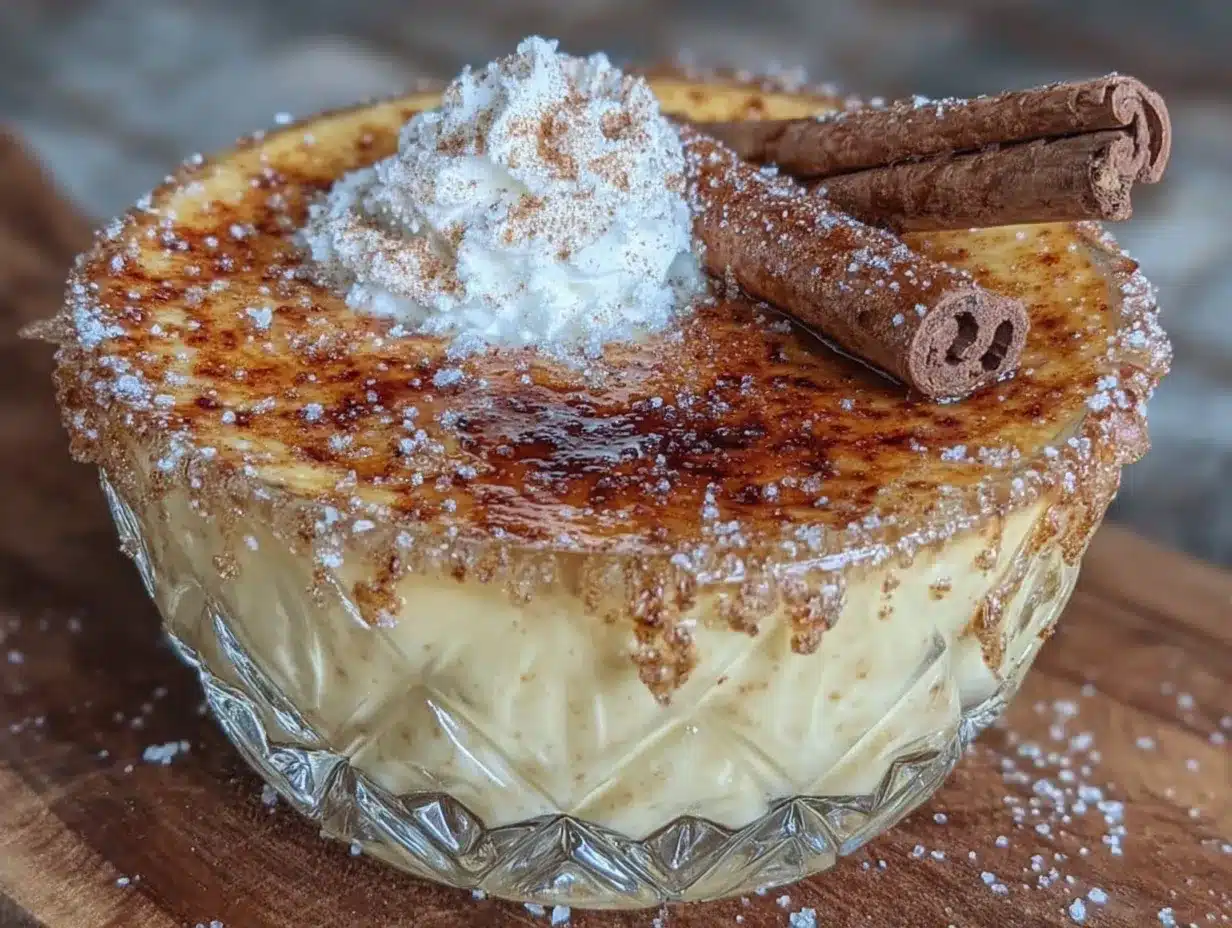
Presentation: For a festive touch, rim your glasses with a mixture of cinnamon and sugar. Dip the rim in a little water or maple syrup, then into the cinnamon-sugar mixture. Top each serving with a dollop of lightly sweetened whipped cream and a grating of fresh nutmeg. It looks like something from a fancy cocktail bar, but it takes about 30 seconds.
What to Serve With It: This eggnog pairs beautifully with gingerbread cookies, shortbread, or a slice of pound cake. For a boozy brunch, serve it alongside a plate of warm cinnamon rolls. It also works as a dessert on its own—it’s rich enough to satisfy a sweet tooth without being overwhelming.
Storage: Store leftover eggnog in an airtight container in the refrigerator for up to 4 days. The texture will thicken slightly as it sits, which I actually prefer. If it gets too thick, just stir in a splash of milk or cream to loosen it up.
Freezing: You can freeze this eggnog for up to 2 months. Pour it into a freezer-safe container, leaving about an inch of headspace for expansion. Thaw it in the refrigerator overnight, then whisk it well before serving. The texture might be slightly different after freezing, but it’s still delicious. I’ve frozen batches in ice cube trays for adding to coffee or hot chocolate—genius move, if I do say so myself.
Reheating: To reheat, warm the eggnog gently over low heat, stirring frequently. Don’t boil it, or it might curdle. You can also reheat individual servings in the microwave in 30-second bursts, stirring between each. I prefer the stovetop method for better control.
Flavor Development: The flavors really develop after a day in the fridge. The nutmeg and vanilla meld together, and the custard gets even creamier. If you can plan ahead, make this a day before you want to serve it. It’s worth the wait.
Nutritional Information & Benefits
Let’s be honest—this is a treat, not a health food. But it does have some redeeming qualities, especially compared to store-bought versions.
Estimated Nutritional Values (per 1-cup serving, without alcohol):
- Calories: 380
- Fat: 28g (17g saturated)
- Carbohydrates: 28g (27g sugar)
- Protein: 8g
- Calcium: 15% DV
- Vitamin D: 10% DV
- Vitamin A: 20% DV
Health Benefits: The eggs provide high-quality protein and essential vitamins like B12 and riboflavin. The milk and cream offer calcium and vitamin D for bone health. The nutmeg has been used traditionally for digestive health, though the amount here is small. Compared to store-bought eggnog, this version has no preservatives, no artificial flavors, and no high-fructose corn syrup. You control exactly what goes in.
Dietary Considerations: This recipe is naturally vegetarian and can be made gluten-free by ensuring your vanilla extract is gluten-free (most are). For a lower-sugar version, reduce the sugar to 1/3 cup or use a natural sweetener like monk fruit. The texture will be slightly different, but it still works. For a lower-fat version, substitute the heavy cream with half-and-half, but expect a thinner result.
Allergens: This recipe contains dairy and eggs. For dairy-free or egg-free options, see the variations section above.
I personally appreciate that this eggnog feels indulgent without being loaded with weird ingredients. It’s real food, made simply. And honestly, a little bit of indulgence is good for the soul, especially during the holidays.
Conclusion
This quick cooked custard eggnog has become a staple in my kitchen, and I think it’ll become one in yours too. It’s everything you want from eggnog—creamy, rich, perfectly spiced—without the worry of raw eggs or the hassle of complicated techniques. It comes together in about 15 minutes, it uses ingredients you probably already have, and it tastes like you spent hours on it.
What I love most about this recipe is how forgiving it is. The first time I made it, I was nervous about curdling the eggs. I whisked like my life depended on it. And you know what? It turned out perfect. Every time since then has been just as good, even when I’ve been distracted or rushed. It’s a recipe that works with you, not against you.
I really hope you try this. Whether you serve it warm on a cold December night or chilled at a holiday party, it’s the kind of recipe that makes people smile. And if you make it your own—add a little extra nutmeg, a splash of your favorite bourbon, or a dollop of whipped cream—that’s even better. Recipes are meant to be adapted, after all.
If you make this quick cooked custard eggnog, I’d love to hear about it. Leave a comment below and let me know how it turned out. Did you add anything special? Serve it with something amazing? I read every comment, and your feedback helps me create better recipes for all of us.
Until next time, happy cooking—and happy sipping.
Frequently Asked Questions
Can I use low-fat milk instead of whole milk?
You can, but the texture won’t be as rich and creamy. Whole milk gives the eggnog its signature velvety mouthfeel. If you’re watching calories, try using 2% milk with the full amount of heavy cream—that’s a good compromise.
How do I know when the custard is thick enough?
The best test is the spoon-coating test. Dip a spoon into the custard and run your finger across the back. If the line holds cleanly without the custard running back together, it’s ready. Alternatively, use an instant-read thermometer—170°F to 175°F is the sweet spot.
Can I make this without a thermometer?
Absolutely. I made it for years without one. Just watch for visual cues: the mixture should steam gently, never boil, and it should visibly thicken after about 5-7 minutes of whisking. When it coats the back of a spoon, you’re done.
Why did my eggnog turn out lumpy?
Lumps usually mean the eggs cooked too quickly. This can happen if the heat was too high or if you added the hot milk too fast. Don’t worry—just pour the lumpy custard through a fine-mesh strainer. It’ll come out smooth and delicious. Then next time, use lower heat and whisk more constantly.
How long does homemade eggnog last in the fridge?
Homemade cooked eggnog will keep for 4-5 days in an airtight container in the refrigerator. The flavor actually improves after a day or two as the spices meld. If it thickens too much during storage, just stir in a splash of milk or cream before serving.
Pin This Recipe!
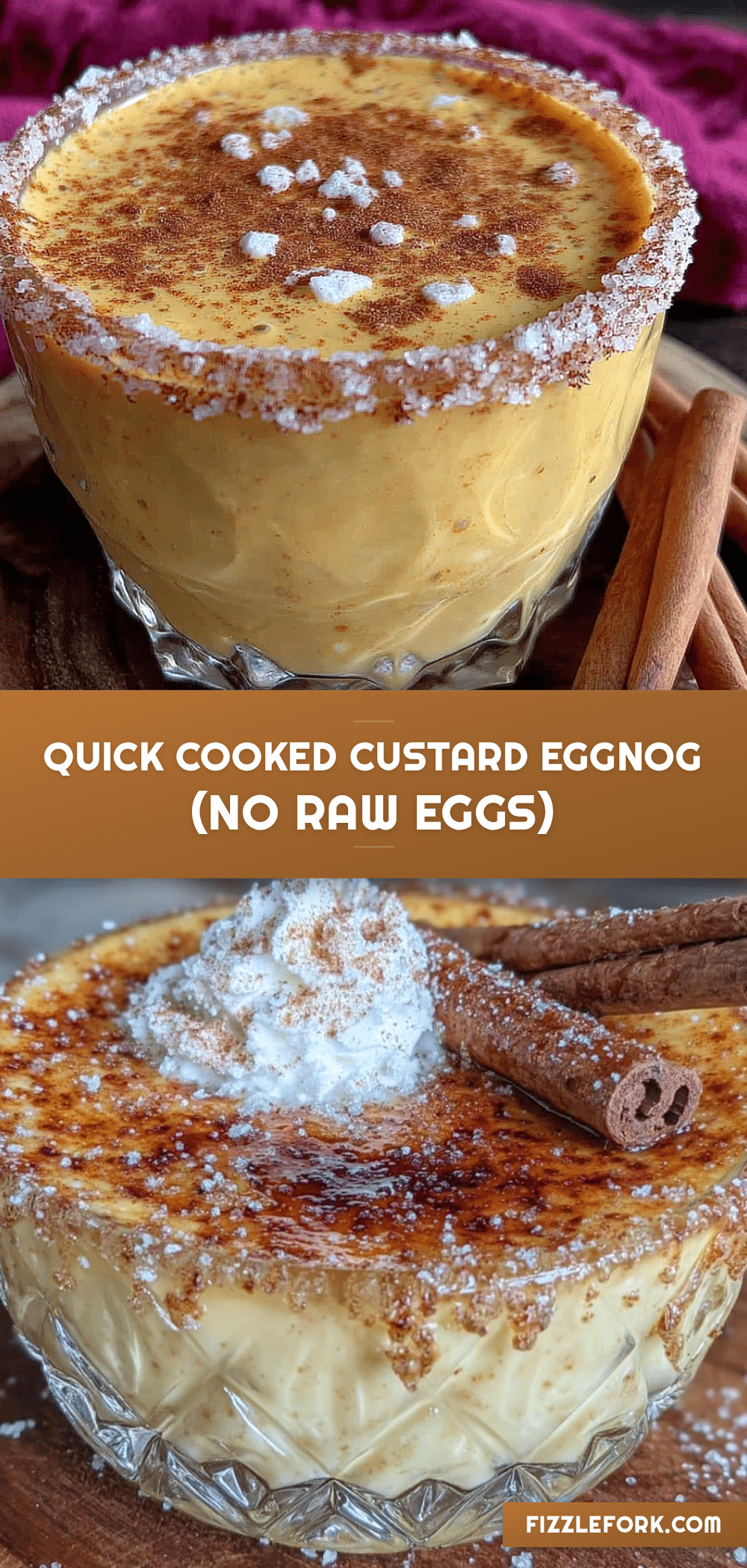
Quick Cooked Custard Eggnog: Best Easy No Raw Eggs Recipe

This quick cooked custard eggnog is creamy, rich, and perfectly spiced without the worry of raw eggs. It comes together in about 15 minutes using simple ingredients, and tastes like you spent hours on it.
- Prep Time: 10 minutes
- Cook Time: 10 minutes
- Total Time: 20 minutes
- Yield: 4 servings 1x
- Category: Beverage
- Cuisine: American
Ingredients
- 4 large egg yolks
- 1/2 cup granulated sugar
- 2 cups whole milk
- 1 cup heavy cream
- 1 teaspoon vanilla extract
- 1/2 teaspoon freshly grated nutmeg
- 1/4 teaspoon ground cinnamon
- Pinch of salt
- Optional: 1-2 tablespoons bourbon, rum, or brandy
Instructions
- In a mixing bowl, whisk together the 4 egg yolks and 1/2 cup sugar until pale yellow and slightly thickened, about 1-2 minutes.
- In a medium saucepan, combine 2 cups whole milk, 1 cup heavy cream, and a pinch of salt. Heat over medium heat until hot but not boiling (steam rising and tiny bubbles around edges).
- While whisking the egg yolk mixture constantly, slowly drizzle in about 1 cup of the hot milk mixture to temper the eggs.
- Pour the tempered egg mixture back into the saucepan with the remaining milk. Return to medium-low heat and whisk constantly until the mixture thickens enough to coat the back of a spoon, about 5-7 minutes.
- Remove from heat and stir in 1 teaspoon vanilla extract, 1/2 teaspoon freshly grated nutmeg, and 1/4 teaspoon ground cinnamon. If using alcohol, stir it in now.
- Optional: Strain the eggnog through a fine-mesh strainer into a clean bowl or measuring cup for a silky smooth texture.
- Serve warm immediately, or let cool to room temperature and refrigerate for at least 2 hours to serve cold.
Notes
For best texture, use room temperature eggs. If custard becomes lumpy, strain through a fine-mesh strainer. The eggnog thickens as it cools; stir in a splash of milk or cream if needed. Make ahead for better flavor—the spices meld overnight.
Nutrition
- Serving Size: 1 cup
- Calories: 380
- Sugar: 27
- Sodium: 100
- Fat: 28
- Saturated Fat: 17
- Carbohydrates: 28
- Protein: 8
Keywords: eggnog, cooked eggnog, custard eggnog, no raw eggs, quick eggnog, holiday drink, Christmas drink