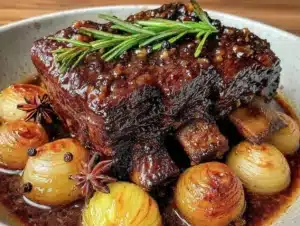
This was supposed to be a roast chicken. A simple, perfectly browned bird for a quiet Thanksgiving for two—our first holiday after moving across the country. But the grocery store was a disaster zone, the poultry section picked clean by the time I got there. I grabbed a package of bone-in beef short ribs out of desperation, grumbling about the lack of options. The oven was already preheated to the wrong temperature, and I was already stressed, standing in my tiny rental kitchen missing my mom’s familiar setup. What came out of that oven three hours later was nothing like the plan—and better. The meat was so tender it fell off the bone with a gentle nudge from a fork. The sauce was dark, rich, and glossy, filling the apartment with a smell that felt like a hug. I plated it next to some mashed potatoes I’d thrown together, and we sat down to a Thanksgiving that looked nothing like the Norman Rockwell picture. Honestly, it was the best one we’ve ever had. That night, I learned that tradition is overrated, and the best meals often come from letting go of the plan. Maybe you’ve been there—staring at a cart full of ingredients you didn’t come for, feeling like you’ve already failed. Let me tell you, it might just be the start of something delicious. These braised short ribs became my signature holiday dish, the one friends now request for their own non-traditional celebrations.
Why You’ll Love This Recipe
This isn’t just another beef recipe. After testing this dish for three different holiday gatherings, tweaking the liquid ratio and the oven temperature each time, I can confidently say this version is the sweet spot. It’s the dish that convinced my turkey-loving uncle to switch sides.
- Quick & Easy: Don’t let the word “braise” scare you. After a quick sear, the oven does all the heavy lifting. It’s hands-off cooking at its finest.
- Simple Ingredients: You likely have onion, garlic, and tomato paste in your pantry. The short ribs are the star, and a decent bottle of red wine does the rest.
- Perfect for a Non-Traditional Thanksgiving: This is the centerpiece for anyone who wants to skip the dry turkey drama. It feels special without the stress.
- Crowd-Pleaser: I’ve served this to a table of eight, and every single plate came back clean. The rich, savory sauce is a universal language.
- Unbelievably Delicious: The texture is what gets you. The meat becomes almost buttery, and the sauce coats every bite with deep, beefy, wine-infused flavor.
What makes this different is the technique of searing the ribs in batches to get a proper crust, then deglazing the pan with a splash of the wine before adding everything else. It’s a small step, but it builds a foundation of flavor that you can’t get by just dumping everything in a pot. This is comfort food at its most soul-soothing—rich, slow-cooked, and made for sharing with the people who matter most.
What Ingredients You Will Need
This recipe uses a handful of high-impact ingredients to create a sauce that tastes like it simmered all day. Most are pantry staples, but a few key players make all the difference.
- Bone-in Beef Short Ribs (4-5 pounds): Look for ribs that are well-marbled with a good amount of meat on the bone. I prefer the English-cut style for this recipe. Ask your butcher for “flanken” cut if you want a thinner, Korean-style rib, but for braising, the thick English cut is best.
- Kosher Salt and Freshly Ground Black Pepper: Don’t skimp here. Season the ribs generously on all sides before searing. It’s the foundation of the entire dish.
- Olive Oil (2 tablespoons): Use a good quality oil for searing. Avocado oil works too if you prefer a higher smoke point.
- Large Yellow Onion (1, diced): A sweet onion like Vidalia also works. The onion melts into the sauce, adding sweetness and body.
- Carrots (2, diced): These add a subtle sweetness and help thicken the sauce as they break down.
- Celery Stalks (2, diced): The classic aromatic base. Don’t skip it—it adds a savory depth that balances the richness of the beef.
- Garlic Cloves (6, minced): Fresh garlic is non-negotiable here. The jarred stuff just won’t give you the same punch.
- Tomato Paste (3 tablespoons): I recommend the double-concentrated kind in a tube—it’s more intense and you don’t waste a whole can. It adds umami and color to the sauce.
- All-Purpose Flour (2 tablespoons): This helps thicken the braising liquid into a luscious sauce. For a gluten-free option, use a 1:1 gluten-free flour blend.
- Dry Red Wine (2 cups): Use something you’d actually drink. A Cabernet Sauvignon, Merlot, or a Côtes du Rhône works beautifully. Avoid anything labeled “cooking wine.”
- Beef Broth (2 cups): Low-sodium is best so you can control the salt level. Swanson’s or Kitchen Basics are my go-to brands for consistent flavor.
- Fresh Thyme Sprigs (4-5): These add an earthy, floral note that complements the beef perfectly. Dried thyme works in a pinch, but fresh is much better here.
- Bay Leaves (2): A classic braising herb. Remove them before serving—they’re not meant to be eaten.
- Red Wine Vinegar (1 tablespoon): Added at the end, this brightens the sauce and cuts through the richness. It’s the secret to a balanced braise.
Equipment Needed
You don’t need a professional kitchen to pull this off, but a few tools make the process much smoother.
- Dutch Oven (6-7 quart): This is the star of the show. A heavy-bottomed pot with a tight-fitting lid is essential for even heat distribution. I use a Le Creuset, but a Lodge cast iron dutch oven is a fantastic budget-friendly alternative that works just as well.
- Sharp Chef’s Knife: You’ll be dicing vegetables and trimming any large fat caps off the ribs. A dull knife is dangerous and frustrating.
- Cutting Board: A large wooden or plastic board gives you room to work.
- Tongs: For searing the ribs and flipping them without piercing the meat.
- Wooden Spoon or Silicone Spatula: For scraping up the browned bits from the bottom of the pot after deglazing.
- Measuring Cups and Spoons: Accuracy matters, especially with the liquid ratios.
Pro Tip: If you don’t have a dutch oven, you can use a large, heavy-bottomed pot with a lid. You can also sear the ribs in a skillet, then transfer everything to a roasting pan and cover tightly with foil for the oven. It works, but you’ll lose some of the fond (those brown bits) if you’re not careful.
Preparation Method
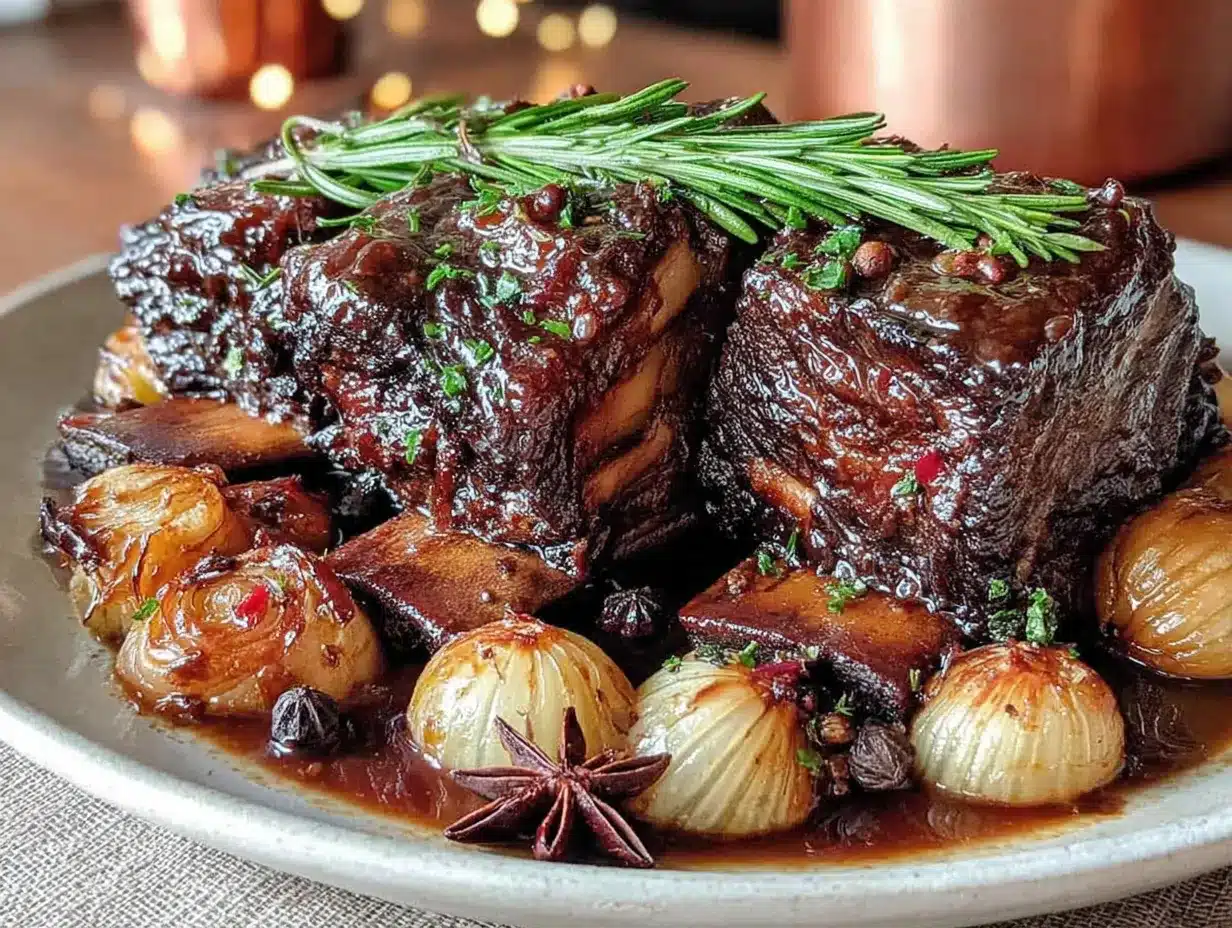
Set yourself up for success. Read through the steps once before you start. This is a slow process, but the active work is only about 20 minutes.
- Preheat and Prep (5 minutes): Preheat your oven to 325°F (160°C). Take the short ribs out of the fridge 20 minutes before cooking to take the chill off. Pat them completely dry with paper towels—this is crucial for a good sear. Season them generously on all sides with kosher salt and black pepper.
- Sear the Ribs (15 minutes): Heat 2 tablespoons of olive oil in your dutch oven over medium-high heat until it shimmers. Working in batches (don’t crowd the pot), sear the ribs for 3-4 minutes per side until deeply browned. You want a dark, mahogany crust, not just a pale tan. Transfer the seared ribs to a plate. Sensory cue: You should hear a loud, steady sizzle. If it’s quiet, the pan isn’t hot enough.
- Sweat the Aromatics (8 minutes): Reduce the heat to medium. Add the diced onion, carrots, and celery to the pot. Cook, stirring occasionally, for 5-6 minutes until the vegetables soften and the onion becomes translucent. Add the minced garlic and cook for 1 more minute until fragrant. Don’t let the garlic burn—it turns bitter.
- Build the Base (3 minutes): Add the tomato paste and flour to the vegetables. Stir constantly for 2 minutes. The paste will darken and the flour will coat the vegetables. This cooks out the raw flour taste and deepens the tomato flavor.
- Deglaze the Pot (2 minutes): Pour in about 1/2 cup of the red wine. Use your wooden spoon to scrape up all the browned bits from the bottom of the pot—that’s pure flavor. Let the wine bubble and reduce by half, then add the remaining 1.5 cups of wine and the beef broth.
- Return the Ribs (2 minutes): Nestle the seared short ribs back into the pot, arranging them in a single layer if possible. They should be mostly submerged in liquid. Add the thyme sprigs and bay leaves. Bring the liquid to a gentle simmer on the stovetop.
- Braise (2.5 – 3 hours): Cover the pot with the lid and transfer it to the preheated oven. Let it cook undisturbed for 2.5 hours. Check at the 2-hour mark—the meat should be pulling away from the bone. If it’s still firm, give it another 30 minutes. The ideal texture is “fork-tender,” meaning a fork slides in with zero resistance.
- Finish and Serve (10 minutes): Carefully remove the pot from the oven. Use tongs to transfer the ribs to a serving platter and tent loosely with foil. Discard the thyme sprigs and bay leaves. Skim off any excess fat from the surface of the sauce with a spoon. Place the pot on the stovetop over medium heat. Stir in the red wine vinegar and let the sauce simmer for 5-7 minutes to thicken slightly. Taste and adjust seasoning with salt and pepper.
Personal Tip: I once forgot to skim the fat, and the sauce was an oily mess. Don’t skip this step—it makes the final dish look and taste so much cleaner.
Cooking Tips & Techniques
After making this dish more times than I can count, I’ve learned a few things the hard way. Let me save you the trouble.
Don’t Skip the Sear: I know it’s tempting to just dump everything in the pot and walk away. But that browning step is where the magic happens. It’s called the Maillard reaction, and it creates hundreds of flavor compounds that make the final dish taste deeply savory. If you rush this, you’ll end up with gray, bland meat.
The Wine Matters: The first time I made this, I used a cheap bottle of red that I wouldn’t drink. The sauce was thin and acidic. Use a wine you enjoy—it doesn’t have to be expensive, but it should be drinkable. A $12 bottle of Cabernet from a decent brand is perfect.
Patience is a Virtue: The biggest mistake I made early on was pulling the ribs out too early. They need time for the connective tissue to break down into gelatin. If the meat is still tough, it needs more time. Don’t rush the oven time. Trust the process.
Multitasking Strategy: While the ribs are braising, you have 2.5 hours of free time. This is the perfect window to make mashed potatoes, roast some root vegetables, or set the table. I usually make a batch of my creamy garlic mashed potatoes while the oven is doing its thing.
Consistency is Key: If your sauce is too thin after braising, you can make a cornstarch slurry (1 tablespoon cornstarch mixed with 2 tablespoons cold water) and whisk it in while the sauce simmers. If it’s too thick, add a splash of beef broth.
Variations & Adaptations
This recipe is forgiving and easy to adapt to different dietary needs or flavor preferences.
1. Low-Carb / Keto-Friendly: Skip the flour. Instead, thicken the sauce with a teaspoon of xanthan gum or simply let it reduce longer on the stovetop. The flavor will still be incredible.
2. Dairy-Free / Paleo: This recipe is naturally dairy-free! Just use a paleo-friendly flour like arrowroot powder or cassava flour in place of the all-purpose flour. The rest of the ingredients are already compliant.
3. Spicy Twist: Add 2 dried chipotle peppers or 1 teaspoon of smoked paprika along with the tomato paste. The smoky heat pairs beautifully with the rich beef. I tried this for a friend who loves spice, and it was a huge hit.
4. Herb Swap: Don’t have thyme? Use 2 sprigs of fresh rosemary or 1 teaspoon of dried oregano. The flavor profile shifts slightly, but it’s still delicious.
5. Slow Cooker Method: After searing the ribs and sweating the vegetables on the stovetop, transfer everything (including the liquid) to a slow cooker. Cook on low for 8 hours or on high for 4-5 hours. The texture will be just as tender.
6. Make it a Stew: After braising, remove the meat from the bones, cut it into large chunks, and return it to the sauce. Add some diced potatoes and carrots, and simmer for 20 minutes. You’ve got a hearty beef stew.
Serving & Storage Suggestions
These short ribs are best served hot, right out of the pot. The sauce should be glossy and thick enough to coat the back of a spoon.
Serving Temperature and Presentation: Serve the ribs on a large, warm platter. Spoon the sauce generously over the top. Garnish with a sprinkle of fresh thyme leaves or chopped parsley for a pop of color. A pinch of flaky sea salt right before serving adds a nice textural contrast.
Complementary Dishes: This dish is rich, so pair it with something to cut through the fat. I love serving it with honey balsamic roasted carrots for a sweet and tangy side. Creamy polenta or mashed potatoes are classic choices for soaking up the sauce. A simple green salad with a vinaigrette also works beautifully.
Beverage Pairing: Pour the same red wine you used for cooking. A full-bodied Cabernet Sauvignon or a smooth Malbec is perfect.
Storage Instructions: Store leftover short ribs in an airtight container in the refrigerator for up to 4 days. The flavors actually deepen overnight, making leftovers even better. To freeze, place the cooled ribs and sauce in a freezer-safe container. They’ll keep for up to 3 months. Thaw overnight in the refrigerator before reheating.
Reheating Methods: The best way to reheat is low and slow. Place the ribs and sauce in a covered pot on the stovetop over low heat for 15-20 minutes, stirring occasionally. You can also reheat in a 300°F (150°C) oven for 20 minutes. Avoid the microwave—it tends to toughen the meat.
Flavor Development: This is one of those dishes that tastes better the next day. The sauce gets even richer as the flavors meld together in the fridge. I often make it a day ahead of time on purpose.
Nutritional Information & Benefits
This is a hearty dish, but it also offers some nutritional perks. The following values are estimates per serving (based on 6 servings, including the sauce).
| Nutrient | Amount Per Serving |
|---|---|
| Calories | 620 |
| Protein | 45g |
| Fat | 38g |
| Saturated Fat | 15g |
| Carbohydrates | 12g |
| Fiber | 2g |
| Sugar | 6g |
| Sodium | 780mg |
Health Benefits: Beef short ribs are a good source of high-quality protein, iron, and zinc, which support muscle health and immune function. The carrots and celery provide vitamin A and fiber. The red wine (in moderation) contains antioxidants like resveratrol. This dish is naturally gluten-free if you use a gluten-free flour substitute.
Dietary Considerations: This recipe is dairy-free and can be made gluten-free and paleo with simple swaps. It is not suitable for a low-fat diet due to the natural fat content of the beef. The primary allergen is wheat (from the flour) unless substituted.
Personal Wellness Perspective: For me, this dish is about balance. It’s not an everyday meal, but for a special occasion like Thanksgiving, it’s exactly what the soul needs. I pair it with a big green salad and don’t feel the least bit guilty about going back for seconds.
Frequently Asked Questions
Can I use boneless short ribs?
Yes, you can. Boneless short ribs will cook a bit faster, so start checking for tenderness at the 2-hour mark. They may also be a little less flavorful since the bone adds depth to the sauce. If using boneless, try to find well-marbled pieces.
How do I make this recipe in an Instant Pot?
Use the sauté function to sear the ribs and cook the vegetables. Add all the liquid and ingredients, then pressure cook on high for 45 minutes. Allow for a natural release for 15 minutes. The sauce will be thinner, so you’ll need to thicken it on the sauté setting for 5-10 minutes.
Can I make this ahead of time for Thanksgiving?
Absolutely. In fact, I recommend it. Make the dish up to three days in advance, let it cool, and store it in the refrigerator. On the day of serving, reheat it gently on the stovetop or in a 300°F (150°C) oven. The flavors will be even better.
What if I don’t have red wine?
You can substitute the red wine with an equal amount of beef broth plus 2 tablespoons of balsamic vinegar for acidity. It won’t have the same depth, but it will still be delicious. For a non-alcoholic version, use a non-alcoholic red wine or a combination of beef broth and pomegranate juice.
How do I prevent the meat from being dry?
The key is not to overcook it. Braise it until it’s fork-tender, but don’t let it go too long past that point. The meat should be moist and falling apart, not dry and stringy. Also, make sure the ribs are mostly submerged in the braising liquid during cooking.
Conclusion
This recipe taught me that the best traditions are the ones we create for ourselves. That first, accidental Thanksgiving with braised short ribs changed how I think about holiday cooking. It’s not about the perfect turkey or the flawless table setting. It’s about the warmth of the meal and the people sharing it. These short ribs are forgiving, deeply flavorful, and they make any occasion feel special without the stress. I love that I can make them ahead of time, so I’m actually relaxed when my guests arrive. I encourage you to make this recipe your own. Swap the herbs, adjust the wine, serve it over your favorite mash. Don’t be afraid to break the rules a little. If you make these for your own non-traditional Thanksgiving, I’d love to hear about it. Drop a comment below or tag me in your photos. And if you’re looking for another cozy side dish to round out the meal, try my roasted butternut squash with sage. Happy cooking, and here’s to making your own traditions.
Pin This Recipe!
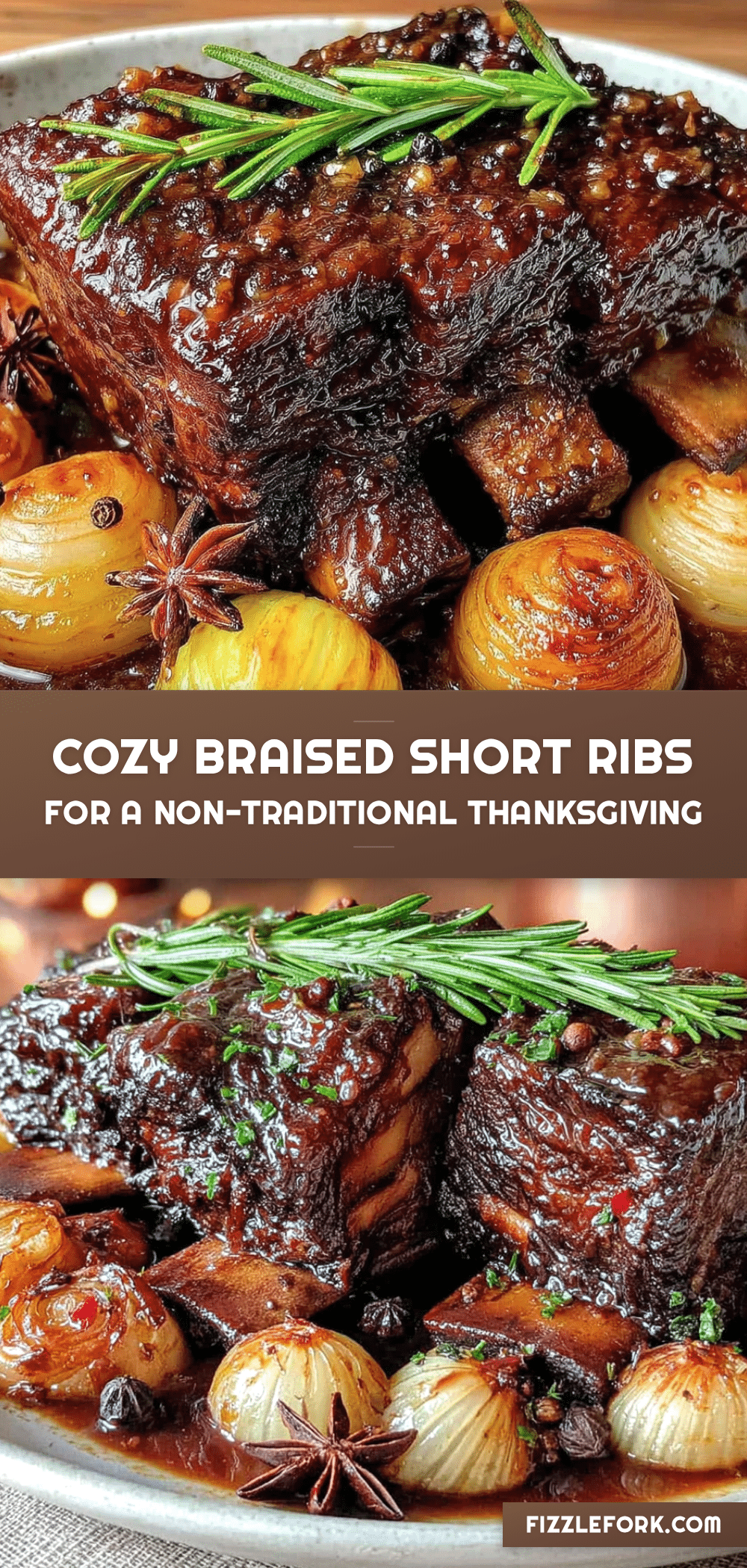
Best Easy Cozy Braised Short Ribs for Thanksgiving Dinner
Tender, fall-off-the-bone beef short ribs braised in a rich red wine sauce. This forgiving, deeply flavorful dish is perfect for a non-traditional Thanksgiving or any special occasion, and it can be made ahead of time for stress-free entertaining.
- Prep Time: 20 minutes
- Cook Time: 3 hours
- Total Time: 3 hours 20 minutes
- Yield: 6 servings 1x
- Category: Main Course
- Cuisine: American
Ingredients
- 4–5 pounds bone-in beef short ribs (English-cut)
- Kosher salt and freshly ground black pepper, to taste
- 2 tablespoons olive oil
- 1 large yellow onion, diced
- 2 carrots, diced
- 2 celery stalks, diced
- 6 garlic cloves, minced
- 3 tablespoons tomato paste (double-concentrated preferred)
- 2 tablespoons all-purpose flour (or 1:1 gluten-free flour blend)
- 2 cups dry red wine (Cabernet Sauvignon, Merlot, or Côtes du Rhône)
- 2 cups low-sodium beef broth
- 4–5 fresh thyme sprigs
- 2 bay leaves
- 1 tablespoon red wine vinegar
Instructions
- Preheat oven to 325°F (160°C). Remove short ribs from fridge 20 minutes before cooking. Pat ribs completely dry with paper towels and season generously on all sides with kosher salt and black pepper.
- Heat olive oil in a 6-7 quart Dutch oven over medium-high heat until shimmering. Working in batches, sear ribs for 3-4 minutes per side until deeply browned (mahogany crust). Transfer seared ribs to a plate.
- Reduce heat to medium. Add diced onion, carrots, and celery to the pot. Cook, stirring occasionally, for 5-6 minutes until vegetables soften and onion is translucent. Add minced garlic and cook for 1 minute until fragrant.
- Add tomato paste and flour to vegetables. Stir constantly for 2 minutes until paste darkens and flour coats vegetables.
- Pour in about 1/2 cup of the red wine. Use a wooden spoon to scrape up browned bits from bottom of pot. Let wine bubble and reduce by half, then add remaining 1.5 cups wine and beef broth.
- Nestle seared short ribs back into pot in a single layer. Add thyme sprigs and bay leaves. Bring liquid to a gentle simmer on stovetop.
- Cover pot with lid and transfer to preheated oven. Braise for 2.5-3 hours, until meat is fork-tender and pulling away from bone. Check at 2-hour mark.
- Carefully remove pot from oven. Transfer ribs to a serving platter and tent loosely with foil. Discard thyme sprigs and bay leaves. Skim excess fat from sauce surface. Place pot on stovetop over medium heat, stir in red wine vinegar, and simmer for 5-7 minutes to thicken slightly. Taste and adjust seasoning with salt and pepper.
Notes
Don’t skip searing the ribs—it creates deep flavor through the Maillard reaction. Use a wine you’d drink; avoid cooking wine. For gluten-free, substitute flour with 1:1 gluten-free flour blend. For a slow cooker, sear ribs and sweat vegetables on stovetop, then transfer everything to slow cooker and cook on low for 8 hours or high for 4-5 hours. Leftovers keep for up to 4 days in the refrigerator or 3 months in the freezer. Reheat low and slow on stovetop or in oven; avoid microwave.
Nutrition
- Serving Size: 1 serving (about 2 r
- Calories: 620
- Sugar: 6
- Sodium: 780
- Fat: 38
- Saturated Fat: 15
- Carbohydrates: 12
- Fiber: 2
- Protein: 45
Keywords: braised short ribs, beef short ribs, Thanksgiving dinner, red wine braised beef, comfort food, holiday recipe, make ahead, dairy free