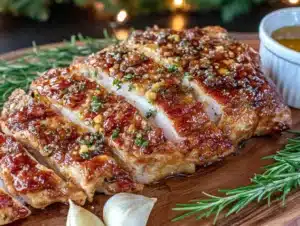
“Wait, is this turkey actually juicy?” My brother-in-law asked this halfway through Thanksgiving dinner last year, fork poised over a slice of white meat. And honestly? I knew exactly what he meant. We’ve all been there—dry, sad turkey breast that tastes more like protein-packed cardboard than a celebratory centerpiece. But this particular bird was different. It was the herb butter roasted turkey breast I’d been testing for weeks, and something had finally clicked.
See, I’d always been a dark meat person. Thighs, legs, the whole deal. Breast meat felt like a gamble I wasn’t willing to take. But then my mom asked me to host Friendsgiving, and she specifically requested turkey breast—white meat only. I couldn’t say no. So I started experimenting. I tried brining, dry-brining, roasting at different temps, covering it with bacon (which was delicious, but not quite what I was after). And then I landed on this herb butter situation. The butter melts into the meat as it roasts, keeping everything tender and flavorful. No dry spots. No bland bites. Just juicy, herby, golden-brown turkey that actually makes you excited for leftovers.
That night at dinner, my brother-in-law had three servings. Three. And he’s not a turkey guy. That’s when I knew this recipe was something special. It’s not fussy or complicated, but it delivers every single time. And if you’ve ever felt like turkey breast is a lost cause, trust me—this one will change your mind.
Why You’ll Love This Recipe
Let me be honest with you. I’ve made this herb butter roasted turkey breast at least a dozen times now, and it never disappoints. It’s become my go-to for everything from holiday dinners to random Sunday roasts when I want something that feels special without a ton of effort. Here’s why it works so well:
- Foolproof Juiciness: The herb butter acts like a built-in baster. As it melts, it keeps the meat moist from the inside out. No more dry turkey breast!
- Simple Ingredients: You probably have most of these in your pantry and fridge right now. Butter, garlic, herbs, salt, pepper. That’s it.
- Perfect for Small Gatherings: Not hosting a huge crowd? A bone-in turkey breast is ideal for 4-6 people. No massive bird to wrestle with.
- Weekend Dinner Hero: It roasts in about 2 hours, which sounds long, but it’s mostly hands-off. Perfect for a cozy Saturday night.
- Leftovers for Days: And I mean good leftovers. Sliced cold for sandwiches, warmed up with gravy, or tossed into a salad. This turkey keeps its texture.
I’ve tested this recipe with different butter-to-herb ratios, different roasting times, and even with and without the gravy. The version I’m sharing today is the one that earned my brother-in-law’s seal of approval. It’s tested, tweaked, and true. Plus, if you’re like me and you love a good one-pan lemon herb chicken dinner for busy nights, you’ll appreciate how this turkey breast comes together with similar simplicity—just a little more roasting time. It’s comfort food that actually delivers on its promises.
What Ingredients You Will Need
This recipe relies on a handful of quality ingredients to build big flavor. The magic really happens with the herb butter, so don’t skimp on fresh herbs if you can help it. Here’s everything you’ll need:
For the Herb Butter
- Unsalted butter, 6 tablespoons (85g), softened to room temperature. I use Kerrygold—the flavor is just better.
- Fresh rosemary, 1 tablespoon finely chopped. Strip the leaves from the woody stem first.
- Fresh thyme, 1 tablespoon leaves, stripped from stems. No need to chop these too fine.
- Fresh sage, 1 tablespoon finely chopped. Adds that earthy, almost floral note that screams “holiday.”
- Garlic, 3 cloves, minced or grated. Fresh garlic is non-negotiable here.
- Salt, 1 teaspoon kosher salt (use half if using table salt).
- Black pepper, ½ teaspoon freshly ground.
- Lemon zest, from 1 lemon. This brightens everything up.
For the Turkey Breast
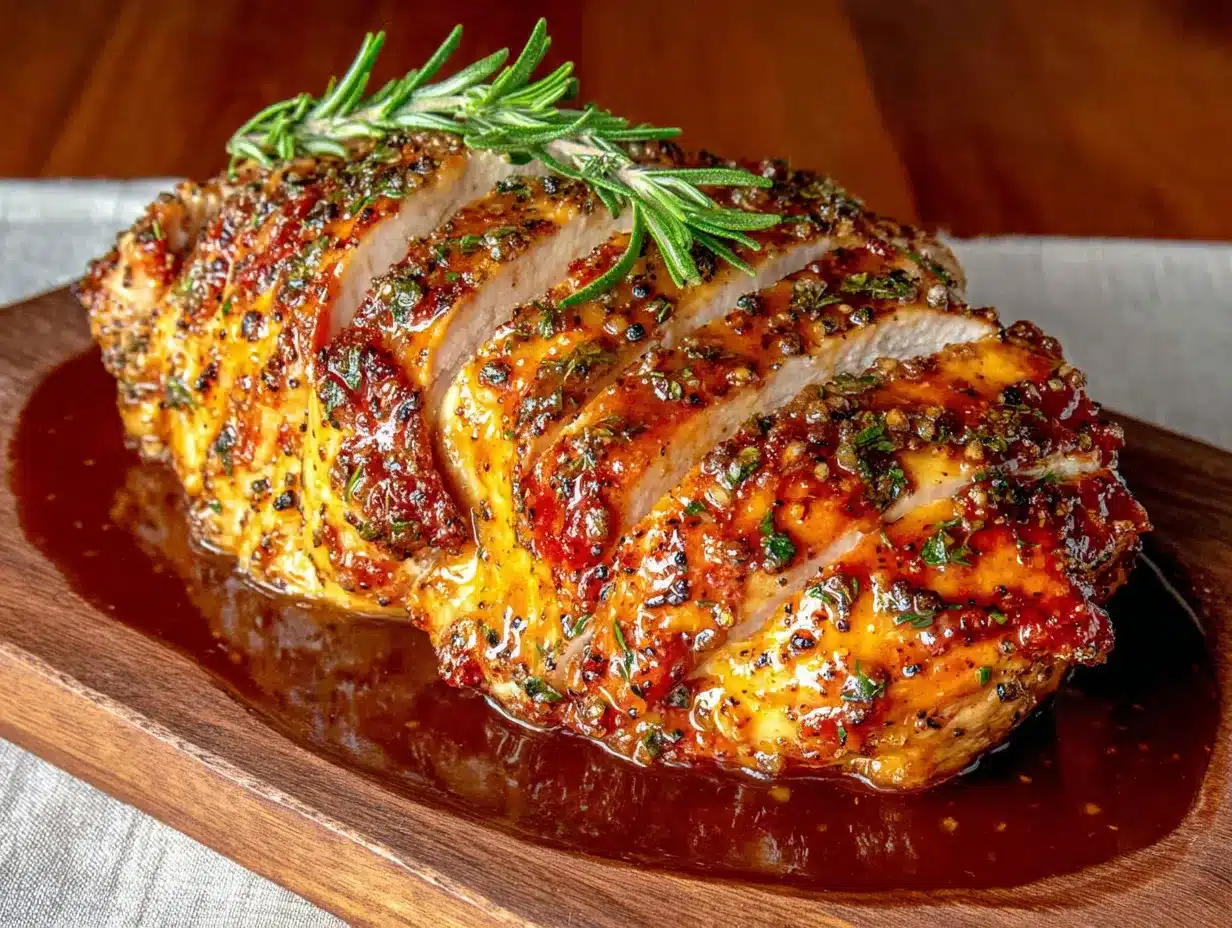
- Bone-in, skin-on turkey breast, 5-7 pounds (2.2-3.2 kg). The bone adds flavor and helps the meat stay juicy. I prefer a whole breast (both lobes) for even roasting.
- Olive oil, 1 tablespoon (15 ml), for rubbing the skin.
- Kosher salt, 1½ teaspoons, for seasoning the outside.
- Black pepper, ½ teaspoon, for the outside.
- Chicken or turkey broth, 1 cup (240 ml), for the roasting pan. Low-sodium is best so you can control the salt.
For the Gravy
- Pan drippings, from the roasted turkey breast (skim off excess fat if there’s a lot).
- Unsalted butter, 2 tablespoons (28g).
- All-purpose flour, 2 tablespoons (16g).
- Chicken or turkey broth, 1½ cups (360 ml), plus more if needed.
- Salt and pepper, to taste.
- Fresh herbs, optional, for garnish.
I always recommend using fresh herbs for the butter. Dried herbs work in a pinch, but you’ll need to use about half the amount since they’re more concentrated. And for the broth, I’m partial to Swanson’s low-sodium chicken broth—it’s consistent and not overly salty. If you’ve got homemade turkey stock in the freezer, even better.
Equipment Needed
You don’t need a ton of fancy gear for this recipe, which is part of why I love it. Here’s what you’ll want to have on hand:
- Roasting pan: A metal or ceramic pan with a rack is ideal. The rack keeps the turkey above the juices so the skin stays crispy. If you don’t have a rack, you can use chopped carrots and celery as a makeshift one—they add flavor too.
- Instant-read thermometer: This is non-negotiable for me. Turkey breast is lean and can go from perfect to dry in minutes. A good thermometer takes the guesswork out. I use a Thermapen, but any reliable instant-read will work.
- Mixing bowl: Small one for combining the herb butter.
- Chef’s knife and cutting board: For chopping herbs and carving later.
- Measuring spoons and cups: Standard kitchen basics.
- Whisk: For making the gravy smooth.
- Small saucepan: If you want to make the gravy on the stovetop instead of in the roasting pan.
- Aluminum foil: For tenting the turkey if it browns too quickly.
If you’re new to roasting, don’t stress about the equipment. A sturdy baking sheet with a wire cooling rack can work in a pinch. Just make sure it has a rim to catch the juices. I’ve used a cast iron skillet before too—works great, though you’ll have less surface area for the gravy.
Preparation Method
Step 1: Make the Herb Butter
In a small bowl, combine the softened butter, chopped rosemary, thyme, sage, minced garlic, salt, pepper, and lemon zest. Mix everything together with a fork until it’s well combined and looks like a speckled, fragrant paste. Set it aside at room temperature while you prep the turkey. You want it spreadable, not hard.
Step 2: Prep the Turkey Breast
Take the turkey breast out of the fridge about 30-40 minutes before you plan to roast it. This helps it cook more evenly. Pat it completely dry with paper towels—this is key for crispy skin. Place it on a cutting board and gently loosen the skin from the meat using your fingers. You want to create a pocket between the skin and the breast meat without tearing the skin. Slide about two-thirds of the herb butter under the skin, spreading it evenly over both lobes of the breast. Rub the remaining butter all over the outside of the skin. Then rub the olive oil over the skin and season generously with salt and pepper.
Step 3: Set Up for Roasting
Preheat your oven to 400°F (200°C). Place the turkey breast on the rack in your roasting pan, skin side up. Pour the 1 cup of broth into the bottom of the pan—don’t pour it over the turkey, you’ll wash away the seasoning. The broth will create steam and keep the meat moist, plus it forms the base for your gravy.
Step 4: Roast the Turkey Breast
Roast the turkey breast for about 20 minutes at 400°F. This initial high heat helps the skin start crisping up. Then, without opening the oven, reduce the temperature to 350°F (175°C) and continue roasting. Total roasting time will be roughly 15-18 minutes per pound, so a 6-pound breast will take about 1 hour and 30 minutes to 1 hour and 45 minutes total. Start checking the internal temperature at the 1-hour mark. Insert your thermometer into the thickest part of the breast, avoiding the bone. You’re looking for 160°F (71°C)—the temperature will carry over to 165°F as it rests.
Step 5: Rest the Turkey
Once the turkey hits 160°F, remove it from the oven. Transfer it to a cutting board and tent it loosely with aluminum foil. Let it rest for at least 20 minutes. Do not skip this step. Resting allows the juices to redistribute throughout the meat. If you cut into it too soon, all that beautiful moisture will end up on your cutting board instead of on your plate.
Step 6: Make the Gravy
While the turkey rests, pour the pan drippings through a fine-mesh strainer into a measuring cup or fat separator. You should have about ½ to ¾ cup of liquid. Let it sit for a minute so the fat rises to the top. Skim off most of the fat, leaving about 2 tablespoons in the drippings. In a small saucepan over medium heat, melt the 2 tablespoons of butter. Whisk in the flour and cook for 1-2 minutes, stirring constantly, until the mixture is golden and smells nutty. Slowly whisk in the reserved pan drippings and the 1½ cups of broth. Bring to a simmer, whisking frequently, until the gravy thickens enough to coat the back of a spoon—about 3-5 minutes. Season with salt and pepper to taste. If it’s too thick, add a splash more broth. Keep it warm until you’re ready to serve.
Step 7: Carve and Serve
After resting, carve the turkey breast against the grain into even slices. Arrange on a platter, spoon some gravy over the top, and garnish with fresh herbs if you like. Serve the remaining gravy on the side.
Cooking Tips & Techniques
I’ve learned a few things the hard way so you don’t have to. Here are my best tips for perfect herb butter roasted turkey breast every time:
Don’t skip the resting time. I know it’s tempting to dig in right away, especially when the house smells incredible. But resting is where the magic happens. I once carved a turkey breast after only 10 minutes of resting, and the juices ran out like a river. The meat was still tasty, but it wasn’t as succulent. Give it the full 20 minutes.
Use a thermometer, not the clock. Ovens vary, turkey sizes vary, and even the shape of the breast affects cooking time. I’ve had a 5-pound breast cook in 1 hour and 15 minutes, and another take nearly 2 hours. The only reliable way to know it’s done is with an instant-read thermometer. Don’t rely on those pop-up timers that come with some turkeys—they usually trigger at higher temps, leading to dry meat.
Pat the skin dry. This seems like a small step, but it makes a huge difference. Moisture on the skin creates steam, which prevents browning. A dry surface means crispy, golden-brown skin that’s actually worth eating. If you have time, you can even leave the turkey uncovered in the fridge overnight to dry out the skin—that’s a game-changer.
Let the butter come to room temp. Cold butter won’t spread evenly under the skin. You’ll end up with clumps in some spots and bare spots in others. Leave the butter out for about an hour before you start. And if you forget, you can microwave it in 5-second bursts, but be careful not to melt it—you want it soft, not liquid.
Watch the gravy consistency. Gravy should be thick enough to coat a spoon but still pourable. If it’s too thin, let it simmer a bit longer. If it’s too thick, whisk in a little more broth. And always taste before serving—you might need a pinch more salt or pepper.
Variations & Adaptations
One of the best things about this recipe is how adaptable it is. Here are some ways to make it your own:
Citrus Herb Butter: Add the zest of an orange along with the lemon zest, and swap the sage for fresh tarragon. The orange adds a bright, almost sweet note that pairs beautifully with turkey. I tried this for a Christmas dinner and it was a hit.
Spicy Chipotle Version: Mix 1-2 teaspoons of chipotle powder or adobo sauce into the herb butter. The smoky heat cuts through the richness of the butter and adds a whole new dimension. Serve with a cooling crema made from sour cream and lime juice.
Garlic and Herb Paste: If you don’t have butter on hand, you can make a paste with olive oil, garlic, fresh herbs, salt, and pepper. Rub it all over and under the skin just like the butter version. The skin won’t get quite as crispy, but the flavor is still fantastic.
Gluten-Free Gravy: Use cornstarch instead of flour to thicken the gravy. Mix 2 tablespoons of cornstarch with 2 tablespoons of cold water to make a slurry, then whisk it into the simmering pan juices. Cook for 1-2 minutes until thickened.
Herb Swap: Not a fan of sage? Use all rosemary and thyme. Or try marjoram or oregano for a different herbal profile. Fresh dill is also lovely in the spring. The key is to keep the total herb amount the same—about 3 tablespoons total.
I once made a variation with smoked paprika and a touch of brown sugar in the butter for a BBQ-style turkey breast. It was incredible with a side of coleslaw and some honey garlic butter salmon vibes—a total flavor mashup that worked surprisingly well.
Serving & Storage Suggestions
This turkey breast is versatile enough for a holiday feast or a simple Sunday dinner. Here’s how to serve and store it:
Serving Temperature: Serve the turkey warm, not piping hot. After resting, it should be around 130-140°F, which is perfect. The gravy should be hot—reheat it gently on the stovetop if needed.
Presentation: Arrange the sliced turkey on a large platter, overlapping the slices slightly. Spoon a little gravy over the top and sprinkle with fresh thyme or parsley. It looks gorgeous with roasted vegetables around the edges.
What to Serve With It: Mashed potatoes are a no-brainer, but roasted Brussels sprouts, green beans almondine, or a simple arugula salad with lemon vinaigrette all work beautifully. For bread, warm dinner rolls or a crusty baguette to soak up the gravy. If you’re feeling extra, a side of creamy loaded baked potato soup makes for a cozy starter.
Storing Leftovers: Let the turkey cool completely before storing. Slice it off the bone and place in an airtight container. Pour a little of the gravy over the slices to keep them moist, or store the gravy separately. It will keep in the fridge for 3-4 days.
Freezing: Turkey freezes well for up to 3 months. Wrap slices tightly in plastic wrap, then foil, or use a vacuum sealer for best results. Thaw in the fridge overnight before reheating. The gravy can also be frozen in a separate container.
Reheating: The best way to reheat turkey without drying it out is in the oven. Place slices in a baking dish, add a splash of broth or gravy, cover with foil, and warm at 300°F for 10-15 minutes. You can also reheat in the microwave in 30-second bursts, but watch it closely. The gravy reheats beautifully on the stovetop over low heat.
Flavor Development: Honestly, the leftovers are sometimes even better than the fresh turkey. The flavors meld together overnight, and the meat stays tender. I love making turkey sandwiches with a little cranberry sauce and leftover gravy for dipping the next day.
Nutritional Information & Benefits
Here’s an approximate nutritional breakdown per serving (based on 6 servings, with gravy):
- Calories: 380-420
- Protein: 45-50g
- Fat: 18-22g
- Carbohydrates: 5-7g
- Fiber: 0g
- Sugar: 0g
- Sodium: 600-800mg (varies with broth and added salt)
Turkey breast is an excellent source of lean protein, which supports muscle health and keeps you feeling full. It’s also rich in B vitamins, particularly B6 and B12, which help with energy metabolism. The herbs in the butter—rosemary, thyme, sage—are packed with antioxidants and anti-inflammatory compounds. Garlic adds immune-supporting allicin. And while the butter adds some saturated fat, a moderate amount in a balanced diet is nothing to worry about.
This recipe is naturally low-carb and gluten-free if you use cornstarch for the gravy. It’s also a great option for anyone following a high-protein or paleo-style diet. Just skip the flour in the gravy and use the cornstarch slurry instead. For a dairy-free version, substitute the butter with a high-quality vegan butter or olive oil—the texture will be slightly different, but the flavor will still be delicious.
Conclusion
This herb butter roasted turkey breast with gravy has become my go-to for any occasion that calls for something special. It’s the recipe that turned my brother-in-law into a turkey fan, and it’s the one I keep coming back to when I want to impress without stressing. The herb butter keeps everything juicy and flavorful, the gravy ties it all together, and the whole process is surprisingly simple.
I love that you can dress it up for a holiday or keep it casual for a weekend roast. It’s forgiving, adaptable, and always delivers. And honestly? The leftovers might be my favorite part. Cold turkey sandwiches with a smear of mayo and a sprinkle of salt? Yes, please.
I’d love to hear how yours turns out. Try swapping in your favorite herbs, or add a pinch of cayenne for heat. Share your version in the comments below, or tag me in your photos. Happy roasting!
Frequently Asked Questions
Can I use a boneless turkey breast instead?
Yes, you can. Boneless turkey breast will cook faster—about 12-15 minutes per pound. The herb butter method works the same way. Just be extra careful not to overcook it, since boneless meat is more prone to drying out. Use your thermometer and pull it at 160°F.
Do I need to brine the turkey breast first?
Not with this recipe. The herb butter does enough to keep the meat moist and flavorful. But if you love brining, a dry brine (rubbing salt all over the turkey and letting it sit in the fridge overnight) will give you even juicier results. Just reduce the added salt in the recipe.
Can I make the herb butter ahead of time?
Absolutely. You can make the herb butter up to 3 days in advance. Shape it into a log using plastic wrap and store it in the fridge. Let it come to room temperature for about 30 minutes before using so it’s spreadable. You can also freeze it for up to 3 months.
My turkey skin isn’t getting crispy. What should I do?
This usually happens if the skin isn’t dry enough before roasting. Next time, pat it very dry with paper towels and consider leaving it uncovered in the fridge overnight. For this batch, you can try increasing the oven temperature to 425°F for the last 10 minutes of cooking, but watch it closely so it doesn’t burn.
How do I prevent the gravy from being lumpy?
Lumpy gravy usually comes from adding the liquid too quickly to the flour-butter mixture. Whisk the broth in slowly, starting with just a splash to make a smooth paste, then gradually add the rest. If you still get lumps, pour the gravy through a fine-mesh strainer before serving—it’ll be silky smooth.
Pin This Recipe!
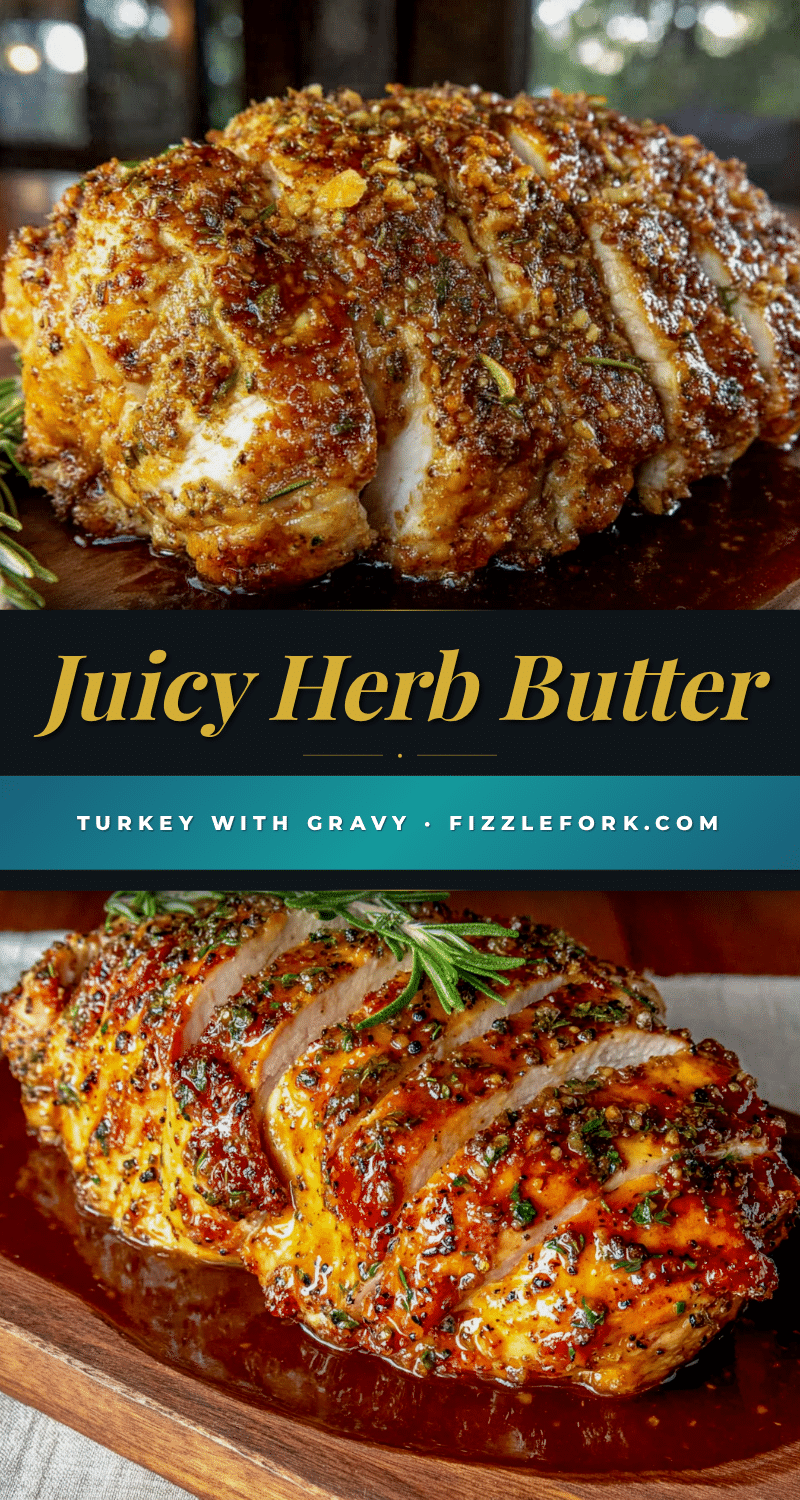
Best Herb Butter Roasted Turkey Breast with Easy Gravy
This herb butter roasted turkey breast is incredibly juicy and flavorful, thanks to a compound butter that melts into the meat as it roasts. Perfect for small gatherings or a cozy Sunday dinner, it comes with an easy pan gravy that ties everything together.
- Prep Time: 20 minutes
- Cook Time: 1 hour 30 minutes to 2 hours
- Total Time: 2 hours to 2 hours 30 minutes
- Yield: 6 servings 1x
- Category: Main Course
- Cuisine: American
Ingredients
- 6 tablespoons (85g) unsalted butter, softened
- 1 tablespoon finely chopped fresh rosemary
- 1 tablespoon fresh thyme leaves
- 1 tablespoon finely chopped fresh sage
- 3 cloves garlic, minced or grated
- 1 teaspoon kosher salt
- ½ teaspoon freshly ground black pepper
- Zest of 1 lemon
- 1 bone-in, skin-on turkey breast (5–7 pounds / 2.2–3.2 kg)
- 1 tablespoon (15 ml) olive oil
- 1½ teaspoons kosher salt (for seasoning the outside)
- ½ teaspoon black pepper (for the outside)
- 1 cup (240 ml) low-sodium chicken or turkey broth
- Pan drippings from roasted turkey
- 2 tablespoons (28g) unsalted butter (for gravy)
- 2 tablespoons (16g) all-purpose flour
- 1½ cups (360 ml) low-sodium chicken or turkey broth (for gravy)
- Salt and pepper to taste (for gravy)
- Fresh herbs for garnish (optional)
Instructions
- Make the herb butter: In a small bowl, combine softened butter, chopped rosemary, thyme, sage, minced garlic, 1 teaspoon salt, ½ teaspoon pepper, and lemon zest. Mix until well combined and set aside at room temperature.
- Prep the turkey: Remove turkey from fridge 30-40 minutes before roasting. Pat completely dry with paper towels. Gently loosen the skin from the meat to create a pocket. Spread about two-thirds of the herb butter under the skin, then rub the remaining butter over the outside. Rub olive oil over the skin and season with 1½ teaspoons salt and ½ teaspoon pepper.
- Set up for roasting: Preheat oven to 400°F (200°C). Place turkey breast on a rack in a roasting pan, skin side up. Pour 1 cup broth into the bottom of the pan (not over the turkey).
- Roast the turkey: Roast at 400°F for 20 minutes, then reduce oven temperature to 350°F (175°C) without opening the door. Continue roasting until internal temperature reaches 160°F (71°C) in the thickest part, about 15-18 minutes per pound (total 1.5-2 hours for a 6-pound breast). Start checking at 1 hour.
- Rest the turkey: Remove from oven, transfer to a cutting board, and tent loosely with foil. Let rest for at least 20 minutes. The temperature will carry over to 165°F.
- Make the gravy: While turkey rests, strain pan drippings into a measuring cup. Let fat rise, then skim off most, leaving about 2 tablespoons. In a small saucepan over medium heat, melt 2 tablespoons butter. Whisk in flour and cook 1-2 minutes until golden. Slowly whisk in reserved drippings and 1½ cups broth. Simmer, whisking frequently, until thickened (3-5 minutes). Season with salt and pepper. Keep warm.
- Carve and serve: After resting, carve turkey against the grain into slices. Arrange on a platter, spoon some gravy over the top, and garnish with fresh herbs if desired. Serve remaining gravy on the side.
Notes
Don’t skip resting the turkey—it allows juices to redistribute. Pat the skin very dry for crispy skin. Use an instant-read thermometer for accuracy. For gluten-free gravy, substitute flour with 2 tablespoons cornstarch mixed with 2 tablespoons cold water.
Nutrition
- Serving Size: 1 serving (about 6 o
- Calories: 400
- Sodium: 700
- Fat: 20
- Saturated Fat: 10
- Carbohydrates: 6
- Protein: 48
Keywords: herb butter turkey breast, roasted turkey breast, turkey with gravy, Thanksgiving turkey, juicy turkey breast, easy turkey recipe