The first Saturday of October, and rain is tapping against the kitchen window in that steady, unhurried way that tells you not to go anywhere. The house smells like woodsmoke from the fireplace, and honestly? The only thing I want is this cake. Not a fancy layer cake with fussy frosting, but something that feels like pulling on a thick sweater. Something that tastes like the best part of autumn.
I found myself staring at a half-gallon of fresh apple cider in the fridge—the good stuff from the orchard, not the filtered kind—and wondering if I could bake it into something soft. Something that would fill the kitchen with that warm, spiced scent that makes everyone wander in asking what’s for dessert. This caramel apple cider cake is what came out of that rainy afternoon. It’s not trying to be fancy. It’s just trying to be exactly what you want on a cool fall day.
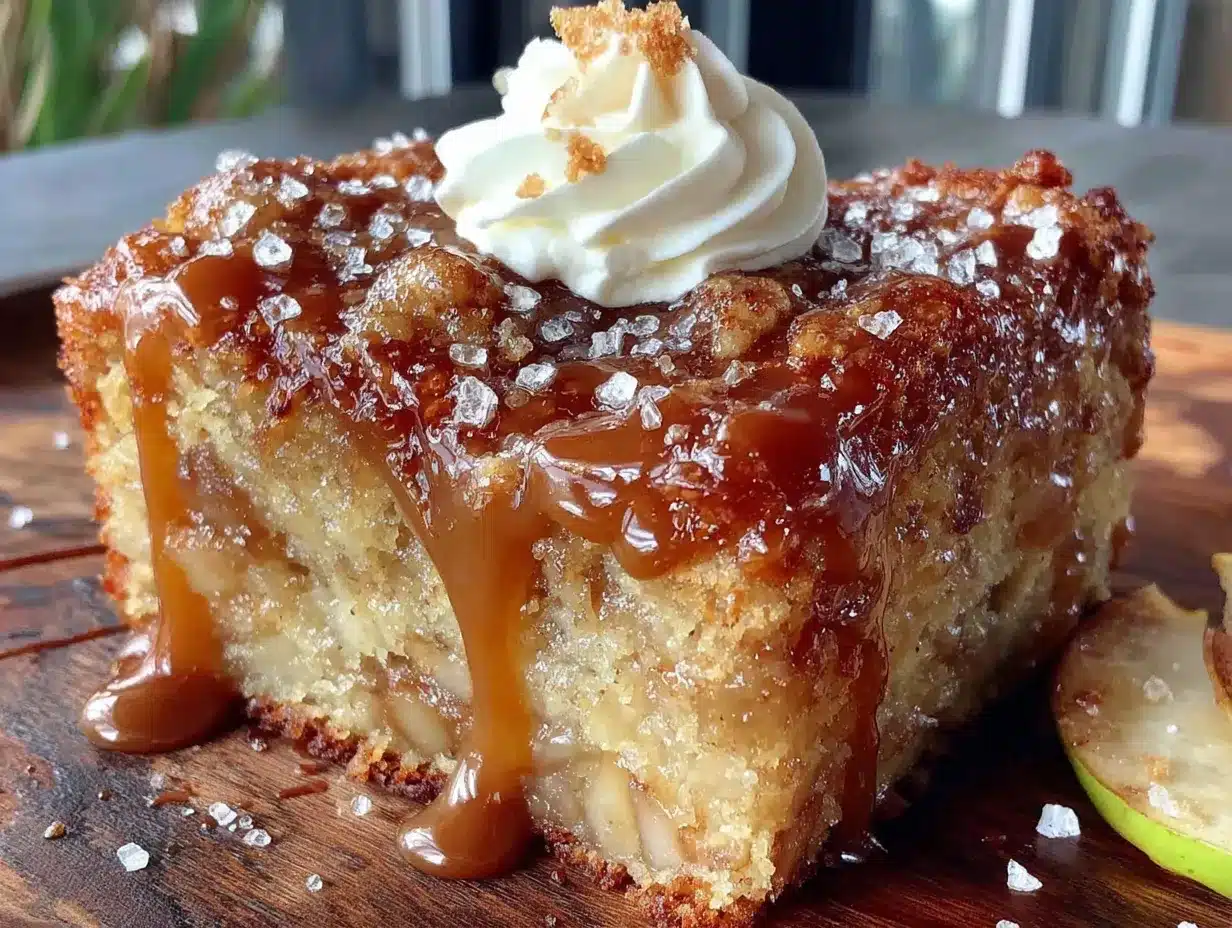
The cider reduces down into something almost syrupy, concentrating all that apple flavor into the batter. Then there’s the salted caramel drizzle on top, because let’s be honest—everything is better with a little salt and caramel. This is the kind of cake you make when you want to feel like everything is going to be okay. And it is.
Why You’ll Love This Recipe
I’ve tested this cake four times to get the texture just right. The first batch was too dense. The second was too wet. The third? Perfect. The fourth was just to make sure I wasn’t lucky. I wasn’t lucky—this recipe is just that good.
- Deep Apple Flavor : We’re not using apple juice or apple sauce here. Reducing real apple cider gives you that concentrated, tangy-sweet apple taste that actually comes through in the finished cake.
- Cozy Spice Blend : Cinnamon, nutmeg, and a hint of clove work together without overwhelming the apple. It’s warm without being heavy.
- Perfectly Moist Crumb : The combination of reduced cider and buttermilk creates a tender, moist texture that stays fresh for days. I’ve tested it.
- Salted Caramel Drizzle : That sweet-salty finish on top? It’s what takes this from a simple cider cake to something you’ll crave all season long.
- Simple Ingredients : No weird extracts or hard-to-find items. You probably have most of this in your pantry right now.
- One Bowl Batter : The wet ingredients come together in one bowl, the dry in another. Minimal dishes, maximum flavor.
This isn’t just another apple cake. The reduced cider trick is something I picked up from an old baking blog years ago, and it makes all the difference. You get that authentic apple flavor without any artificial taste. Plus, the salted caramel drizzle is dead simple to make at home—no candy thermometer needed. Trust me, if I can make it without burning it, you can too.
What Ingredients You Will Need
This recipe relies on simple, wholesome ingredients to deliver that cozy autumn flavor. Most are pantry staples, but a few deserve a little explanation.
For the Cake
- Apple cider, 2 cups (480 ml) — Use fresh, unfiltered cider if you can find it. The cloudy kind from the orchard has more flavor. You’ll reduce this down to about ½ cup, so don’t skip this step.
- All-purpose flour, 2 ½ cups (312 g) — Spoon and level your flour for accurate measuring. Too much flour makes a dry cake.
- Granulated sugar, 1 cup (200 g) — Regular white sugar keeps the cake tender. You could try coconut sugar, but the texture will be slightly different.
- Light brown sugar, ½ cup (100 g), packed — Adds moisture and a hint of molasses that pairs beautifully with the apple cider.
- Unsalted butter, ½ cup (113 g), softened — I use Kerrygold when I’m feeling fancy, but any good unsalted butter works. Salted butter will throw off the salt balance.
- Vegetable oil, ¼ cup (60 ml) — Keeps the cake extra moist. You can use melted coconut oil, but the flavor will shift slightly.
- Large eggs, 2, room temperature — Room temperature eggs incorporate better into the batter. Set them out 30 minutes before baking.
- Buttermilk, ½ cup (120 ml) — The acid in buttermilk tenderizes the gluten. No buttermilk? Add 1 tablespoon of lemon juice to regular milk and let it sit for 5 minutes.
- Vanilla extract, 2 teaspoons — Pure vanilla, not imitation. It makes a difference.
- Ground cinnamon, 2 teaspoons — The backbone of the spice blend. Fresh cinnamon is more potent.
- Ground nutmeg, ½ teaspoon — Freshly grated if you have it. The pre-ground stuff works fine too.
- Ground cloves, ¼ teaspoon — A little goes a long way. Too much clove can taste medicinal.
- Baking powder, 2 teaspoons — Make sure it’s not expired. Old baking powder won’t give you proper rise.
- Baking soda, ½ teaspoon — Works with the buttermilk to create a light crumb.
- Salt, ½ teaspoon — Balances the sweetness and enhances the apple flavor.
For the Salted Caramel Drizzle
- Granulated sugar, ½ cup (100 g) — White sugar caramelizes cleanly. Don’t substitute with brown sugar here—it can burn faster.
- Unsalted butter, 3 tablespoons (42 g), cut into pieces — Cold butter works best to stop the caramel from cooking.
- Heavy cream, ¼ cup (60 ml), room temperature — Warm cream prevents the caramel from seizing. I microwave mine for 15 seconds before adding.
- Flaky sea salt, ½ teaspoon — Maldon or another flaky salt. The big crystals give you those perfect salty bites.
- Vanilla extract, 1 teaspoon — Rounds out the caramel flavor.
Equipment Needed
You don’t need a professional bakery setup for this one. Here’s what you’ll need:
- 9×5-inch loaf pan — A standard loaf pan works perfectly. If you use a dark non-stick pan, reduce the oven temperature by 25°F to prevent over-browning.
- Medium saucepan — For reducing the apple cider. A wider pan works faster because more surface area means quicker evaporation.
- Small saucepan — For the caramel. I use a light-colored stainless steel pan so I can see the sugar color change. Dark pans make it harder to tell when the caramel is done.
- Mixing bowls — Two medium bowls, one for dry ingredients and one for wet.
- Whisk — For combining dry ingredients and smoothing the batter.
- Rubber spatula — For folding and scraping every last bit of batter into the pan.
- Parchment paper — Line your loaf pan for easy removal. Trust me on this.
- Wire cooling rack — Essential for even cooling. Don’t skip this or the bottom of your cake will get soggy.
- Candy thermometer (optional) — Helpful for the caramel but not required. I’ve made this caramel dozens of times by sight alone.
I’ve made this cake with a cheap loaf pan from the grocery store and it came out fine. You don’t need fancy equipment. Just make sure your pans are clean and your oven is properly preheated.
Preparation Method
Step 1: Reduce the Apple Cider
Pour 2 cups of apple cider into a medium saucepan. Bring it to a boil over medium-high heat, then reduce to a simmer. Let it bubble away for about 15-20 minutes, stirring occasionally, until it reduces to about ½ cup. It should look syrupy and smell intensely of apples. Watch it toward the end—it can go from perfect to burnt quickly. Remove from heat and let it cool completely. I usually do this step first and let it cool while I prep everything else.
Step 2: Preheat and Prep
Preheat your oven to 350°F (175°C). Grease your 9×5-inch loaf pan and line it with parchment paper, leaving some overhang on the long sides. This makes lifting the cake out so much easier. Trust me, you’ll thank yourself later.
Step 3: Mix the Dry Ingredients
In a medium bowl, whisk together the flour, cinnamon, nutmeg, cloves, baking powder, baking soda, and salt. Set this aside. Whisking aerates the flour and distributes the leavening agents evenly. No lumps allowed here.
Step 4: Cream the Butter and Sugars
In a large bowl, beat the softened butter, granulated sugar, and brown sugar together until light and fluffy, about 3 minutes. You can do this by hand with a wooden spoon, but an electric mixer makes it faster. The mixture should look pale and slightly increased in volume. Scrape down the sides of the bowl halfway through.
Step 5: Add Wet Ingredients
Beat in the vegetable oil, then add the eggs one at a time, mixing well after each addition. Stir in the vanilla extract. The batter might look a little separated at this point—that’s normal. Don’t panic.
Step 6: Alternate Dry and Wet
Add the dry ingredients in three additions, alternating with the buttermilk. Start and end with the dry ingredients. Mix just until combined after each addition. Overmixing develops gluten and makes the cake tough. You want a thick, smooth batter with no visible flour streaks.
Step 7: Add the Reduced Cider
Gently fold in the cooled reduced apple cider with a rubber spatula. The batter will thin out slightly. Make sure the cider is completely cool—warm cider will start cooking the eggs and ruin the texture. Fold until just combined.
Step 8: Bake
Pour the batter into the prepared loaf pan and smooth the top. Bake for 50-60 minutes, or until a toothpick inserted into the center comes out clean or with just a few moist crumbs. If the top is browning too quickly (around the 40-minute mark), tent loosely with aluminum foil. My oven runs hot, so I start checking at 45 minutes.
Step 9: Cool
Let the cake cool in the pan for 15 minutes. Then lift it out using the parchment paper overhang and transfer to a wire rack to cool completely. Don’t rush this. A warm cake will melt your caramel drizzle into a puddle.
Step 10: Make the Salted Caramel
While the cake cools, make the caramel. Place the sugar in a small saucepan over medium heat. Stir constantly with a heatproof spatula. The sugar will clump, then melt into a golden amber liquid. This takes about 5-7 minutes. Once it’s fully melted and the color of a copper penny, remove from heat immediately. Whisk in the butter pieces until melted and smooth. Slowly pour in the warm heavy cream while whisking—it will bubble up violently, so stand back. Whisk in the vanilla and flaky sea salt. Let it cool for 10 minutes to thicken slightly.
Step 11: Drizzle and Serve
Once the cake is completely cool, drizzle the salted caramel over the top. Let it set for 5 minutes before slicing. The caramel will soak into the top slightly, creating that perfect sweet-salty crust.
Cooking Tips & Techniques
I’ve made enough mistakes in the kitchen to fill a cookbook. Here’s what I learned so you don’t have to repeat my errors.
Don’t skip reducing the cider. I know it seems like an extra step, but the flavor concentration is what makes this cake special. I once tried using regular cider straight from the bottle, and the cake was bland and watery. The reduction is non-negotiable.
Room temperature ingredients matter. Cold eggs and cold buttermilk can cause your batter to separate or not emulsify properly. Set everything out 30 minutes before you start. I usually take my eggs out, measure my buttermilk, and let them sit while I reduce the cider.
Watch your caramel like a hawk. Sugar goes from golden to burnt in about 30 seconds. The first time I made caramel, I looked away to answer a text and ended up with a black, smoky mess. Stay at the stove. Watch the color. Swirl the pan gently instead of stirring once the sugar starts melting.
Use a light-colored loaf pan if you have one. Dark pans absorb more heat and can over-brown the outside before the inside is done. If you only have dark pans, reduce the oven temperature by 25°F and bake a little longer.
Test for doneness properly. A toothpick should come out clean or with a few moist crumbs. If it comes out wet with batter, bake for another 5 minutes and test again. If it comes out dry with crumbs, you’re done.
Let the cake cool completely. I know it’s tempting to slice into a warm cake, but the caramel will slide right off and the crumb will be too tender to hold together. Patience pays off here.
Variations & Adaptations
This recipe is forgiving. Here are some ways to make it your own:
Gluten-Free Version: Substitute the all-purpose flour with a 1:1 gluten-free baking flour blend. I’ve used Bob’s Red Mill with good results. Add 1 teaspoon of xanthan gum if your blend doesn’t already include it. The texture will be slightly more tender, but the flavor is still there.
Dairy-Free Adaptation: Use plant-based butter (I like Miyoko’s) and replace the buttermilk with ½ cup of unsweetened oat milk mixed with 1 tablespoon of lemon juice. The caramel can be made with coconut cream instead of heavy cream, though it will have a slight coconut flavor.
Spice It Up: Add ½ teaspoon of ground ginger or cardamom for a different warm spice profile. I once added a pinch of white pepper, and it gave the cake an unexpected but pleasant warmth.
Add Texture: Fold in ½ cup of toasted pecans or walnuts with the reduced cider. The crunch contrasts beautifully with the tender crumb. I prefer pecans because they feel more autumnal.
Make It a Layer Cake: Double the recipe and bake in two 8-inch round pans for about 30-35 minutes. Layer with caramel buttercream or cream cheese frosting. This version is perfect for Thanksgiving or fall birthdays.
Apple Cider Glaze Alternative: Instead of the salted caramel, mix 1 cup of powdered sugar with 2 tablespoons of reduced apple cider and a splash of vanilla. It’s lighter and lets the apple flavor shine even more.
Serving & Storage Suggestions
This cake is best served at room temperature or slightly warm. The caramel softens and the crumb feels almost custard-like. A dollop of lightly sweetened whipped cream or a scoop of vanilla bean ice cream takes it over the top. For a truly indulgent experience, warm a slice in the microwave for 15 seconds and pour extra caramel on top.
If you’re serving this for a gathering, arrange slices on a wooden board with fresh apple slices, a sprinkle of cinnamon, and a few candied pecans. It makes a beautiful presentation without much effort.
Storage: Keep the cake in an airtight container at room temperature for up to 3 days. The caramel will soften and soak into the top, which honestly makes it even better. If you live in a humid climate, refrigerate it to prevent mold, but bring slices to room temperature before serving.
Freezing: This cake freezes beautifully. Wrap the cooled, un-drizzled cake tightly in plastic wrap, then foil. Freeze for up to 3 months. When ready to serve, thaw overnight in the refrigerator, bring to room temperature, then make the caramel fresh. The caramel doesn’t freeze well—it gets grainy.
Reheating: For a single slice, microwave for 15-20 seconds. For a whole cake, warm in a 300°F oven for 10 minutes. The flavors actually deepen after a day or two, so don’t be afraid to make this ahead of time.
Nutritional Information & Benefits
Let’s be real—this is a dessert. But it’s made with real ingredients, and there are some bright spots worth mentioning.
Per slice (1/10 of the cake, with caramel): approximately 380 calories, 18g fat, 52g carbohydrates, 4g protein, 2g fiber, 35g sugar. The caramel adds about 80 calories per serving, but honestly, it’s worth it.
Apple cider contains antioxidants called polyphenols, which support heart health and may help reduce inflammation. The reduction process concentrates these compounds slightly, so you’re getting more bang for your buck.
Cinnamon has been shown to help regulate blood sugar levels. Not that a slice of cake is a health food, but every little bit helps, right? The nutmeg and cloves also have anti-inflammatory properties.
Buttermilk is lower in fat than cream and provides calcium and probiotics. If you use the dairy-free version, oat milk adds beta-glucans that support cholesterol health.
Allergen note: This recipe contains wheat, dairy, and eggs. The gluten-free and dairy-free adaptations are noted in the variations section. The caramel is naturally gluten-free.
Conclusion
This caramel apple cider cake has become my go-to for fall gatherings, quiet Sunday afternoons, and any day that calls for a little extra comfort. The reduced cider gives it an authentic apple flavor that you just can’t get from extracts or apple sauce. And that salted caramel drizzle? It’s the kind of finishing touch that makes people close their eyes when they take the first bite.
I love that this recipe doesn’t require any fancy techniques or hard-to-find ingredients. It’s approachable enough for a beginner baker but impressive enough to bring to a potluck or holiday dinner. The cake itself is forgiving—I’ve made it with slightly different spice ratios and it’s always turned out delicious.
I’d love to hear how yours turns out. Did you add pecans? Try the dairy-free version? Drizzle extra caramel on top like I always do? Drop a comment below and let me know. And if you’re looking for more cozy fall baking, you might enjoy this banana walnut bread or these pumpkin snickerdoodle cookies. Happy baking, friends!
Frequently Asked Questions
Can I use apple juice instead of apple cider?
You can, but the flavor won’t be as deep. Apple cider is unfiltered and has more apple solids, which means more flavor. Apple juice is thinner and sweeter. If you only have apple juice, reduce it the same way, but expect a milder apple taste. You might want to add an extra teaspoon of cinnamon to compensate.
Why did my caramel turn out grainy?
Grainy caramel usually happens when sugar crystals form during cooking. To prevent this, make sure your saucepan and spatula are completely clean—any debris can cause crystallization. Also, avoid stirring the sugar once it starts melting. Swirl the pan gently instead. If your caramel still turns grainy, you can save it by adding a tablespoon of water and reheating gently while stirring.
Can I make this cake in advance?
Absolutely. In fact, the flavors deepen after a day or two. Bake the cake, let it cool completely, and wrap it tightly in plastic wrap. Store at room temperature for up to 2 days before adding the caramel. Make the caramel fresh on the day you plan to serve it for the best texture. The caramel doesn’t store well once it’s on the cake—it gets sticky and hard.
How do I know when the apple cider is reduced enough?
You’re looking for about ½ cup of syrupy liquid. It should coat the back of a spoon and smell intensely of apples. If you tilt the pan, the liquid should move slowly, like warm maple syrup. If it’s still watery, keep simmering. If it’s thick like honey, you’ve gone too far—but don’t worry, you can add a splash of water to thin it back out.
Can I add fresh apples to the batter?
I wouldn’t recommend it. Fresh apples release moisture as they bake, which can make the cake soggy and prevent it from rising properly. If you really want apple pieces in your cake, try folding in ½ cup of dried apple pieces (rehydrated in warm water for 10 minutes and drained). They’ll add texture without the excess moisture.
Pin This Recipe!
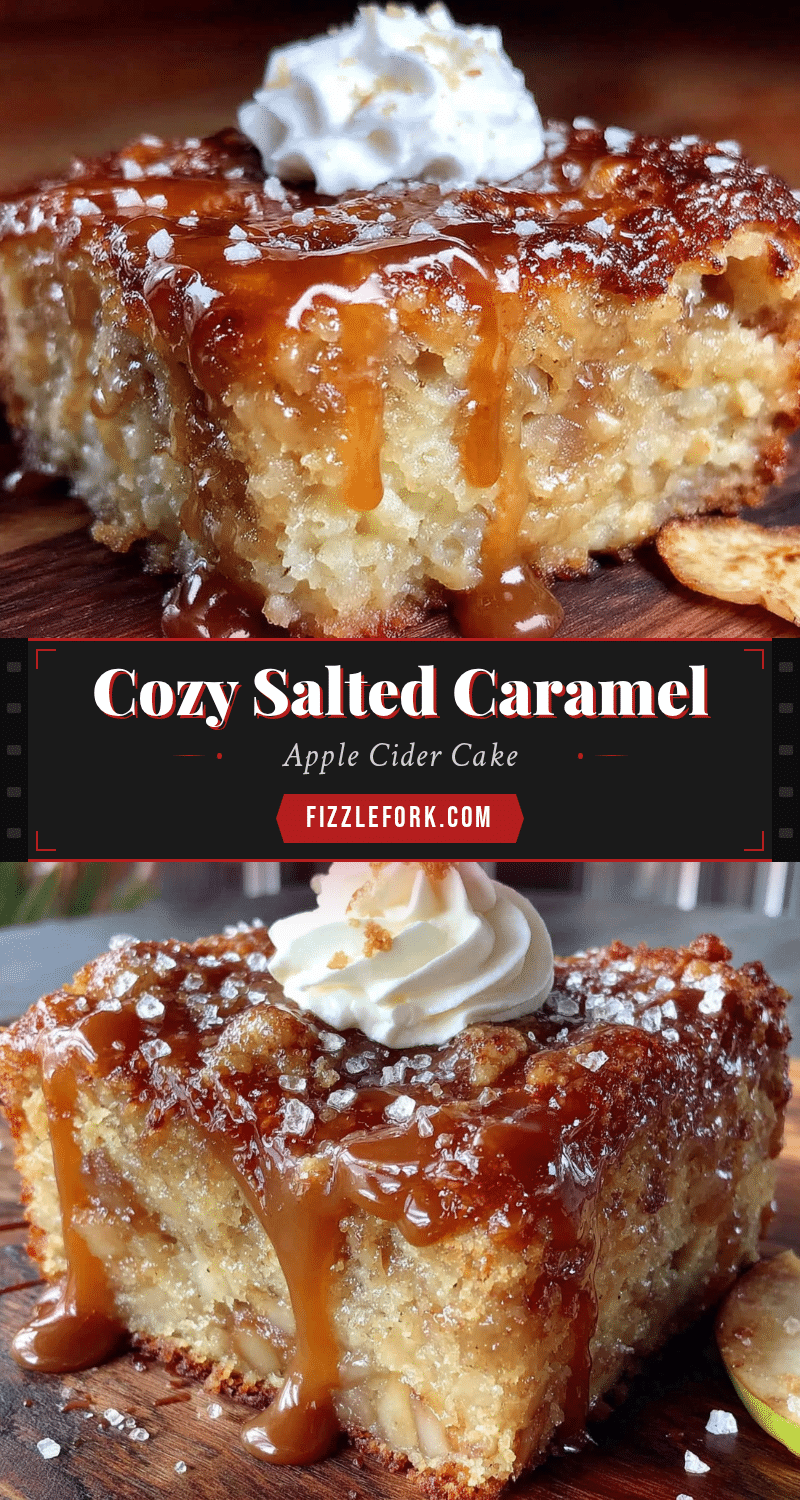
Cozy Caramel Apple Cider Cake with Salted Caramel Drizzle

A moist, tender apple cider cake with deep apple flavor from reduced cider, topped with a homemade salted caramel drizzle. Perfect for cozy fall days.
- Prep Time: 20 minutes
- Cook Time: 60 minutes
- Total Time: 1 hour 20 minutes
- Yield: 10 servings
- Category: Dessert
- Cuisine: American
Ingredients
- Apple cider, 2 cups (480 ml)
- All-purpose flour, 2 ½ cups (312 g)
- Granulated sugar, 1 cup (200 g)
- Light brown sugar, ½ cup (100 g), packed
- Unsalted butter, ½ cup (113 g), softened
- Vegetable oil, ¼ cup (60 ml)
- Large eggs, 2, room temperature
- Buttermilk, ½ cup (120 ml)
- Vanilla extract, 2 teaspoons
- Ground cinnamon, 2 teaspoons
- Ground nutmeg, ½ teaspoon
- Ground cloves, ¼ teaspoon
- Baking powder, 2 teaspoons
- Baking soda, ½ teaspoon
- Salt, ½ teaspoon
- Granulated sugar, ½ cup (100 g) (for caramel)
- Unsalted butter, 3 tablespoons (42 g), cut into pieces (for caramel)
- Heavy cream, ¼ cup (60 ml), room temperature (for caramel)
- Flaky sea salt, ½ teaspoon (for caramel)
- Vanilla extract, 1 teaspoon (for caramel)
Instructions
- Reduce the apple cider: Pour 2 cups of apple cider into a medium saucepan. Bring to a boil over medium-high heat, then reduce to a simmer. Cook for 15-20 minutes, stirring occasionally, until reduced to about ½ cup and syrupy. Remove from heat and let cool completely.
- Preheat oven to 350°F (175°C). Grease a 9×5-inch loaf pan and line with parchment paper, leaving overhang on the long sides.
- Mix dry ingredients: In a medium bowl, whisk together flour, cinnamon, nutmeg, cloves, baking powder, baking soda, and salt. Set aside.
- Cream butter and sugars: In a large bowl, beat softened butter, granulated sugar, and brown sugar together until light and fluffy, about 3 minutes.
- Add wet ingredients: Beat in vegetable oil, then add eggs one at a time, mixing well after each. Stir in vanilla extract.
- Alternate dry and wet: Add dry ingredients in three additions, alternating with buttermilk, starting and ending with dry. Mix just until combined.
- Fold in reduced cider: Gently fold in the cooled reduced apple cider with a rubber spatula until just combined.
- Pour batter into prepared loaf pan and smooth the top. Bake for 50-60 minutes, until a toothpick inserted into the center comes out clean or with a few moist crumbs. If browning too quickly, tent with foil at 40 minutes.
- Cool in pan for 15 minutes, then lift out using parchment and transfer to a wire rack to cool completely.
- Make salted caramel: Place ½ cup granulated sugar in a small saucepan over medium heat. Stir constantly until sugar melts into a golden amber liquid, about 5-7 minutes. Remove from heat. Whisk in butter pieces until melted. Slowly pour in warm heavy cream while whisking (mixture will bubble). Whisk in vanilla and flaky sea salt. Let cool for 10 minutes to thicken.
- Once cake is completely cool, drizzle salted caramel over the top. Let set for 5 minutes before slicing.
Notes
Don’t skip reducing the cider—it concentrates the apple flavor. Room temperature ingredients are important for proper emulsification. Watch the caramel closely as it can burn quickly. Let the cake cool completely before adding caramel to prevent it from melting off.
Nutrition
- Serving Size: 1 slice (1/10 of cak
- Calories: 380
- Sugar: 35
- Sodium: 280
- Fat: 18
- Saturated Fat: 8
- Carbohydrates: 52
- Fiber: 2
- Protein: 4
Keywords: apple cider cake, caramel apple cake, fall dessert, salted caramel, autumn baking, apple cake, cozy cake