I was standing in the frozen food aisle last November, staring at a box of stuffing mix, when the smell of sage hit me from somewhere — someone walked by with a bouquet of herbs, maybe, or it was just my brain playing tricks. And suddenly I was seven years old in Miss Etta’s kitchen, her flour-dusted hands pressing my tiny fingers into the cornbread dough because she said you had to “put your love right in there.” She wasn’t my grandmother — she was my neighbor, a retired schoolteacher who took me under her wing when my mom worked late. That kitchen smelled like bacon grease and butter and something green I couldn’t name back then. Sage. It was always sage. I grabbed a bag of cornmeal instead of the box mix and walked out. I mean, honestly, maybe you’ve been there — that moment when a recipe chooses you instead of the other way around. I called my mama that night and asked if she remembered how Miss Etta made her dressing. Neither of us could quite recall the exact measurements, just the feeling of it: warm, savory, with that unmistakable sage that seemed to wrap around you like a hug. It took me six tries to get it right. Six pans of dressing, some too dry, some too wet, one that my husband politely called “interesting.” But this version — this is the one. This is the one that made me close my eyes after the first bite and see Miss Etta’s yellow kitchen again.
Why You’ll Love This Recipe
This isn’t your grandmother’s dressing — well, actually, it could be, but with a few smart tweaks that make it work for how we eat today. After testing this recipe more times than I care to admit, I can tell you exactly why it’s become my go-to for every holiday, potluck, and random Tuesday when I need comfort food.
- Simple Ingredients: No fancy grocery trips needed. Cornmeal, buttermilk, eggs, onions, celery, and sage — that’s the backbone. You probably have most of this in your kitchen right now.
- Perfect for Meal Prep: You can make the cornbread two days ahead and the dressing a day ahead. It actually gets better as the flavors meld together in the fridge.
- Crowd-Pleaser: Every time I bring this to a gathering, someone asks for the recipe. It’s that good. Even the picky eaters go back for seconds.
- Freezer-Friendly: Make a double batch and freeze one for later. It thaws beautifully and tastes just as fresh.
- Unbelievably Delicious: The texture is what gets me — crisp edges, tender center, and that sage flavor that’s bold but not overpowering. It’s comfort food at its finest.
What makes this recipe different? It’s the balance. Most dressings are either too dry or too mushy. This one hits that sweet spot where every bite holds together but still feels moist. The secret is in how you prepare the cornbread — we’re not just crumbling it dry. We’re toasting it first to get that perfect texture. And the sage? We’re using both dried and fresh, because trust me, that makes all the difference.
This is the kind of recipe that makes you feel like you’ve got this whole cooking thing figured out. It’s wholesome, it’s satisfying, and it’s the dish everyone will remember.
What Ingredients You Will Need
This recipe uses simple, wholesome ingredients that come together to create something truly special. Most of these are pantry staples, which makes this dressing perfect for last-minute holiday planning or a cozy Sunday dinner.
For the Cornbread
- 1 ½ cups yellow cornmeal (I prefer Martha White or White Lily for that authentic Southern texture)
- ½ cup all-purpose flour
- 1 tablespoon baking powder
- 1 teaspoon salt
- 1 tablespoon sugar (just a touch — we’re not making sweet cornbread here)
- 2 large eggs, room temperature
- 1 ½ cups buttermilk, shaken well
- ¼ cup unsalted butter, melted (plus more for the pan)
For the Dressing

- 6 cups crumbled day-old cornbread (about one 9×13 pan)
- 2 cups low-sodium chicken broth (or vegetable broth for a vegetarian version)
- ½ cup unsalted butter
- 1 large yellow onion, finely diced (about 1 ½ cups)
- 3 celery stalks, finely diced (about 1 cup)
- 3 cloves garlic, minced
- 2 tablespoons fresh sage, chopped (about 8-10 leaves)
- 1 ½ teaspoons dried sage (I like Spice Islands for consistent quality)
- 1 teaspoon dried thyme
- ½ teaspoon dried rosemary, crushed
- 1 teaspoon salt, plus more to taste
- ½ teaspoon black pepper, freshly ground
- 2 large eggs, lightly beaten
- ¼ cup fresh parsley, chopped (for garnish)
Ingredient Tips
For the cornbread, use a coarse-ground cornmeal if you can find it — it gives the dressing a better texture. If you only have fine-ground, that works too, just reduce the baking time by a few minutes. Look for fresh sage with firm, fragrant leaves. If you’re using dried sage, make sure it’s not more than six months old for the best flavor. And here’s a trick I learned from my friend Carol: toast the dried herbs in a dry skillet for about 30 seconds before adding them to the dressing. It wakes up their oils and makes the flavor pop.
Equipment Needed
You don’t need a lot of fancy equipment for this recipe, which is part of what makes it so approachable. Here’s what you’ll need:
- 9×13-inch baking dish (for the cornbread and the dressing)
- Large cast-iron skillet (if you have one, it makes the best cornbread — but a regular baking pan works fine)
- Large mixing bowl
- Medium skillet (for sautéing the vegetables)
- Sharp knife and cutting board
- Measuring cups and spoons
- Whisk
- Wooden spoon or spatula
- Cooling rack
If you don’t have a cast-iron skillet, don’t worry. I’ve made this cornbread in a glass baking dish for years and it turns out great. Just make sure to preheat the dish with the butter before adding the batter — that’s the secret to a good crust. And if you’re using a metal pan, reduce the oven temperature by 25 degrees to prevent over-browning.
Preparation Method
Step 1: Make the Cornbread (Day Before or 2 Days Ahead)
Preheat your oven to 425°F (218°C). Place your 9×13 baking dish or cast-iron skillet in the oven with 2 tablespoons of butter to melt while it preheats. In a large bowl, whisk together the cornmeal, flour, baking powder, salt, and sugar. In a separate bowl, whisk the eggs, then add the buttermilk and melted butter. Pour the wet ingredients into the dry and stir until just combined — a few lumps are okay, don’t overmix. Carefully remove the hot dish from the oven, swirl the melted butter to coat the bottom, then pour in the batter. Bake for 20-25 minutes until golden brown and a toothpick inserted in the center comes out clean. Let it cool completely on a rack, then cover and leave it on the counter overnight. The cornbread needs to be at least a day old for the best dressing texture — fresh cornbread will turn mushy.
Step 2: Prepare the Cornbread
Once the cornbread is day-old, preheat your oven to 350°F (177°C). Crumble the cornbread into a large bowl using your hands — aim for uneven pieces, some smaller crumbs and some larger chunks. Spread the crumbled cornbread on a baking sheet and toast in the oven for 10-12 minutes, stirring halfway through. You want it lightly golden and dry to the touch, but not browned. This step is crucial — it prevents the dressing from turning into a soggy mess. Let it cool while you prepare the vegetables.
Step 3: Sauté the Vegetables
In a large skillet, melt the ½ cup of butter over medium heat. Add the diced onion and celery and cook for 8-10 minutes, stirring occasionally, until the onion is translucent and the celery is tender. Add the minced garlic and cook for one more minute until fragrant. Remove from heat and stir in the fresh sage, dried sage, thyme, rosemary, salt, and pepper. Let this mixture cool for about 5 minutes — you don’t want it to scramble the eggs later.
Step 4: Combine Everything
In the large bowl with the toasted cornbread, pour the sautéed vegetable mixture over the top and toss gently to combine. In a separate small bowl, whisk the beaten eggs with 1 cup of the chicken broth. Pour this over the cornbread mixture and stir gently. Add the remaining cup of broth, one quarter at a time, stirring after each addition. The mixture should look moist but not soupy — if you press it with a spoon, a little liquid should come to the surface. If it looks dry, add another ¼ cup of broth. Let the mixture sit for 10 minutes to allow the cornbread to absorb the liquid.
Step 5: Bake the Dressing
Preheat your oven to 375°F (190°C). Grease a 9×13 baking dish with butter or non-stick spray. Transfer the dressing mixture to the prepared dish and spread it evenly. Bake for 35-40 minutes until the top is golden brown and the edges are crisp. The center should be set but still slightly moist — if you jiggle the dish, it should wobble just a little. Let it rest for 10-15 minutes before serving. This resting time is important — it allows the dressing to firm up so you get clean slices instead of a scoop.
Cooking Tips & Techniques
I learned most of these the hard way, let me tell you. The first time I made this dressing, I used fresh cornbread straight out of the oven. It turned into what my husband lovingly called “cornbread pudding.” Tasted fine, but the texture was all wrong. So here’s what I know now:
Day-old cornbread is non-negotiable. I know it’s tempting to make everything the same day, but the cornbread needs time to dry out. If you’re in a pinch, you can cube the fresh cornbread and bake it at 300°F for 15-20 minutes to dry it out, but it’s not quite the same.
Toast the crumbled cornbread. This was the game-changer for me. That extra 10 minutes in the oven makes the cornbread absorb the broth without getting mushy. You get those perfect tender-but-structured bites.
Don’t skip the resting time. After you mix everything together, let it sit for 10 minutes before baking. This gives the cornbread time to soak up the liquid evenly. I once skipped this step because I was running late, and the dressing came out uneven — dry in some spots, wet in others.
Use two types of sage. Fresh sage gives you that bright, herbal note, while dried sage brings the deeper, earthier flavor that we all associate with Thanksgiving. Using both gives you a more complex flavor profile.
Watch your salt. Chicken broth has a lot of sodium, so start with less salt and add more at the end if needed. You can always add salt, but you can’t take it out.
Variations & Adaptations
One of the things I love about this recipe is how flexible it is. Here are some variations I’ve tried and loved:
Vegetarian Version
Swap the chicken broth for a good-quality vegetable broth. I like Better Than Bouillon vegetable base — it has a rich, savory flavor that works beautifully here. Add an extra tablespoon of butter to compensate for the lack of chicken fat.
Gluten-Free Option
Use a gluten-free cornmeal blend and replace the all-purpose flour with an equal amount of gluten-free all-purpose flour. I’ve tested this with King Arthur Measure for Measure and it works perfectly. Just make sure your broth is also gluten-free.
Sausage and Sage Dressing
Brown 1 pound of ground pork sausage (I like Jimmy Dean mild) in the skillet before sautéing the vegetables. Remove the sausage with a slotted spoon, then cook the vegetables in the rendered fat instead of butter. Add the sausage back in when you combine everything. This version is a hit at my family’s Christmas dinner.
Mushroom and Leek Variation
Sauté 8 ounces of sliced cremini mushrooms with the onions and celery, and replace half the onion with chopped leeks (white and light green parts only). This adds an earthy, umami flavor that’s perfect for a vegetarian version.
Herb Swap
If you’re not a sage fan (though I can’t imagine why), try using fresh thyme and rosemary instead. Use 2 tablespoons of fresh thyme leaves and 1 tablespoon of chopped fresh rosemary. It gives the dressing a more Mediterranean flavor profile.
Serving & Storage Suggestions
This dressing is best served warm, straight from the oven. I like to let it rest for 10-15 minutes, then cut it into squares and serve it on a platter. It pairs beautifully with roasted turkey, baked ham, or even a simple roast chicken. For a vegetarian meal, serve it alongside a hearty mushroom gravy and roasted root vegetables.
For storage, let the dressing cool completely, then cover the dish tightly with foil or plastic wrap. It will keep in the refrigerator for up to 4 days. The flavors actually get better after a day or two as the herbs meld together.
To reheat, place the covered dish in a 350°F oven for 15-20 minutes, or until heated through. If the dressing seems dry, drizzle a little warm broth over the top before reheating. You can also reheat individual portions in the microwave for 1-2 minutes, but the edges won’t be as crisp.
This dressing freezes beautifully. Wrap the cooled dish tightly in plastic wrap, then in foil, and freeze for up to 3 months. To thaw, move it to the refrigerator overnight, then reheat as directed above. I always make a double batch for Thanksgiving and freeze one for a cozy winter dinner.
Nutritional Information & Benefits
Per serving (about ¾ cup, based on 12 servings):
| Nutrient | Amount |
|---|---|
| Calories | 285 |
| Total Fat | 16g |
| Saturated Fat | 9g |
| Cholesterol | 85mg |
| Sodium | 520mg |
| Total Carbohydrates | 28g |
| Dietary Fiber | 2g |
| Sugars | 4g |
| Protein | 7g |
This dressing is a good source of fiber from the cornmeal and celery, and the eggs provide high-quality protein. Sage is rich in antioxidants and has anti-inflammatory properties. The buttermilk adds calcium and probiotics (if you use cultured buttermilk). While this isn’t a low-calorie dish, it’s made with whole, recognizable ingredients — no preservatives or artificial flavors. I think of it as a wholesome indulgence, the kind of food that nourishes both body and soul.
For those watching their sodium, use low-sodium broth and reduce the added salt to ½ teaspoon. You can also use a plant-based butter to reduce saturated fat.
Conclusion
This Southern Sage Cornbread Dressing is more than just a side dish — it’s a connection to the people and places that shaped us. Every time I make it, I think of Miss Etta’s yellow kitchen and her flour-dusted hands. And every time I take that first bite, I’m seven years old again, learning that the best food is made with love and a generous hand with the sage.
I hope this recipe becomes a tradition in your home, too. Don’t be afraid to make it your own — add more sage if you love it, throw in some sausage if that’s your thing, or keep it simple and let the cornbread shine. The beauty of this dressing is that it’s forgiving and flexible, just like the best family recipes.
I’d love to hear how it turns out for you! Drop a comment below and let me know if you tried any variations, or tag me in your photos on social media. Happy cooking, friends — and don’t forget to put your love right in there.
Frequently Asked Questions
Can I make this dressing ahead of time?
Absolutely! You can assemble the dressing completely (up to step 4) a day ahead, cover it, and refrigerate. When you’re ready to bake, let it sit at room temperature for 30 minutes, then bake as directed. You may need to add 5-10 minutes to the baking time since it starts cold.
Can I use boxed cornbread mix?
You can, but I don’t recommend it. Boxed mixes tend to be sweeter, which throws off the savory balance of the dressing. If you’re in a pinch, use a mix and reduce or omit the sugar in the recipe. But honestly, homemade cornbread is so easy and tastes so much better — it’s worth the extra few minutes.
Why is my dressing dry?
This usually happens if the cornbread was too dry to begin with, or if you didn’t add enough broth. Next time, try adding an extra ¼ cup of broth and make sure your cornbread isn’t over-toasted. You can also try covering the dish with foil for the first 20 minutes of baking to trap steam.
Can I make this dairy-free?
Yes! Use a plant-based butter (I like Miyoko’s or Earth Balance) and replace the buttermilk with 1 ½ cups of unsweetened almond or oat milk mixed with 1 tablespoon of lemon juice. Let it sit for 5 minutes before using. The texture will be slightly different, but still delicious.
How do I get crispy edges on my dressing?
Spread the dressing in a thin, even layer — no more than 2 inches deep. Bake it uncovered, and if you want extra crispy edges, turn on the broiler for the last 2-3 minutes. Watch it carefully so it doesn’t burn. A metal or cast-iron pan also helps create crispier edges than glass or ceramic.
Pin This Recipe!
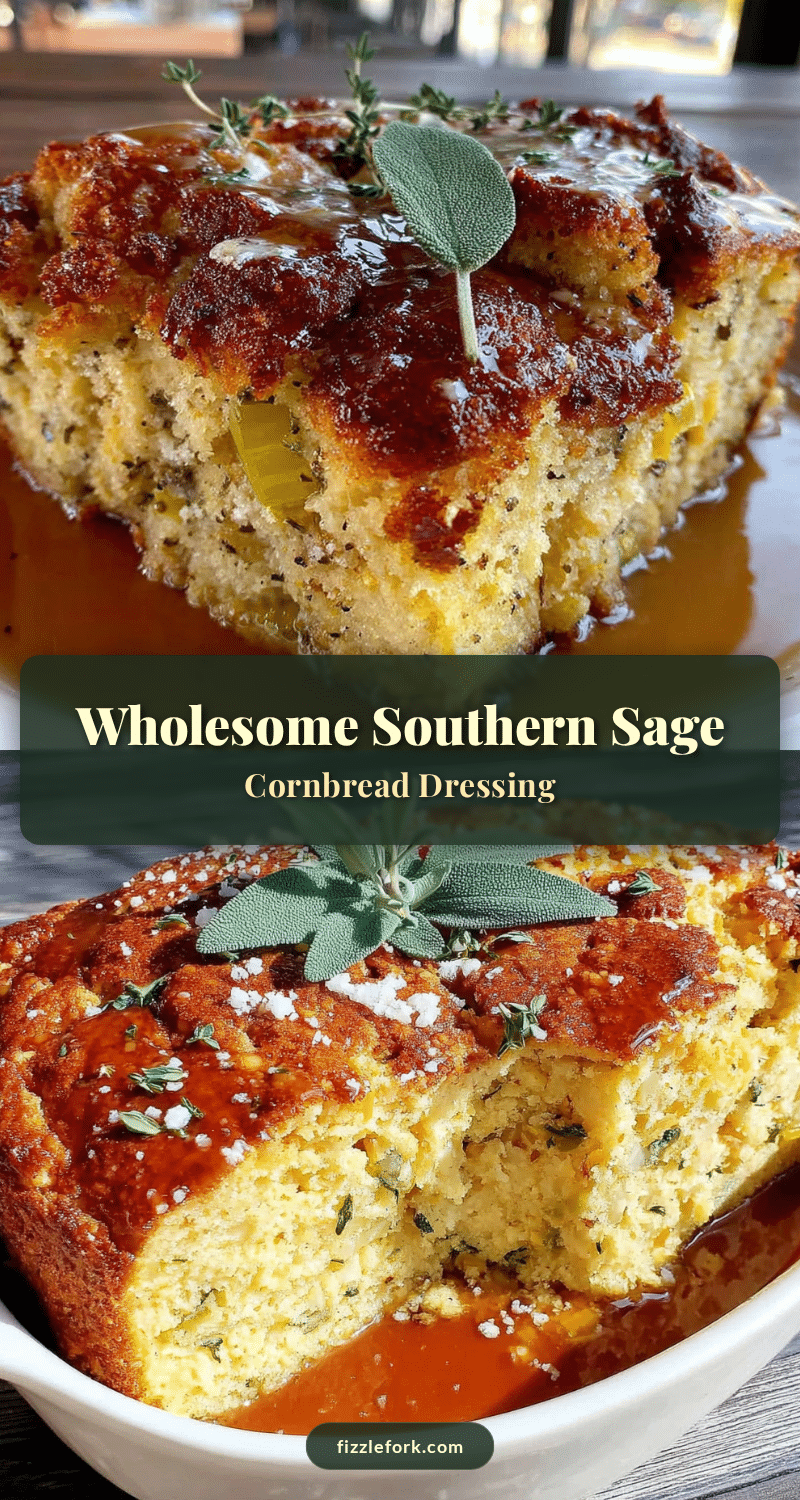
Best Southern Sage Cornbread Dressing Recipe (Easy)

This Southern Sage Cornbread Dressing is a comforting, savory side dish with crisp edges and a tender center, featuring a perfect balance of fresh and dried sage. It’s a crowd-pleaser that’s freezer-friendly and perfect for holidays or any cozy meal.
- Prep Time: 30 minutes
- Cook Time: 1 hour 5 minutes
- Total Time: 1 hour 35 minutes (plus overnight for cornbread)
- Yield: 12 servings 1x
- Category: Side Dish
- Cuisine: Southern
Ingredients
- 1 ½ cups yellow cornmeal
- ½ cup all-purpose flour
- 1 tablespoon baking powder
- 1 teaspoon salt
- 1 tablespoon sugar
- 2 large eggs, room temperature
- 1 ½ cups buttermilk, shaken well
- ¼ cup unsalted butter, melted (plus more for the pan)
- 6 cups crumbled day-old cornbread (about one 9x13 pan)
- 2 cups low-sodium chicken broth (or vegetable broth for vegetarian)
- ½ cup unsalted butter
- 1 large yellow onion, finely diced (about 1 ½ cups)
- 3 celery stalks, finely diced (about 1 cup)
- 3 cloves garlic, minced
- 2 tablespoons fresh sage, chopped (about 8–10 leaves)
- 1 ½ teaspoons dried sage
- 1 teaspoon dried thyme
- ½ teaspoon dried rosemary, crushed
- 1 teaspoon salt, plus more to taste
- ½ teaspoon black pepper, freshly ground
- 2 large eggs, lightly beaten
- ¼ cup fresh parsley, chopped (for garnish)
Instructions
- Make the cornbread (day before or 2 days ahead): Preheat oven to 425°F (218°C). Place a 9×13 baking dish or cast-iron skillet in the oven with 2 tablespoons of butter to melt. In a large bowl, whisk together cornmeal, flour, baking powder, salt, and sugar. In a separate bowl, whisk eggs, then add buttermilk and melted butter. Pour wet ingredients into dry and stir until just combined. Carefully remove hot dish from oven, swirl melted butter to coat bottom, then pour in batter. Bake for 20-25 min…
- Prepare the cornbread: Once cornbread is day-old, preheat oven to 350°F (177°C). Crumble cornbread into a large bowl using your hands. Spread crumbled cornbread on a baking sheet and toast for 10-12 minutes, stirring halfway through, until lightly golden and dry but not browned. Let cool.
- Sauté the vegetables: In a large skillet, melt ½ cup butter over medium heat. Add diced onion and celery and cook for 8-10 minutes until onion is translucent and celery tender. Add minced garlic and cook for 1 minute until fragrant. Remove from heat and stir in fresh sage, dried sage, thyme, rosemary, salt, and pepper. Let cool for about 5 minutes.
- Combine everything: In the large bowl with toasted cornbread, pour sautéed vegetable mixture over top and toss gently. In a small bowl, whisk beaten eggs with 1 cup chicken broth. Pour over cornbread mixture and stir gently. Add remaining cup of broth, one quarter at a time, stirring after each addition. Mixture should be moist but not soupy. Let sit for 10 minutes to allow cornbread to absorb liquid.
- Bake the dressing: Preheat oven to 375°F (190°C). Grease a 9×13 baking dish with butter or non-stick spray. Transfer dressing mixture to prepared dish and spread evenly. Bake for 35-40 minutes until top is golden brown and edges are crisp. Center should be set but still slightly moist. Let rest for 10-15 minutes before serving.
Notes
Day-old cornbread is non-negotiable for best texture. Toast the crumbled cornbread to prevent sogginess. Let the mixture rest for 10 minutes before baking to allow even absorption. Use both fresh and dried sage for complex flavor. Watch salt as chicken broth adds sodium. For crispy edges, spread dressing in a thin layer and bake uncovered.
Nutrition
- Serving Size: ¾ cup
- Calories: 285
- Sugar: 4
- Sodium: 520
- Fat: 16
- Saturated Fat: 9
- Carbohydrates: 28
- Fiber: 2
- Protein: 7
Keywords: cornbread dressing, sage dressing, Southern dressing, Thanksgiving dressing, holiday side dish, cornbread stuffing, sage cornbread dressing