I met Klaus at the community garden, not at a cooking class or a German deli like you might expect. He was in his late seventies then, tending to a patch of cabbages that looked like they were winning some kind of war against the weeds. I was struggling with my own raised bed, trying to convince a few tomato plants to survive the summer heat. He watched me for a good ten minutes, leaning on his rake, before he finally shuffled over and pointed at my soil. “Too dry,” he said, and that was it. No lecture, no advice I didn’t ask for. Just two words and a nod toward the hose.
Over the next few months, we fell into a quiet rhythm. I’d bring extra zucchini from my garden, and he’d appear with a jar of something pickled or a container of stew. The day he handed me a cast iron skillet full of bratwurst and apples, the smell was so deep and warm that I almost dropped it. “This is what we eat when the air gets cold,” he said, and I could tell he meant more than just the temperature. That skillet was a story about his childhood in Bavaria, about winters spent around small tables, about food that doesn’t try to impress you but somehow always does.
I’ve made this Easy German Bratwurst Skillet more times than I can count since then. Honestly, the first time I tried to recreate it, I burned the apples and the sausages came out rubbery. Klaus would have laughed, probably. But I kept at it, tweaking the timing, learning when to let the sauerkraut caramelize and when to pull it back. This version is my own now, respectful of his original but shaped by my own kitchen. Maybe you’ve had a moment like that, where someone shares something simple and it ends up becoming part of your regular rotation. That’s what this skillet is for me, and I think it might be for you too.
Why You’ll Love This Recipe
This isn’t just another sausage recipe. This Easy German Bratwurst Skillet is the kind of dinner that makes your whole kitchen smell like a cozy Oktoberfest tent, minus the crowds and the overpriced beer. I’ve tested this at least a dozen times, tweaking the apple-to-sauerkraut ratio, adjusting the cooking time for different bratwurst brands, and even trying it with chicken sausage when I wanted something lighter. Every single version worked, which is exactly what I want for you.
- 30-Minute Meal: From fridge to table in under half an hour. No marinating, no complicated steps, no waiting around. Perfect for those weeknights when you’re tired but still want something that feels special.
- Simple Ingredients: You likely have the oil, salt, and pepper already. The bratwurst, apples, and sauerkraut are easy to find at any grocery store. No specialty trips required.
- Perfect for Cold Weather: This is the meal you want when the wind is howling and you need something that fills the house with warmth. It’s comfort in a cast iron skillet.
- Crowd-Pleaser: I’ve served this to kids who claimed they didn’t like sauerkraut and adults who asked for the recipe before finishing their plate. It’s got that magic balance of savory and sweet.
- Unbelievably Delicious: The way the apples soften and soak up the bratwurst juices, the way the sauerkraut gets slightly crispy at the edges, the way the whole thing comes together in one pan with minimal cleanup. This is next-level comfort food.
What makes this recipe different from all the other skillet dinners out there is the technique. Most recipes just throw everything in a pan and hope for the best. I’ve learned that browning the bratwurst first, then building the apple and sauerkraut mixture in the same pan, creates layers of flavor that you can’t get any other way. It’s not complicated, but it makes a real difference. This is the kind of meal that makes you close your eyes after the first bite, not because it’s fancy, but because it tastes like exactly what you needed.
What Ingredients You Will Need
This recipe uses simple, hearty ingredients that come together to create something genuinely satisfying. The key is using good-quality bratwurst and letting the apples and sauerkraut do their thing in the same pan.
- 4 bratwurst sausages (about 1 pound total; I prefer Johnsonville or a brand from a local butcher for the best flavor)
- 2 tablespoons olive oil (or any neutral cooking oil; avocado oil works too)
- 1 medium yellow onion, thinly sliced (about 1 cup sliced)
- 2 medium apples, cored and sliced into ¼-inch wedges (I recommend Honeycrisp or Granny Smith for a good balance of sweet and tart)
- 1 ½ cups sauerkraut, drained but not rinsed (rinsing removes the tangy flavor that makes this dish work)
- ½ cup apple cider (or unsweetened apple juice; adds a subtle sweetness that ties everything together)
- 1 teaspoon caraway seeds (optional but highly recommended; they add that classic German flavor)
- ½ teaspoon salt
- ¼ teaspoon black pepper
- 1 tablespoon Dijon mustard (for serving; whole-grain mustard works beautifully too)
- Fresh parsley, chopped (for garnish; optional but adds a nice pop of color)
Let me talk about the bratwurst for a second. I’ve tried this with both fresh and pre-cooked bratwurst, and I have to say, fresh is better. Pre-cooked works in a pinch, but you won’t get that same juicy texture and deep flavor. Look for raw bratwurst in the meat section of your grocery store. If you can’t find it, Italian sausage makes a decent substitute, though the flavor profile will shift a bit.
For the apples, I’ve used Gala, Fuji, and even Pink Lady varieties. They all work, but Honeycrisp holds its shape better during cooking and gives you that nice contrast between soft and slightly firm. Granny Smith apples add more tartness, which is great if you prefer a less sweet dish. Just make sure you core them and slice them evenly so they cook at the same rate.
The sauerkraut is worth a mention too. I’ve tried bagged, jarred, and canned versions. Bagged sauerkraut from the refrigerated section tends to have the best texture and flavor. If you can find it, look for brands that don’t have a ton of added preservatives. And please, don’t rinse it. You want that tangy juice to flavor the whole dish.
Equipment Needed
You don’t need a lot of fancy gear for this recipe, which is part of why I love it. Here’s what you’ll need:
- Large cast iron skillet (12-inch is ideal; if you don’t have cast iron, a heavy-bottomed stainless steel skillet works fine)
- Sharp knife (for slicing apples and onions)
- Cutting board
- Wooden spoon or spatula (for stirring; metal can scratch some pans)
- Tongs (for turning the bratwurst)
- Measuring cups and spoons
- Small bowl (for draining the sauerkraut)
If you don’t have a cast iron skillet, don’t worry. I’ve made this in a regular non-stick pan and it turned out great. The cast iron just gives you better browning and heat retention, but it’s not essential. I picked up my skillet at a thrift store for eight dollars, and it’s been with me for years. You don’t need to spend a lot to get good results.
One tip: if you’re using a non-stick pan, avoid using metal utensils. They can scratch the coating, and nobody wants that. Stick with wood or silicone.
Preparation Method
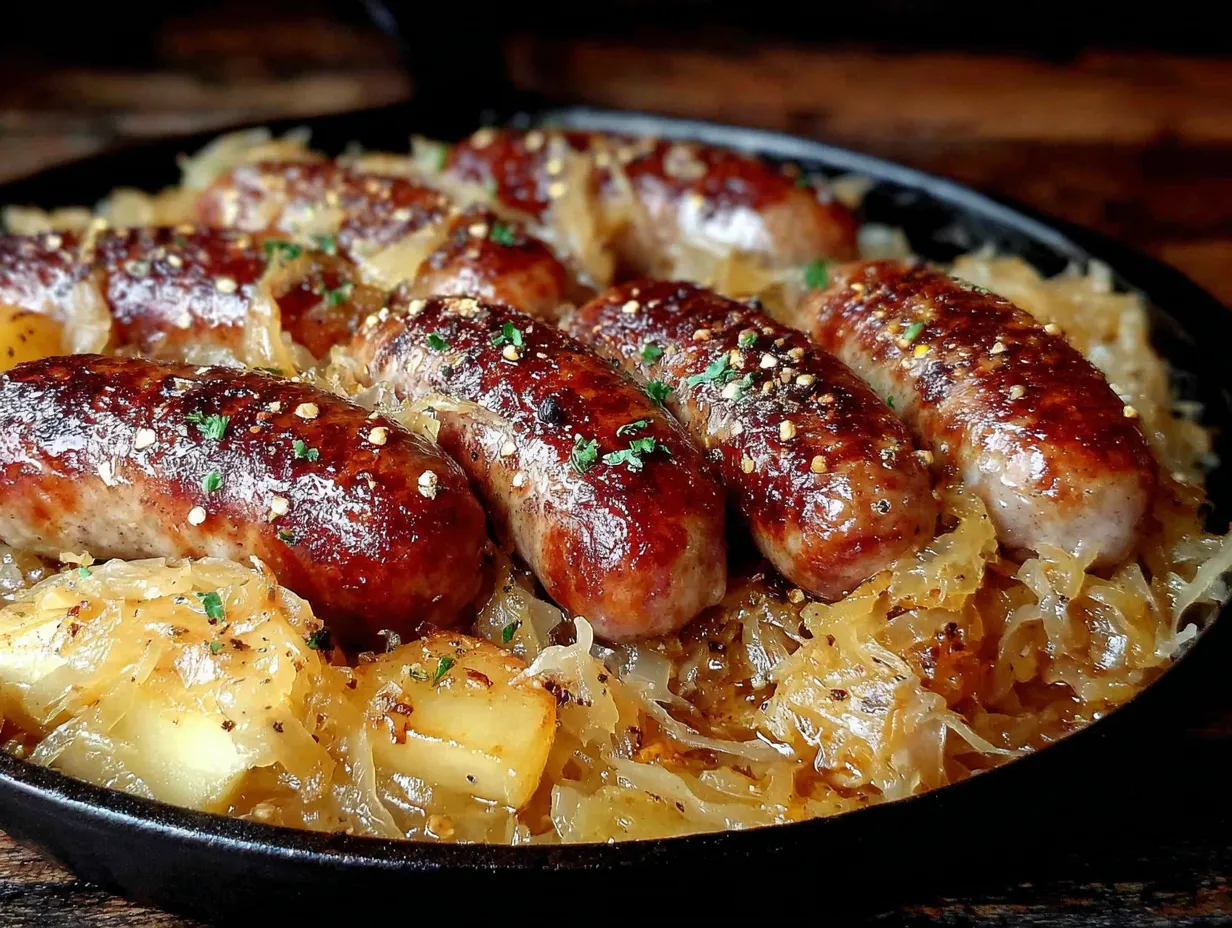
Let me walk you through this step by step. I’ve made this so many times that I could do it with my eyes closed, but I’ll share all the little details that make it work.
- Prep your ingredients first. Slice the onion into thin half-rings. Core the apples and cut them into wedges about ¼-inch thick. Drain the sauerkraut in a small bowl and set it aside. Having everything ready before you start cooking makes the whole process smoother. I learned this the hard way after burning a batch of onions while trying to slice an apple.
- Heat your skillet over medium heat. Add 1 tablespoon of olive oil and let it warm up for about 30 seconds. You want the oil to shimmer, not smoke. Place the bratwurst in the skillet and cook for about 5-7 minutes, turning occasionally with tongs, until they’re browned on all sides. They don’t need to be cooked through yet, just nicely colored. The browning adds so much flavor.
- Remove the bratwurst and set them aside on a plate. Don’t wipe out the skillet. Those browned bits stuck to the bottom are pure flavor gold. Leave them right where they are.
- Add the remaining 1 tablespoon of olive oil to the same skillet. Toss in the sliced onions and cook for about 3-4 minutes, stirring occasionally, until they start to soften and turn translucent. If the pan looks dry, add a splash of apple cider to loosen things up.
- Add the apple wedges to the skillet. Cook for another 3-4 minutes, stirring gently, until the apples start to soften and get a little color on the edges. The smell at this point is incredible, sweet and savory all at once.
- Stir in the drained sauerkraut and caraway seeds (if using). Cook for 2 minutes, letting the sauerkraut warm through and absorb some of the flavors in the pan. Season with salt and pepper.
- Pour in the apple cider and stir everything together. Let it simmer for about 1 minute, scraping up any browned bits from the bottom of the skillet. This is called deglazing, and it’s the secret to a deeply flavorful dish.
- Nestle the browned bratwurst back into the skillet, pushing them down into the apple-sauerkraut mixture. Reduce the heat to medium-low, cover the skillet, and let everything cook for 10-12 minutes. The bratwurst will finish cooking through, and the apples will become tender but still hold their shape.
- Remove the lid and check the bratwurst. They should be firm to the touch and register at least 160°F internally. If they’re not quite there, cover and cook for another 2-3 minutes.
- Serve immediately. Spoon the apple-sauerkraut mixture onto plates, top with the bratwurst, and add a dollop of Dijon mustard on the side. Garnish with fresh parsley if you’re feeling fancy.
A few things to watch for: if the apples start to fall apart, you’ve cooked them a bit too long. They should be tender but still have some structure. And if the sauerkraut starts to stick to the pan, just add another splash of apple cider or water. No big deal.
Cooking Tips & Techniques
I’ve made every mistake you can imagine with this recipe, so let me save you some trouble. The first time I made it, I cooked the bratwurst on high heat and ended up with burnt outsides and raw centers. Not good. Medium heat is your friend here. It gives the sausages time to cook through without scorching.
Another thing I learned: don’t overcrowd the pan. If you’re making a double batch, cook the bratwurst in two rounds. Crowding the pan lowers the temperature and steams the sausages instead of browning them. You want that beautiful golden crust, and you can only get it when the pan isn’t packed.
Let’s talk about the apples. I used to slice them too thin, and they’d turn into mush. Now I cut them into wedges about the thickness of my pinky finger. That way they soften but still have some bite. And don’t stir them too much once they’re in the pan. Let them sit and get a little caramelized on one side before you flip them.
Timing is everything with this dish. While the bratwurst is browning, I slice the apples and onions. While the onions are cooking, I drain the sauerkraut. It all comes together in about 25 minutes, and there’s never a dull moment. Multitasking like this makes the whole process feel effortless.
One more tip: taste the sauerkraut before you add it. Some brands are saltier than others. If yours is particularly salty, you might want to skip the extra salt in the recipe. Trust your taste buds on this one.
Variations & Adaptations
This recipe is pretty forgiving, and I’ve tried a few different versions over the years. Here are some of my favorites:
- Chicken or Turkey Sausage: For a lighter option, swap the pork bratwurst for chicken or turkey sausage. The cooking time stays about the same, but the flavor will be a bit milder. I’ve done this on weeknights when I wanted something less heavy, and it still hits the spot.
- Gluten-Free: Most bratwurst is gluten-free, but double-check the label. Some brands use fillers that contain gluten. Serve with mashed potatoes or crusty gluten-free bread on the side.
- Spicy Version: Add a pinch of red pepper flakes along with the caraway seeds, or use spicy bratwurst if you can find it. The heat pairs surprisingly well with the sweet apples.
- Beer instead of Apple Cider: If you want a more traditional German flavor, use a dark beer like a Munich dunkel or a bock instead of apple cider. The beer adds a rich, malty depth that’s really nice. Just let it simmer for an extra minute or two to cook off the alcohol.
- Add Potatoes: Toss in some halved baby potatoes along with the onions. They’ll need a few extra minutes to cook, but they make the dish even heartier. I’ve done this on cold winter nights when I wanted a one-pan meal that really stuck to the ribs.
I once tried this with pear instead of apple, just to see what would happen. It was good, but the pears broke down faster and made the dish a bit sweeter than I wanted. Stick with apples for the best balance.
Serving & Storage Suggestions
This skillet is best served hot, straight from the pan. I like to spoon the apple-sauerkraut mixture onto plates first, then lay the bratwurst on top. A generous smear of Dijon mustard on the side is non-negotiable in my kitchen. The mustard cuts through the richness of the sausage and brightens up the whole dish.
For sides, you can’t go wrong with mashed potatoes or crusty rye bread. Both are perfect for soaking up the juices at the bottom of the plate. A simple green salad with a tangy vinaigrette also works well, adding some freshness to balance the hearty flavors. If you’re feeling ambitious, serve it with a warm pretzel and some beer cheese for the full German experience.
Storage is simple. Let any leftovers cool completely, then transfer them to an airtight container. They’ll keep in the refrigerator for up to 3 days. The flavors actually meld together overnight, so leftovers might taste even better the next day.
To reheat, I recommend using a skillet over medium-low heat. Add a splash of water or apple cider to loosen things up, cover, and warm through for about 5-7 minutes. The microwave works in a pinch, but it can make the sausages rubbery and the apples mushy. The stovetop gives you much better results.
You can freeze this dish too. Place the cooled mixture in a freezer-safe container and store for up to 2 months. Thaw overnight in the refrigerator before reheating. I’ve done this a few times when I made a double batch, and it’s always been a lifesaver on busy nights.
Nutritional Information & Benefits
Here’s an approximate breakdown per serving (one bratwurst with about a cup of the apple-sauerkraut mixture):
- Calories: 420
- Protein: 18g
- Fat: 28g
- Carbohydrates: 22g
- Fiber: 5g
- Sugar: 14g
- Sodium: 980mg
This dish has some surprising health benefits. Sauerkraut is fermented, which means it’s packed with probiotics that support gut health. It’s also a good source of vitamin C and vitamin K. Apples add fiber and antioxidants, particularly in the skin, so don’t peel them. The bratwurst provides protein and B vitamins, though it’s higher in saturated fat, so enjoy it in moderation.
If you’re watching your sodium intake, look for low-sodium sauerkraut and skip the added salt in the recipe. You can also use turkey bratwurst to cut the fat content significantly. This isn’t a health food, but it’s a balanced meal that leaves you feeling satisfied, not stuffed.
Conclusion
This Easy German Bratwurst Skillet has become my go-to for those nights when I need something warm, comforting, and unfussy. It reminds me of Klaus and his quiet wisdom, of the way food can carry stories without saying a word. The combination of savory sausage, sweet apples, and tangy sauerkraut is one of those perfect flavor partnerships that just works.
I hope you’ll give this recipe a try, and I hope you’ll make it your own. Maybe you’ll add a little extra mustard, or swap in a different type of apple, or serve it with a side of potato salad. That’s the beauty of a simple skillet meal, it leaves room for your own touch. When you make it, let me know how it turns out. Drop a comment below, share a photo, or tell me about your own kitchen story. I’d love to hear it.
Until next time, happy cooking and warm bellies.
Frequently Asked Questions
Can I use pre-cooked bratwurst for this recipe?
Yes, you can. Pre-cooked bratwurst will save you a few minutes of cooking time. Just brown them as directed, then reduce the covered cooking time to about 5-7 minutes since they only need to be heated through.
What kind of apples work best in this dish?
Honeycrisp and Granny Smith are my top picks. Honeycrisp holds its shape well and adds sweetness, while Granny Smith brings tartness that balances the rich sausage. Gala and Fuji also work well.
Can I make this in a slow cooker?
You can, but the texture will be different. Brown the bratwurst and onions in a skillet first, then transfer everything to a slow cooker with the remaining ingredients. Cook on low for 4-5 hours. The apples will be softer and the sauerkraut less caramelized, but it’s still tasty.
Is this recipe keto-friendly?
It can be. The apples add some carbs, but you can reduce the amount or substitute with a lower-carb fruit like radishes or turnips. The sauerkraut and bratwurst are naturally low in carbs. Just watch the apple cider, which adds sugar.
How do I prevent the apples from turning into mush?
Don’t slice them too thin, and don’t overcook them. Aim for wedges about ¼-inch thick, and cook them just until they’re tender but still hold their shape. If you’re reheating leftovers, use the stovetop instead of the microwave to avoid turning them to mush.
Pin This Recipe!
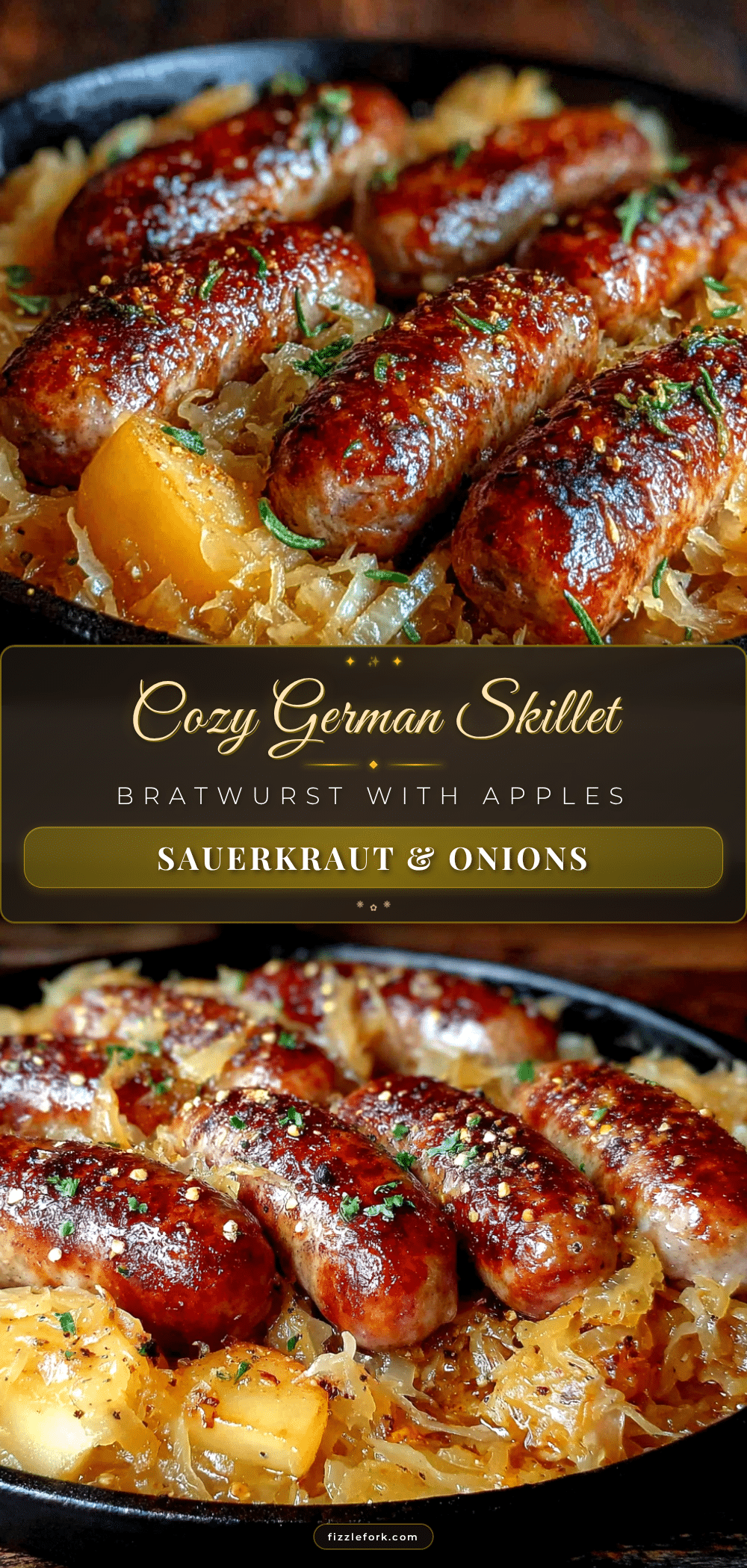
Easy German Bratwurst Skillet: 30-Minute Apple Sauerkraut Dinner

A quick and comforting one-pan meal featuring juicy bratwurst, sweet apples, and tangy sauerkraut, ready in just 30 minutes. Perfect for cozy weeknight dinners.
- Prep Time: 10 minutes
- Cook Time: 20 minutes
- Total Time: 30 minutes
- Yield: 4 servings 1x
- Category: Main Course
- Cuisine: German
Ingredients
- 4 bratwurst sausages (about 1 pound)
- 2 tablespoons olive oil
- 1 medium yellow onion, thinly sliced
- 2 medium apples (Honeycrisp or Granny Smith), cored and sliced into ¼-inch wedges
- 1 ½ cups sauerkraut, drained but not rinsed
- ½ cup apple cider (or unsweetened apple juice)
- 1 teaspoon caraway seeds (optional)
- ½ teaspoon salt
- ¼ teaspoon black pepper
- 1 tablespoon Dijon mustard (for serving)
- Fresh parsley, chopped (for garnish, optional)
Instructions
- Prep your ingredients first: slice the onion into thin half-rings, core the apples and cut into ¼-inch wedges, drain the sauerkraut.
- Heat a large cast iron skillet over medium heat. Add 1 tablespoon olive oil and let it warm for 30 seconds. Place the bratwurst in the skillet and cook for 5-7 minutes, turning occasionally, until browned on all sides. Remove and set aside.
- Add the remaining 1 tablespoon olive oil to the same skillet. Add the sliced onions and cook for 3-4 minutes, stirring occasionally, until softened and translucent.
- Add the apple wedges to the skillet and cook for 3-4 minutes, stirring gently, until they start to soften and get some color.
- Stir in the drained sauerkraut and caraway seeds (if using). Cook for 2 minutes. Season with salt and pepper.
- Pour in the apple cider and stir, scraping up any browned bits from the bottom. Let simmer for 1 minute.
- Nestle the browned bratwurst back into the skillet, pushing them into the apple-sauerkraut mixture. Reduce heat to medium-low, cover, and cook for 10-12 minutes until bratwurst is cooked through (internal temperature of 160°F).
- Serve immediately: spoon the apple-sauerkraut mixture onto plates, top with bratwurst, and add a dollop of Dijon mustard. Garnish with fresh parsley if desired.
Notes
For best results, use fresh (raw) bratwurst rather than pre-cooked. Don’t rinse the sauerkraut to preserve its tangy flavor. Slice apples evenly to ensure even cooking. If using a non-stick pan, avoid metal utensils.
Nutrition
- Serving Size: 1 bratwurst with abo
- Calories: 420
- Sugar: 14
- Sodium: 980
- Fat: 28
- Saturated Fat: 10
- Carbohydrates: 22
- Fiber: 5
- Protein: 18
Keywords: bratwurst, German, skillet, apple, sauerkraut, 30-minute meal, one-pan dinner