It was 11:47 PM on a Tuesday in late October, and I had a very specific craving for something sweet, salty, and deeply savory all at once. I didn’t have the chicken I’d planned to roast, but I had a forgotten butternut squash rolling around in the bottom of the crisper drawer and a half-bag of pecans from a baking project last month. The idea that arrived was weirdly specific—roast it hot, let the edges get all crispy and caramelized, and then throw some salty cheese on top because, honestly, when doesn’t that work?
I was in my pajamas, the kitchen was a mess from a failed attempt at cleaning, and I was too tired to overthink it. I just chopped, drizzled, and tossed that squash in a mix of maple syrup and olive oil—no measuring, just vibes—and slid it into the oven. The whole house filled with this warm, nutty smell that felt like a hug you didn’t know you needed. I mean, there’s something about roasting vegetables late at night that feels almost meditative, you know? No pressure, no audience, just you and the sizzle.
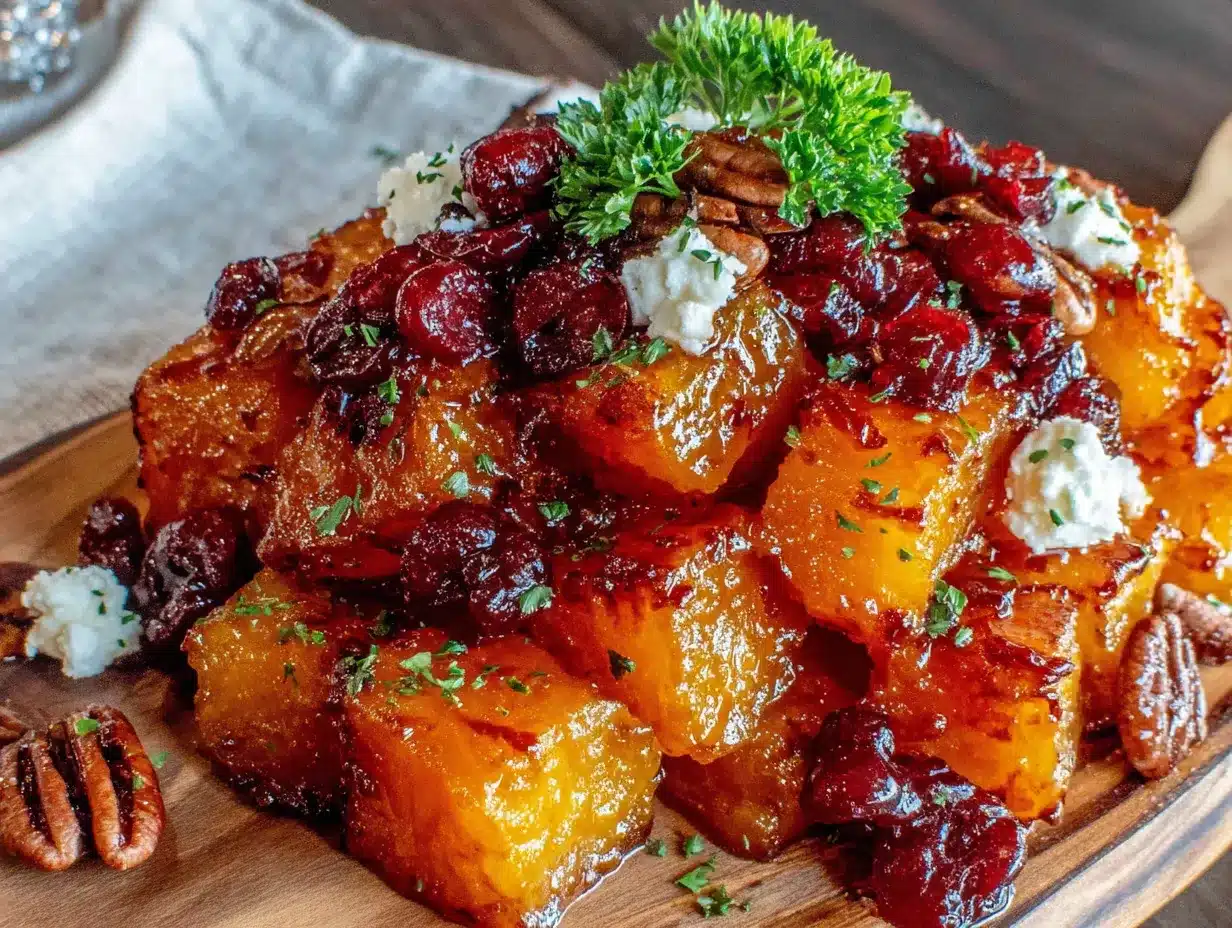
When it came out, all golden and sticky, I crumbled some feta over the top and stood at the counter eating it straight from the pan. It was messy, imperfect, and absolutely perfect. That’s the thing about this Easy Maple Roasted Butternut Squash with Pecans & Feta—it doesn’t need a fancy occasion or a clean kitchen. It just needs you to be hungry for something that tastes like comfort. Maybe you’ve been there, standing in your kitchen at a weird hour, craving something that feels both indulgent and wholesome. This is that dish.
And honestly? I’ve been making it on purpose ever since.
Why You’ll Love This Recipe
Let me tell you, this isn’t just another roasted vegetable side dish. This is the kind of recipe that makes you look forward to cold weather. I’ve tested it at least a dozen times—sometimes with different squashes, once with walnuts when I ran out of pecans (still good, but not the same), and even tried it with a balsamic glaze that was fine but missed the mark. This version? It’s the one.
- Quick & Easy: Comes together in about 40 minutes, with only 10 minutes of active prep. Perfect for those nights when you want something impressive without the stress.
- Simple Ingredients: No fancy grocery trips needed. You probably have maple syrup, olive oil, and salt in your pantry right now. Just grab a squash, some pecans, and feta.
- Perfect for Cozy Nights: This is comfort food at its finest. The sweetness of the maple, the crunch of the pecans, the salty tang of feta—it’s like a warm blanket on a plate.
- Crowd-Pleaser: I brought this to a Friendsgiving last year, and even the self-proclaimed “squash haters” went back for seconds. Kids love it, adults love it, everyone loves it.
- Unbelievably Delicious: The texture is what gets me every time. The edges get all crispy and caramelized from the high heat, while the inside stays tender and buttery. It’s next-level comfort food.
What makes this recipe different from all the others? It’s the balance. Most roasted squash recipes are either too sweet or too savory. This one hits that perfect middle ground where the maple syrup enhances the natural sweetness of the squash without overwhelming it, and the feta cuts through with just enough saltiness. I’ve tried versions that called for honey (too floral), brown sugar (too cloying), or no sweetener at all (boring). Maple syrup is the Goldilocks of this dish—just right.
This recipe isn’t just good—it is the kind that makes you close your eyes after the first bite. It’s comfort food reimagined: healthier than you’d expect, faster than you’d think, but with the same soul-soothing satisfaction. Perfect for impressing guests without stress, or turning a simple Tuesday night into something memorable.
What Ingredients You Will Need
This recipe uses simple, wholesome ingredients that come together to deliver bold flavor and satisfying texture without any fuss. Most of these are pantry staples or easy to find at any grocery store. Here’s what you’ll need:
For the Roasted Squash
- 1 medium butternut squash (about 2-3 pounds), peeled, seeded, and cut into 1-inch cubes (look for one that feels heavy for its size—that means it’s fresh and moist inside)
- 3 tablespoons pure maple syrup (use the real stuff, not pancake syrup—I prefer Grade A Dark Amber for its richer flavor)
- 2 tablespoons olive oil (extra virgin works great, but a lighter olive oil is fine too)
- ½ teaspoon salt (I use kosher salt for better control)
- ¼ teaspoon black pepper, freshly ground
- ¼ teaspoon cinnamon (optional, but adds a lovely warmth that pairs beautifully with the maple)
- Pinch of cayenne pepper (optional—just a tiny bit for a subtle kick that nobody will quite be able to name)
For the Topping
- ½ cup pecan halves (or chopped pecans—I like halves for the visual appeal, but chopped works just as well)
- ⅓ cup crumbled feta cheese (use a good quality feta—I prefer one packed in brine for the best texture and flavor)
- 1 tablespoon fresh thyme leaves (optional, but highly recommended for that pop of freshness)
- Extra drizzle of maple syrup for serving (because why not?)
Ingredient Tips & Substitutions:
- Butternut squash: You can substitute with acorn squash, delicata squash, or even sweet potatoes. If using delicata, you don’t even need to peel it—the skin is tender and edible when roasted.
- Maple syrup: For a less sweet version, use half the amount. Honey or agave nectar work in a pinch, but the flavor profile will shift slightly.
- Pecans: Walnuts are the best substitute here—they have a similar texture and earthy flavor. Pine nuts work too, but they’re pricier.
- Feta: Goat cheese is a fantastic swap if you want something creamier. For a dairy-free version, use a vegan feta or simply omit it—the dish is still delicious.
- Fresh thyme: Dried thyme works, but use half the amount. Rosemary is also a lovely alternative.
Equipment Needed
You don’t need a fancy kitchen to pull this off. Here’s what you’ll need:
- Large baking sheet (half-sheet pan is ideal—about 18×13 inches. If you don’t have one, use the largest baking sheet you own. Crowding the pan leads to steaming instead of roasting.)
- Sharp chef’s knife (for cutting the squash—this is non-negotiable. A dull knife with a hard squash is a recipe for disaster. I learned this the hard way after a near-miss with my thumb.)
- Vegetable peeler (a Y-shaped peeler works best for butternut squash’s curved shape)
- Large mixing bowl (for tossing the squash with oil and maple syrup)
- Spatula or tongs (for flipping the squash halfway through roasting)
- Cutting board (get a big one—you’ll need space for that squash)
Budget-Friendly Tips: Don’t have a good chef’s knife? A sturdy serrated knife can work for cutting squash in a pinch. No baking sheet? Use a casserole dish or even a cast-iron skillet (though you might need to roast in batches). I’ve made this in a toaster oven before—just reduce the temperature by 25°F and check early.
Maintenance Tip: If you’re using a high-quality baking sheet, avoid putting it in the dishwasher. Hand-wash it to prevent warping. Trust me on this—I’ve ruined two good pans that way.
Preparation Method
Let’s get cooking. This is straightforward, but I’ll walk you through every step so you get those perfect caramelized edges.
Step 1: Preheat and Prep (5 minutes)
Preheat your oven to 425°F (220°C). Line your baking sheet with parchment paper if you want easier cleanup—I usually do, but it’s not strictly necessary. The squash will caramelize better directly on the pan, but the parchment makes life easier. Your call.
Step 2: Prep the Squash (10 minutes)
This is the most labor-intensive part, but I promise it’s worth it. First, cut off both ends of the butternut squash so it stands flat on your cutting board. Use a sharp vegetable peeler to remove the skin—go deep enough to get past the tough outer layer but not so deep you’re wasting flesh. Cut the squash in half lengthwise and scoop out the seeds with a spoon (save them for roasting later if you’re feeling ambitious—they make a great snack).
Now cut the squash into 1-inch cubes. Try to make them roughly the same size so they cook evenly. I know, it’s tedious, but uneven pieces mean some will be burnt and some will be undercooked. Take your time here.
Sensory cue: The squash should feel firm and dense as you cut it. If it feels spongy or gives easily, it might be past its prime.
Step 3: Season and Toss (5 minutes)
In a large mixing bowl, combine the cubed squash, maple syrup, olive oil, salt, pepper, cinnamon (if using), and that tiny pinch of cayenne. Toss everything together with your hands—yes, get in there—until every piece is evenly coated. The maple syrup will feel a bit sticky, but that’s exactly what we want.
Personal tip: I used to use a spatula for this, but I switched to my hands and never looked back. You can feel when every piece is coated, and it’s oddly satisfying. Plus, less dishes to wash.
Step 4: Roast the Squash (25-30 minutes)
Spread the squash in a single layer on your prepared baking sheet. Make sure there’s space between the pieces—if they’re touching, they’ll steam instead of caramelize. If your pan is too small, use two pans or roast in batches.
Roast for 15 minutes, then flip each piece with a spatula or tongs. The bottoms should be starting to brown and caramelize. Roast for another 10-15 minutes, until the edges are deeply golden and the squash is fork-tender.
Sensory cue: Your kitchen should smell like a cozy fall candle—sweet, nutty, and warm. The squash should look glossy and slightly shriveled at the edges, with deep brown caramelization spots.
Step 5: Add the Pecans (2-3 minutes)
In the last 5 minutes of roasting, sprinkle the pecan halves over the squash and return to the oven. This toasts them just enough to bring out their oils without burning them. Keep an eye on them—pecans go from perfectly toasted to burnt in about 30 seconds. I’ve made that mistake more times than I’d like to admit.
Step 6: Finish and Serve (2 minutes)
Remove the pan from the oven and let it cool for 2-3 minutes. Transfer to a serving platter or leave it on the pan if you’re being casual (no judgment here). Sprinkle the crumbled feta and fresh thyme leaves over the top. Drizzle with an extra touch of maple syrup if you’re feeling indulgent.
Warning: The pan is hot. I may or may not have grabbed a hot baking sheet without a towel once. Don’t be like me.
Cooking Tips & Techniques
After making this Easy Maple Roasted Butternut Squash with Pecans & Feta more times than I can count, I’ve picked up a few tricks that make a real difference. Here are the ones I swear by:
The High Heat Secret
425°F isn’t a suggestion—it’s the key to getting those caramelized edges. Lower temperatures will cook the squash through, but you won’t get that sticky-sweet crust that makes this dish special. I once tried roasting at 375°F because I was making it alongside a chicken that needed a lower temp, and the result was… fine. Just fine. Not great. Don’t compromise on the heat.
Don’t Skip the Flip
I know it’s tempting to just throw the pan in the oven and forget about it, but flipping the squash halfway through is crucial. The bottom of each piece gets direct contact with the hot pan, and that’s where the best caramelization happens. If you don’t flip, you’ll have one caramelized side and one pale side. We’re not making half-hearted squash here.
The Crowded Pan Mistake
This is the most common mistake I see. If your squash pieces are touching or overlapping, they’ll steam in their own moisture instead of roasting. You’ll end up with soft, pale squash instead of caramelized, golden goodness. Use two pans if you need to. Your future self will thank you.
Timing the Pecans
Add the pecans late—about 5 minutes before the squash is done. If you add them at the beginning, they’ll burn and turn bitter. I learned this the hard way when I made this for a dinner party and ended up with charcoal-flavored nuts. Not my finest moment.
Make-Ahead Strategy
You can peel and cube the squash up to 2 days in advance. Store it in an airtight container in the fridge. This is a game-changer for holiday cooking when you’re already juggling a million things. Just toss and roast when you’re ready.
Variations & Adaptations
One of the best things about this recipe is how flexible it is. Here are some variations I’ve tried and loved:
Spicy Maple Squash
Add ½ teaspoon of red pepper flakes along with the cayenne for a more pronounced heat. The sweetness of the maple and the spice create this incredible contrast that keeps you coming back for another bite. I made this version for a game-day gathering, and it was gone before the wings.
Herb-Infused Version
Swap the thyme for fresh rosemary or sage. Chop them finely and toss with the squash before roasting. The earthy herbs balance the sweetness beautifully. This version is especially good with roasted pork or chicken.
Vegan Adaptation
Simply omit the feta or use a vegan feta alternative. The dish is still incredibly flavorful without it—the maple and pecans do most of the heavy lifting. I’ve also tried it with toasted coconut flakes on top for a different kind of richness, and it was surprisingly good.
Balsamic Twist
Replace 1 tablespoon of maple syrup with balsamic vinegar. The acidity cuts through the sweetness and adds a tangy complexity. This version pairs beautifully with grilled meats or as part of a grain bowl with farro and arugula.
Air Fryer Method
If you’re short on time, you can make this in an air fryer. Toss the cubed squash with the oil and maple syrup, then air fry at 400°F for 12-15 minutes, shaking the basket halfway through. Add the pecans for the last 3 minutes. The texture is slightly different—crispier on the outside—but equally delicious.
Serving & Storage Suggestions
How to Serve
This dish is best served warm, straight from the oven. The feta will be soft and slightly melted, the pecans crunchy, and the squash tender and caramelized. I like to serve it on a large platter so everyone can see those beautiful golden pieces.
Temperature: Let it rest for 2-3 minutes after roasting—this lets the flavors settle and prevents burning your mouth. I’ve definitely dug in too early and regretted it.
What to Pair It With
- Main Dishes: This squash is incredible alongside roasted chicken, grilled pork chops, or a hearty lentil loaf. It also makes a fantastic side for Thanksgiving or Christmas dinners.
- Grains: Serve it over a bed of quinoa, farro, or wild rice for a vegetarian main dish. The nutty grains complement the sweet squash perfectly.
- Salads: Toss leftovers into a salad with arugula, dried cranberries, and a simple vinaigrette. The warm squash wilts the greens slightly, creating a lovely warm salad.
- Beverages: A glass of dry Riesling or a tart apple cider pairs beautifully with the sweet and savory flavors.
Storage Instructions
Refrigerator: Store leftovers in an airtight container for up to 5 days. The texture will soften slightly, but the flavor actually gets better as it sits—the maple syrup continues to permeate the squash.
Freezer: You can freeze the roasted squash (without the feta and pecans) for up to 3 months. Thaw in the refrigerator overnight, then reheat in a 350°F oven for 10 minutes. Add fresh feta and pecans after reheating.
Reheating Tips
The best way to reheat this is in the oven at 350°F for 5-7 minutes. The microwave works in a pinch, but it will make the squash soft and the pecans lose their crunch. If you’re in a hurry, spread it on a baking sheet and pop it under the broiler for 1-2 minutes—watch it carefully so the pecans don’t burn.
How Flavors Develop
Here’s a secret: this dish is even better the next day. The maple syrup continues to soak into the squash, making it even more flavorful. The feta softens and kind of melts into the crevices. I’ve been known to make a double batch just so I have leftovers for lunch the next day.
Nutritional Information & Benefits
This Easy Maple Roasted Butternut Squash with Pecans & Feta isn’t just delicious—it’s packed with nutrients that make you feel good about eating it.
Estimated Nutritional Values (per serving, about 1 cup):
- Calories: 220
- Protein: 5g
- Fat: 12g (mostly healthy fats from olive oil and pecans)
- Carbohydrates: 28g
- Fiber: 5g
- Sugar: 12g (naturally occurring from the squash and maple syrup)
- Sodium: 320mg
- Vitamin A: 350% of your daily needs (butternut squash is a powerhouse!)
- Vitamin C: 35% of your daily needs
- Calcium: 10% of your daily needs
Health Benefits:
- Butternut squash is rich in beta-carotene, which your body converts to vitamin A for healthy vision and immune function. It’s also high in fiber, which supports digestive health.
- Pecans are packed with healthy monounsaturated fats, which are good for heart health. They also contain magnesium and zinc.
- Olive oil provides anti-inflammatory antioxidants and healthy fats.
- Feta cheese adds calcium and protein, plus a dose of probiotics if you use the unpasteurized kind.
Dietary Considerations: This recipe is naturally gluten-free and vegetarian. For a vegan version, omit the feta or use a plant-based alternative. It’s also relatively low in added sugar—most of the sweetness comes from the squash itself.
Potential Allergens: Contains dairy (feta) and tree nuts (pecans). If you have a nut allergy, substitute the pecans with pumpkin seeds or sunflower seeds for a similar crunch.
Conclusion
Here’s the thing about this Easy Maple Roasted Butternut Squash with Pecans & Feta—it’s the kind of recipe that proves you don’t need complicated techniques or fancy ingredients to make something truly special. It’s simple, honest, and deeply satisfying. Whether you’re making it for a holiday feast, a weeknight dinner, or a late-night craving (no judgment), it delivers every single time.
I love this recipe because it reminds me that cooking doesn’t have to be stressful to be good. It’s forgiving—you can use a different squash, swap the nuts, skip the feta—and it still works. It’s the kind of dish that makes you feel like you’ve got this, even on days when you’re not so sure.
So go ahead, make it your own. Add more spice, less cheese, extra pecans—whatever feels right. And when you do, I’d love to hear about it. Drop a comment below, share your twist on the recipe, or tag me in your photos. There’s nothing I love more than seeing how you make this dish your own.
Now go roast some squash. You deserve it.
Frequently Asked Questions
Can I use frozen butternut squash for this recipe?
You can, but I don’t recommend it. Frozen squash releases a lot of water as it thaws, which means it will steam instead of caramelizing. If you’re in a pinch, thaw the squash completely and pat it very dry with paper towels before roasting. The texture won’t be quite the same, but it’ll still taste good.
How do I cut a butternut squash safely?
This is the number one question I get. First, microwave the whole squash for 2-3 minutes to soften it slightly—this makes cutting much easier. Use a sharp chef’s knife, not a paring knife. Cut off both ends so it sits flat, then peel with a Y-shaped peeler. Cut it in half lengthwise, scoop out the seeds, then lay each half flat and cut into cubes. And please, for the love of good cooking, watch your fingers.
Can I make this recipe ahead of time for a party?
Absolutely. You can prep the squash up to 2 days in advance and store it in the fridge. On the day of your party, just toss it with the oil and maple syrup and roast as directed. You can also roast the squash a day ahead, then reheat it in a 350°F oven for 10 minutes before adding the feta and pecans. The flavor actually gets better overnight.
What can I use instead of maple syrup?
Honey is the best substitute—it has a similar consistency and sweetness level. Brown sugar works too, but dissolve it in the olive oil first so it distributes evenly. Agave nectar is another option, though it’s thinner and slightly less flavorful. Just avoid artificial sweeteners—they don’t caramelize the same way and can leave a bitter aftertaste.
How do I keep the pecans from burning?
Timing is everything. Add the pecans in the last 5 minutes of roasting, not at the beginning. Also, make sure they’re spread out in a single layer so they toast evenly. If your oven runs hot, check them after 3 minutes. Burnt pecans are sad pecans, and we don’t do sad pecans here.
Pin This Recipe!
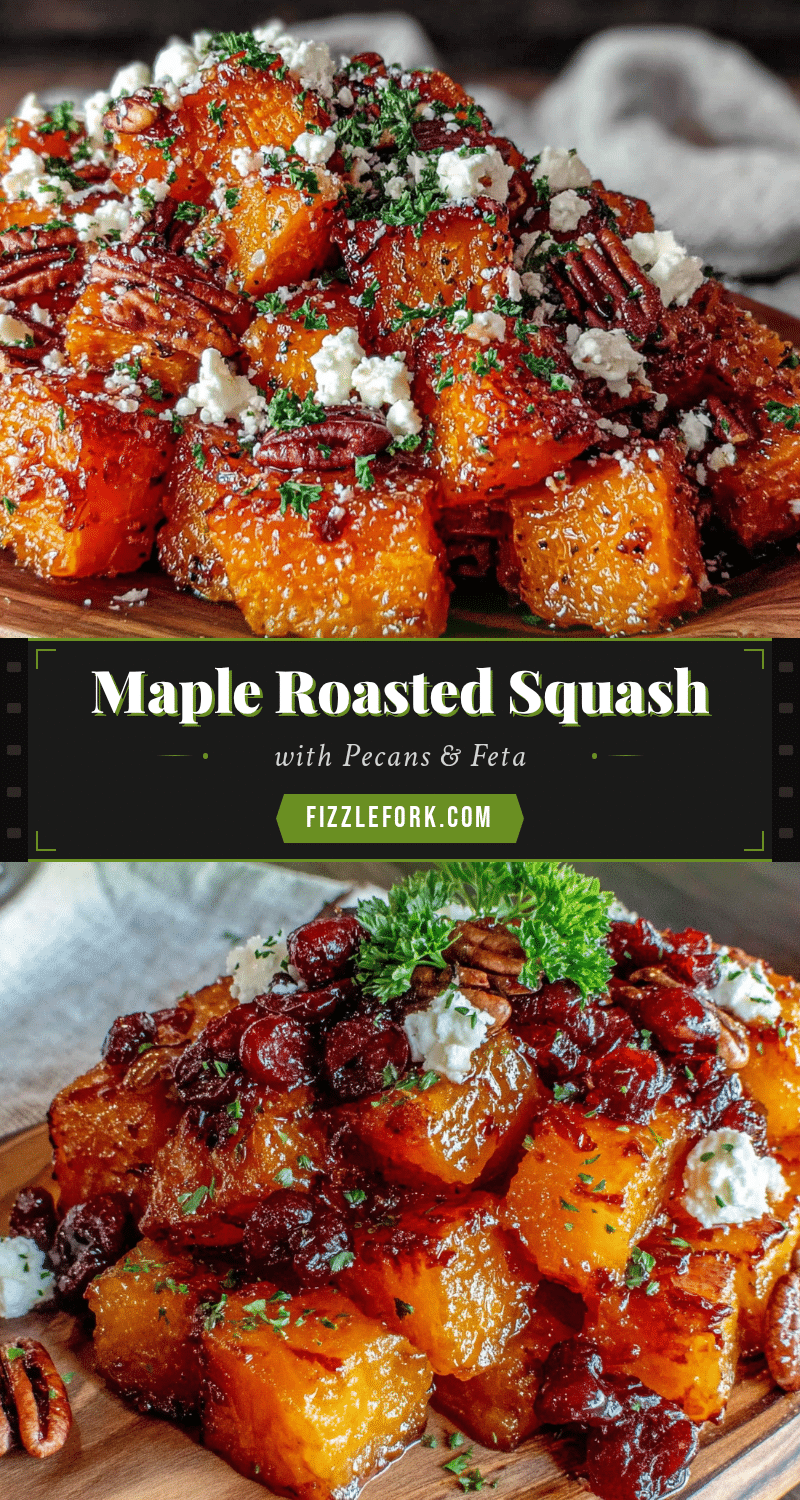
Easy Maple Roasted Butternut Squash with Pecans & Feta
This easy roasted butternut squash is tossed with maple syrup and olive oil, then roasted until caramelized and topped with crunchy pecans and salty feta. It’s the perfect balance of sweet and savory, ready in about 40 minutes.
- Prep Time: 10 minutes
- Cook Time: 30 minutes
- Total Time: 40 minutes
- Yield: 4 servings 1x
- Category: Side Dish
- Cuisine: American
Ingredients
- 1 medium butternut squash (about 2–3 pounds), peeled, seeded, and cut into 1-inch cubes
- 3 tablespoons pure maple syrup (Grade A Dark Amber preferred)
- 2 tablespoons olive oil (extra virgin or light)
- ½ teaspoon kosher salt
- ¼ teaspoon freshly ground black pepper
- ¼ teaspoon cinnamon (optional)
- Pinch of cayenne pepper (optional)
- ½ cup pecan halves (or chopped pecans)
- ⅓ cup crumbled feta cheese (preferably packed in brine)
- 1 tablespoon fresh thyme leaves (optional)
- Extra drizzle of maple syrup for serving
Instructions
- Preheat your oven to 425°F (220°C). Line a large baking sheet with parchment paper if desired.
- Cut off both ends of the butternut squash so it stands flat. Use a sharp vegetable peeler to remove the skin. Cut the squash in half lengthwise and scoop out the seeds. Cut into 1-inch cubes, trying to make them roughly the same size.
- In a large mixing bowl, combine the cubed squash, maple syrup, olive oil, salt, pepper, cinnamon (if using), and cayenne (if using). Toss with your hands until every piece is evenly coated.
- Spread the squash in a single layer on the prepared baking sheet, making sure there is space between pieces. Roast for 15 minutes.
- Flip each piece with a spatula or tongs. Roast for another 10-15 minutes, until the edges are deeply golden and the squash is fork-tender.
- In the last 5 minutes of roasting, sprinkle the pecan halves over the squash and return to the oven to toast.
- Remove the pan from the oven and let it cool for 2-3 minutes. Transfer to a serving platter or leave on the pan. Sprinkle crumbled feta and fresh thyme leaves over the top. Drizzle with extra maple syrup if desired.
Notes
For best caramelization, do not crowd the pan—use two pans if needed. Add pecans in the last 5 minutes to prevent burning. The dish is even better the next day as flavors meld. For a vegan version, omit feta or use vegan feta. Substitute pecans with walnuts or pumpkin seeds if needed.
Nutrition
- Serving Size: 1 cup
- Calories: 220
- Sugar: 12
- Sodium: 320
- Fat: 12
- Saturated Fat: 3
- Carbohydrates: 28
- Fiber: 5
- Protein: 5
Keywords: roasted butternut squash, maple roasted squash, butternut squash with feta, easy squash recipe, fall side dish, Thanksgiving side dish, vegetarian, gluten-free