This was supposed to be a fancy braised short rib situation for a dinner party I was way too ambitious about hosting on a Tuesday. I had the full shopping list—bone-in short ribs, a whole bottle of decent red wine, fresh thyme bundles, the works. But somewhere between rushing home from work and realizing I had exactly zero clean pots big enough for stovetop braising, the plan fell apart. I grabbed the wrong cut of beef from the freezer—stew meat, not short ribs—and the only clean vessel in my kitchen was the slow cooker I hadn’t used since last winter. I was already fifteen minutes behind schedule, the wine was open, and honestly? I almost just ordered pizza.
What came out of that slow cooker eight hours later was nothing like the plan—and better. I mean, way better. The beef had broken down into these impossibly tender chunks, the wine had mellowed into this rich, savory broth that smelled like a French bistro, and the rosemary I’d tossed in on a whim had woven through everything like it belonged there all along. I stood over the pot with a ladle, tasting it three times because I couldn’t quite believe it. Maybe you’ve been there—that moment when a kitchen disaster turns into something you’ll make for the rest of your life.
That Tuesday night stew became my go-to for every busy weeknight since. It’s the recipe I make when I’m tired, when I’ve got nothing left in the tank, and when I need dinner to take care of itself while I handle everything else. It’s proof that you don’t need fancy cuts or complicated techniques to get deep, slow-cooked flavor. You just need a slow cooker, a little patience, and the willingness to let a mistake become your new favorite thing.
Why You’ll Love This Recipe
Let me tell you why this easy slow cooker beef stew with red wine and rosemary has earned a permanent spot in my weekly rotation. I’ve tested this recipe more times than I can count—through different cuts of beef, varying wine qualities, and even a few rosemary substitutions when my plant decided to die on me. This version is the winner, and here’s why it works so well for real life.
- Quick & Easy: Ten minutes of prep in the morning, and dinner’s ready when you walk in the door. No browning, no deglazing, no fuss. I mean it—just toss everything in and go.
- Simple Ingredients: You probably have half these ingredients already. Beef, carrots, potatoes, onion, garlic, rosemary. The wine is the only “special” thing, and honestly, any drinkable red will do.
- Perfect for Busy Weeknights: This is the definition of set-it-and-forget-it. While you’re working, running errands, or collapsing on the couch, this stew is quietly becoming amazing.
- Crowd-Pleaser: My picky-eating nephew asked for seconds. My neighbor who “doesn’t really like stew” asked for the recipe. It’s that good.
- Unbelievably Delicious: The red wine and rosemary create this deep, aromatic broth that tastes like you simmered it all day on the stove—because technically, you did, just with zero effort.
What makes this different from every other beef stew recipe out there? It’s the combination of using a full cup of red wine (don’t skimp!) and fresh rosemary sprigs that infuse slowly over hours. The wine breaks down the beef’s connective tissue while adding complexity, and the rosemary keeps everything tasting fresh and bright instead of heavy. It’s comfort food that doesn’t weigh you down—just warms you up from the inside out.
What Ingredients You Will Need
This recipe uses simple, hearty ingredients that work together to create deep, slow-cooked flavor without any complicated techniques. Most of these are pantry staples or easy to find at any grocery store.
For the Stew Base
- 2 pounds beef stew meat, cut into 1.5-inch cubes (chuck roast is my go-to; look for well-marbled pieces for the most tender results)
- 1 tablespoon olive oil (optional—only if you want to brown the beef; I skip it on busy mornings)
- 1 large yellow onion, diced (about 1.5 cups)
- 4 cloves garlic, minced (I use the pre-minced jarred stuff when I’m rushing—no shame)
- 4 medium carrots, peeled and cut into 1-inch chunks
- 3 medium potatoes, peeled and cubed (Yukon Gold hold their shape best; russets get a bit mushy but still taste great)
- 2 celery stalks, sliced (adds that classic stew flavor base)
For the Broth
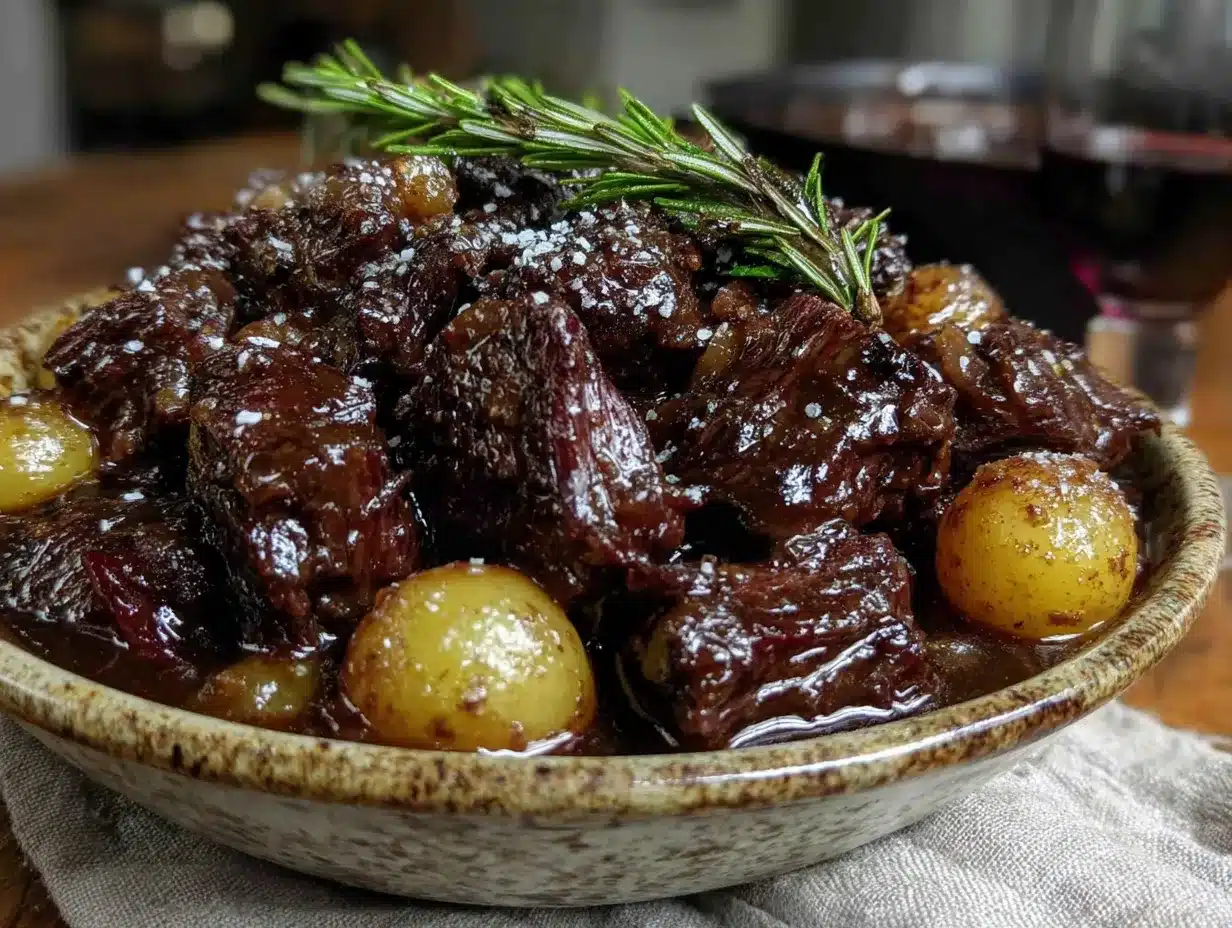
- 1 cup dry red wine (Cabernet Sauvignon or Merlot work beautifully; just use something you’d actually drink)
- 2 cups beef broth, low-sodium (I prefer Better Than Bouillon roasted beef base—it has deeper flavor than boxed broth)
- 2 tablespoons tomato paste (adds richness and helps thicken the broth)
- 2 tablespoons Worcestershire sauce (brings that umami depth)
- 2 fresh rosemary sprigs (dried works in a pinch—use 1 teaspoon, but fresh really makes a difference here)
- 2 bay leaves
- 1 teaspoon salt (plus more to taste)
- 1/2 teaspoon black pepper
- 1/2 teaspoon dried thyme
For Thickening (Optional)
- 2 tablespoons cornstarch mixed with 2 tablespoons cold water (add at the end if you want a thicker broth)
Ingredient Tips from My Kitchen: If you can find pasture-raised beef, the flavor difference is noticeable—it’s richer and the meat stays more tender. For the wine, I’ve used everything from a $8 bottle of Cab to a nicer Malbec, and honestly, the cheaper stuff works fine as long as it’s not sweet. Avoid cooking wines—they’re salty and weird. Just grab a regular bottle you’d drink with dinner. And if you’re out of fresh rosemary, dried works, but cut the amount to 1 teaspoon and add it earlier so it has time to rehydrate.
Equipment Needed
You don’t need a fancy kitchen setup for this recipe. Here’s what you’ll actually use:
- Slow cooker (4 to 6-quart size works perfectly; I use a 6-quart Crock-Pot and it gives plenty of room for stirring)
- Cutting board and sharp knife (a good chef’s knife makes dicing onions way less painful)
- Measuring cups and spoons
- Wooden spoon or spatula for stirring
- Small bowl for the cornstarch slurry (if you’re thickening at the end)
- Ladle for serving
Budget-Friendly Tip: If you don’t own a slow cooker, a Dutch oven works beautifully—just cook it in a 300°F oven for 3-4 hours instead. Or check your local thrift store; I found my backup slow cooker for $8, and it works like a dream. No need to buy fancy equipment for this one.
Preparation Method
This is where the magic happens. Follow these steps, and you’ll have the best slow cooker beef stew of your life—I promise.
- Prep your ingredients (10 minutes): Dice the onion, mince the garlic, chop the carrots, potatoes, and celery into bite-sized chunks. Cut the beef into uniform 1.5-inch cubes so everything cooks evenly. I do this the night before sometimes and store everything in the fridge—makes morning assembly take literally two minutes.
- Layer everything in the slow cooker (5 minutes): Place the beef chunks at the bottom of the slow cooker. Top with the onions, garlic, carrots, potatoes, and celery. Don’t stir yet—layering helps the beef stay submerged and cook evenly.
- Make the broth (3 minutes): In a separate bowl or large measuring cup, whisk together the red wine, beef broth, tomato paste, Worcestershire sauce, salt, pepper, and dried thyme. Pour this mixture over the ingredients in the slow cooker. Tuck the rosemary sprigs and bay leaves into the liquid so they’re fully submerged.
- Cook low and slow (8 hours on low or 4-5 hours on high): Cover and cook on LOW for 8 hours or HIGH for 4-5 hours. I always recommend LOW—the longer cooking time breaks down the beef’s connective tissue better, giving you those fork-tender chunks. If you’re in a hurry, HIGH works, but the beef won’t be quite as silky.
- Check for doneness (2 minutes): The stew is ready when the beef shreds easily with a fork and the vegetables are tender. Remove the rosemary stems and bay leaves—they’ve done their job.
- Thicken the broth (optional, 2 minutes): If you want a thicker, more traditional stew consistency, mix the cornstarch and cold water in a small bowl until smooth. Stir this slurry into the hot stew, then let it cook uncovered on HIGH for 15-20 minutes until it thickens. The broth will look glossy and coat the back of a spoon.
- Taste and adjust (1 minute): Give it a taste. Add more salt or pepper if needed. Sometimes I add an extra splash of Worcestershire if it needs more depth. Trust your taste buds here.
- Serve and enjoy: Ladle into bowls and serve hot. The stew will be steaming, the beef will be melt-in-your-mouth tender, and the aroma will make everyone in the house wander into the kitchen asking what’s for dinner.
Sensory Cue: When it’s done, the broth should be a deep mahogany color, the beef should offer no resistance when you press it with a fork, and the smell should make you hungry even if you just ate. If it doesn’t look or smell like that, give it another 30 minutes—slow cookers vary, and patience pays off here.
Cooking Tips & Techniques
After making this stew more times than I can count, I’ve learned a few things the hard way. Let me save you the trouble.
Don’t skip the wine. I know it feels like a splurge, but the wine does two things: it tenderizes the beef and adds a depth of flavor that broth alone can’t achieve. The alcohol cooks off completely, so it’s family-friendly. I once used a cheap cooking wine out of desperation, and the stew tasted metallic and weird. Just use the real stuff.
Brown the beef if you have time. I said you could skip it, and you can—but if you have an extra 5 minutes, searing the beef in a hot skillet with a little oil before adding it to the slow cooker adds a layer of flavor that’s hard to beat. The browned bits (fond) on the bottom of the pan? Deglaze that with a splash of wine and pour it all in. Worth it.
Don’t lift the lid. I know it’s tempting to check on it, but every time you lift that lid, you release heat and add 20-30 minutes to the cooking time. Trust the process. Your stew is fine in there.
Season in layers. Add salt at the beginning (it helps the beef retain moisture) and then taste and adjust at the end. I’ve under-salted stew before and added more at the table, but it’s never quite the same as seasoning throughout the cooking process.
My biggest failure: I once added the cornstarch slurry at the beginning, thinking it would thicken as it cooked. It didn’t—it just made the broth cloudy and weird. Always add thickeners at the end. Learn from my mistake, please.
Timing strategy: Start this in the morning before work or school drop-off. The 8-hour low setting means it’ll be ready right around dinner time. If you’re home during the day, give it a stir once or twice if you remember—but honestly, it’s fine if you don’t.
Variations & Adaptations
One of the best things about this stew is how flexible it is. Here are some ways I’ve adapted it depending on what’s in my fridge or who’s coming to dinner.
Gluten-Free Version: This recipe is naturally gluten-free if you use a gluten-free Worcestershire sauce (Lea & Perrins is gluten-free, but double-check labels). Skip the flour-based thickener and use cornstarch or arrowroot powder instead. I’ve made it this way for gluten-sensitive friends, and nobody noticed the difference.
Low-Carb/Keto Adaptation: Swap the potatoes for cauliflower florets or turnips. Add them in the last 2 hours of cooking so they don’t turn to mush. The rest of the recipe is already low-carb friendly—just skip the potatoes and load up on extra carrots and celery. I’ve done this when I was watching my carbs, and it was just as satisfying.
Herb Swaps: No rosemary? Use 2 sprigs of fresh thyme or 1 teaspoon of dried Italian seasoning. I once used sage by accident (grabbed the wrong jar) and honestly, it was pretty great—earthy and unexpected. Don’t be afraid to experiment.
Vegetable Additions: Throw in a cup of frozen peas or green beans during the last 30 minutes of cooking for extra color and nutrients. Mushrooms are also fantastic—add them at the beginning with the other vegetables. I’ve added parsnips and sweet potatoes too, and they all work beautifully.
Make It Spicy: Add a pinch of red pepper flakes or a chopped chipotle pepper in adobo sauce for a smoky heat. My husband loves this version—it gives the stew a little kick without overwhelming the wine and rosemary flavors.
My personal favorite variation: I once added a parmesan rind to the slow cooker (the hard end piece you usually throw away). It melted into the broth and added this incredible savory depth that made the stew taste like it had been simmering for two days. Try it if you have one lying around.
Serving & Storage Suggestions
This stew is at its best served piping hot in deep bowls with something crusty to soak up every last drop of that wine-infused broth.
Serving Temperature: Serve it steaming hot—right off the slow cooker. I like to let it rest for 5 minutes after cooking to let the flavors settle. The broth will be rich and glossy, the beef fork-tender, and the vegetables perfectly soft but not mushy.
What to Serve With It: A thick slice of crusty sourdough or a warm baguette is non-negotiable in my house. The bread soaks up the broth like a dream. For a lighter option, serve over egg noodles, mashed potatoes, or even creamy polenta. I’ve also paired it with a simple green salad dressed with lemon vinaigrette—the acidity cuts through the richness beautifully.
Storage Instructions: This stew actually gets better the next day. Let it cool completely, then transfer to an airtight container. It’ll keep in the refrigerator for up to 4 days. The flavors meld overnight, so leftovers taste even richer and more complex. I sometimes make a double batch just for the leftovers.
Freezer Instructions: This stew freezes like a champ. Portion it into freezer-safe containers or zip-top bags (lay them flat to save space). It’ll keep for up to 3 months. Thaw overnight in the fridge before reheating.
Reheating Tips: Reheat gently on the stovetop over medium-low heat, stirring occasionally. Add a splash of beef broth or water if it’s thickened too much. You can also microwave individual portions in 30-second bursts, stirring between each. The texture stays great either way.
Flavor Development: Honestly, this stew is even better on day two. The beef continues to absorb the broth, and the rosemary and wine flavors deepen overnight. I’ve been known to make it on Sunday just so I can eat it on Monday. No regrets.
Nutritional Information & Benefits
Here’s the nutritional breakdown for one serving (about 1.5 cups, based on 6 servings total):
| Nutrient | Amount Per Serving |
|---|---|
| Calories | 385 |
| Protein | 32g |
| Fat | 12g |
| Saturated Fat | 4g |
| Carbohydrates | 28g |
| Fiber | 4g |
| Sugar | 6g |
| Sodium | 680mg |
| Iron | 25% DV |
| Vitamin A | 80% DV |
| Vitamin C | 15% DV |
This stew is packed with protein from the beef, which helps keep you full and supports muscle health. The carrots provide a massive dose of vitamin A for healthy vision and immune function. Potatoes offer potassium and vitamin C, while the bone broth base (if you use it) adds collagen and minerals that support joint health. The red wine contributes antioxidants like resveratrol, which has been linked to heart health in moderate amounts. It’s a balanced, hearty meal that nourishes you from the inside out.
Dietary Considerations: This recipe is naturally gluten-free (check your Worcestershire sauce) and dairy-free. It’s also nut-free and egg-free. For a low-sodium version, use low-sodium beef broth and reduce the added salt—you can always add more at the table.
Conclusion
This easy slow cooker beef stew with red wine and rosemary is the recipe I turn to when I need dinner to be a sure thing. It’s forgiving, it’s flexible, and it delivers every single time. Whether you’re a seasoned cook or someone who’s still figuring out which end of the knife to hold, this stew will make you look like you know what you’re doing.
I love this recipe because it reminds me that the best things in life don’t have to be complicated. A few simple ingredients, a little patience, and a slow cooker that does all the heavy lifting—that’s all it takes to create something truly memorable. It’s the kind of meal that makes a Tuesday night feel special, that fills your home with the kind of smell that says “welcome home,” and that leaves everyone at the table asking for seconds.
So go ahead—give it a try. Customize it with whatever vegetables you have on hand, swap the herbs if you’re feeling adventurous, and make it your own. And when you do, I’d love to hear about it. Drop a comment below and tell me how it turned out, what you changed, or just share your favorite slow cooker memory. Let’s keep this conversation going—because good food is meant to be shared.
Frequently Asked Questions
Can I make this stew without wine?
Yes, absolutely. Replace the wine with an equal amount of beef broth and add 1 tablespoon of balsamic vinegar for acidity and depth. It won’t have quite the same complexity, but it’ll still be delicious. I’ve done this when I didn’t have an open bottle, and it worked great.
Can I use frozen beef straight from the freezer?
Technically yes, but I don’t recommend it. Frozen beef releases a lot of water as it thaws, which can make the broth watery and dilute the flavor. If you’re in a pinch, add the frozen beef but reduce the broth by 1/2 cup and expect a slightly thinner final stew. Better to thaw overnight in the fridge if you can.
How do I prevent the potatoes from turning mushy?
Cut your potatoes into larger chunks—about 1.5 to 2 inches—so they hold up better during the long cooking time. Yukon Gold potatoes are the best choice because they maintain their shape and texture. If you’re cooking on HIGH, add the potatoes in the last 3 hours instead of at the beginning.
Can I cook this on the stovetop instead of a slow cooker?
Absolutely. Use a heavy-bottomed Dutch oven or large pot. Brown the beef first (if you want), then add all ingredients and bring to a simmer. Cover and cook on low heat for 2-3 hours, or until the beef is fork-tender. Stir occasionally and add more broth if it gets too thick. The stovetop version actually develops even deeper flavor because of the direct heat.
How do I know when the stew is done?
The beef should be fall-apart tender—when you press it with a fork, it should shred easily with no resistance. The vegetables should be soft but not disintegrating. The broth should be rich and flavorful, not watery. If any of these aren’t true, just give it more time. Slow cookers vary, so trust your senses over the timer.
Pin This Recipe!
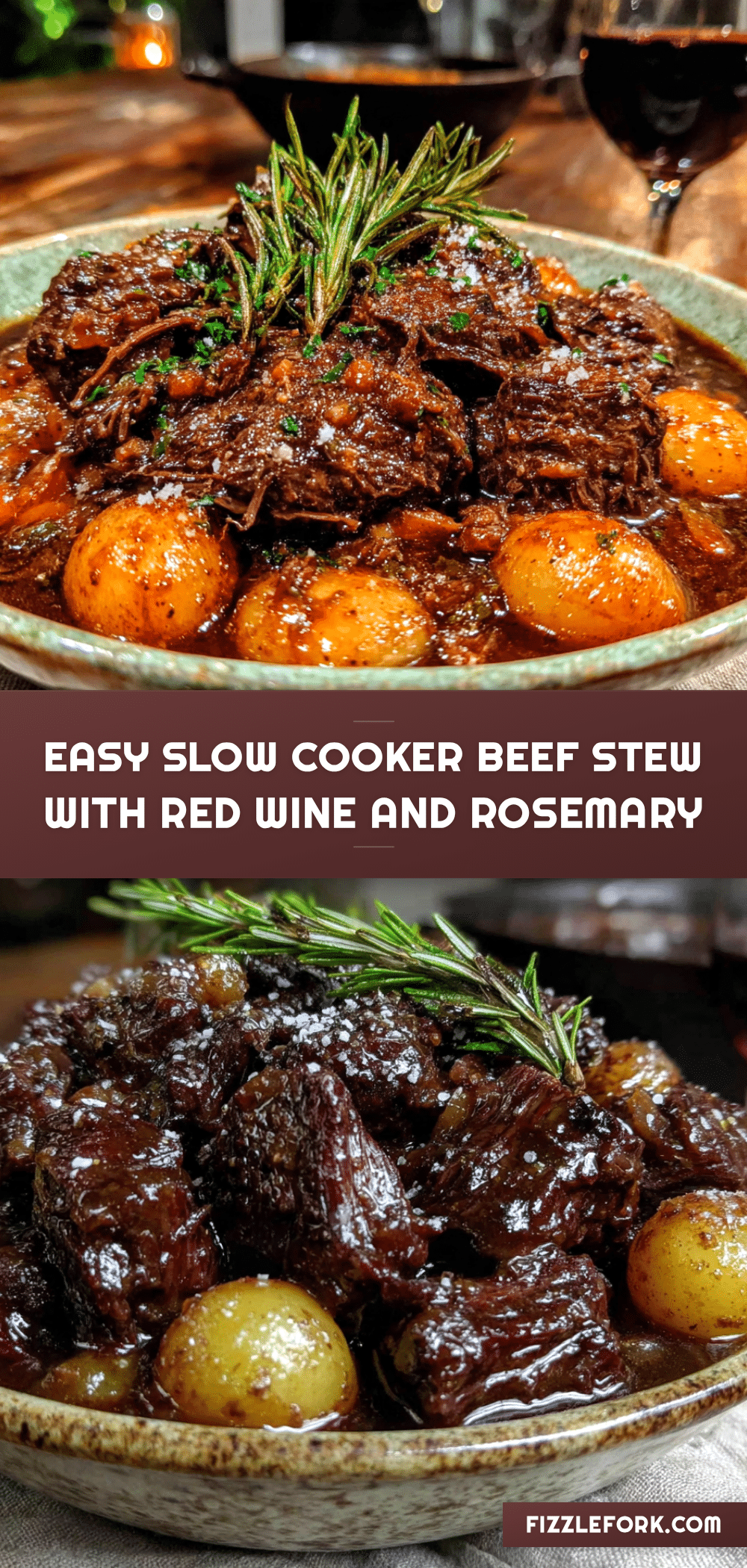
Easy Slow Cooker Beef Stew with Red Wine and Rosemary

A rich, savory beef stew made in the slow cooker with red wine and fresh rosemary. This set-it-and-forget-it recipe delivers fork-tender beef and a deeply flavorful broth with minimal effort.
- Prep Time: 10 minutes
- Cook Time: 8 hours (low) or 4-5 hours (high)
- Total Time: 8 hours 10 minutes (low) or 4 hours 15 minutes (high)
- Yield: 6 servings 1x
- Category: Main Course
- Cuisine: American
Ingredients
- 2 pounds beef stew meat, cut into 1.5-inch cubes
- 1 tablespoon olive oil (optional)
- 1 large yellow onion, diced (about 1.5 cups)
- 4 cloves garlic, minced
- 4 medium carrots, peeled and cut into 1-inch chunks
- 3 medium potatoes, peeled and cubed (Yukon Gold recommended)
- 2 celery stalks, sliced
- 1 cup dry red wine (Cabernet Sauvignon or Merlot)
- 2 cups low-sodium beef broth
- 2 tablespoons tomato paste
- 2 tablespoons Worcestershire sauce
- 2 fresh rosemary sprigs
- 2 bay leaves
- 1 teaspoon salt
- 1/2 teaspoon black pepper
- 1/2 teaspoon dried thyme
- 2 tablespoons cornstarch (optional, for thickening)
- 2 tablespoons cold water (optional, for thickening)
Instructions
- Prep your ingredients: Dice the onion, mince the garlic, chop the carrots, potatoes, and celery into bite-sized chunks. Cut the beef into uniform 1.5-inch cubes.
- Layer everything in the slow cooker: Place the beef chunks at the bottom. Top with the onions, garlic, carrots, potatoes, and celery. Do not stir.
- Make the broth: In a separate bowl or large measuring cup, whisk together the red wine, beef broth, tomato paste, Worcestershire sauce, salt, pepper, and dried thyme. Pour over the ingredients in the slow cooker. Tuck the rosemary sprigs and bay leaves into the liquid.
- Cook low and slow: Cover and cook on LOW for 8 hours or HIGH for 4-5 hours.
- Check for doneness: The stew is ready when the beef shreds easily with a fork and the vegetables are tender. Remove the rosemary stems and bay leaves.
- Thicken the broth (optional): If desired, mix the cornstarch and cold water in a small bowl until smooth. Stir into the hot stew and cook uncovered on HIGH for 15-20 minutes until thickened.
- Taste and adjust: Add more salt or pepper if needed. Serve hot.
Notes
For best results, use well-marbled beef chuck and cook on LOW. Browning the beef before adding to the slow cooker adds extra flavor. Do not lift the lid during cooking. Add thickeners only at the end. The stew tastes even better the next day.
Nutrition
- Serving Size: 1.5 cups
- Calories: 385
- Sugar: 6
- Sodium: 680
- Fat: 12
- Saturated Fat: 4
- Carbohydrates: 28
- Fiber: 4
- Protein: 32
Keywords: slow cooker beef stew, red wine beef stew, rosemary beef stew, easy beef stew, comfort food, weeknight dinner