Jen wasn’t trying to impress anyone. I’d stopped by her place to borrow a ladder—mine had mysteriously vanished after a neighbor’s yard sale—and the smell hit me before I even got through the front door. It was sweet, but not in a cloying way. Earthy, almost, with something warm and nutty drifting through the hallway. She shrugged when I asked what was in the oven. “Oh, just squash. You know, for dinner.” Just squash. Honestly, I’ve never heard something so casually dismissive of something so clearly magical.
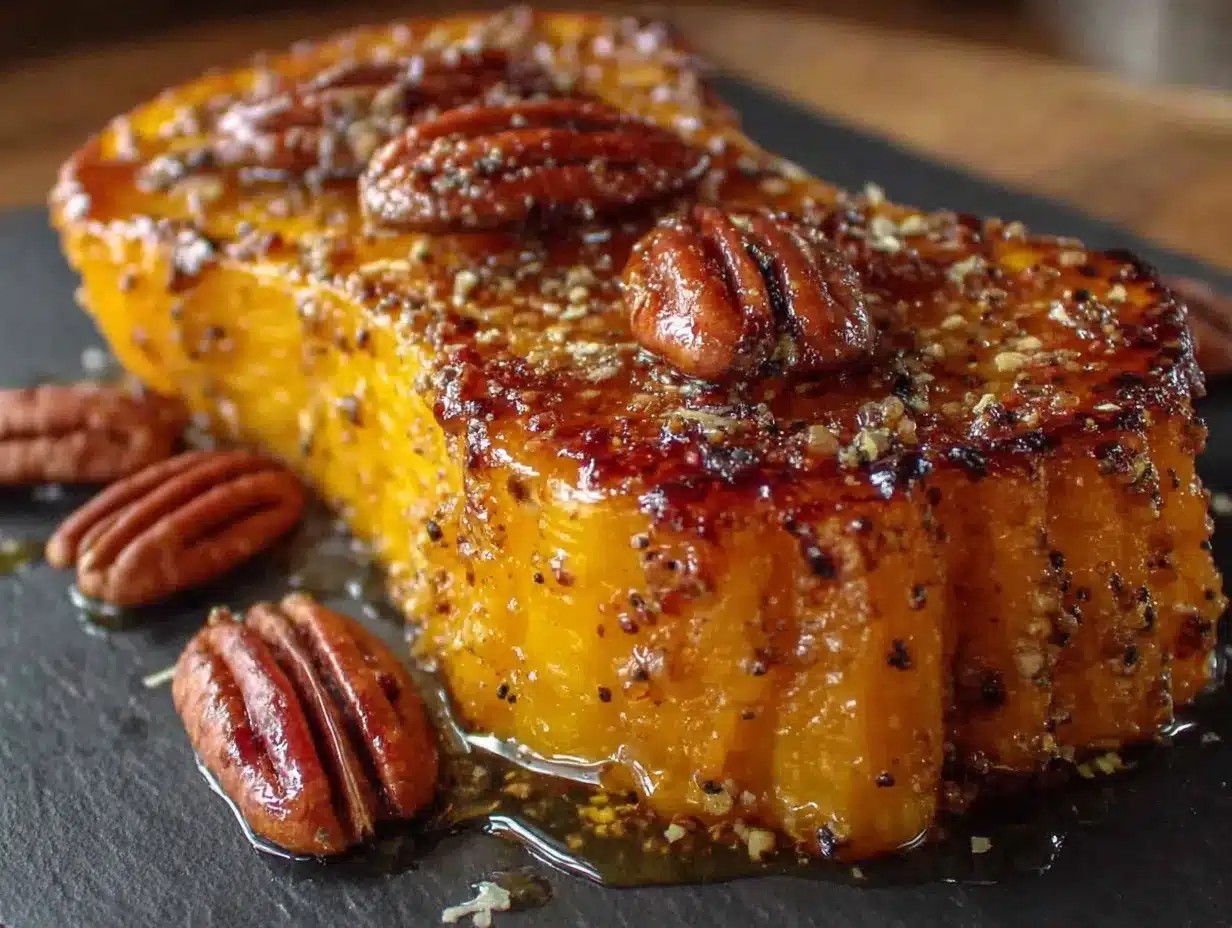
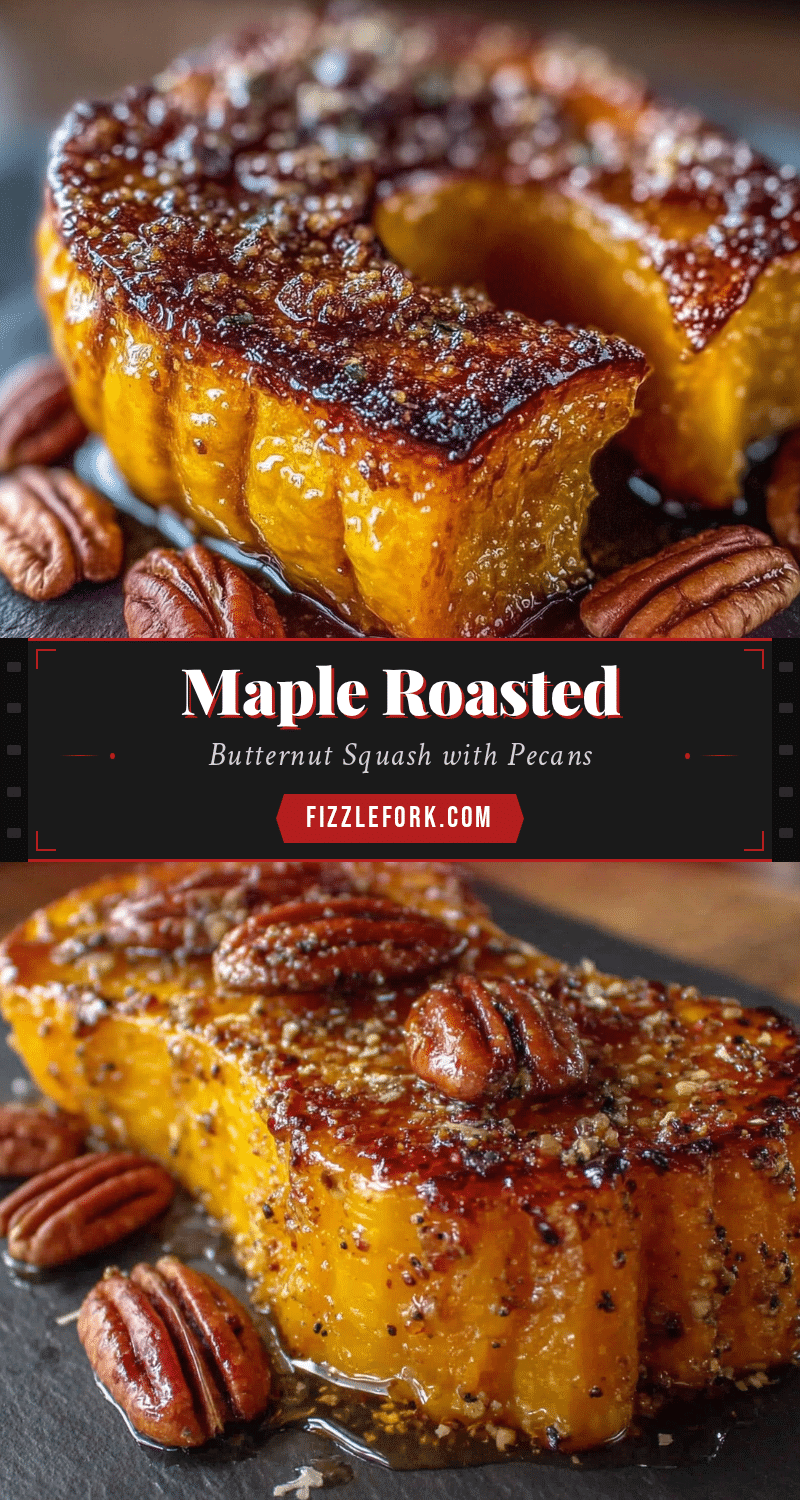
I stood there in her kitchen, watching her pull this pan out of the oven, and the color alone stopped me cold. Deep amber edges, glossy from something sticky and dark, with pecans scattered across the top like they’d been placed there by a very deliberate, very talented hand. She didn’t even look at it twice. Just set it on the counter and asked if I wanted tea. Meanwhile, I was practically drooling into her sink. Maybe you’ve been there—that moment when you realize someone else’s “nothing special” is about to become your entire personality for the next month.
That was three autumns ago, and I’ve made this Maple Roasted Butternut Squash with Pecans more times than I can count. It’s the dish I bring to every Friendsgiving, the one that disappears first at potlucks, the side dish that somehow steals the spotlight from the main course. And the best part? It’s barely more work than roasting plain vegetables. The maple syrup does the heavy lifting, the pecans add that little crunch, and you walk away looking like you spent hours on something that practically made itself. Let me tell you—this is the kind of recipe that makes people think you’re a better cook than you actually are. And I’m not complaining one bit.
Why You’ll Love This Recipe
I’ve tested this Maple Roasted Butternut Squash with Pecans at least a dozen times—for my family, for friends, for that one dinner party where I accidentally burned the garlic bread and needed a win. It delivered every single time. Here’s why this one’s different from every other roasted squash recipe floating around out there:
- Simple Ingredients, Maximum Flavor: You don’t need a specialty grocery store or a spice cabinet that looks like a chemistry lab. Butternut squash, maple syrup, pecans, butter, and a few pantry staples. That’s it. The magic is in the roasting, not the shopping.
- Perfect for Hosting: This was made for gatherings. It scales beautifully—double it, triple it, no problem. It sits well on a buffet table, stays warm for a good while, and looks stunning next to a roast chicken or a glazed ham. Your guests will think you fussed. You didn’t.
- Crowd-Pleaser Guaranteed: I’ve served this to picky kids, vegan cousins, gluten-free friends, and that one uncle who “doesn’t really like vegetables.” Every single person went back for seconds. The sweetness is familiar, the pecans add texture, and the whole thing feels indulgent without being heavy.
- Make-Ahead Friendly: You can prep the squash and the topping separately a day ahead. When your guests arrive, just toss everything together and roast. No last-minute chopping, no stress, no messy kitchen while people are mingling.
- Unbelievably Delicious: That first bite—the caramelized edges, the tender squash, the toasted pecans—it’s the kind of thing that makes you close your eyes for a second. Comfort food that feels a little fancy, but stays completely approachable.
This isn’t just another roasted vegetable recipe. It’s the one that converts people who think they don’t like squash. It’s the side dish that gets texted around the next day. And honestly? It’s the recipe I’m most proud to share when someone asks me for something that never fails.
What Ingredients You Will Need
This Maple Roasted Butternut Squash with Pecans relies on simple, honest ingredients that work together to create something genuinely special. Most of these are probably already in your kitchen—except maybe the squash itself, which is worth a quick trip to the store.
- Butternut Squash (1 large, about 3 lbs / 1.4 kg): Look for one that feels heavy for its size with unblemished skin. I prefer to buy pre-peeled and cubed squash from the grocery store when I’m short on time—it saves about 15 minutes of wrestling with a vegetable peeler. But if you have the patience, cutting your own gives you more control over the size of the cubes. Aim for 1-inch pieces so they cook evenly.
- Pure Maple Syrup (1/3 cup / 80 ml): Please, please use the real stuff. Not pancake syrup, not “maple-flavored” anything. Grade A dark amber is my go-to—it has a stronger flavor that stands up to roasting. The syrup reduces and caramelizes in the oven, creating that glossy, sticky coating that makes this dish so addictive.
- Pecan Halves (1 cup / 100 g): I recommend buying raw pecans and toasting them yourself—it makes a noticeable difference in flavor. If you only have pecan pieces, that’s fine too. Just keep an eye on them during roasting since smaller pieces toast faster.
- Unsalted Butter (3 tablespoons / 42 g): Salted butter works in a pinch, just reduce the added salt slightly. I’ve tried this with coconut oil for a dairy-free version, and it’s good—but butter gives a richness that coconut oil can’t quite match.
- Olive Oil (2 tablespoons / 30 ml): Helps the squash roast evenly and encourages browning. Use a good-quality extra virgin if you have it, but regular olive oil is perfectly fine.
- Salt (1 teaspoon / 5 g): I use kosher salt. It’s less intense than table salt, so adjust if you’re using fine salt. Start with 3/4 teaspoon and add more at the end if needed.
- Black Pepper (1/2 teaspoon / 1 g): Freshly ground is best. It adds a subtle warmth that balances the sweetness.
- Cinnamon (1/2 teaspoon / 1 g): Optional, but I love the warmth it adds. It makes the dish feel cozier, more like a fall celebration.
- Pinch of Cayenne Pepper (optional): Hear me out—just a tiny pinch. It doesn’t make the dish spicy, but it wakes up all the other flavors. I add it about half the time, depending on my mood.
For the garnish (optional but recommended):
- Fresh Thyme or Rosemary (a few sprigs): Adds a pop of green and a subtle herbal note that cuts through the sweetness. I’ve also used dried thyme in a pinch—about 1/2 teaspoon, sprinkled over before roasting.
- Flaky Sea Salt (like Maldon): A sprinkle right before serving makes a huge difference. It adds little bursts of salt that contrast beautifully with the sweet maple glaze.
Equipment Needed
You don’t need a fancy kitchen to make this Maple Roasted Butternut Squash with Pecans. Here’s what you’ll need:
- Large Baking Sheet (18×13 inches / 45×33 cm): A rimmed baking sheet is ideal—it catches any syrupy drips and keeps your oven clean. I’ve used a half-sheet pan for years and it works perfectly. If you only have a smaller pan, split the squash between two sheets to avoid overcrowding.
- Sharp Chef’s Knife: Butternut squash is dense. A dull knife is dangerous here. I learned that the hard way after a near-miss with my thumb. A good 8-inch chef’s knife makes quick work of it.
- Vegetable Peeler: A sturdy Y-peeler is my preference for squash. It handles the tough skin better than a straight peeler.
- Large Mixing Bowl: For tossing the squash with the maple mixture. A bowl with a wide opening makes mixing easier.
- Small Saucepan: For melting the butter and maple syrup together. You could also use the microwave, but the stovetop gives you more control.
- Spatula or Wooden Spoon: For stirring and scraping every last bit of that maple glaze onto the squash.
- Measuring Cups and Spoons: Accurate measurements matter here—too much maple syrup and the squash gets soggy instead of caramelized.
If you don’t have a large baking sheet, a 9×13-inch baking dish works in a pinch, though the squash won’t brown as evenly. And honestly? I’ve made this in a cast-iron skillet before, and the caramelization was incredible. The edges got extra crispy, which is never a bad thing.
Preparation Method
This Maple Roasted Butternut Squash with Pecans comes together in about an hour, with about 15 minutes of active work. The oven does the rest. Here’s how to make it:
- Preheat your oven to 400°F (200°C). Position the rack in the middle. Getting the oven properly hot is crucial—it’s what creates those caramelized edges.
- Prepare the butternut squash. If you’re starting with a whole squash, cut off both ends with a sharp knife. Stand it upright on a stable cutting board and slice down the middle to split it in half. Scoop out the seeds and stringy bits with a spoon. Peel each half with a vegetable peeler, then cut into 1-inch cubes. You should end up with about 6 cups of cubed squash. (Pro tip: If the squash feels too hard to cut, microwave it whole for 2-3 minutes to soften it slightly.)
- Make the maple butter mixture. In a small saucepan over medium heat, combine the maple syrup, butter, olive oil, salt, pepper, and cinnamon if using. Stir until the butter is melted and everything is well combined. Don’t let it boil—just warm enough to come together smoothly. Remove from heat and stir in the cayenne if you’re using it.
- Toss the squash. Place the cubed squash in a large mixing bowl. Pour the warm maple mixture over the top and toss gently with a spatula until every piece is coated. Make sure to scrape the bowl—you don’t want any of that good stuff left behind.
- Arrange on the baking sheet. Spread the squash in a single layer on your baking sheet. This is important—if the pieces are crowded, they’ll steam instead of roast. Leave a little space between each cube. Reserve the bowl—you’ll use it again for the pecans.
- Roast for 25 minutes. Place the sheet in the oven and set a timer. While it roasts, prepare the pecans.
- Prepare the pecans. In the same bowl you used for the squash (less dishes, my favorite kind of cooking), toss the pecan halves with about 1 tablespoon of the maple mixture that’s left in the saucepan. If there’s not enough left, just use a teaspoon of maple syrup and a tiny pinch of salt.
- Add the pecans. After 25 minutes, remove the baking sheet from the oven. Sprinkle the pecans evenly over the squash. Give everything a gentle stir with a spatula, then return to the oven.
- Roast for another 15-20 minutes. The squash should be tender when pierced with a fork, and the edges should be deeply caramelized—dark amber, almost sticky-looking. The pecans should be toasted and fragrant. Watch closely during the last 5 minutes; maple syrup can burn quickly.
- Rest and garnish. Remove from the oven and let the squash sit on the baking sheet for 5 minutes. This allows the glaze to set slightly. Transfer to a serving dish, sprinkle with fresh thyme or rosemary if using, and finish with a pinch of flaky sea salt.
A note on timing: If you’re making this for a crowd, you can prep the squash and the maple mixture up to a day ahead. Store the cubed squash in a sealed bag in the fridge, and keep the maple mixture in a jar. When you’re ready to cook, just toss and roast. It makes hosting so much less stressful.
Cooking Tips & Techniques
After making this Maple Roasted Butternut Squash with Pecans more times than I can count, I’ve collected a few tricks that make a real difference. Some I learned from mistakes—like the time I used too much maple syrup and ended up with soggy, sad squash. Others came from happy accidents.
Don’t skip the preheat. I know it’s tempting to pop the pan in while the oven is still warming up, but that extra time at a lower temperature makes the squash release moisture instead of caramelizing. Wait until the oven hits 400°F. Your patience will be rewarded with those gorgeous brown edges.
Space is your friend. Overcrowding the baking sheet is the number one mistake I see people make. The squash needs room to breathe. If it’s packed too tightly, it steams in its own moisture and turns mushy. Use two sheets if you need to—rotate them halfway through for even cooking.
Toast the pecans separately if you’re nervous. I’ve burned pecans more times than I’d like to admit. They go from perfect to charcoal in about 30 seconds. If you’re worried about timing, toast the pecans in a dry skillet over medium heat for 3-4 minutes, then add them to the squash for the last 5 minutes of roasting. Less risk, same result.
Resist the urge to stir too often. I know, I know—you want to check on it. But every time you open the oven, heat escapes and the cooking process slows down. Stir once when you add the pecans, and that’s it. Let the oven do its job.
Make extra glaze on purpose. I always double the maple butter mixture and reserve half. After the squash comes out of the oven, I drizzle a little more over the top. It adds an extra layer of shine and sweetness that makes the dish look (and taste) even more impressive.
One mistake I’ll never make again: Using old pecans. They go rancid faster than you think, and that bitter taste ruins the whole dish. Give them a sniff before using—they should smell nutty and sweet, not like paint thinner. Fresh pecans make all the difference.
Variations & Adaptations
This Maple Roasted Butternut Squash with Pecans is wonderfully adaptable. Here are some variations I’ve tried and loved:
Savory-Sweet Twist: Skip the cinnamon and add 2 cloves of minced garlic and a tablespoon of fresh sage instead. The garlic gets mellow and sweet as it roasts, and the sage adds an earthy note that pairs beautifully with the maple. I made this version for a Thanksgiving potluck and it disappeared before the turkey even hit the table.
Maple Bourbon Version: Replace 2 tablespoons of the maple syrup with bourbon. The alcohol cooks off, leaving behind a smoky, complex sweetness. This version feels a little more grown-up—perfect for a dinner party where you want to impress. Just don’t tell anyone it only took 15 minutes of work.
Vegan Adaptation: Replace the butter with coconut oil or a high-quality vegan butter. I’ve used both, and the coconut oil version has a subtle tropical note that’s actually lovely with the maple. Just make sure your maple syrup is 100% pure—some cheaper brands use honey, which isn’t vegan.
Spicy Kick: Double the cayenne pepper and add 1/2 teaspoon of smoked paprika. The heat builds slowly and lingers just enough to keep things interesting. My spice-loving friends beg me to make this version every time they visit.
Different Nuts: Pecans are classic, but walnuts work beautifully too—they have a slightly more bitter edge that balances the sweetness. Toasted almonds add a nice crunch, and pine nuts make it feel unexpectedly fancy. I’ve even used pepitas (pumpkin seeds) for a nut-free version that still has that satisfying crunch.
Roasted Vegetable Medley: Add cubed sweet potatoes, carrots, and parsnips to the pan alongside the squash. Toss everything with the maple mixture and roast together. The different textures and colors make for a stunning side dish that feels like fall on a plate.
Air Fryer Method: If you’re short on time, this works beautifully in an air fryer. Cook the squash at 375°F (190°C) for 12-15 minutes, shaking the basket halfway through. Add the pecans for the last 3-4 minutes. The edges get incredibly crispy, almost like they’re fried. Just work in batches to avoid overcrowding.
Serving & Storage Suggestions
This Maple Roasted Butternut Squash with Pecans is at its best served warm, straight from the oven. The edges are still crispy, the glaze is glossy, and the pecans have that fresh-toasted flavor. But it’s remarkably forgiving—it holds up well on a buffet table for a good 30-40 minutes, and it’s almost as good at room temperature.
What to serve alongside it: This side dish pairs beautifully with roasted chicken, glazed ham, or a simple roast pork loin. For vegetarian mains, try it alongside a hearty lentil loaf or stuffed acorn squash. It also works wonderfully as part of a holiday spread—think roasted turkey, mashed potatoes, and green bean casserole. The sweetness of the squash balances out richer, savory dishes.
Presentation tips for hosting: Transfer the squash to a wide, shallow serving dish so the caramelized edges are visible. Sprinkle with fresh thyme leaves and a generous pinch of flaky sea salt right before serving. I like to add a few extra toasted pecans on top for visual appeal. If you’re feeling fancy, a drizzle of balsamic glaze adds beautiful contrast and a tangy pop of flavor.
Storage: Leftovers keep well in an airtight container in the refrigerator for up to 4 days. The squash will soften slightly, and the pecans will lose some of their crunch, but the flavor is still fantastic. I’ve been known to eat it cold straight from the fridge—don’t judge me until you’ve tried it.
Reheating: The best way to reheat is in a 350°F (175°C) oven for 8-10 minutes. Spread the squash on a baking sheet and heat until warmed through and the edges crisp up again. The microwave works in a pinch, but the texture won’t be as good—the squash will be softer and the glaze won’t re-caramelize. If you’re using the microwave, heat in 30-second bursts and stop as soon as it’s warm.
Freezing: I don’t recommend freezing this dish. The squash becomes watery when thawed, and the texture is never quite right. If you have a large batch, it’s better to share with neighbors or freeze the raw cubed squash and make fresh glaze when you’re ready to cook.
Flavor development: Here’s something I discovered by accident—this dish tastes even better the next day. The flavors meld together overnight, and the maple syrup soaks into the squash a little more. If you’re planning ahead, make it a day in advance and reheat gently. Your future self will thank you.
Nutritional Information & Benefits
This Maple Roasted Butternut Squash with Pecans is one of those rare dishes that feels indulgent but is actually packed with good-for-you ingredients. Here’s a rough estimate per serving (assuming 6 servings):
- Calories: Approximately 280-320 per serving
- Fat: 16g (mostly from healthy nuts and olive oil)
- Carbohydrates: 35g
- Fiber: 6g
- Sugar: 18g (naturally occurring from squash and maple syrup)
- Protein: 4g
- Vitamin A: Over 200% of your daily needs (hello, butternut squash!)
- Vitamin C: About 35% of your daily needs
- Manganese: Important for bone health and metabolism
Butternut squash is a nutritional powerhouse. It’s loaded with beta-carotene, which your body converts to vitamin A for healthy vision and immune function. The fiber content helps with digestion and keeps you feeling full. Pecans are rich in healthy monounsaturated fats and antioxidants—they’re good for your heart and your brain. And while maple syrup is still sugar, it contains trace minerals like zinc and manganese that refined sugar doesn’t have.
For those with dietary restrictions: This recipe is naturally gluten-free and can easily be made vegan (swap the butter for coconut oil). It’s also nut-free if you skip the pecans or substitute pumpkin seeds. The main allergens to note are tree nuts (pecans) and dairy (butter).
I’m not a nutritionist, and I don’t pretend to be one. But I do believe that food should make you feel good—both while you’re eating it and after. This dish strikes that balance perfectly. It’s vegetables, yes, but it’s also a celebration. And sometimes that’s exactly what you need.
Conclusion
This Maple Roasted Butternut Squash with Pecans has become my go-to for every gathering, every holiday, every time I need a dish that’s guaranteed to impress without causing a meltdown in the kitchen. It’s the recipe that made me realize that sometimes the simplest things are the ones that leave the deepest impression. Jen didn’t think she was doing anything special that day, and maybe she wasn’t—but the memory of that smell, that color, that casual shrug, has stuck with me for years.
I hope you make this for your next dinner party, your next Friendsgiving, your next Tuesday night when you just want something that feels a little bit special. I hope you double the batch because it will disappear faster than you expect. And I hope you don’t stress about making it perfect—because honestly, the beauty of this dish is that it’s forgiving. A little more maple, a little less salt, a different herb on top—it all works.
If you try this Maple Roasted Butternut Squash with Pecans, I’d love to hear about it. Leave a comment below and tell me how it turned out, what you served it with, or if you came up with your own twist. And if you share it on social media, tag me—I want to see those caramelized edges and glossy pecans. Happy cooking, friends. This one’s a keeper.
Frequently Asked Questions
Can I use frozen butternut squash for this recipe?
You can, but I don’t recommend it. Frozen squash releases a lot of water as it thaws, which prevents the caramelization that makes this dish so good. If you’re in a pinch, thaw the squash completely and pat it very dry with paper towels before tossing with the maple mixture. It won’t be quite as crispy, but it’ll still taste great.
How do I prevent the pecans from burning?
Add them halfway through roasting, not at the beginning. Pecans toast much faster than squash, and the maple syrup on them can burn quickly. I also recommend checking the pan at the 35-minute mark—if the pecans look dark enough, you can remove the pan early and let the squash finish on its own.
Can I make this ahead of time for a party?
Absolutely. You can prep the squash and the maple mixture up to 24 hours in advance—just store them separately in the fridge. When you’re ready to cook, toss and roast as directed. The squash might release a little extra moisture from sitting, so you may need to add 5 minutes to the roasting time.
What’s the best way to cut a butternut squash safely?
Start by cutting off both ends to create flat surfaces. Stand the squash upright and slice down the middle. Scoop out the seeds, then peel each half with a vegetable peeler. If the squash feels too hard, microwave it whole for 2-3 minutes to soften the skin slightly. And please—use a sharp knife. A dull knife is much more dangerous than a sharp one.
Can I use honey instead of maple syrup?
Yes, but the flavor will be different. Honey is sweeter and has a more floral taste that doesn’t caramelize quite the same way. If you’re substituting, use about 1/4 cup of honey instead of 1/3 cup of maple syrup, and keep a close eye on the squash during roasting—honey burns faster than maple syrup.
Pin This Recipe!
Maple Roasted Butternut Squash with Pecans: Best Easy Side
This Maple Roasted Butternut Squash with Pecans is a simple yet stunning side dish that caramelizes beautifully in the oven. With just a handful of ingredients, it’s perfect for holidays, potlucks, or any night you want a vegetable dish that steals the show.
- Prep Time: 15 minutes
- Cook Time: 40-45 minutes
- Total Time: 55-60 minutes
- Yield: 6 servings 1x
- Category: Side Dish
- Cuisine: American
Ingredients
- 1 large butternut squash (about 3 lbs / 1.4 kg), peeled and cut into 1-inch cubes (about 6 cups)
- 1/3 cup (80 ml) pure maple syrup (Grade A dark amber preferred)
- 1 cup (100 g) pecan halves (raw, toasted)
- 3 tablespoons (42 g) unsalted butter
- 2 tablespoons (30 ml) olive oil
- 1 teaspoon (5 g) kosher salt
- 1/2 teaspoon (1 g) freshly ground black pepper
- 1/2 teaspoon (1 g) ground cinnamon (optional)
- Pinch of cayenne pepper (optional)
- Fresh thyme or rosemary sprigs for garnish (optional)
- Flaky sea salt (like Maldon) for finishing (optional)
Instructions
- Preheat your oven to 400°F (200°C). Position the rack in the middle.
- Prepare the butternut squash: Cut off both ends, stand upright, and slice down the middle. Scoop out seeds and stringy bits. Peel each half with a vegetable peeler, then cut into 1-inch cubes. You should have about 6 cups.
- Make the maple butter mixture: In a small saucepan over medium heat, combine maple syrup, butter, olive oil, salt, pepper, and cinnamon (if using). Stir until butter is melted and well combined. Do not let it boil. Remove from heat and stir in cayenne (if using).
- Toss the squash: Place cubed squash in a large mixing bowl. Pour warm maple mixture over the top and toss gently with a spatula until every piece is coated.
- Arrange on a large rimmed baking sheet (18×13 inches / 45×33 cm) in a single layer, leaving space between cubes. Reserve the bowl.
- Roast for 25 minutes.
- While squash roasts, prepare the pecans: In the reserved bowl, toss pecan halves with about 1 tablespoon of the maple mixture left in the saucepan (or use 1 teaspoon maple syrup and a pinch of salt).
- After 25 minutes, remove baking sheet from oven. Sprinkle pecans evenly over squash and gently stir. Return to oven.
- Roast for another 15-20 minutes, until squash is tender when pierced with a fork and edges are deeply caramelized. Watch closely during the last 5 minutes to prevent burning.
- Remove from oven and let rest on baking sheet for 5 minutes. Transfer to a serving dish, garnish with fresh thyme or rosemary (if using), and sprinkle with flaky sea salt (if using).
Notes
For best results, use real maple syrup (not pancake syrup). Add pecans halfway through roasting to prevent burning. The dish can be prepped a day ahead: store cubed squash and maple mixture separately in the fridge. Leftovers keep in an airtight container in the refrigerator for up to 4 days. Reheat in a 350°F (175°C) oven for 8-10 minutes for best texture. Not recommended for freezing.
Nutrition
- Serving Size: 1 serving (about 1 c
- Calories: 300
- Sugar: 18
- Sodium: 400
- Fat: 16
- Saturated Fat: 4
- Carbohydrates: 35
- Fiber: 6
- Protein: 4
Keywords: maple roasted butternut squash, roasted butternut squash with pecans, easy butternut squash recipe, holiday side dish, fall vegetable side, gluten-free side dish, vegetarian side dish