My husband, who has never in his life voluntarily eaten a parsnip, looked at me across the dinner table and said, “Can you make those vegetables again? The ones from last week.” And I almost dropped my fork. I mean, this is the same man who picks bell peppers out of stir-fry like he’s defusing a bomb. So when he asked for seconds of a sheet pan full of roasted root vegetables, I knew I had stumbled onto something real. That’s how this Perfect Balsamic Roasted Root Vegetable Medley became a permanent fixture in our weekly rotation — not because I planned it, but because it earned its place, one quiet bite at a time.
Honestly, I didn’t set out to create a showstopper. It was a Tuesday, I had a fridge full of leftover carrots and a sad-looking sweet potato, and I needed something — anything — to go alongside the chicken I’d already seasoned. I grabbed a bottle of balsamic vinegar, drizzled way more than I probably should have, and crossed my fingers. What came out of the oven was sticky, caramelized, and so deeply savory-sweet that we ate the entire pan standing at the counter. No plates. No shame.
The thing about this recipe is that it doesn’t try hard. It lets the vegetables do the talking — the natural sugars concentrate as they roast, the balsamic reduces into a glossy glaze, and a pinch of herbs ties it all together. It’s the kind of side dish that quietly steals the show, the one people reach for even when there’s a juicy roast or a creamy casserole sitting right next to it. If you’ve been looking for a way to make vegetables feel like the main event, this is it.
Why You’ll Love This Recipe
I’ve tested this medley more times than I can count — adjusting the oven temperature, swapping vegetables, playing with vinegar ratios — and each time, it worked. Here’s why this version is the one you’ll come back to:
- Quick & Easy: From chopping to table in about 45 minutes, with just 10 minutes of active prep. Perfect for busy weeknights when you need something hands-off.
- Simple Ingredients: You probably have most of these in your pantry right now. No obscure spices, no specialty oils — just real food.
- Perfect for Meal Prep: These roasted vegetables reheat beautifully and taste even better the next day. Make a big batch on Sunday and use them in grain bowls, salads, or alongside proteins all week.
- Crowd-Pleaser: I’ve served this at Thanksgiving, at casual backyard dinners, and alongside a simple weeknight chicken — and every single time, the pan comes back empty.
- Unbelievably Delicious: The balsamic glaze caramelizes into these sticky, almost candy-like edges while the insides stay tender. It’s the kind of texture that makes you forget you’re eating vegetables.
What sets this recipe apart is the technique. Most roasted vegetable recipes just toss everything in oil and hope for the best. But I learned the hard way that not all vegetables roast at the same speed — carrots and parsnips need a head start, while zucchini and bell peppers turn to mush if you add them too early. This method staggers the additions so everything comes out perfectly cooked, with those gorgeous caramelized edges that make balsamic roasted vegetables so addictive.
And honestly? This is the recipe that made my husband a vegetable convert. If that’s not a testament, I don’t know what is.
What Ingredients You Will Need
This recipe uses humble, everyday ingredients that transform into something extraordinary with a little heat and patience. Here’s what you’ll need and why each one matters:
- Sweet potatoes (2 medium, peeled and cut into 1-inch cubes) — They bring natural sweetness and a creamy interior that contrasts beautifully with the caramelized exterior. I prefer orange-fleshed sweet potatoes for their moisture content.
- Carrots (4 large, peeled and cut into 1-inch chunks) — Earthy and sweet, they hold their shape well and develop those gorgeous sticky edges. Look for firm, bright orange carrots without any soft spots.
- Parsnips (3 medium, peeled and cut into 1-inch chunks) — Don’t skip these! They have a subtle, almost nutty sweetness that deepens dramatically when roasted. If you’ve never cooked with parsnips, this is the recipe to try them in.
- Red onion (1 large, cut into 1-inch wedges) — Adds a mild, sweet onion flavor that caramelizes into jammy, almost buttery pieces.
- Beets (2 medium, peeled and cut into 1-inch cubes, optional but recommended) — They add an earthy depth and stunning color. Just be aware they’ll stain everything pink, so handle with care.
- Garlic cloves (4-5, smashed) — Whole cloves roast into sweet, spreadable morsels that are like little flavor bombs throughout the dish.
- Balsamic vinegar (3 tablespoons, good quality) — This is the star. The acidity cuts through the sweetness of the vegetables while the natural sugars concentrate into a glossy, tangy glaze. I recommend a moderately aged balsamic — not the cheap stuff, but you don’t need the 20-year-old bottle either.
- Extra-virgin olive oil (3 tablespoons) — Helps the vegetables brown evenly and carries the flavors. Use a good one here, since it’s a primary flavor component.
- Fresh rosemary (2 sprigs, leaves stripped and chopped) — Earthy and piney, it complements the root vegetables perfectly. Dried works in a pinch (use 1 teaspoon), but fresh is noticeably better.
- Fresh thyme (4-5 sprigs, leaves stripped) — Adds a subtle, lemony-herbal note that brightens the whole dish.
- Salt and black pepper (to taste) — Don’t be shy with the salt; it helps draw out moisture and encourages browning.
- Optional garnish: Fresh parsley, chopped, and a final drizzle of balsamic glaze or reduction for serving.
Equipment Needed
You don’t need a fancy kitchen to make this recipe shine. Here’s what I use:
- Large sheet pan (18×13 inches or similar) — A rimmed baking sheet is non-negotiable. The rim catches any juices and prevents a sticky mess in your oven. I use a heavy-duty aluminum one for even heat distribution.
- Chef’s knife (8-inch) — A sharp knife makes chopping root vegetables safe and easy. Dull knives are actually more dangerous — they slip.
- Cutting board — Go for a large wooden or plastic board that gives you plenty of room to work.
- Vegetable peeler — A Y-shaped peeler is my favorite for root vegetables; it glides smoothly over curves and knobby bits.
- Mixing bowl (large) — For tossing everything together. You can also do this right on the sheet pan to save dishes.
- Parchment paper or silicone baking mat — Not strictly necessary, but it makes cleanup infinitely easier. Plus, the vegetables release more easily from parchment.
- Measuring spoons — For the oil and vinegar. I eyeball it these days, but measuring helps when you’re learning the recipe.
If you don’t have a silicone baking mat, don’t worry — aluminum foil works too, though the vegetables might stick a little more. And if your sheet pan is on the smaller side, just use two pans and rotate them halfway through. Crowding the pan is the number one mistake people make, and it leads to steamed, not roasted, vegetables.
Preparation Method
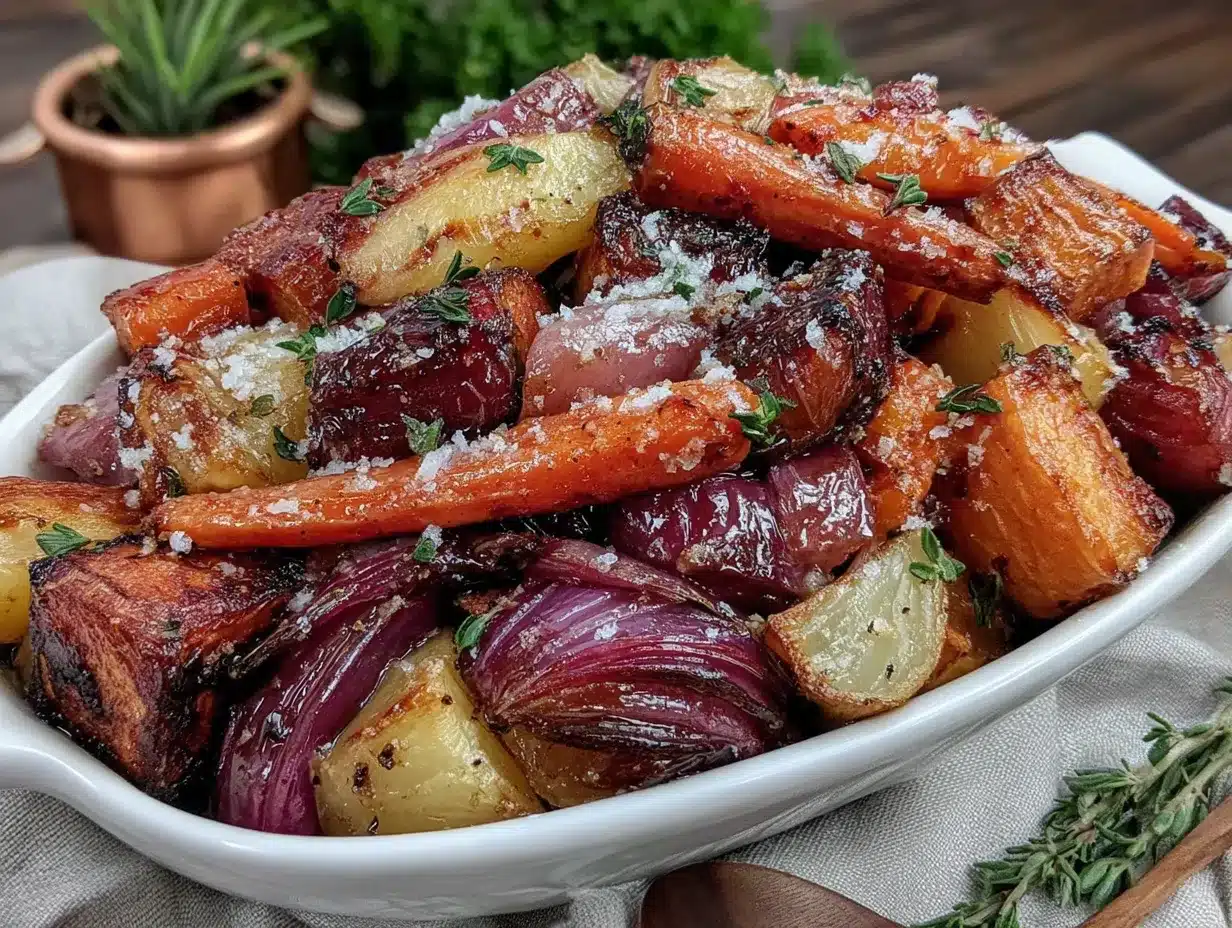
Let me walk you through this step by step. Trust me, the order matters here.
- Preheat your oven to 425°F (220°C). This high heat is crucial for caramelization. Don’t skimp on the temperature — 400°F won’t give you those sticky, browned edges.
- Prep your vegetables. Peel the sweet potatoes, carrots, parsnips, and beets (if using). Cut them all into roughly 1-inch cubes. The key here is uniformity — pieces that are the same size cook at the same rate. Cut the red onion into 1-inch wedges, keeping the root end intact so the layers hold together. Smash the garlic cloves with the flat side of your knife.
- Toss the hard vegetables first. In your large mixing bowl, combine the sweet potatoes, carrots, parsnips, beets, and red onion. Drizzle with 2 tablespoons of olive oil and 2 tablespoons of balsamic vinegar. Add the chopped rosemary, thyme, a generous pinch of salt, and several grinds of black pepper. Toss well with your hands or a spatula until everything is evenly coated.
- Spread them on the sheet pan. Line your pan with parchment paper or a silicone mat. Spread the vegetables in a single, even layer. Make sure there’s space between each piece — if they’re touching too much, they’ll steam instead of roast. If your pan is crowded, use two pans.
- Roast for 20 minutes. Place the pan in the preheated oven and set a timer. During this time, the vegetables will start softening and browning on the bottom.
- Flip and add garlic. After 20 minutes, remove the pan from the oven. Use a spatula to flip the vegetables — they should be golden on the bottom. Add the smashed garlic cloves to the pan, tucking them in between the vegetables. Drizzle with the remaining 1 tablespoon of olive oil and 1 tablespoon of balsamic vinegar.
- Roast for another 15-20 minutes. Return the pan to the oven. The vegetables are done when they’re tender enough to pierce easily with a fork and have deep golden-brown, almost sticky edges. The garlic should be soft and caramelized.
- Finish and serve. Remove from the oven. Taste a piece and adjust seasoning with more salt or pepper if needed. Transfer to a serving platter, garnish with fresh parsley, and drizzle with a little extra balsamic glaze if you’re feeling fancy. Serve hot or at room temperature.
Pro tip from my kitchen: Don’t skip the flipping step. I know it’s tempting to just let them sit, but flipping ensures even browning and prevents the bottoms from burning while the tops stay pale. Also, if you’re using beets, keep them on one side of the pan — they’ll stain everything else pink if they’re mixed in too closely.
Cooking Tips & Techniques
I’ve made this recipe at least two dozen times, and I’ve learned a few things the hard way. Here are my best tips:
- Don’t crowd the pan. This is the single most important rule of roasting. If the vegetables are piled on top of each other, they’ll steam and release moisture instead of caramelizing. Give them room to breathe. If you have to use two pans, do it.
- Cut vegetables uniformly. I cannot stress this enough. A 1-inch cube of sweet potato and a 1-inch chunk of carrot will cook at roughly the same rate. But if your carrot pieces are twice as big as your sweet potato pieces, you’ll end up with burnt sweet potatoes and raw carrots.
- Use good balsamic vinegar. The cheap stuff is often more acidic and less sweet, which means it won’t reduce into that lovely sticky glaze. I use a mid-range balsamic from Trader Joe’s or a local olive oil shop — it’s worth the extra couple of dollars.
- Let the vegetables get dark. People are often afraid of browning, but that deep, almost-burnt color is where the flavor lives. The natural sugars in the vegetables caramelize and the balsamic reduces into a concentrated, sweet-tangy glaze. Don’t pull them out when they’re just barely golden — wait until they’re truly caramelized.
- Roast at high heat. 425°F is the sweet spot. Lower temperatures will cook the vegetables through, but you won’t get that desirable browning. Higher temperatures risk burning the balsamic before the vegetables are tender.
- Add fresh herbs at the end. If you’re using delicate herbs like parsley or chives, add them after roasting. The heat will wilt them if they go in too early. Hardy herbs like rosemary and thyme can go in from the start — they can handle the heat.
I once forgot to flip the vegetables halfway through and ended up with a pan full of burnt bottoms and raw tops. It was not my finest moment, but it taught me to respect the flip. Learn from my mistakes!
Variations & Adaptations
One of the best things about this recipe is how flexible it is. Here are some ways to make it your own:
- Seasonal swaps: In the fall, add cubed butternut squash or pumpkin. In spring, swap in asparagus spears and radishes (add them halfway through since they cook faster). Summer calls for zucchini and bell peppers, but add those in the last 15 minutes so they don’t turn to mush.
- Herb variations: Try fresh sage for a woodsy, almost buttery flavor, or use oregano for a more Mediterranean vibe. Dried Italian seasoning works in a pinch — use about 1 teaspoon.
- Spice it up: Add a pinch of red pepper flakes or a drizzle of honey before roasting for a sweet-heat combination that’s absolutely addictive.
- Make it a meal: Toss the roasted vegetables with cooked quinoa or farro, add some crumbled feta or goat cheese, and you’ve got a hearty vegetarian main dish. I’ve done this for lunch more times than I can count.
- Dietary adaptations: This recipe is naturally gluten-free, dairy-free, and vegan. For a lower-carb version, swap the sweet potatoes for additional cauliflower florets or turnips.
- Different vinegar: If you don’t have balsamic, try apple cider vinegar mixed with a teaspoon of maple syrup, or use a good quality red wine vinegar with a little honey.
My personal favorite variation? Adding a handful of whole shallots alongside the other vegetables. They turn sweet and jammy, almost like little onion candies. I also love tossing in some chickpeas for extra protein and crunch — they get wonderfully crispy in the oven.
Serving & Storage Suggestions
This medley is incredibly versatile when it comes to serving. Here’s how I like to enjoy it:
Serving temperature: These vegetables are delicious hot out of the oven, but I honestly love them at room temperature too. The flavors continue to meld and deepen as they cool. They’re fantastic alongside a crispy one-pan lemon herb chicken thighs for a complete meal that comes together with minimal effort.
Presentation ideas: Serve them on a large wooden board or a white platter to let the colors pop. Sprinkle with fresh herbs and a final drizzle of balsamic glaze. They also look gorgeous layered over a bed of greens with some toasted nuts and crumbled cheese.
Complementary dishes: This medley pairs beautifully with roasted meats, grilled fish, or even a simple omelet for breakfast. I’ve also served it as part of a build-your-own charcuterie board — the sweet, caramelized vegetables are a perfect counterpoint to salty meats and creamy cheeses.
Storage: Store leftovers in an airtight container in the refrigerator for up to 5 days. The vegetables will soften slightly, but the flavors actually get better. I often make a double batch on purpose just for leftovers.
Reheating: The best way to reheat is in a 350°F oven for about 10 minutes. This restores some of the crispy edges. You can also reheat in a skillet over medium heat, stirring occasionally. The microwave works in a pinch, but the texture won’t be as good — the vegetables will be softer.
Freezing: You can freeze the roasted vegetables in a single layer on a sheet pan, then transfer to a freezer bag. They’ll keep for up to 3 months. Reheat directly from frozen in a 400°F oven until warmed through.
Nutritional Information & Benefits
This dish isn’t just delicious — it’s packed with good-for-you ingredients. Here’s a rough breakdown per serving (based on 6 servings):
- Calories: Approximately 180-200 per serving
- Carbohydrates: 32g (mostly from complex carbs and natural sugars)
- Fiber: 6g — root vegetables are excellent sources of dietary fiber
- Protein: 3g
- Fat: 7g (from heart-healthy olive oil)
- Vitamin A: Over 200% of the daily value — sweet potatoes and carrots are loaded with beta-carotene
- Vitamin C: 25% of the daily value — parsnips and beets contribute a surprising amount
- Potassium: 15% of the daily value — important for heart health and muscle function
Dietary considerations: This recipe is naturally gluten-free, dairy-free, vegan, and nut-free. It’s also relatively low in sodium if you watch your salt. The balsamic vinegar adds negligible sugar compared to the natural sweetness of the vegetables.
Health benefits: Root vegetables are nutritional powerhouses. They’re rich in antioxidants, particularly beta-carotene and anthocyanins (from the beets), which support immune function and reduce inflammation. The fiber content promotes digestive health and helps maintain stable blood sugar levels. Plus, the olive oil provides healthy monounsaturated fats that support heart health.
I’ll be honest — I don’t make this recipe because it’s healthy. I make it because it tastes incredible. But it’s a nice bonus knowing that something this satisfying is also doing my body good.
Conclusion
This Perfect Balsamic Roasted Root Vegetable Medley has become one of those recipes I turn to again and again — not because it’s fancy or complicated, but because it just works. It’s the kind of dish that makes you look like you spent hours in the kitchen when really, the oven did all the heavy lifting. The vegetables come out tender, caramelized, and coated in that glossy, tangy-sweet balsamic glaze that makes everything taste like comfort.
I love that this recipe is flexible enough to adapt to whatever’s in my fridge, reliable enough to serve at a holiday dinner, and simple enough to throw together on a random Tuesday. It’s the side dish that steals the show, the vegetable recipe that converts skeptics, and the kind of food that makes you feel good from the inside out.
If you give this recipe a try, I’d love to hear how it goes. Did you add any fun variations? Did your family fight over the last piece of caramelized onion? Drop a comment below and let me know — your feedback helps me and other readers too. And if you’re looking for another cozy, vegetable-forward dish, don’t miss our cozy pumpkin gnocchi with easy sage brown butter — it’s the perfect follow-up to this medley.
Happy roasting, friends!
Frequently Asked Questions
Can I make this recipe ahead of time?
Absolutely! You can prep the vegetables up to 24 hours in advance — just chop them, toss with the oil and vinegar, and store in an airtight container in the fridge. When you’re ready to cook, spread them on the pan and roast as directed. You may need to add 5-10 minutes to the cooking time since they’ll be cold from the fridge.
Why are my roasted vegetables soggy instead of caramelized?
This usually happens for one of three reasons: your pan is too crowded, your oven isn’t hot enough, or you’re adding too much oil. Make sure the vegetables are in a single layer with space between each piece, your oven is preheated to 425°F, and you’re using just enough oil to coat them — not drown them.
Can I use frozen vegetables for this recipe?
I don’t recommend it. Frozen vegetables contain a lot of water, which releases during roasting and prevents caramelization. You’ll end up with steamed, mushy vegetables instead of the golden, caramelized ones we’re after. Stick with fresh for the best results.
How do I prevent the balsamic vinegar from burning?
Balsamic vinegar can burn if it’s exposed to high heat for too long without any oil to buffer it. That’s why I recommend tossing the vegetables with both oil and vinegar together — the oil helps distribute the heat and prevents the sugar in the vinegar from scorching. Also, flipping the vegetables halfway through ensures even cooking without burning.
What’s the best way to cut root vegetables evenly?
Start by cutting the vegetables into planks (about 1-inch thick), then cut those planks into strips, then cut the strips into cubes. For round vegetables like beets, slice off a small piece from one side to create a flat surface — this prevents them from rolling around while you chop. And always use a sharp knife; it makes the job safer and easier.
Pin This Recipe!
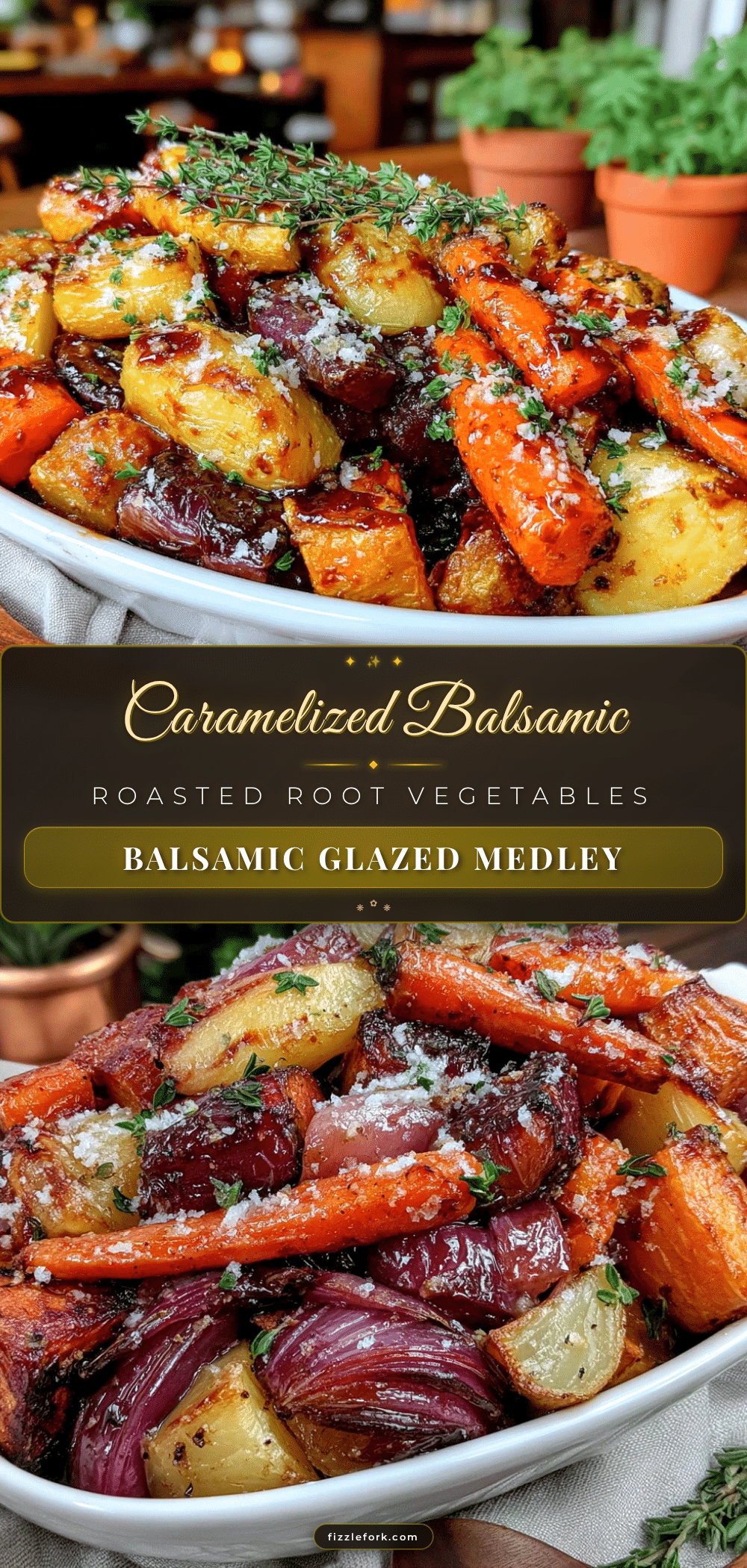
Perfect Balsamic Roasted Root Vegetable Medley

A simple yet stunning side dish of caramelized root vegetables coated in a glossy balsamic glaze. This recipe is quick, easy, and perfect for weeknights or holiday feasts.
- Prep Time: 10 minutes
- Cook Time: 35-40 minutes
- Total Time: 45-50 minutes
- Yield: 6 servings 1x
- Category: Side Dish
- Cuisine: American
Ingredients
- 2 medium sweet potatoes, peeled and cut into 1-inch cubes
- 4 large carrots, peeled and cut into 1-inch chunks
- 3 medium parsnips, peeled and cut into 1-inch chunks
- 1 large red onion, cut into 1-inch wedges
- 2 medium beets, peeled and cut into 1-inch cubes (optional)
- 4–5 garlic cloves, smashed
- 3 tablespoons balsamic vinegar
- 3 tablespoons extra-virgin olive oil
- 2 sprigs fresh rosemary, leaves stripped and chopped
- 4–5 sprigs fresh thyme, leaves stripped
- Salt and black pepper to taste
- Fresh parsley, chopped (for garnish)
- Balsamic glaze or reduction (for serving, optional)
Instructions
- Preheat your oven to 425°F (220°C).
- Prep your vegetables: Peel the sweet potatoes, carrots, parsnips, and beets (if using). Cut them all into roughly 1-inch cubes. Cut the red onion into 1-inch wedges, keeping the root end intact. Smash the garlic cloves with the flat side of your knife.
- Toss the hard vegetables first: In a large mixing bowl, combine the sweet potatoes, carrots, parsnips, beets, and red onion. Drizzle with 2 tablespoons of olive oil and 2 tablespoons of balsamic vinegar. Add the chopped rosemary, thyme, a generous pinch of salt, and several grinds of black pepper. Toss well until evenly coated.
- Spread them on the sheet pan: Line your pan with parchment paper or a silicone mat. Spread the vegetables in a single, even layer, making sure there is space between each piece. If crowded, use two pans.
- Roast for 20 minutes.
- Flip and add garlic: After 20 minutes, remove the pan from the oven. Flip the vegetables with a spatula. Add the smashed garlic cloves, tucking them in between the vegetables. Drizzle with the remaining 1 tablespoon of olive oil and 1 tablespoon of balsamic vinegar.
- Roast for another 15-20 minutes, until the vegetables are tender and have deep golden-brown, sticky edges.
- Finish and serve: Remove from the oven. Taste and adjust seasoning with more salt or pepper if needed. Transfer to a serving platter, garnish with fresh parsley, and drizzle with extra balsamic glaze if desired. Serve hot or at room temperature.
Notes
Don’t crowd the pan—this is the most important rule for caramelization. Cut vegetables uniformly for even cooking. Use good quality balsamic vinegar for the best glaze. Let the vegetables get dark; that’s where the flavor lives. Roast at high heat (425°F) for optimal browning. Add fresh herbs at the end if using delicate ones like parsley.
Nutrition
- Serving Size: 1 serving (about 1 c
- Calories: 190
- Sugar: 12
- Sodium: 200
- Fat: 7
- Saturated Fat: 1
- Carbohydrates: 32
- Fiber: 6
- Protein: 3
Keywords: balsamic roasted vegetables, root vegetable medley, roasted root vegetables, balsamic glaze, easy side dish, vegan, gluten-free, sheet pan recipe