There used to be a tiny bakery tucked between a laundromat and a dusty antique shop on the corner of Elm and 4th in my old neighborhood. It was called The Copper Spoon, and they had this glass case near the register that held exactly one loaf of cranberry orange bread every morning. When that bakery closed its doors three years ago—the owner retired, moved to Florida to fish, as the rumor went—I honestly felt a little lost. I mean, I stood outside on that last day and watched them take the sign down. Pathetic, right? But that bread. That bread was the reason I showed up early on Saturday mornings. After seventeen tries—seventeen loaves, some dense as hockey pucks, some so tart they’d make you pucker from across the room—I finally got it. This is that loaf. The one that tastes like a Saturday morning in late October, when the air is crisp and the cranberries are finally in season. Maybe you’ve been there, chasing a ghost of a recipe from a place that no longer exists. This one’s for you.
Why You’ll Love This Recipe
Let me tell you why this cranberry orange bread is different from every other recipe you’ve bookmarked and forgotten about. First off, it’s the kind of bread that makes you look like a hero at a brunch without actually requiring you to be one. I’ve brought this to more gatherings than I can count, and the loaf pan comes back empty every single time. Not a crumb left. That’s not bragging—that’s just the citrus working its magic.
- Quick & Easy: From mixing bowl to oven in under 15 minutes. No stand mixer required, no complicated techniques. Just a bowl, a whisk, and some elbow grease.
- Simple Ingredients: You probably have everything except the cranberries and fresh oranges. And honestly, if you’ve got frozen cranberries in the back of your freezer, those work too.
- Perfect for Hosting: This bread is a showstopper on a holiday brunch table, a potluck dessert spread, or even as a hostess gift wrapped in parchment and tied with twine. It’s impressive without being fussy.
- Crowd-Pleaser: I’ve watched kids who swear they hate cranberries go back for seconds. The orange glaze is the secret weapon—it balances the tartness so perfectly.
- Unbelievably Delicious: The texture is tender and moist, with little bursts of tart cranberry in every bite. The glaze seeps into the warm bread just enough to make it irresistible.
What really sets this recipe apart is the technique of macerating the cranberries in orange juice and sugar before folding them into the batter. It’s a small step, but it makes a huge difference. The berries soften slightly and release just a bit of their juice, which means you don’t end up with dry, puckered cranberries scattered through a bland loaf. Every bite has that bright, tangy pop of flavor. This isn’t just another quick bread recipe—it’s the one I’ve tweaked and tested until it was exactly right.
Honestly, this is the kind of bread that makes you close your eyes after the first bite. The kind that makes you text your friend and say, “I made that cranberry bread, and it’s even better than The Copper Spoon’s.” And then you realize you just paid yourself the highest compliment a home baker can receive.
What Ingredients You Will Need
This recipe uses simple, wholesome ingredients to deliver that bakery-quality flavor and texture. Most of these are pantry staples, but a few deserve a little extra attention.
For the Bread
- 1 ½ cups all-purpose flour (spooned and leveled—don’t scoop directly from the bag or you’ll pack it down and end up with dry bread)
- 1 teaspoon baking powder (make sure it’s fresh; expired baking powder is the #1 reason quick breads fail to rise)
- ½ teaspoon baking soda
- ½ teaspoon salt (I use fine sea salt; it dissolves more evenly)
- 1 cup granulated sugar
- 2 large eggs, room temperature (cold eggs can seize the butter and make the batter lumpy)
- ½ cup unsalted butter, melted and slightly cooled (I prefer Kerrygold for the richness, but any good unsalted butter works)
- ¾ cup buttermilk, room temperature (if you don’t have buttermilk, add 1 tablespoon of lemon juice to ¾ cup whole milk and let it sit for 5 minutes)
- 1 tablespoon orange zest (from about 1 large orange—zest it before you juice it!)
- ¼ cup fresh orange juice (about 1 orange)
- 1 teaspoon vanilla extract
- 1 ½ cups fresh or frozen cranberries (if using frozen, do not thaw them—toss them in a tablespoon of flour before adding to the batter to prevent sinking)
For the Orange Glaze
- 1 cup powdered sugar, sifted (sifting prevents lumps—trust me on this one)
- 2 to 3 tablespoons fresh orange juice (start with 2, add more if needed for drizzling consistency)
- ½ teaspoon orange zest (optional, but it makes the glaze look beautiful with little flecks of color)
A quick note on cranberries: fresh cranberries are typically available from October through December, but I always buy a few extra bags and stash them in the freezer. They keep for up to a year, so you can make this bread any time of year. If you’re using frozen cranberries, don’t bother thawing them first. Just toss them in a little flour before folding them into the batter, and they’ll distribute evenly without turning the batter purple.
For the oranges, I recommend navel oranges for their sweetness and juice content. They’re reliable and widely available. But honestly, any juicy orange will work—even blood oranges if you want a slightly different color and flavor profile. Just make sure you’re using fresh juice, not the stuff from a carton. The glaze really needs that bright, fresh citrus flavor to shine.
Equipment Needed
You don’t need a lot of fancy equipment for this recipe, which is part of why I love it. Here’s what you’ll need:
- 9×5-inch loaf pan (a standard size—if yours is slightly smaller or larger, adjust the baking time accordingly)
- Parchment paper (I swear by this for easy removal. Cut a strip long enough to overhang the long sides of the pan like handles)
- Two mixing bowls (one medium, one large)
- Whisk (a sturdy one—you’ll be mixing wet and dry ingredients separately)
- Rubber spatula (for folding in the cranberries gently)
- Microplane or zester (for zesting the oranges—a box grater works in a pinch, but a microplane gives you finer zest)
- Citrus juicer (or just use your hands—I’ve done both, and honestly, squeezing oranges by hand is oddly satisfying)
- Cooling rack (essential for letting the bread cool evenly before glazing)
- Small whisk or fork (for mixing the glaze)
If you don’t have parchment paper, you can grease the pan thoroughly with butter and dust it with flour. Just make sure you get the corners. I learned that lesson the hard way when half my loaf stayed stuck to the pan. Budget tip: a basic metal loaf pan from the grocery store works perfectly fine. You don’t need the expensive nonstick ones.
Preparation Method
Alright, let’s make some bread. I’ve broken this down into clear steps so you can follow along without any guesswork. Take your time—this is supposed to be enjoyable, not stressful.
- Preheat your oven to 350°F (175°C). Position the rack in the center of the oven. Line your 9×5-inch loaf pan with parchment paper, leaving about 2 inches of overhang on the long sides. This will make lifting the bread out so much easier later.
- Macerate the cranberries. In a small bowl, combine the cranberries with 2 tablespoons of the granulated sugar and 2 tablespoons of the fresh orange juice. Stir gently, then set aside while you prepare the rest of the batter. This step softens the cranberries slightly and infuses them with citrus flavor. The berries will look a little glossy and the sugar will start to dissolve—that’s exactly what you want.
- Whisk the dry ingredients. In a medium bowl, whisk together the flour, baking powder, baking soda, and salt. Set aside. This ensures the leavening agents are evenly distributed throughout the flour, so your bread rises uniformly.
- Mix the wet ingredients. In a large bowl, whisk together the remaining ¾ cup plus 2 tablespoons of sugar and the eggs until smooth and slightly pale, about 1 minute. Add the melted butter, buttermilk, orange zest, remaining 2 tablespoons of orange juice, and vanilla extract. Whisk until everything is well combined. The mixture will look a little thin—that’s normal.
- Combine wet and dry. Pour the dry ingredients into the wet mixture. Use a rubber spatula to fold everything together gently. Stir just until you no longer see streaks of flour—about 10 to 12 strokes. Overmixing will make the bread tough and dense. A few small lumps are perfectly fine.
- Fold in the cranberries. Add the macerated cranberries (including any liquid that has accumulated in the bowl) to the batter. Fold gently 3 or 4 times until the cranberries are evenly distributed. Don’t overmix here either. You want those berries scattered throughout, not crushed into the batter.
- Pour into the pan. Scrape the batter into your prepared loaf pan and spread it evenly with the spatula. The batter will be thick but pourable. Give the pan a gentle tap on the counter to release any air bubbles.
- Bake. Place the pan in the preheated oven and bake for 55 to 65 minutes. Start checking at 50 minutes. The bread is done when a toothpick inserted into the center comes out clean or with just a few moist crumbs attached. If the top is browning too quickly (after about 40 minutes), tent the pan loosely with aluminum foil.
- Cool in the pan. Let the bread cool in the pan on a wire rack for 15 minutes. This allows it to set and makes it easier to remove without breaking.
- Remove and cool completely. Using the parchment paper overhang, lift the bread out of the pan and transfer it to the wire rack. Let it cool completely before glazing—about 1 hour. I know it’s tempting to glaze it while it’s still warm, but the glaze will just melt and soak in, and you’ll lose that beautiful white drizzle effect.
- Make the glaze. While the bread is cooling, make the glaze. In a small bowl, whisk together the sifted powdered sugar, 2 tablespoons of fresh orange juice, and the optional orange zest. Whisk until smooth. If the glaze is too thick, add another tablespoon of orange juice, one teaspoon at a time. If it’s too thin, add a little more powdered sugar. The consistency should be thick but pourable—like heavy cream.
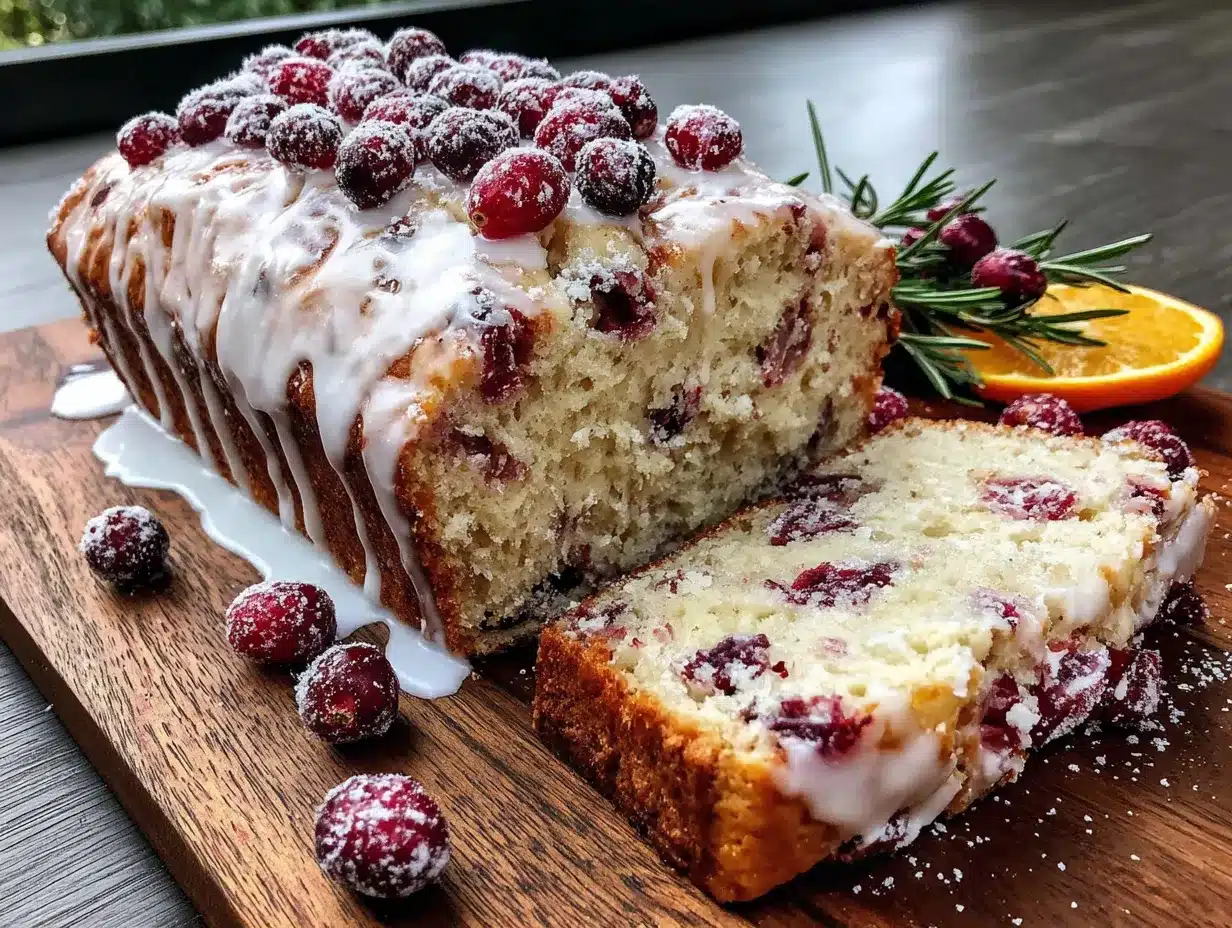
- Glaze and serve. Once the bread is completely cool, drizzle the glaze over the top. Let it set for about 10 minutes before slicing. Use a serrated knife for clean slices—it makes a real difference.
Cooking Tips & Techniques
I’ve made this bread enough times to have a few opinions about what works and what doesn’t. Here are my best tips, learned through trial and error (and a few disappointing loaves).
Room temperature ingredients matter. I know, I know—every recipe says this, and it feels like a hassle. But cold eggs and cold buttermilk will make your melted butter seize up into little hard bits. The result is a lumpy batter and an uneven crumb. Just take your eggs and buttermilk out of the fridge 30 minutes before you start mixing. That’s it. Thirty minutes.
Don’t skip the parchment paper. The first time I made this, I greased the pan with butter and dusted it with flour, thinking I was being clever. The bread came out beautifully, but about a third of it stayed stuck to the bottom. The parchment paper trick changed my baking life. Seriously. It’s worth the extra 30 seconds.
Watch your oven like a hawk. Every oven runs a little differently. My old apartment oven would bake this bread in exactly 55 minutes. My current oven takes a full 62 minutes. Start checking at 50 minutes, and use a toothpick or a thin skewer to test the center. If it comes out clean, it’s done. If there’s wet batter on it, give it another 5 minutes and check again.
Let it cool completely. I cannot stress this enough. The glaze needs a cool surface to set properly. If you pour it over a warm loaf, it will melt into a thin, sticky mess that looks more like a disaster than a beautiful drizzle. I once served a glazed loaf at a brunch where the glaze had completely run off the sides and pooled on the plate. It tasted fine, but it looked like a crime scene.
Use a serrated knife to slice. A sharp chef’s knife will crush the tender crumb and squish the cranberries. A serrated bread knife, on the other hand, glides through cleanly. Saw gently, don’t press down hard.
Variations & Adaptations
One of the things I love about this recipe is how versatile it is. Here are a few variations I’ve tried and loved.
Gluten-Free Version: Substitute the all-purpose flour with a 1:1 gluten-free baking flour blend that contains xanthan gum. I’ve had good results with King Arthur’s Measure for Measure blend. The texture will be slightly more tender and a little crumblier, but the flavor is still spot-on. Add an extra tablespoon of buttermilk to compensate for the drier flour blend.
Dairy-Free Adaptation: Replace the butter with melted coconut oil or a good vegan butter stick (I like Miyoko’s). Use unsweetened almond milk or oat milk mixed with 1 tablespoon of lemon juice for the buttermilk. The coconut oil version has a very subtle coconut flavor that actually pairs nicely with the orange and cranberries.
Spiced Cranberry Orange Bread: Add 1 teaspoon of ground cinnamon, ½ teaspoon of ground ginger, and ¼ teaspoon of ground cloves to the dry ingredients. This gives the bread a warm, holiday-spiced flavor that’s perfect for Thanksgiving or Christmas morning. I made this version for a Friendsgiving brunch and it disappeared in about 12 minutes.
Blueberry Orange Variation: Swap the cranberries for fresh or frozen blueberries. The flavor profile changes completely—it becomes sweeter and more mellow. The blueberry version is wonderful in the spring and summer. I’ve also made it with a mix of blueberries and raspberries, which was absolutely gorgeous.
Mini Loaf Version: Divide the batter among 4 mini loaf pans (about 5×3 inches each). Bake for 30 to 35 minutes, checking for doneness with a toothpick. These make wonderful gifts. I’ve wrapped them in cellophane bags with a little tag that says “Baked with love” and handed them out to neighbors. They’re always a hit.
Serving & Storage Suggestions
This cranberry orange bread is incredibly versatile when it comes to serving. Here’s how I like to enjoy it.
Serving Temperature: This bread is best at room temperature, after the glaze has fully set. The texture is tender and moist, and the glaze has a slight crackle when you bite into it. If you want to serve it warm, skip the glaze and just serve slices with a pat of butter. The warmth will melt the butter into the bread, and it’s absolutely heavenly.
Presentation Tips for Hosting: When I bring this to a gathering, I leave the loaf whole on a wooden cutting board with a serrated knife next to it. I drizzle the glaze in a zigzag pattern rather than a straight line—it looks more intentional and rustic. A few fresh cranberries and a sprig of rosemary arranged on the board add a beautiful pop of color. It’s a simple touch that makes people think you put in way more effort than you actually did.
What to Serve Alongside: This bread pairs beautifully with a cup of hot coffee or a mug of spiced chai. For a brunch spread, serve it alongside a savory egg dish like a frittata or quiche. The tart-sweet bread balances out the richness of eggs and cheese perfectly. If you’re serving it as dessert, a dollop of lightly sweetened whipped cream or a scoop of vanilla ice cream takes it over the top.
Storage Instructions: Store the glazed bread in an airtight container at room temperature for up to 3 days. If you haven’t glazed it yet, wrap it tightly in plastic wrap and then foil, and it will keep for up to 5 days. The flavors actually deepen and meld together after a day or two, so don’t be surprised if it tastes even better on day two.
Freezing Instructions: This bread freezes beautifully. Wrap the unglazed, fully cooled loaf tightly in plastic wrap, then in a layer of aluminum foil. Freeze for up to 3 months. When you’re ready to serve, thaw it overnight in the refrigerator, then bring it to room temperature before glazing. I’ve also frozen individual slices for quick breakfasts—just grab a slice, let it thaw for 15 minutes, and you’re good to go.
Reheating Tip: If you want to revive a day-old slice, pop it in a 300°F oven for 5 to 7 minutes. It will taste almost freshly baked. The microwave works in a pinch, but it makes the texture a little gummy. The oven is definitely the way to go.
Nutritional Information & Benefits
Here’s the estimated nutritional breakdown for one slice of cranberry orange bread (based on 10 slices per loaf, with glaze):
| Nutrient | Amount per Slice |
|---|---|
| Calories | 285 |
| Total Fat | 11g |
| Saturated Fat | 6g |
| Cholesterol | 55mg |
| Sodium | 220mg |
| Total Carbohydrates | 43g |
| Dietary Fiber | 2g |
| Sugars | 28g |
| Protein | 4g |
Cranberries are packed with antioxidants and vitamin C, which support immune health. Oranges are also an excellent source of vitamin C, and the zest contains essential oils that have anti-inflammatory properties. While this is certainly a treat (it’s a sweet bread with glaze, after all), it’s not without some redeeming qualities. The buttermilk adds a little calcium and protein, and using real fruit means you’re getting actual nutrients, not just empty calories.
If you’re watching your sugar intake, you can reduce the granulated sugar to ¾ cup and use a lighter hand with the glaze. The bread will still be delicious, just slightly less sweet. For a lower-fat version, substitute half the butter with unsweetened applesauce. The texture will be a little more cake-like, but it works well.
Conclusion
This cranberry orange bread is more than just a recipe to me. It’s the taste of a Saturday morning that no longer exists, brought back to life in my own kitchen. It’s proof that you can recreate the things you miss, even if you can’t bring back the place where you first found them. And honestly? There’s something deeply satisfying about baking a loaf of bread that makes people close their eyes and smile.
I hope you make this bread for your next gathering. I hope you serve it on a nice plate and watch your friends go back for seconds. I hope you experiment with the variations and make it your own. And if you do, I’d love to hear about it. Leave a comment below and tell me how it turned out—did you add the spice blend? Use blueberries instead? Forget to set a timer and accidentally overbake it? (I’ve been there too.)
Share this recipe with someone who loves citrus and tart berries. Pin it for later. Make it for your book club, your holiday brunch, or just because it’s Tuesday and you deserve something beautiful. Happy baking, friend.
Frequently Asked Questions
Can I use dried cranberries instead of fresh or frozen?
You can, but the texture will be different. Dried cranberries are chewy and sweet, so they won’t provide the same tart burst that fresh or frozen cranberries do. If you use dried cranberries, rehydrate them in warm orange juice for 15 minutes before adding them to the batter. Drain them well and toss them in a little flour before folding them in.
Why did my bread sink in the middle?
A sunken middle usually means the bread was underbaked, or the oven temperature was too low. Make sure your oven is properly preheated and that you’re baking at 350°F. Also, avoid opening the oven door during the first 40 minutes of baking—the sudden temperature drop can cause the bread to collapse.
Can I make this bread without the orange glaze?
Absolutely. The bread is delicious on its own, with a tender crumb and plenty of citrus flavor from the zest and juice in the batter. If you skip the glaze, consider sprinkling a little coarse sugar on top of the batter just before baking for a sparkly, crunchy finish.
How do I keep the cranberries from sinking to the bottom?
Tossing the cranberries in a tablespoon of flour before folding them into the batter helps suspend them evenly throughout the loaf. This works for both fresh and frozen cranberries. Also, make sure your batter is thick enough to support the berries—if it’s too thin, they’ll sink regardless.
Can I double this recipe to make two loaves?
Yes, you can easily double the recipe. Use two separate loaf pans and bake them on the same rack, leaving at least 2 inches of space between them for air circulation. The baking time may increase by 5 to 10 minutes, so start checking for doneness at the 55-minute mark.
Pin This Recipe!

Perfect Cranberry Orange Bread with Easy Orange Glaze
This cranberry orange bread is tender and moist, with bursts of tart cranberry in every bite and a bright orange glaze that balances the sweetness. It’s a quick and easy recipe that’s perfect for holiday brunches, potlucks, or as a hostess gift.
- Prep Time: 15 minutes
- Cook Time: 55 minutes
- Total Time: 1 hour 10 minutes
- Yield: 10 servings 1x
- Category: Bread
- Cuisine: American
Ingredients
- 1 ½ cups all-purpose flour (spooned and leveled)
- 1 teaspoon baking powder
- ½ teaspoon baking soda
- ½ teaspoon fine sea salt
- 1 cup granulated sugar
- 2 large eggs, room temperature
- ½ cup unsalted butter, melted and slightly cooled
- ¾ cup buttermilk, room temperature
- 1 tablespoon orange zest (from about 1 large orange)
- ¼ cup fresh orange juice (about 1 orange)
- 1 teaspoon vanilla extract
- 1 ½ cups fresh or frozen cranberries (if frozen, do not thaw; toss in 1 tablespoon flour before adding)
- 1 cup powdered sugar, sifted
- 2 to 3 tablespoons fresh orange juice (for glaze)
- ½ teaspoon orange zest (optional, for glaze)
Instructions
- Preheat oven to 350°F (175°C). Line a 9×5-inch loaf pan with parchment paper, leaving overhang on the long sides.
- In a small bowl, combine cranberries with 2 tablespoons of the granulated sugar and 2 tablespoons of the fresh orange juice. Stir gently and set aside to macerate.
- In a medium bowl, whisk together flour, baking powder, baking soda, and salt. Set aside.
- In a large bowl, whisk together remaining sugar (¾ cup plus 2 tablespoons) and eggs until smooth and slightly pale, about 1 minute. Add melted butter, buttermilk, orange zest, remaining 2 tablespoons orange juice, and vanilla extract. Whisk until well combined.
- Pour dry ingredients into wet mixture. Fold gently with a rubber spatula until just combined (about 10-12 strokes). Do not overmix.
- Fold in macerated cranberries (including any liquid) with 3-4 gentle folds until evenly distributed.
- Pour batter into prepared loaf pan and spread evenly. Tap pan gently on counter to release air bubbles.
- Bake for 55-65 minutes, until a toothpick inserted in center comes out clean or with a few moist crumbs. If top browns too quickly, tent with foil after 40 minutes.
- Cool in pan on a wire rack for 15 minutes. Then lift bread out using parchment overhang and cool completely on rack (about 1 hour).
- For glaze: In a small bowl, whisk together sifted powdered sugar, 2 tablespoons orange juice, and optional orange zest until smooth. Add more juice if needed for drizzling consistency.
- Once bread is completely cool, drizzle glaze over top. Let set for 10 minutes before slicing with a serrated knife.
Notes
Room temperature ingredients are important to prevent butter from seizing. Don’t skip parchment paper for easy removal. Let bread cool completely before glazing to achieve a beautiful drizzle. Use a serrated knife for clean slices.
Nutrition
- Serving Size: 1 slice
- Calories: 285
- Sugar: 28
- Sodium: 220
- Fat: 11
- Saturated Fat: 6
- Carbohydrates: 43
- Fiber: 2
- Protein: 4
Keywords: cranberry orange bread, quick bread, cranberry bread, orange glaze, holiday bread, brunch recipe