Sticky dough all over my fingers and a timer counting down the minutes until my husband walked through the door with a bottle of wine and two hungry friends in tow. I had a bubbling sourdough starter on my counter that needed feeding, a bunch of rosemary going limp in the fridge, and absolutely no plan for what to serve alongside the pasta I was throwing together. That’s when I remembered a trick my neighbor taught me—focaccia doesn’t need to be precious. It doesn’t need hours of babysitting or a perfectly shaped loaf. It just needs patience and a good olive oil soak.
I dumped the starter into a bowl, added warm water and flour, and figured I’d let fate handle the rest. Two hours later, I was dimpling the dough with my fingertips, pressing rosemary sprigs into the oily surface, and hoping for the best. What came out of the oven was golden, crisp on the bottom, and impossibly airy inside. Everyone tore into it before the pasta even hit the table.
Honestly, this rosemary garlic sourdough focaccia bread has become my emergency dinner superhero. It’s the kind of bread that makes you look like you planned ahead when you absolutely did not. The sourdough starter adds a subtle tang that balances the rich olive oil and fragrant herbs, creating something that feels both rustic and refined. You don’t need to be a professional baker to pull this off—just a little patience and a willingness to get your hands messy.
Why You’ll Love This Recipe
I’ve tested this focaccia more times than I care to admit. Some batches came out flat and sad. Others were so oily they left grease spots on the paper towels. But this version? It’s the one I keep coming back to, and here’s why it works.
- Simple Ingredients: You probably already have flour, olive oil, garlic, and rosemary in your kitchen. The sourdough starter does all the heavy lifting.
- No Kneading Required: This is a lazy baker’s dream. A few stretches and folds, some patience, and the gluten develops itself.
- Perfect for Entertaining: It looks impressive on a board next to olives and cheese, but it takes about 15 minutes of active work.
- Crowd-Pleaser: I’ve served this at casual dinners and holiday gatherings, and it disappears every single time.
- Freezer-Friendly: Make two and stash one for later. It reheats beautifully.
What makes this rosemary garlic sourdough focaccia bread different from the standard stuff? The fermentation. That slow rise gives the dough a complexity you just can’t rush with commercial yeast. It’s tangy without being sour, tender without being dense. And the garlic? I use both fresh minced garlic in the dough and whole roasted cloves pressed into the top. Double the flavor, double the fun.
There’s something about pulling apart a warm piece of focaccia that feels like a hug. It’s the bread you make when you want to feed people without stress. The kind that makes everyone at the table close their eyes for a second after the first bite. Trust me on this one.
What Ingredients You Will Need
This recipe uses simple, wholesome ingredients to deliver that signature focaccia texture—crispy edges, soft center, and plenty of herby flavor. Most of these are pantry staples, which is exactly how I like to bake.
For the Dough
- Active sourdough starter – 100g (about ½ cup), fed and bubbly. This is your leavening agent and flavor backbone. I use mine when it’s doubled in size and smells fruity.
- Bread flour – 400g (about 3 cups). You can use all-purpose, but bread flour gives better structure and chew. King Arthur is my go-to.
- Warm water – 300g (about 1 ¼ cups), around 85°F. Too hot will kill your starter, too cold slows fermentation.
- Olive oil – 60g (about ¼ cup), plus extra for the pan. Use a good quality one—you’ll taste it.
- Fine sea salt – 10g (about 1 ½ teaspoons). Don’t skimp; salt controls fermentation and builds flavor.
- Fresh garlic – 3 cloves, minced finely. I grate mine on a microplane so it melts into the dough.
For the Topping
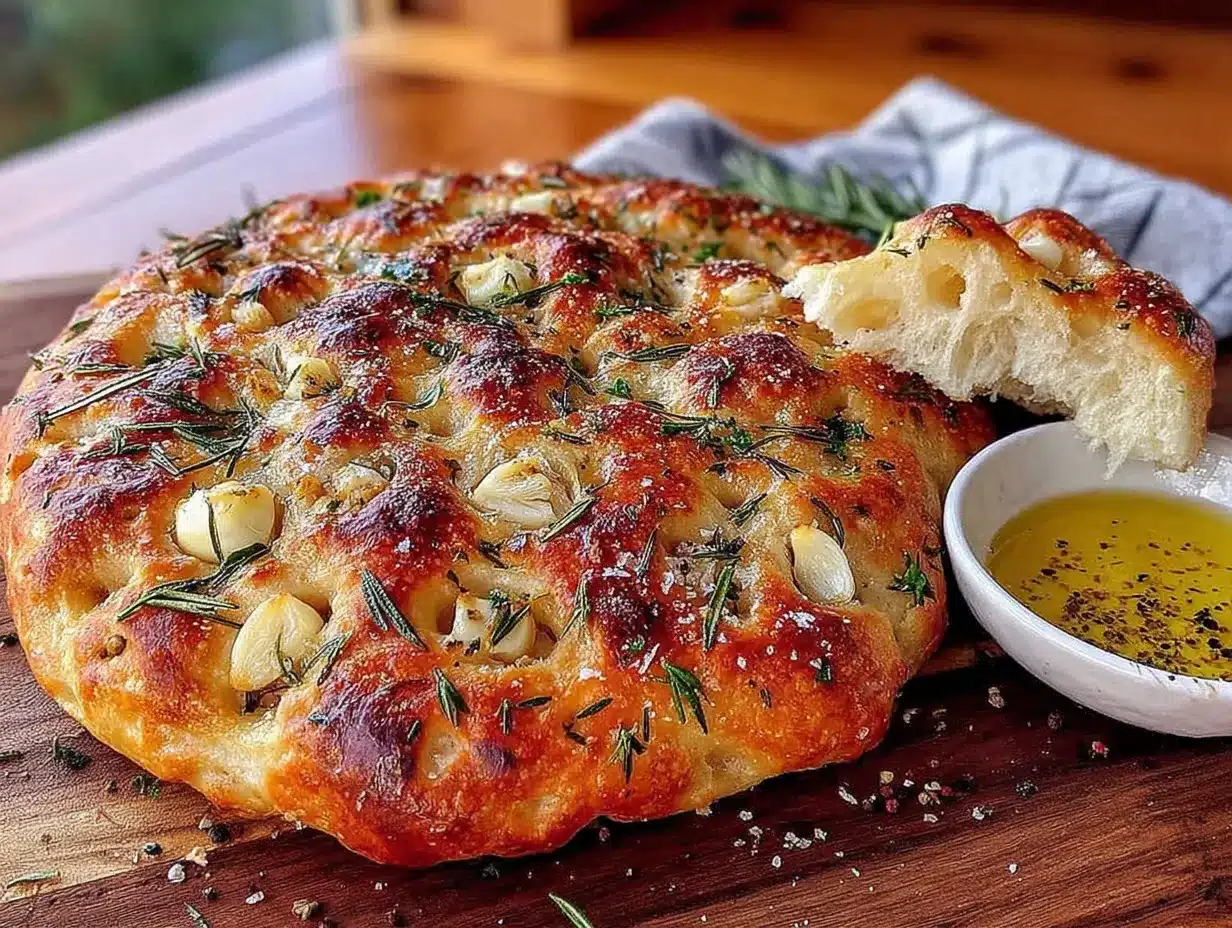
- Fresh rosemary – 3-4 sprigs, leaves stripped and roughly chopped. Dried works in a pinch, but fresh is noticeably better.
- Garlic cloves – 4-5 whole cloves, peeled and lightly smashed. These get pressed into the dough before baking.
- Flaky sea salt – Maldon or similar, for finishing. It adds that perfect crunch.
- Extra virgin olive oil – A generous drizzle before baking, about 2 tablespoons.
I want to talk about the starter for a second. If yours is sluggish, feed it a few times before using it in this recipe. A hungry starter won’t give you the rise you need. You want it active and bubbly—like a science experiment that’s about to overflow. If you don’t have a starter yet, you can use ½ teaspoon of active dry yeast mixed with the warm water and flour, but the flavor won’t be quite the same. The tang is what makes this rosemary garlic sourdough focaccia bread special.
For the rosemary, I grab it from my garden when I remember, but the grocery store stuff works fine. Just avoid the dried rosemary that looks like pine needles—it’s too woody and sharp. You want soft, fragrant leaves that will crisp up in the oven without stabbing your gums.
Equipment Needed
You don’t need fancy gear for this recipe, which is part of its charm. Here’s what I use:
- Large mixing bowl – Glass or ceramic works best. Avoid metal if you can; it conducts heat and can affect fermentation.
- Digital kitchen scale – I cannot stress this enough. Baking by weight is more accurate than cups, especially with sourdough. A $15 scale from Amazon does the job.
- 9×13-inch baking pan – Metal or glass both work. I prefer metal for better browning on the bottom.
- Bench scraper – Helps with folding the dough and cleaning up sticky messes. A flexible spatula works too.
- Plastic wrap or a damp kitchen towel – To cover the dough during rising.
- Cooling rack – Essential for keeping the bottom crust crispy.
I used to try making focaccia in a cast iron skillet, and while it works, the sides are too high to get that classic flat shape. Stick with a standard sheet pan or baking dish. If you don’t have a scale, use the spoon-and-level method for flour: spoon it into your measuring cup and level it off with a knife. But honestly, get the scale. It’s a game-changer.
Preparation Method
This rosemary garlic sourdough focaccia bread follows a simple timeline: mix, rest, fold, rise, dimple, bake. The active work is minimal, but the waiting is essential. Plan for about 4-5 hours total, or stretch it overnight in the fridge for even better flavor.
- Mix the dough: In your large bowl, combine 100g active sourdough starter, 300g warm water, and 60g olive oil. Whisk until the starter dissolves into the water—it should look milky and bubbly. Add 400g bread flour and 10g fine sea salt. Stir with a wooden spoon or your hand until a shaggy, sticky dough forms. It will look rough and ugly. That’s fine.
- First rest (30 minutes): Cover the bowl with plastic wrap or a damp towel and let it sit at room temperature. This autolyse step lets the flour absorb the water and starts gluten development without any effort from you. Go wash the dishes or scroll your phone.
- Stretch and fold (3 rounds, 30 minutes apart): Wet your hand slightly to prevent sticking. Grab a section of dough from one side, stretch it up, and fold it over the center. Rotate the bowl and repeat 3-4 times until you’ve gone all around. Cover and rest 30 minutes. Repeat this process two more times. The dough will go from sticky and slack to smooth and elastic. You’ll feel it tighten under your hands.
- Bulk fermentation (2-3 hours): Cover the bowl and let the dough rise at room temperature until it’s nearly doubled in size and looks puffy with bubbles on the surface. The time depends on your starter’s strength and your kitchen temperature. In my chilly kitchen, it takes closer to 3 hours. In summer, it’s done in 2.
- Transfer to pan: Pour 2-3 tablespoons of olive oil into your 9×13-inch pan and spread it around. Scrape the dough into the pan using a bench scraper or your hand. Don’t deflate it too much—just get it in there. Let it rest for 20 minutes so the gluten relaxes.
- Stretch the dough: Using oiled fingertips, gently stretch the dough to fill the corners of the pan. If it resists, let it rest another 10 minutes and try again. You want an even layer about ¾-inch thick.
- Second rise (1-2 hours): Cover the pan and let the dough rise until it’s puffy and jiggly. It should look like a soft pillow. This is where patience pays off.
- Dimple and top: Preheat your oven to 425°F (220°C). Generously drizzle olive oil over the surface. Using your fingertips, press straight down into the dough to create deep dimples all over. Don’t be shy—go all the way to the bottom. Press the whole smashed garlic cloves into some of the dimples, spacing them evenly. Sprinkle chopped rosemary and flaky sea salt over the top.
- Bake (25-30 minutes): Place the pan on the middle rack and bake until the top is deep golden brown and the bottom sounds hollow when tapped. Rotate the pan halfway through for even browning. The kitchen should smell like a fancy Italian restaurant.
- Cool and serve: Let the focaccia cool in the pan for 5 minutes, then transfer to a cooling rack. Don’t skip this step—the bottom will get soggy if it sits in the pan. Let it cool at least 15 minutes before cutting. Or don’t. I won’t judge if you tear into it immediately.
Cooking Tips & Techniques
I’ve made this rosemary garlic sourdough focaccia bread at least twenty times, and I’ve learned a few things the hard way. Here’s what I wish someone had told me.
Don’t rush the fermentation. The first time I made this, I tried to speed things up by using warmer water and placing the bowl near the oven. The dough rose fast but tasted flat. That tangy flavor needs time to develop. If your schedule allows, do the bulk fermentation overnight in the fridge. The cold slows things down and builds complexity.
Use enough oil. Focaccia is supposed to be oily. That’s not a flaw—it’s the feature. The olive oil creates a crispy crust and prevents the dough from sticking. If you skimp, you’ll end up with dry, pale bread that sticks to the pan. Be generous.
Dimple with confidence. Your fingertips should go all the way to the bottom of the pan. Those deep wells collect the olive oil and create crispy, caramelized pockets. I used to barely press down, and my focaccia came out flat and uniform. Deep dimples make all the difference.
Watch the salt. Flaky sea salt on top is wonderful, but it’s easy to overdo it. A light sprinkle is enough. Remember that the dough already has salt in it. Too much topping salt makes it inedible.
One of my biggest failures? I forgot the salt entirely once. The bread rose beautifully but tasted like cardboard. Salt isn’t just for flavor—it strengthens the gluten structure and controls fermentation. Don’t skip it.
Variations & Adaptations
This is the kind of recipe that begs for experimentation. Here are some variations I’ve tried and loved.
- Cheesy Rosemary Garlic Focaccia: After dimpling, sprinkle ½ cup of shredded parmesan or pecorino over the top before baking. The cheese melts into the dimples and creates crispy, salty edges. I made this for a party once and it vanished in minutes.
- Tomato and Herb Focaccia: Press halved cherry tomatoes into the dimples alongside the garlic. They roast and burst, creating little pockets of sweetness. Add a few fresh basil leaves after baking.
- Everything Bagel Focaccia: Skip the rosemary and garlic. Instead, brush the top with olive oil and sprinkle generously with everything bagel seasoning. It’s perfect for sandwiches or breakfast alongside eggs.
- Gluten-Free Option: Substitute the bread flour with a good gluten-free all-purpose blend that contains xanthan gum. The texture will be denser and less airy, but still delicious. I recommend Cup4Cup brand for best results.
- Whole Wheat Version: Replace half the bread flour with whole wheat flour. The dough will be slightly less fluffy but has a nuttier, earthier flavor that pairs beautifully with rosemary.
My personal favorite variation is adding caramelized onions. Cook two sliced onions low and slow in butter until golden and jammy, then press them into the dimples before baking. The sweetness against the salty, herbaceous bread is incredible. I served this alongside a bowl of cozy garden fresh tomato soup last fall, and it was the perfect pairing.
Serving & Storage Suggestions
This rosemary garlic sourdough focaccia bread is best served warm, but it’s still fantastic at room temperature. Here’s how I like to enjoy it.
Serving: Cut into squares or strips and serve alongside a bowl of olive oil and balsamic vinegar for dipping. It’s also perfect for sandwiches—slice it horizontally and fill with prosciutto, fresh mozzarella, and arugula. I’ve used it as a base for flavorful pulled pork sliders and it held up beautifully without getting soggy.
Storage: Store leftover focaccia in an airtight container at room temperature for up to 2 days. Do not refrigerate—it will dry out and go stale faster. If you need to keep it longer, freeze it.
Freezing: Wrap the cooled focaccia tightly in plastic wrap, then in foil. Freeze for up to 3 months. To reheat, unwrap and place directly in a 350°F oven for 10-15 minutes until warmed through and crispy. I always make a double batch and stash one in the freezer for busy weeknights.
Reheating: Skip the microwave—it makes the bread rubbery. Instead, reheat in a toaster oven or regular oven at 350°F for 5-7 minutes. The crust gets crispy again, and the interior stays soft.
The flavors actually improve after a day. The garlic mellows, the rosemary infuses deeper, and the olive oil soaks into every nook. Day-old focaccia makes the best croutons too—just cut into cubes, toss with olive oil, and toast until golden.
Nutritional Information & Benefits
While this is definitely a treat, it’s not without its redeeming qualities. Here’s a rough estimate per serving (1/8 of the recipe):
- Calories: Approximately 280
- Carbohydrates: 38g
- Protein: 6g
- Fat: 12g (mostly from heart-healthy olive oil)
- Fiber: 2g
- Sodium: 380mg
The sourdough fermentation process breaks down phytic acid in the flour, making the minerals more bioavailable. It also produces beneficial bacteria that support gut health. Olive oil is rich in monounsaturated fats and antioxidants, while rosemary contains anti-inflammatory compounds. Garlic adds a dose of allicin, known for its immune-supporting properties.
If you’re watching your sodium, reduce the salt in the dough to 8g and go light on the flaky sea salt topping. For a lower-carb option, this isn’t the recipe for you—but honestly, focaccia is meant to be enjoyed in moderation as part of a balanced diet.
Frequently Asked Questions
Can I use active dry yeast instead of sourdough starter?
Yes, absolutely. Use ½ teaspoon of active dry yeast dissolved in the warm water with a pinch of sugar. Let it sit for 5 minutes until foamy, then proceed with the recipe. The flavor won’t be as tangy, but the texture will still be great.
Why is my focaccia dense and not airy?
This usually happens when the dough hasn’t fermented long enough. The bubbles need time to develop. Make sure your starter is active and bubbly before using it, and don’t rush the bulk fermentation. A warm spot in your kitchen (75-80°F) helps speed things up.
Can I make the dough ahead of time?
Definitely. After the stretch and fold stage, cover the bowl and refrigerate for up to 24 hours. The next day, let it come to room temperature for about an hour before transferring to the pan. The cold fermentation actually improves the flavor.
How do I know when the focaccia is fully baked?
The top should be deep golden brown, and the bottom should sound hollow when you tap it. If you have an instant-read thermometer, the internal temperature should be around 200°F. When in doubt, bake it a few minutes longer—underbaked focaccia is gummy in the middle.
Can I use dried rosemary instead of fresh?
You can, but the flavor is different. Dried rosemary is more concentrated and can be woody. Use about half the amount and crush it between your fingers before sprinkling. Fresh rosemary is softer and crisps up beautifully in the oven.
Conclusion
This rosemary garlic sourdough focaccia bread has become a staple in my kitchen for good reason. It’s forgiving enough for beginners, rewarding enough for experienced bakers, and delicious enough to make you forget about store-bought bread entirely. The combination of tangy sourdough, fragrant rosemary, and rich olive oil is simple but unforgettable.
I love how this recipe adapts to whatever I have on hand. Sometimes I add olives or sun-dried tomatoes. Other times I keep it classic with just rosemary and garlic. It’s the kind of bread that makes any meal feel special—whether it’s a weeknight pasta dinner or a holiday spread.
If you try this recipe, I’d love to hear how it turned out. Leave a comment below and let me know your favorite variation. Did you add cheese? Swap in thyme? Press in some roasted cherry tomatoes? Share your creation and tag me on social media. Happy baking, friends!
Pin This Recipe!
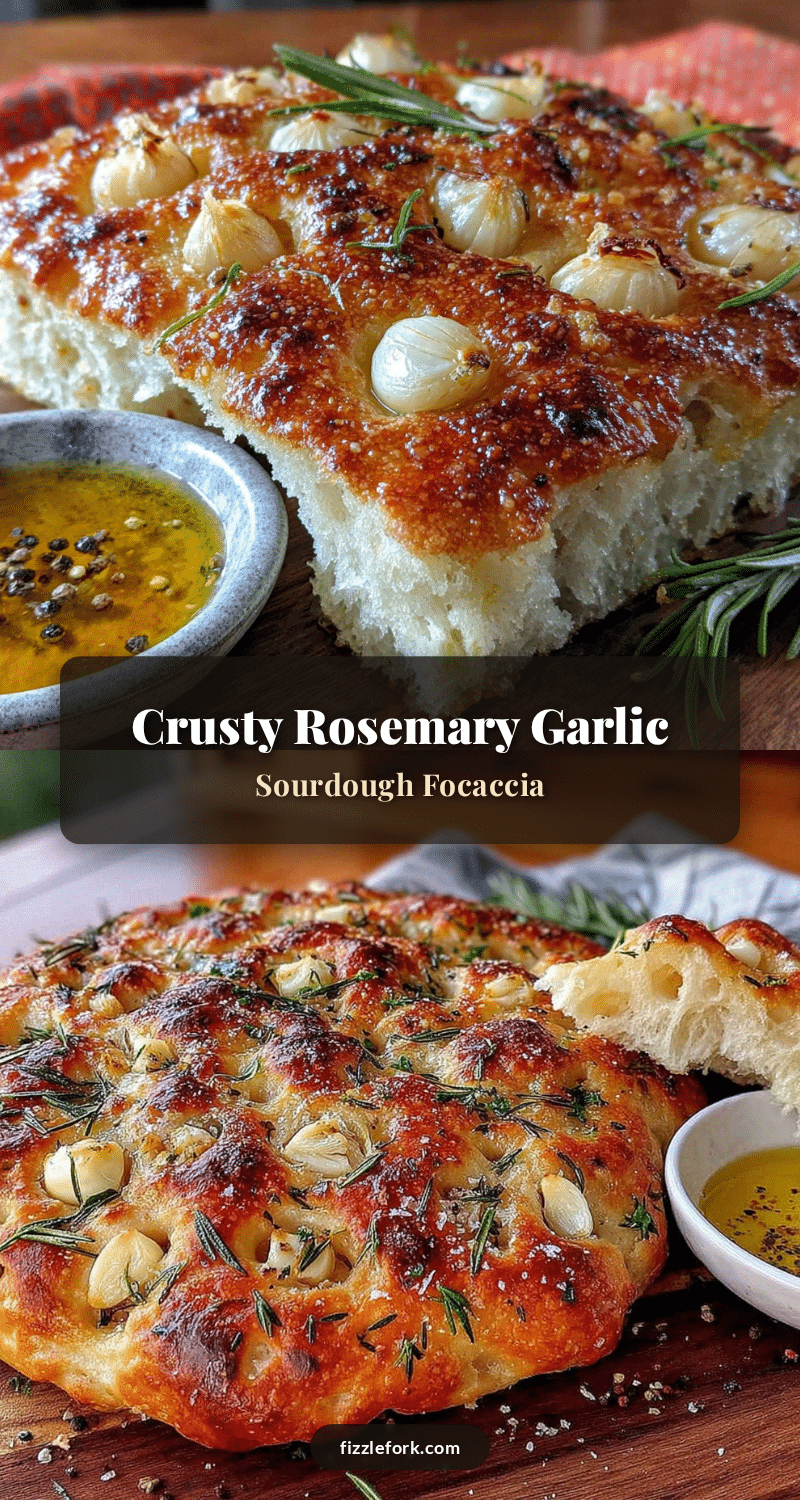
Perfect Rosemary Garlic Focaccia: Easy Homemade Recipe
This rosemary garlic sourdough focaccia bread is a forgiving, no-knead recipe that delivers a golden, airy loaf with crispy edges and a tangy flavor. Perfect for entertaining or a weeknight dinner, it requires minimal active work and uses simple ingredients.
- Prep Time: 15 minutes
- Cook Time: 30 minutes
- Total Time: 4 hours 45 minutes (includes rising time)
- Yield: 8 servings 1x
- Category: Bread
- Cuisine: Italian
Ingredients
- 100g (about ½ cup) active sourdough starter, fed and bubbly
- 400g (about 3 cups) bread flour (all-purpose works, but bread flour gives better structure)
- 300g (about 1 ¼ cups) warm water (around 85°F)
- 60g (about ¼ cup) olive oil, plus extra for the pan
- 10g (about 1 ½ teaspoons) fine sea salt
- 3 cloves fresh garlic, minced finely
- 3–4 sprigs fresh rosemary, leaves stripped and roughly chopped
- 4–5 whole garlic cloves, peeled and lightly smashed
- Flaky sea salt (like Maldon), for finishing
- 2 tablespoons extra virgin olive oil, for drizzling before baking
Instructions
- Mix the dough: In a large bowl, combine 100g active sourdough starter, 300g warm water, and 60g olive oil. Whisk until the starter dissolves. Add 400g bread flour and 10g fine sea salt. Stir until a shaggy, sticky dough forms.
- First rest (30 minutes): Cover the bowl with plastic wrap or a damp towel and let it sit at room temperature.
- Stretch and fold (3 rounds, 30 minutes apart): Wet your hand slightly. Grab a section of dough, stretch it up, and fold it over the center. Rotate the bowl and repeat 3-4 times. Cover and rest 30 minutes. Repeat two more times.
- Bulk fermentation (2-3 hours): Cover the bowl and let the dough rise at room temperature until nearly doubled in size and puffy with bubbles.
- Transfer to pan: Pour 2-3 tablespoons of olive oil into a 9×13-inch pan. Scrape the dough into the pan. Let it rest for 20 minutes.
- Stretch the dough: Using oiled fingertips, gently stretch the dough to fill the corners of the pan. If it resists, let it rest another 10 minutes.
- Second rise (1-2 hours): Cover the pan and let the dough rise until puffy and jiggly.
- Dimple and top: Preheat oven to 425°F (220°C). Generously drizzle olive oil over the surface. Using your fingertips, press straight down to create deep dimples all over. Press whole smashed garlic cloves into some dimples. Sprinkle chopped rosemary and flaky sea salt on top.
- Bake (25-30 minutes): Place pan on the middle rack and bake until deep golden brown and the bottom sounds hollow when tapped. Rotate pan halfway through.
- Cool and serve: Let cool in the pan for 5 minutes, then transfer to a cooling rack. Cool at least 15 minutes before cutting.
Notes
Don’t rush the fermentation for best flavor. Use enough olive oil for a crispy crust. Dimple deeply to create oil pockets. For overnight flavor, refrigerate dough after stretch and fold stage for up to 24 hours. Store at room temperature for up to 2 days; freeze for up to 3 months.
Nutrition
- Serving Size: 1/8 of recipe
- Calories: 280
- Sugar: 1
- Sodium: 380
- Fat: 12
- Saturated Fat: 2
- Carbohydrates: 38
- Fiber: 2
- Protein: 6
Keywords: rosemary garlic focaccia, sourdough focaccia, easy focaccia recipe, homemade focaccia, no-knead bread