The velvety, almost buttery smoothness of this soup is what I was after from the start. Not a thin, watery broth masquerading as soup, but something that coats the back of a spoon with a weight that feels both luxurious and grounding. That texture, that specific, silken mouthfeel, is the entire point of this creamy roasted butternut squash soup with crispy sage.
I spent a few autumns chasing that perfect consistency. You know, the one where the squash is so deeply caramelized it practically melts into the stock, leaving behind a natural sweetness that doesn’t need a ton of cream to feel indulgent. Honestly, I’ve made versions that were too grainy (the blender wasn’t powerful enough) and versions that were too sweet (I got a little heavy-handed with the maple syrup). But this one? This one hits the mark.
The real star, besides that creamy texture, is the crispy sage. It’s not just a garnish; it’s a textural counterpoint. That little shatter of a fried leaf against the smooth soup is the kind of simple pleasure that makes you slow down and actually taste your food. It’s a bowl of pure comfort, and it’s exactly what I want on a chilly evening when the only thing on my mind is getting warm from the inside out.
This isn’t a complicated recipe, but it does ask for a little patience with the roasting. Trust me, it’s worth it. That deep, concentrated flavor is what makes this soup the best version of itself.
Why You’ll Love This Recipe
This creamy roasted butternut squash soup with crispy sage isn’t just another soup recipe. It’s the one I make when I want to feel like I’ve accomplished something in the kitchen, even if it was a quiet, simple process. Here’s why it stands out.
- Deep, Caramelized Flavor: Roasting the squash and garlic first is a non-negotiable step. It concentrates their natural sugars and adds a nutty, almost smoky depth that you just can’t get from boiling. This is where the magic happens.
- Naturally Creamy Texture: We’re not drowning this soup in heavy cream. The roasted squash itself, when properly blended, creates a velvety-smooth base. A little coconut milk or half-and-half at the end just rounds it out beautifully.
- Simple, Wholesome Ingredients: You don’t need a pantry full of exotic spices. Onion, garlic, squash, stock, and a little sage. That’s the core of it. It’s clean, honest food.
- That Crispy Sage Topping: Let’s be honest, this is what makes the soup feel special. The crispy sage adds a savory, herbaceous crunch that cuts through the richness of the soup. It’s a little bit of texture heaven in every spoonful.
- Perfect for Meal Prep: This soup tastes even better the next day. The flavors have time to meld and deepen. Make a big batch on Sunday, and you’ve got easy, comforting lunches or light dinners all week long. It’s as cozy as a bowl of creamy loaded baked potato soup with bacon, but with a more refined, seasonal vibe.
What Ingredients You Will Need
This recipe relies on a short list of high-quality ingredients. Each one plays a role in building that signature flavor and texture. Let’s break down what you’ll need to grab.
- Butternut Squash (1 large, about 3 pounds): The star of the show. Look for one that feels heavy for its size with a firm, unblemished skin. I prefer to buy it whole and roast it myself for the best flavor, but pre-cut cubes will work in a pinch. Just keep an eye on them during roasting as they may cook faster.
- Yellow Onion (1 medium): Adds a savory backbone to the soup. When cooked down, it becomes sweet and mellow, perfectly complementing the squash.
- Garlic (1 whole head): Roasting a whole head of garlic transforms it from sharp and pungent to sweet, nutty, and spreadably soft. This is a game-changer for the soup’s depth of flavor. Don’t skip it!
- Olive Oil (2-3 tablespoons): A good quality extra-virgin olive oil is perfect for roasting the vegetables. It helps them caramelize and adds a subtle fruity note.
- Vegetable or Chicken Broth (4 cups): Use a good quality broth, as it’s a major flavor component. I often use a low-sodium version so I can control the salt level. For a richer soup, chicken broth is excellent; for a vegan version, stick with vegetable.
- Canned Coconut Milk (1/2 cup, full-fat) or Heavy Cream: This is what gives the soup its final luxurious creaminess. Full-fat coconut milk adds a subtle sweetness and richness without being overpowering. Heavy cream will make it even more decadent.
- Fresh Sage Leaves (about 15-20 leaves): Essential for that crispy topping. You’ll also use a few leaves to infuse the soup itself. Make sure they are completely dry before frying to avoid splattering.
- Butter or Ghee (2 tablespoons): Used for frying the sage leaves and adding a final layer of rich, nutty flavor. Ghee has a higher smoke point, which is helpful here.
- Salt and Black Pepper: To taste. I use kosher salt for cooking and a generous amount of freshly cracked black pepper at the end.
- Optional Garnishes: A drizzle of good olive oil, a sprinkle of red pepper flakes for heat, toasted pumpkin seeds for extra crunch, or a swirl of coconut cream.
Equipment Needed
You don’t need a professional kitchen to make this soup, but a few key tools will make the process much smoother. Here’s what I use.
- Large Baking Sheet: For roasting the squash and garlic. A rimmed baking sheet is best to catch any juices.
- Sharp Chef’s Knife: Butternut squash is tough. A sharp, heavy knife is non-negotiable for safely cutting it in half.
- Vegetable Peeler: For peeling the squash. A Y-peeler is my personal favorite for this task.
- Large Soup Pot or Dutch Oven: A heavy-bottomed pot, like a Dutch oven, distributes heat evenly and is perfect for simmering the soup.
- Immersion Blender or Countertop Blender: This is the most important tool for achieving that silky smooth texture. An immersion blender is less messy and allows you to blend directly in the pot. A countertop blender will give you an even smoother result, but you’ll need to work in batches and be careful with the hot liquid.
- Small Skillet: For frying the sage leaves. A small pan means you need less butter.
- Measuring Cups and Spoons: For accuracy.
If you don’t have an immersion blender, a standard blender works perfectly. Just let the soup cool for a few minutes before blending, and never fill the blender more than halfway full with hot liquid. Hold the lid down with a kitchen towel to be safe.
Preparation Method

This is where the magic happens. Follow these steps, and you’ll be rewarded with a bowl of pure autumn comfort. Take your time with the roasting—it’s the most important part.
- Preheat and Prep: Preheat your oven to 400°F (200°C). Line a large baking sheet with parchment paper for easy cleanup. Carefully peel the butternut squash using a vegetable peeler. Cut it in half lengthwise and scoop out the seeds and stringy bits with a spoon. Cut the squash into 1-inch cubes. Don’t stress about making them perfect, but try to keep them similar in size for even roasting.
- Roast the Vegetables: Place the cubed squash on the prepared baking sheet. Cut the top off the head of garlic to expose the cloves, drizzle it with a little olive oil, and wrap it in a small piece of foil. Place the wrapped garlic on the baking sheet with the squash. Drizzle the squash with 2 tablespoons of olive oil and a generous pinch of salt and pepper. Toss everything to coat evenly. Roast for 30-40 minutes, or until the squash is tender and caramelized on the edges, flipping the pieces halfway through. You want them to be fork-tender and starting to brown.
- Sauté the Aromatics: While the squash roasts, heat a drizzle of olive oil in your large soup pot over medium heat. Add the diced onion and a pinch of salt. Cook, stirring occasionally, for 5-7 minutes, until the onion is soft and translucent. You don’t want it to brown, just to become sweet and tender.
- Combine and Simmer: Once the squash is roasted, add it to the pot with the sautéed onion. Squeeze the roasted garlic cloves out of their skins—they should pop right out—and add them to the pot as well. Discard the skins. Pour in the 4 cups of broth. Add a few fresh sage leaves (about 4-5) to the pot. Bring the mixture to a boil, then reduce the heat to low, cover, and let it simmer for 15-20 minutes. This allows all the flavors to get to know each other.
- Blend Until Silky Smooth: Remove the pot from the heat. Using an immersion blender, carefully blend the soup directly in the pot until completely smooth and velvety. If you’re using a countertop blender, work in batches, filling the blender no more than halfway. Blend until smooth, then return the soup to the pot.
- Finish with Cream: Stir in the 1/2 cup of coconut milk or heavy cream. Taste the soup and adjust the seasoning with more salt and pepper as needed. If the soup is too thick, add a little more broth or water until it reaches your desired consistency. Keep the soup warm over low heat while you make the crispy sage.
- Make the Crispy Sage: In a small skillet, melt the 2 tablespoons of butter or ghee over medium heat. Once the butter is shimmering and just starting to foam, carefully add the remaining sage leaves in a single layer. Fry for 15-30 seconds per side, until they turn a darker green and become crisp. They will sizzle and shrink slightly. Use a slotted spoon or tongs to transfer them to a paper towel-lined plate to drain. Be careful not to overcrowd the pan; you may need to do this in two batches. The butter will now be infused with sage flavor—you can drizzle a little of it over the soup for extra richness.
- Serve Immediately: Ladle the hot soup into bowls. Top with a few crispy sage leaves, a drizzle of the sage-infused butter (if desired), a pinch of flaky sea salt, and maybe some toasted pumpkin seeds for extra crunch. Serve immediately.
Cooking Tips & Techniques
Over the years, I’ve made a few mistakes so you don’t have to. Here are some hard-won tips for making the best creamy roasted butternut squash soup with crispy sage.
Don’t Crowd the Pan. This is my number one tip for roasting. If you pile the squash too high on the baking sheet, it will steam instead of roast. You want those beautiful caramelized edges, which means the pieces need a little breathing room. Use two baking sheets if you have to.
Pat the Sage Dry. Before you fry the sage leaves, make sure they are completely dry. Any moisture on the leaves will cause the hot butter to splatter, which is no fun for anyone. A quick pat with a paper towel is all it takes.
Blend with Care. Hot liquid expands when blended, which can be a disaster with a countertop blender. Always let the soup cool for a few minutes, and never fill the blender more than halfway. Hold the lid down firmly with a folded kitchen towel. An immersion blender is much safer and easier for this job.
Taste and Adjust. The sweetness of butternut squash can vary. After you blend the soup, taste it. Does it need more salt? A pinch of cayenne or red pepper flakes for heat? A squeeze of lemon juice to brighten it up? This is your chance to make it perfect for your palate.
Make it Ahead. This soup is a dream for meal prep. The flavors actually deepen and improve after a day in the fridge. Make it a day ahead, store it in an airtight container, and reheat gently on the stovetop. You might need to add a splash of broth or water when reheating, as it will thicken as it sits.
Variations & Adaptations
This recipe is a fantastic base, and it’s easy to tweak it to fit your mood, your diet, or what you have on hand. Here are a few of my favorite ways to change it up.
- Spicy Roasted Squash Soup: Add 1/2 teaspoon of smoked paprika and a pinch of cayenne pepper to the squash before roasting. When you blend the soup, stir in a tablespoon of harissa paste for a warm, smoky heat. The crispy sage is a lovely counterpoint to the spice.
- Vegan and Dairy-Free: This recipe is already vegan if you use vegetable broth and coconut milk. Make sure to use a high-quality full-fat coconut milk for the best creamy texture. The crispy sage can be fried in olive oil or avocado oil instead of butter.
- Apple and Squash Soup: For a sweeter, more complex flavor, peel and core one large Granny Smith apple and add the chunks to the baking sheet with the squash during the last 15 minutes of roasting. The apple’s tartness balances the squash’s sweetness beautifully.
- Curried Butternut Squash Soup: Sauté 1 tablespoon of grated fresh ginger and 2 teaspoons of curry powder with the onion. The warm spices are a natural pairing with the sweet squash. Finish with a swirl of coconut milk for a truly comforting bowl.
- Thicker, Heartier Soup: To make this soup more of a meal, stir in 1/2 cup of cooked red lentils or a cup of cooked white beans after blending. This adds protein and fiber, making it even more satisfying. It’s a great way to turn a side dish into a main course, much like a bowl of cozy one pot chicken and wild rice soup.
Serving & Storage Suggestions
This soup is wonderful on its own, but it’s even better with a few thoughtful accompaniments. Here’s how I like to serve and store it.
Serving Suggestions: Serve the soup piping hot in deep bowls. The crispy sage is best added right before serving to maintain its crunch. For a complete meal, pair it with a crusty piece of bread for dipping, like a slice of perfect rosemary garlic focaccia. A simple green salad with a tangy vinaigrette is also a great contrast to the soup’s richness. For a heartier lunch, serve it alongside a small build your own charcuterie board with honey and nuts for a lovely, balanced meal.
Storage Instructions: Allow the soup to cool completely to room temperature before storing. Transfer it to an airtight container and refrigerate for up to 5 days. The flavors will meld and deepen, making it even more delicious the next day.
Freezing Instructions: This soup freezes beautifully. Pour the cooled soup into freezer-safe bags or containers, leaving a little room for expansion. It can be frozen for up to 3 months. Thaw overnight in the refrigerator before reheating.
Reheating Instructions: Reheat the soup gently on the stovetop over medium-low heat, stirring occasionally. You may need to add a splash of broth or water to thin it out, as it will thicken after being refrigerated or frozen. You can also reheat individual portions in the microwave.
Nutritional Information & Benefits
This soup is not only delicious but also packed with nutrients. It’s a bowl of comfort that you can feel good about eating. Here’s a quick look at what’s inside.
- Rich in Vitamin A: Butternut squash is one of the best sources of beta-carotene, which your body converts into vitamin A. This is essential for healthy vision, a strong immune system, and glowing skin.
- Good Source of Fiber: The squash provides a good amount of dietary fiber, which aids in digestion and helps you feel full and satisfied.
- Antioxidant-Rich: Both the squash and the sage are packed with antioxidants, which help protect your body from damage caused by free radicals.
- Low in Calories: Despite its creamy texture, this soup is relatively low in calories, especially when made with vegetable broth and coconut milk.
Estimated Nutritional Information (per serving, based on 6 servings):
| Nutrient | Amount |
|---|---|
| Calories | ~220-280 |
| Fat | ~14g |
| Carbohydrates | ~25g |
| Fiber | ~6g |
| Protein | ~4g |
Note: These values are estimates and will vary based on the specific ingredients and brands you use.
Conclusion
This creamy roasted butternut squash soup with crispy sage is more than just a recipe; it’s a little ritual. It’s the smell of roasting squash filling your kitchen, the satisfying sizzle of sage leaves in butter, and the quiet joy of a perfectly smooth, deeply flavorful bowl of soup. It’s the kind of meal that asks you to slow down, take a deep breath, and just be present for a moment.
I love that it’s both simple and special. Simple enough for a weeknight, yet elegant enough for a dinner party. I hope you give it a try and make it your own. Maybe you’ll add a little more spice, or a different herb, or a swirl of something unexpected. That’s the beauty of cooking—making a recipe yours.
I’d love to hear how it turns out for you! Leave a comment below and let me know if you tried any variations. And if you loved it, please share it with a friend who needs a little warming up. Happy cooking!
Frequently Asked Questions
Can I use pre-cut butternut squash?
Yes, you can! It will save you time on prep. Just keep in mind that pre-cut cubes are often smaller and may roast a little faster, so start checking for doneness around the 20-minute mark.
My soup is too thick. How can I fix it?
No problem at all! Simply stir in a little more broth, water, or even a splash of milk until it reaches your desired consistency. Reheat it gently after adjusting.
Can I make this soup without an immersion blender?
Absolutely. A standard countertop blender works perfectly. Just make sure to let the soup cool for a few minutes before blending, and always work in batches, filling the blender no more than halfway to avoid any hot liquid explosions.
How do I keep the crispy sage from getting soggy?
The key is to fry the sage leaves until they are completely dry and crisp, and then drain them on a paper towel. Only add them to the soup right before serving. Any leftovers can be stored in an airtight container at room temperature for a day, but they are best enjoyed fresh.
Can I use dried sage instead of fresh?
While fresh sage is highly recommended for the crispy topping, you can use dried sage in the soup itself. Add about 1 teaspoon of dried, rubbed sage to the pot when you sauté the onions. It won’t have the same vibrant flavor, but it will still add a nice earthy note.
Pin This Recipe!
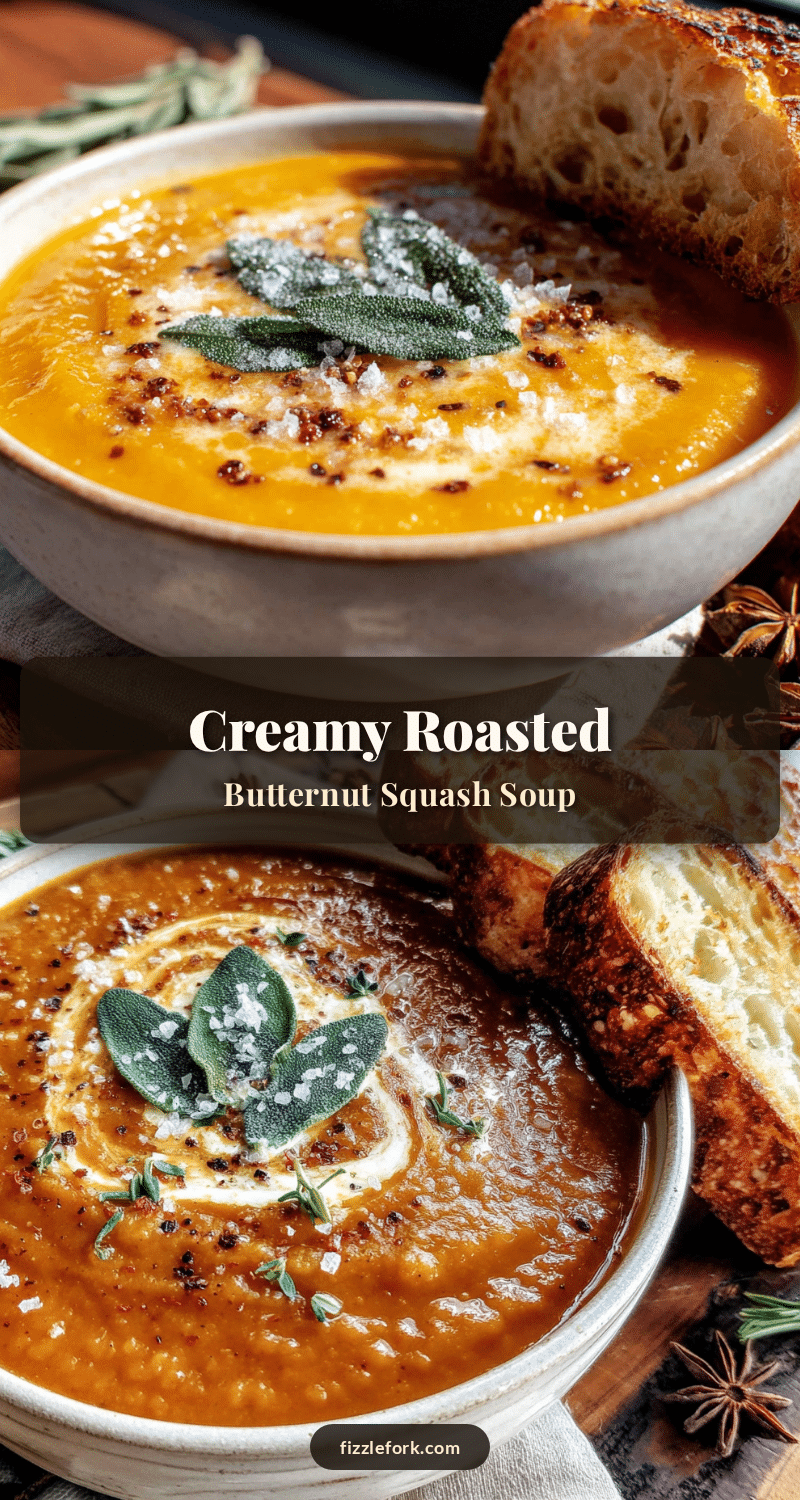
Creamy Roasted Butternut Squash Soup with Crispy Sage

A velvety, naturally creamy soup made from deeply caramelized roasted butternut squash, finished with a touch of coconut milk or cream and topped with crispy fried sage leaves for a perfect textural contrast.
- Prep Time: 15 minutes
- Cook Time: 40 minutes
- Total Time: 55 minutes
- Yield: 6 servings 1x
- Category: Soup
- Cuisine: American
Ingredients
- 1 large butternut squash (about 3 pounds), peeled, seeded, and cut into 1-inch cubes
- 1 medium yellow onion, diced
- 1 whole head garlic
- 2–3 tablespoons olive oil
- 4 cups vegetable or chicken broth (low-sodium recommended)
- 1/2 cup full-fat canned coconut milk or heavy cream
- 15–20 fresh sage leaves
- 2 tablespoons butter or ghee
- Salt and black pepper to taste
- Optional garnishes: good olive oil, red pepper flakes, toasted pumpkin seeds, coconut cream
Instructions
- Preheat oven to 400°F (200°C). Line a large baking sheet with parchment paper.
- Peel the butternut squash, cut in half lengthwise, scoop out seeds, and cut into 1-inch cubes.
- Place cubed squash on the baking sheet. Cut the top off the garlic head, drizzle with olive oil, wrap in foil, and place on the sheet. Drizzle squash with 2 tablespoons olive oil, salt, and pepper; toss to coat.
- Roast for 30-40 minutes, flipping halfway, until squash is tender and caramelized.
- While squash roasts, heat a drizzle of olive oil in a large soup pot over medium heat. Add diced onion and a pinch of salt; cook 5-7 minutes until soft and translucent.
- Add roasted squash and squeezed roasted garlic cloves to the pot. Pour in 4 cups broth and add 4-5 fresh sage leaves. Bring to a boil, then reduce heat, cover, and simmer 15-20 minutes.
- Remove from heat. Blend soup with an immersion blender until smooth, or in batches in a countertop blender (cool slightly first).
- Stir in 1/2 cup coconut milk or heavy cream. Adjust seasoning with salt and pepper. Keep warm.
- In a small skillet, melt 2 tablespoons butter or ghee over medium heat. Fry remaining sage leaves in a single layer for 15-30 seconds per side until crisp. Drain on paper towels.
- Ladle soup into bowls, top with crispy sage leaves, a drizzle of sage-infused butter, and optional garnishes. Serve immediately.
Notes
For best flavor, don’t crowd the baking sheet; use two if needed. Pat sage leaves dry before frying to prevent splattering. Soup thickens as it sits; add broth when reheating. Can be frozen for up to 3 months.
Nutrition
- Serving Size: 1 bowl (about 1.5 cu
- Calories: 250
- Sugar: 8
- Sodium: 480
- Fat: 14
- Saturated Fat: 6
- Carbohydrates: 25
- Fiber: 6
- Protein: 4
Keywords: butternut squash soup, creamy soup, roasted squash, crispy sage, fall soup, vegetarian soup, vegan option, gluten-free